
.jpg) 11 hours ago
15
11 hours ago
15
An incredible total lunar eclipse is still unfolding across North America, though totality has now come to an end. Earth's shadow transformed the full moon into a dramatic blood moon earlier tonight and the first mesmerizing images are already pouring in.
Breathtaking views of both the partial and spectacular blood moon phases of the total lunar eclipse are already flooding the internet, captured by photographers situated in America and Oceania.
First views of the March 3 total lunar eclipse
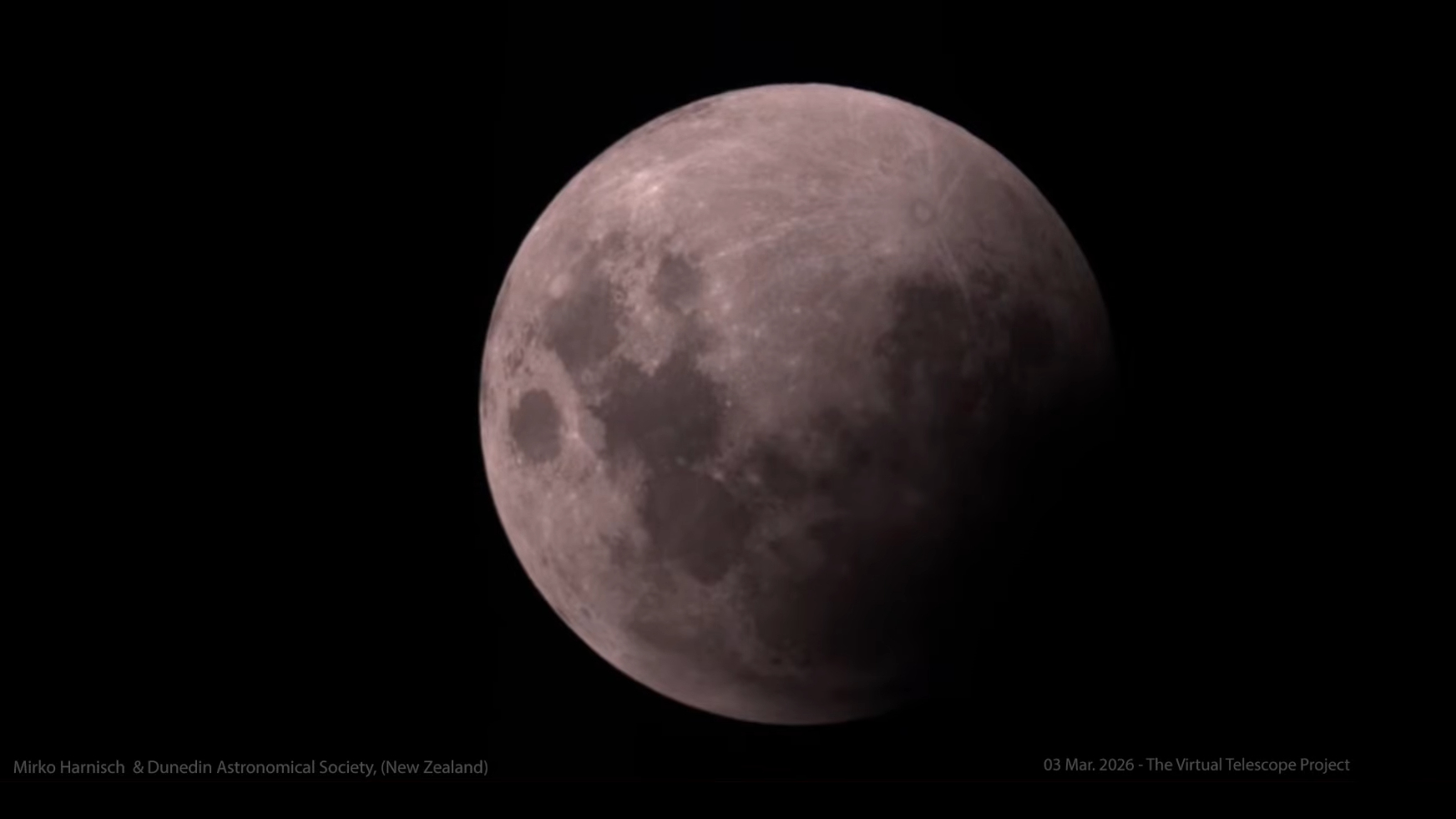
Mirko Harnisch and the Dunedin Astronomical Society captured a gorgeous view of the full moon during the partial eclipse phase from New Zealand, as seen in this still from The Virtual Telescope Project livestream. The image was captured shortly after Earth's curved inner shadow began its slow journey across the lunar disk, darkening the lunar seas sprawling across the western portion of its surface. The March full moon is commonly known as the Worm Moon and is named for the time of year when the ground softens to allow earthworms and burrowing beetles to emerge.
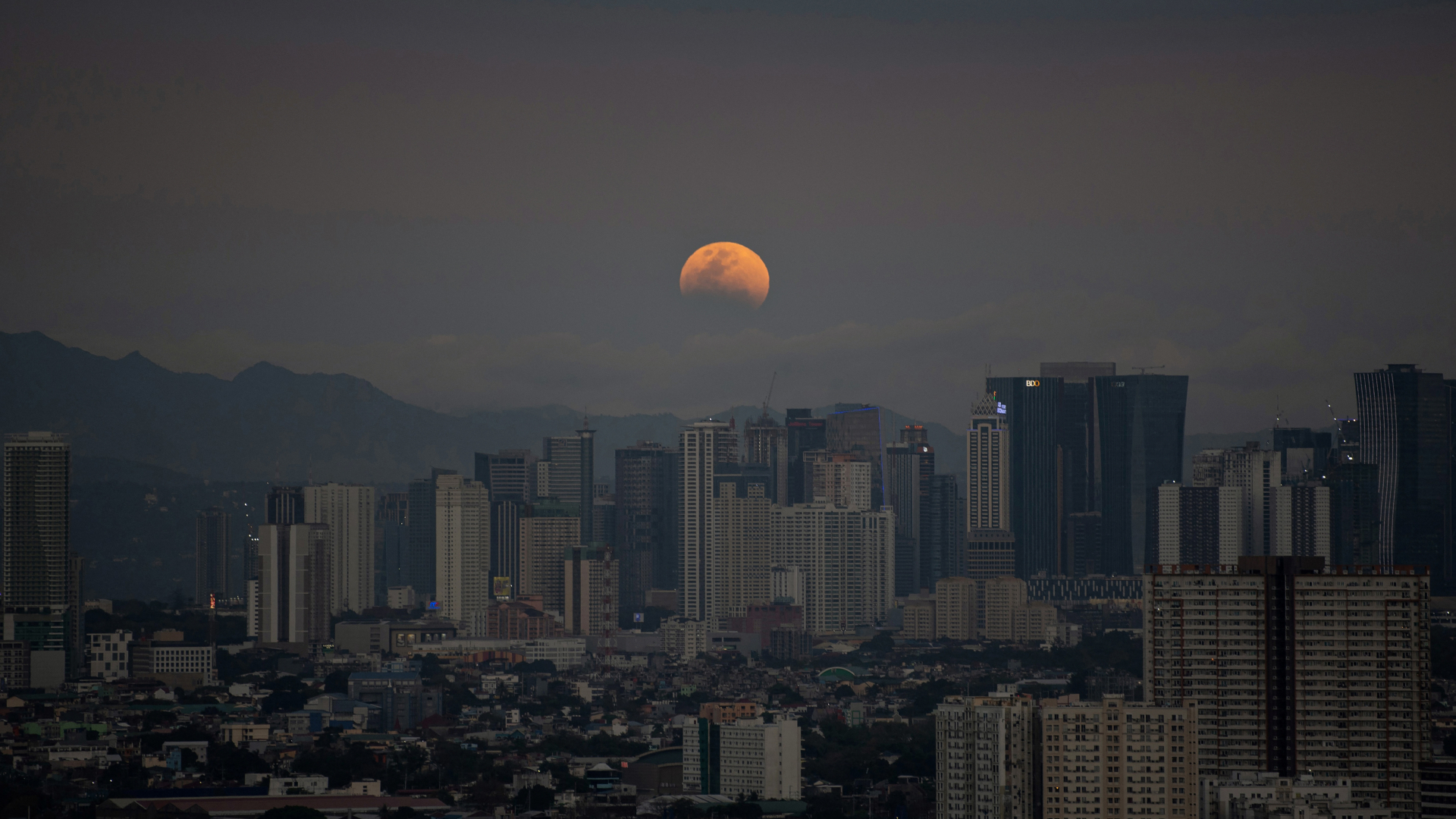
Photographer Ted Aljibe captured a gorgeous view of the partially eclipsed full moon as it rose over the city of Manila in the Philippines, as Earth's shadow veiled the lower part of its disk.
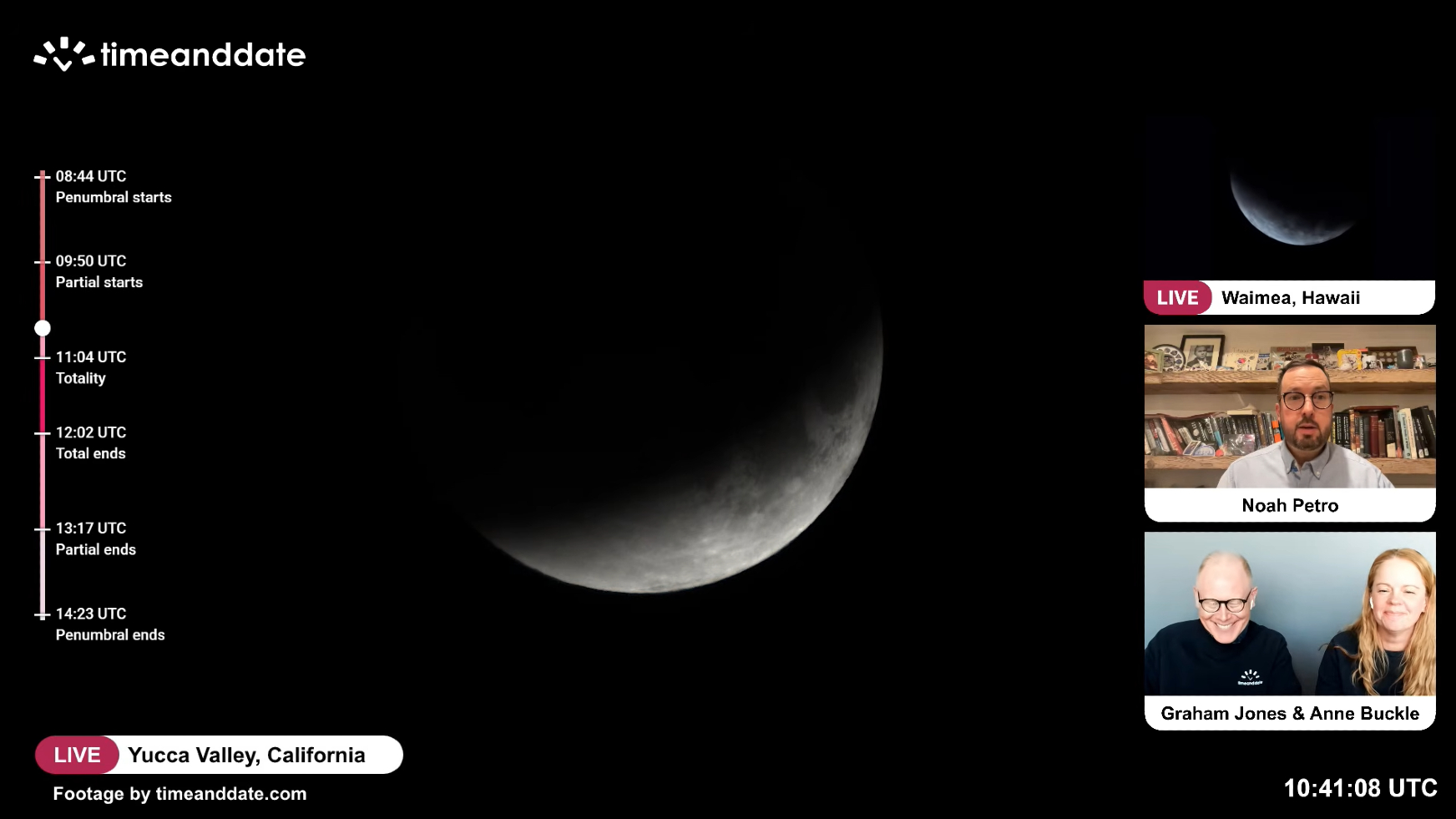
Our next view comes courtesy of Time and Date and was taken as a small crescent of the lunar disk peeked out around the massive sweep of our planet's umbral shadow late into the partial phase. The dark basaltic plain of Mare Crisium (the Sea of Crisis) can be seen as a small oval at the top of the sunlit portion, with Mare Fecunditatis (the Sea of Fertility) below, marking regions where liquid lava once flooded the lunar surface.
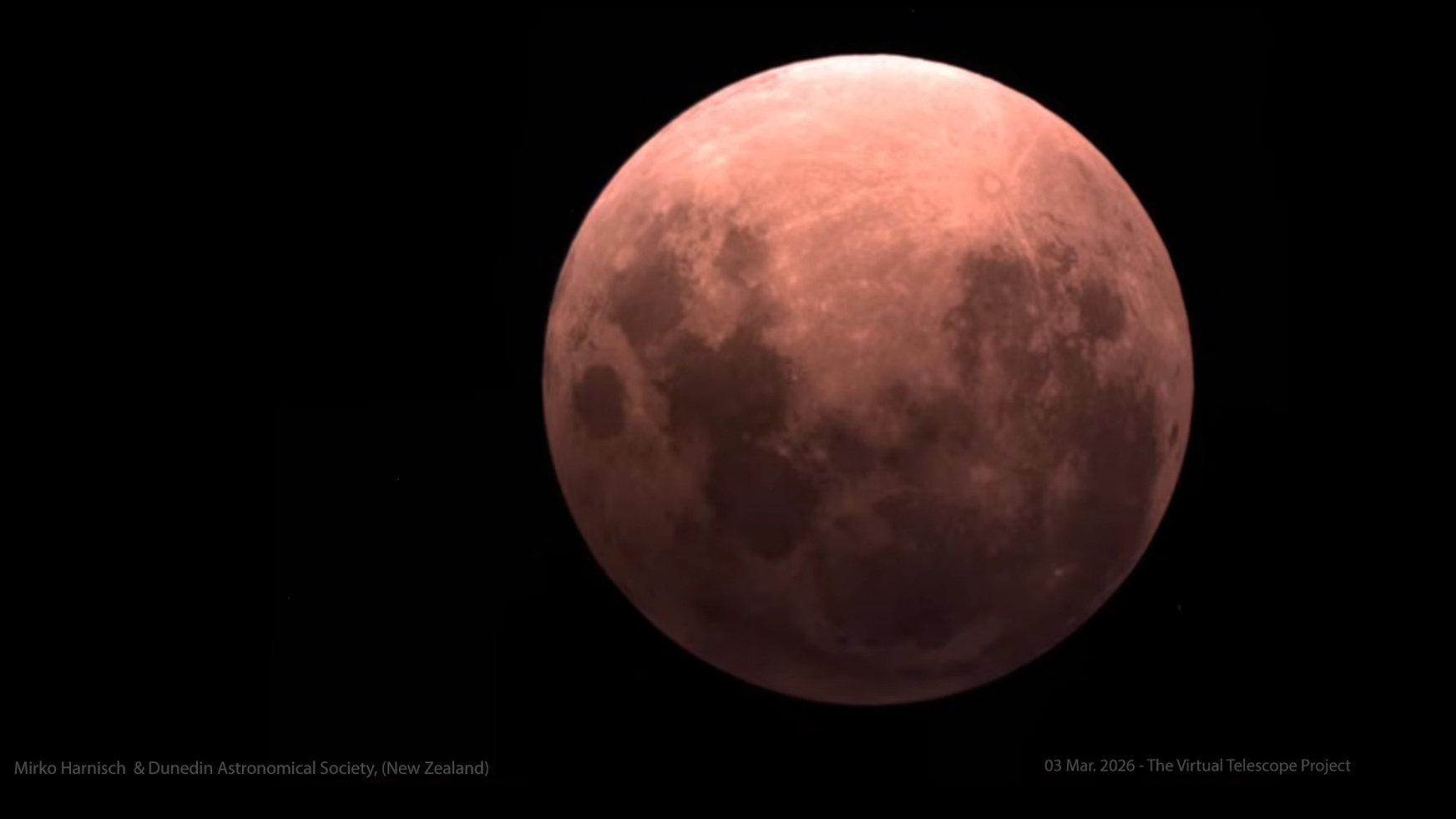
Harnisch and the Dunedin Astronomical Society were able to capture another gorgeous view of the lunar disk as it hung over New Zealand during totality, as sunlight filtered by Earth's atmosphere was bent onto its ancient surface, transforming the worm moon into a dramatic blood moon.
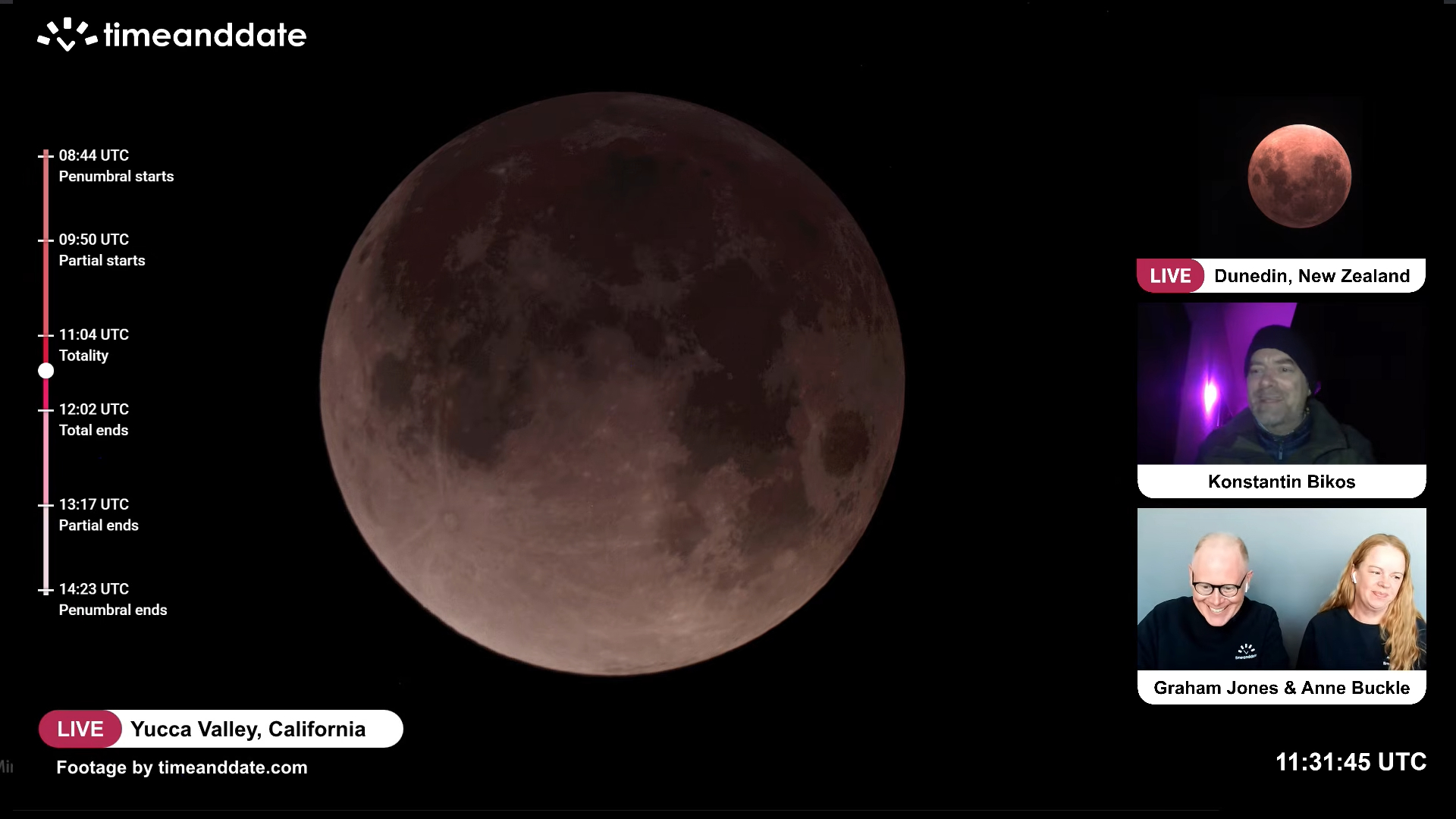
Time and Date provided yet another perspective of the blood moon from its mobile observatory in Yucca Yalley in California, in which the outlines of the lunar seas can be seen darkening the crimson orb as it drifted silently behind Earth, hidden from the sun.
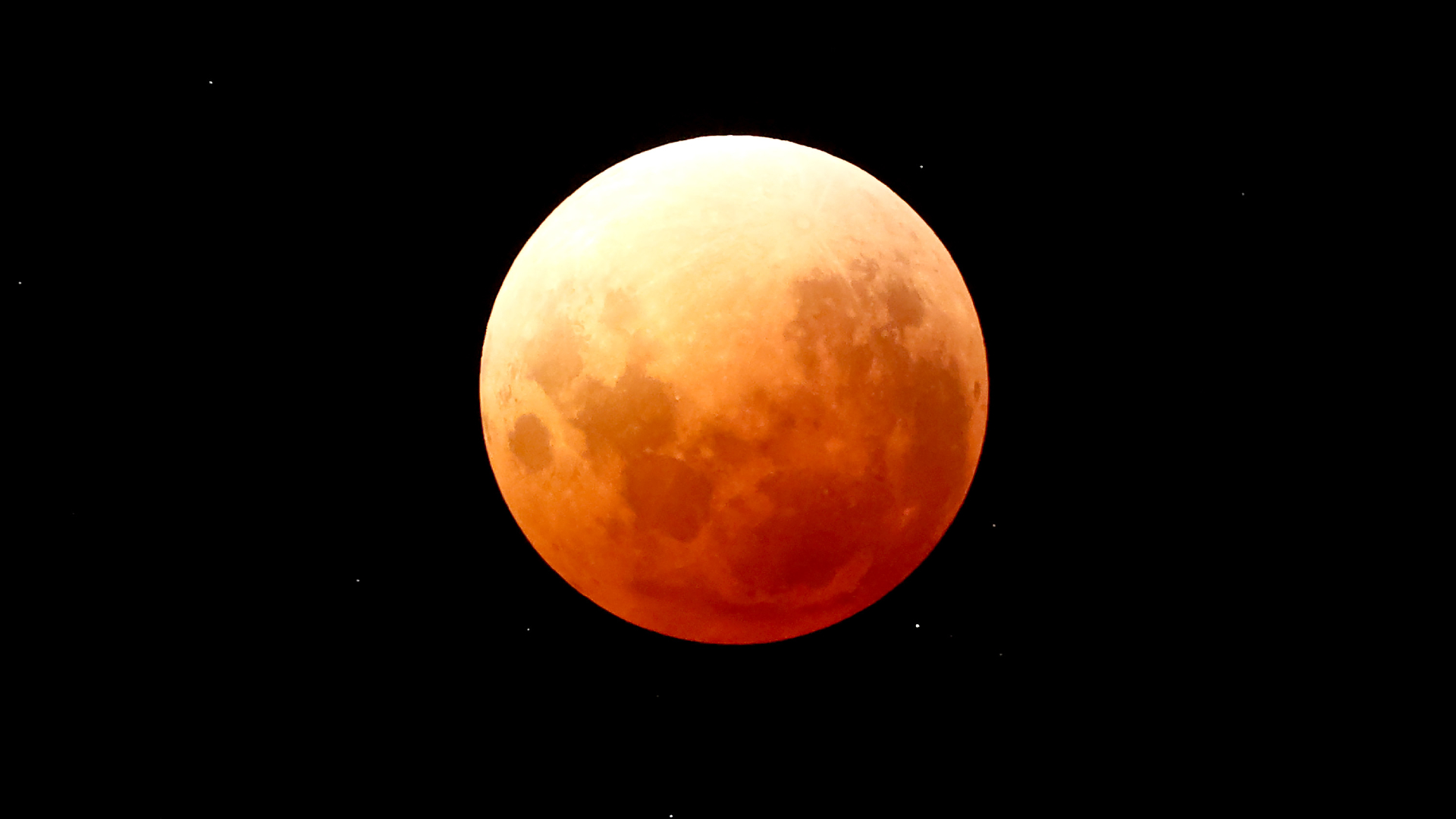
Finally, photographer Phil Walker snapped this impressive view of the full moon during totality from northern New Zealand, as it bathed in the light of every sunrise and sunset on Earth.
Be sure to follow along live with our total lunar eclipse live blog, which will keep you up to date with all of the major milestones as Earth's shadow slips inexorably from the face of its natural satellite. The March 3 eclipse will draw to a close at 9:23 a.m. EST (1423 GMT), when the outer part of Earth's shadow — known as its penumbral shadow — departs the lunar disk.
Editor's Note: If you would like to share your photos of the March 3 blood moon eclipse with Space.com's readers, then please send your images along with your comments, name and location to [email protected].
 English (US)