
.jpg) 2 hours ago
2
2 hours ago
2
Article content
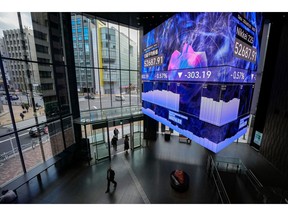
(Bloomberg) — Asian equities dropped as attacks on key energy infrastructure in the Middle East drove oil prices higher, fueling investor concern that an escalating war will add to inflation pressures.

THIS CONTENT IS RESERVED FOR SUBSCRIBERS ONLY
Subscribe now to read the latest news in your city and across Canada.
- Exclusive articles from Barbara Shecter, Joe O'Connor, Gabriel Friedman, and others.
- Daily content from Financial Times, the world's leading global business publication.
- Unlimited online access to read articles from Financial Post, National Post and 15 news sites across Canada with one account.
- National Post ePaper, an electronic replica of the print edition to view on any device, share and comment on.
- Daily puzzles, including the New York Times Crossword.
SUBSCRIBE TO UNLOCK MORE ARTICLES
Subscribe now to read the latest news in your city and across Canada.
- Exclusive articles from Barbara Shecter, Joe O'Connor, Gabriel Friedman and others.
- Daily content from Financial Times, the world's leading global business publication.
- Unlimited online access to read articles from Financial Post, National Post and 15 news sites across Canada with one account.
- National Post ePaper, an electronic replica of the print edition to view on any device, share and comment on.
- Daily puzzles, including the New York Times Crossword.
REGISTER / SIGN IN TO UNLOCK MORE ARTICLES
Create an account or sign in to continue with your reading experience.
- Access articles from across Canada with one account.
- Share your thoughts and join the conversation in the comments.
- Enjoy additional articles per month.
- Get email updates from your favourite authors.
THIS ARTICLE IS FREE TO READ REGISTER TO UNLOCK.
Create an account or sign in to continue with your reading experience.
- Access articles from across Canada with one account
- Share your thoughts and join the conversation in the comments
- Enjoy additional articles per month
- Get email updates from your favourite authors
Sign In or Create an Account
or
Article content
The MSCI Asia Pacific Index was down more than 2%, snapping a three-day advance, as investors trimmed risk. Japan’s Nikkei 225 slumped 2.8%, with traders also on alert for the yen’s potential breach of 160 against the dollar. US equity futures edged higher after the S&P 500 and Nasdaq 100 both fell 1.4% on Wednesday.
Article content
Article content
Article content
Brent crude traded around $112 per barrel as strikes between Iran and Israel on critical energy facilities — which also caused extensive damage to the world’s largest liquefied natural gas export plant in Qatar — raised concerns of a more lasting impact from the conflict.
Article content
By signing up you consent to receive the above newsletter from Postmedia Network Inc.
Article content
Oil’s surge already has global central bankers fretting about price pressures. The Bank of Japan kept interest rates unchanged on Thursday, following a hold by the Federal Reserve on Wednesday, with both signaling the Middle East conflict had clouded the policy outlook.
Article content
The gauge of Asian stocks is down nearly 8% in March, trailing peers in the US and Europe.
Article content
“Asia is more vulnerable than other regions to the ongoing interruption in oil, LNG and other input products,” Morgan Stanley strategists including Jonathan Garner and Kristal Ji wrote in a note, recommending investors to sell this week’s rally in the region’s stocks.
Article content
Iran carried out attacks on the LNG site in Qatar, one of several energy assets it pledged to target following strikes on the Islamic Republic’s giant South Pars gas field. President Donald Trump said the US didn’t know about Israel’s assault on the field, but threatened to “blow up the entirety” of the deposit with US forces if Qatari assets get hit further.
Article content
Article content
He said earlier this week that targeting oil infrastructure on Iran’s main export hub, Kharg Island, remains on the table following earlier bombing of military targets there.
Article content
Fed officials continue to expect one rate cut this year though Chair Jerome Powell emphasized that to resume lowering rates, they needed to see progress in reducing inflation. “If we don’t see that progress, then we won’t see the rate cut,” Powell said in remarks to reporters after the Fed decision.
Article content
His comments prompted traders to scale back expectations for rate cuts, reinforcing a higher-for-longer rate outlook amid volatility in energy markets. They are now pricing in only about 15 basis points worth of Fed easing this year, less than one full quarter-point cut.
Article content
In economic forecasts released with their decision, Fed officials raised their outlook for inflation in 2026 to 2.7% from 2.4%. Notably, they saw the core measure — which excludes volatile food and energy categories — also rising to 2.7%.
Article content
Treasuries sold off across the curve on Wednesday, with the two-year yield jumping about 10 basis points. It rose another three basis points to 3.80% on Thursday.
 English (US)