
.jpg) 4 hours ago
4
4 hours ago
4
Article content
(Bloomberg) — Washington’s Gulf Arab allies are increasingly frustrated as hostilities between the US and Iran intensify, jeopardizing their national security and economies.

THIS CONTENT IS RESERVED FOR SUBSCRIBERS ONLY
Subscribe now to read the latest news in your city and across Canada.
- Exclusive articles from Barbara Shecter, Joe O'Connor, Gabriel Friedman, and others.
- Daily content from Financial Times, the world's leading global business publication.
- Unlimited online access to read articles from Financial Post, National Post and 15 news sites across Canada with one account.
- National Post ePaper, an electronic replica of the print edition to view on any device, share and comment on.
- Daily puzzles, including the New York Times Crossword.
SUBSCRIBE TO UNLOCK MORE ARTICLES
Subscribe now to read the latest news in your city and across Canada.
- Exclusive articles from Barbara Shecter, Joe O'Connor, Gabriel Friedman and others.
- Daily content from Financial Times, the world's leading global business publication.
- Unlimited online access to read articles from Financial Post, National Post and 15 news sites across Canada with one account.
- National Post ePaper, an electronic replica of the print edition to view on any device, share and comment on.
- Daily puzzles, including the New York Times Crossword.
REGISTER / SIGN IN TO UNLOCK MORE ARTICLES
Create an account or sign in to continue with your reading experience.
- Access articles from across Canada with one account.
- Share your thoughts and join the conversation in the comments.
- Enjoy additional articles per month.
- Get email updates from your favourite authors.
THIS ARTICLE IS FREE TO READ REGISTER TO UNLOCK.
Create an account or sign in to continue with your reading experience.
- Access articles from across Canada with one account
- Share your thoughts and join the conversation in the comments
- Enjoy additional articles per month
- Get email updates from your favourite authors
Sign In or Create an Account
or
Article content
The Gulf states’ exasperation is underscored by their wide-ranging views on what the US should do next.
Article content
Article content
Some officials believe President Donald Trump should escalate military operations by deploying ground troops in parts of Iran and perhaps even seizing its crucial oil export hub of Kharg Island, according to people familiar with the matter, declining to be named talking about sensitive matters.
Article content
Article content
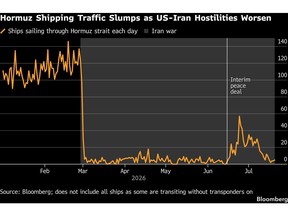
These officials believe Iran’s leaders won’t back down and relinquish their grip over the Strait of Hormuz unless the US takes more aggressive action, said the people. The alternative is a prolonged, even if low-level, conflict that could last months, one of the people said, deterring foreign investors and tourists from the region.
Article content
By signing up you consent to receive the above newsletter from Postmedia Network Inc.
Article content
The view of many officials is that the US needs to “escalate, to de-escalate,” said David Schenker, a US diplomat for the Middle East during Trump’s first term and now a fellow at the Washington Institute for Near East Policy. “Something more needs to be done, because the current dynamic will not compel Iran to make any concession, whether on the strait or on the nuclear front.”
Article content
The White House and the State Department did not immediately respond to a request for comment.
Article content
Some countries, among them Qatar, the main conflict mediator along with Pakistan, disagree and want an immediate deescalation, said the people. That’s with the aim of preventing the fighting reaching the levels of March and early April, when the US and Israel were blitzing Iranian cities and Tehran was firing thousands of drones and missiles across the Gulf.
Article content
Article content
It marks a shift from the weeks leading up to a interim deal between the US and Iran in mid-June, when Gulf Arab states were largely unified in urging Trump to use diplomacy and ease tensions with Tehran. That solidarity unraveled as hostilities worsened in the past two weeks, with Iran and the US blaming each other for the breakdown of the so-called memorandum of understanding they signed.
Article content
Kuwait and Bahrain have come under heavy Iranian attack, as has Jordan.
Article content
Kuwait’s water and power plants have been hit by missiles and drones, and flights have been suspended frequently. Saudi Arabia, Qatar and the United Arab Emirates have seen their energy tankers attacked around the Strait of Hormuz, while Iran has also fired upon Oman and Iraq.
Article content
The war, which the wealthy Gulf Cooperation Council monarchies urged Washington not to start, has left them questioning the US’s ability to protect its allies. Some are now looking to deepen defense ties with European nations as a result, said the people, who asked not to be named discussing sensitive matters.
Article content
Trump seems more and more frustrated with Iranian leaders, especially after three US soldiers were killed in the past week in Jordan and Iraq, with a fourth missing. Iran has refused to stop attacking ships sailing through Hormuz, despite Washington’s threats to step up airstrikes until it does.
 English (US)