
 2 hours ago
2
2 hours ago
2
Tights. Fights. Good vs. evil.
Folks sometimes wonder why there is wrestling coverage at The Beat. I’ve never quite understood the question. The medium might be different, but the heart of wrestling beats the same as many parts of comics. Folks in spandex participating in grand fictions. Twists in narrative leading to shocking moments. Larger than life personalities and situations, always bending towards a simple idea: good, in the end, will always win – if not in the moment, than as a state of being.
Heroes may face hardship. They might even die. But that’s not the end. Good eventually lives. Our heroes always breathe again, if not on the page or screen, then in spirit.
None of it is real – and yet the emotion remains. Wrestling is superhero comics, and superhero comics are wrestling… with one important distinction.
Superheroes aren’t real people.
Wrestlers are.
On Saturday, December 13th, 2025, the man we know as John Cena wrestled his last ever match. It was the culmination of 20+ years in “the business”. It was also the end of a year long story told with all the ups and downs that reality plies to our fiction.
With his commitments to Hollywood projects taking up the majority of his time for the past several years, Cena had only appeared sporadically as a wrestler, until he announced his impending retirement at a big show in July of 2024. On that day, he did something unheard of in the field of professional wrestling: he would be calling his shot, running a year long retirement tour across 2025. Very few people get to do that, as a vast majority of wrestlers never know when their time is actually up – whether it is their body breaking down, or the company they work for deciding it is time to move on. To announce a year long farewell was something else. It was also risky as hell.
When Spider-Man gets punched in the face, he can be as resilient as the creators want him to be. When a wrestler lands wrong, it can be disastrous. Planning for a year long run that would require not just the physical demands of several matches, but the needs of Cena’s already busy Hollywood schedule would be a huge strain. Could Cena’s body even hold out? And what if it didn’t?
Thankfully, there wasn’t a time where things were physically dicey. Cena’s myriad of appearances over the year featured 18 matches mixed with a bunch of other dates that involved storyline progression and physicality. Each match went off without a hitch on a physical level, but in terms of storytelling… well…
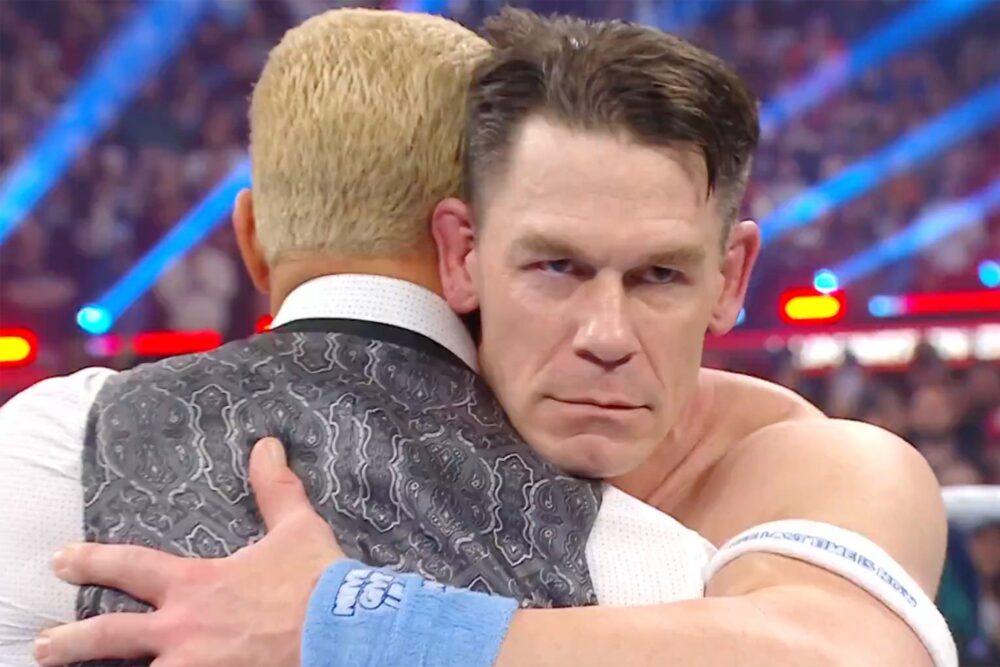 oh heck
Heading into WrestleMania, a call was made to turn take the longtime babyface Cena, and turn him heel against current company mega star Cody Rhodes in an angle that involved Dwayne “The Rock” Johnson and rapper Travis Scott. The turn itself set the world on fire with all kinds of outlets reporting on the surprising turn of events. One moment, Cena was celebrating a moment with Rhodes, and the next, he was participating in a coup of sorts at The Rock’s behest. Travis Scott got in on the action, as the three laid Cody out and left audiences stunned.
At the time, folks were excited. This was something that wrestling fans had been waiting for. Many had booed the man in his role as a hero because he seemed to overpower logic and storytelling at all turns, and it frustrated them. Despite the fact that Cena was quantifiably the industry’s biggest draw and merch seller for years, folks felt that the character never gave enough to the bad guys he faced. He just kept overcoming the odds, and making supposed threats look weak – leading to a lack of believable new stars. Now, finally, Cena would be the villain folks always wanted him to be. It should have been glorious.
Unfortunately, it collapsed almost immediately.
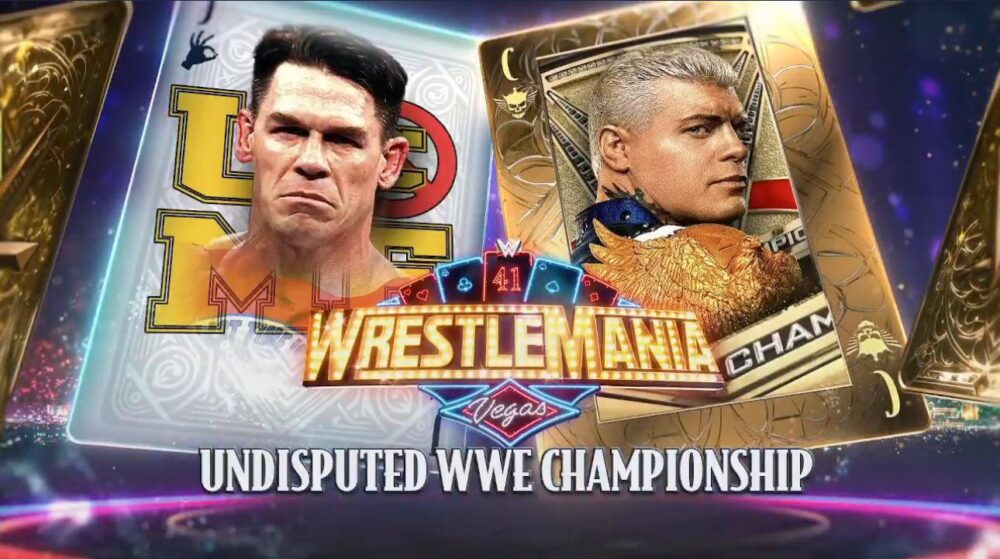 Look at that sweet grumpy boy
Cena’s turn to the dark side required a reason. Leading up to this moment, The Rock had been pushing Cody Rhodes to become “his champion” – to be his face and puppet for the corporation instead of working for the fans. Cody’s rejection of this triggered Cena’s surprising turn. Everyone began wondering why Cena would do such a thing, and what The Rock (and Travis Scott) had to do with it all.
Shortly after this, outside of the narrative, The Rock had decided that his part of the storyline was done. In an interview he stated that once the turn happened he decided to step away entirely from the situation and let the storyline play out on its own. This isn’t something that is typically met with open arms in the wrestling world. When you set something in motion, the expectation is for there to be a follow up. There was never an explaination as to why Cena really sided with The Rock, or why Travis Scott was a part of the plan. Scott came out to help Cena win against Cody Rhodes at WrestleMania, and then was never seen or mentioned again. This wasn’t apparently the plan as Scott was supposedly training to wrestle later in the year, but dropped out of the commitment entirely after a bit of training.
In terms of the wrestling narrative, John Cena had become a bad guy seemingly with the partnership and direction of two other folks. In short order, fans were told that those elements were nothing really, and that Cena was bad now because he just felt like it. All the questions the turn had dug up came with answers that amount to nothing, and it immediately eroded the goodwill in the situation.
Cena struggled to be a heel through to August, putting on some fine matches, but nothing like you’d want to see during a grand farewell. With The Rock and Travis Scott firmly somewhere in the distance, a call was made to have Cena abandon the pretence of being a bad guy. He apologized to the crowd and overnight, because a good guy again, just in time to revisit his rivalry with Cody Rhodes for Summerslam.
Cena had won at WrestleMania as a bad guy in a match that most regard as one of the lesser main events in ‘Mania history. At Summerslam, he lost in what was considered one of Cena’s best matches to date. In defeat, the crowd was finally behind Cena – not just in storyline, but in real life. The folks who booed him for a myriad of perceived reasons got on board. There wasn’t much time left, and the man seemed to be giving his all.
This would remain the case through to the end of the year.
After that loss, Cena didn’t have very many dates left that he could appear – so matches started happening with little to no “build”. It didn’t seem to matter though. While the company had tried their best to make the “bad guy” Cena really work, the circumstances around it didn’t click. Reality pushed them in a different direction, and when they finally accepted that new direction, things just seemed to line up. Everyone started buying in as each date of Cena’s tour was crossed off.
He had a classic match with AJ Styles where both men pulled out a myriad of moves from many of their past rivals. It was like watching fond memories take the form of a wrestling match, both thanking the people who made them who they became while showing the world who they were.
He had a couple of matches against Dominik Mysterio for the one championship he had yet to hold – in short order winning, and then losing in a couple of great showings. And then, came this past weekend.
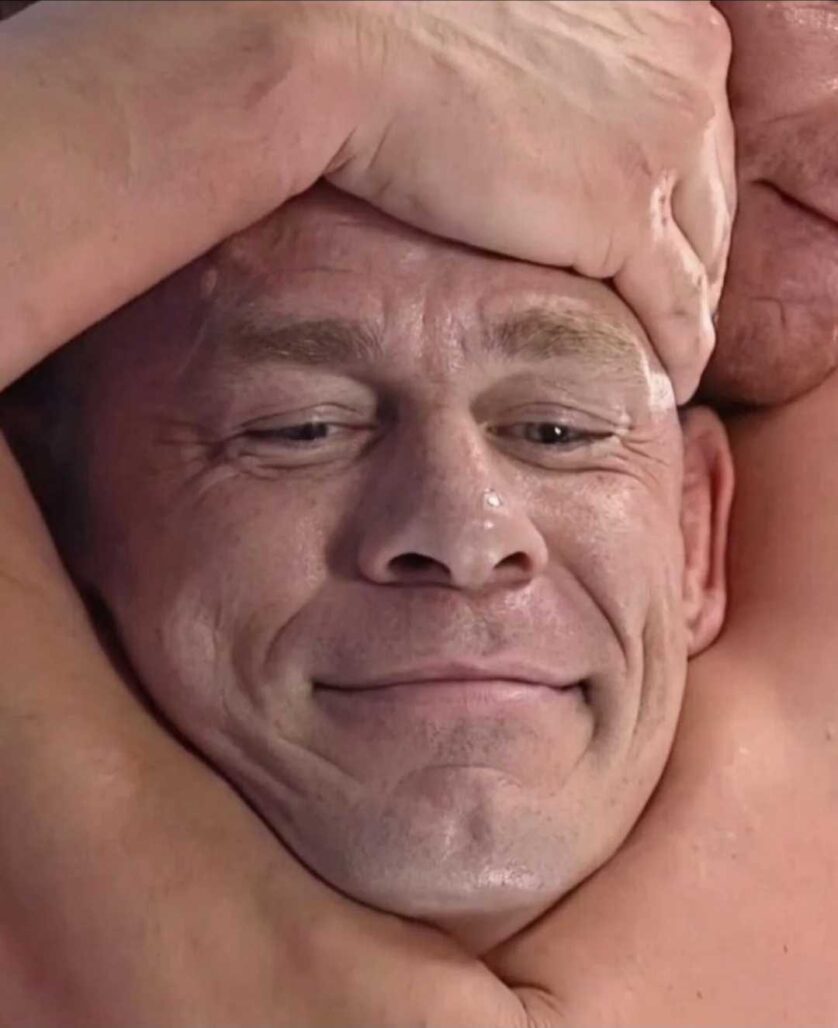 hello darkness my old friend
Part of what made Cena who he was as a wrestler, for good or for ill, were the beats he could play in his sleep. The catchphrases, the promos, the specific move set… the whole presentation. They were notes of a familiar song that were played largely unbroken. One of those notes was the idea of “never giving up”. That was a big thing for this iteration of Cena, and as such, that character had never given up in a match once that character piece was locked in place – meaning no tap outs to submissions, no losses in “last man standing” matches, and no titualr words uttered in an “I Quit” match.
So in his final match, when his opponent Gunter locked in a third sleeper hold on Cena, the crowd was shocked and enraged when Cena’s face melted into blissful smile, and he tapped out, signalling a surrender.
This was the culmination of a year’s worth of goodbyes? This was the end of a career built on always overcoming the odds? This was how Cena was going to say good-bye?
This was not the narrative people wanted – after all, if wrestling isn’t real, then why can’t we just have the happy ending? Why can’t we get what we want and move along?
This is where reality rears its ugly head again.
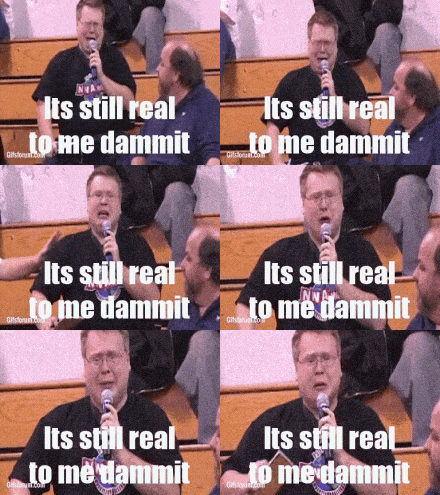
Comics aren’t real. Wrestling isn’t real. Yet they both need to deal with aspects of reality.
In comics, it is the fact that we will never get a satisfying ending for so many of the characters that we know and love. The stories and characters might not be real, but their purpose in the world is concrete. They exist as ideas that in some cases, will outlast us all, changing and evolving, but never ending. Spider-Man doesn’t get to go to sleep, because the idea is required to breathe. He doesn’t get to settle. He doesn’t get to be happy – he just gets to be, and because of that, we’ll never get closure.
Wrestling deals with this same reality, but in a different way. The wrestlers as we see them on TV are also ideas – grand performers playing up caricature and filling roles. These ideas feed us grand narratives of good vs. evil, but in the end, these ideas must be finite. Comics bleed from ink – wrestling bleeds from flesh, and eventually, the flesh gives away. The real people behind the ideas have to go home, on their own terms or otherwise.
So while comics leave us frustrated because we often don’t get closure, wrestling leaves us frustrated because we often arrive at an ending. Sometimes that ending suits a narrative, but more often than not, it doesn’t.
This past weekend, we encountered the end of the idea of John Cena – of the man who never gave up, who touted “hustle, loyalty, and respect”, and gave his all for decades. The real person giving his body to the role and the business knew that the jorts wouldn’t fit forever, and that it was time to end his run – which means putting an end to the idea.
John Cena the person goes out because time comes for us all. John Cena the wrestler goes out by letting someone kill the idea – bringing the character to an end. Cena smiles, squeezed to death in a mountain of meat – the idea coming to an end as folks lament the passing.
Of course there’s anger. As much as we want closure, we want the ideas we grew up with to stay with us – even if we grew frustrated with them over time. That’s why when Superman died, the world mourned. This is how folks are feeling about John Cena. This is why they’re combing over the end of the match – how it should have gone, how it could have been better. It’s mourning, and bargaining.
In the end, like with all wrestlers, the idea has to die – but just like in comics, the business never stops. So when the idea dies, the wrestler behind it usually tries to make sure there is something left from the idea to build for tomorrow.
This is what happened this past weekend. An idea died, and the wrestling world mourned. The crowd rebelled, the internet spawned millions of thought pieces (including this one!) and it all provided fuel for tomorrow.
This is the legacy of John Cena. Tapping out blissfully and letting the anger or grief fuel what is to come.
What a way to die.
Thank you, Cena.
 English (US)