
.jpg) 1 hour ago
3
1 hour ago
3
President Donald Trump’s decisions are causing fallout in some of the world’s key property markets, and investors should navigate wisely.
Under Donald Trump’s presidency, the global property market is experiencing a wave of shocks. LUXUO investigates how his growing list of real estate controversies — which include a USD 400 million White House ballroom, a 250-foot triumphal arch and an escalating war with Iran — is reshaping investor confidence and capital flows, which in turn affects where the world’s wealthy choose to live. Critics call the ballroom a “vanity project” funded by taxpayers. Veterans are suing to stop the arch. In Dubai, Iranian missiles have emptied malls and collapsed luxury home sales. The forces destabilising real estate are the same forces building new monuments in Washington. Power reshapes property in two ways: through marble and missiles. The question for global investors is not where prices are heading, but what they are buying protection from.
The Washington Prelude: Private Celebrations at Public Costs
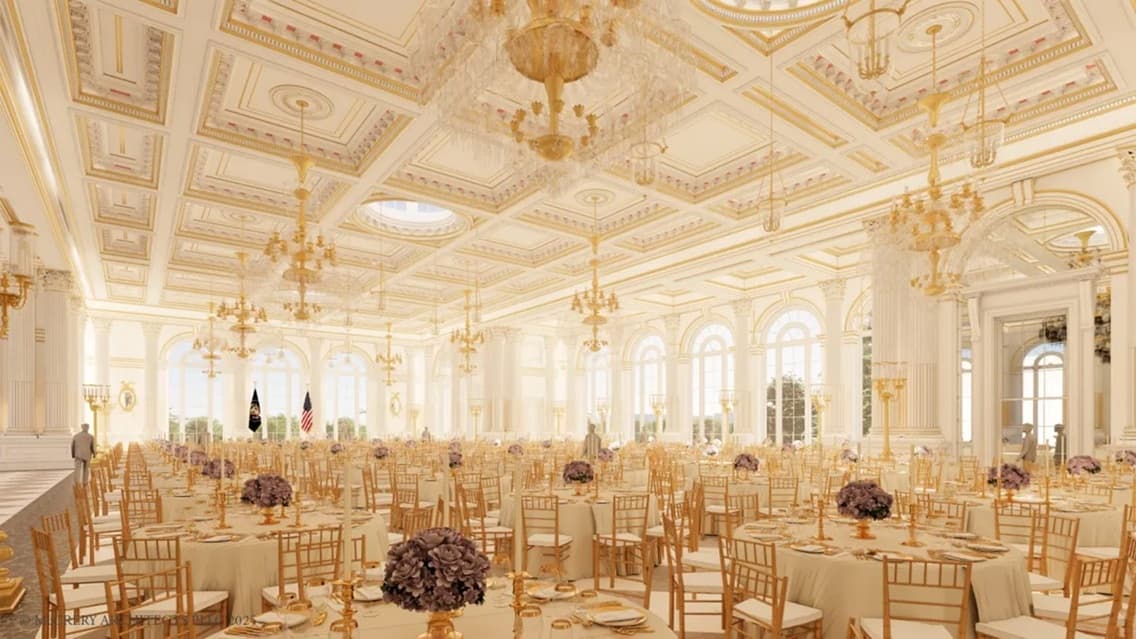 Rendering of the supposed White House ballroom. Image: McCrevy Architects.
In July 2025, President Trump announced plans for a 90,000-square-foot ballroom in the White House’s East Wing, a project estimated to cost USD 400 million — double the initial projection. Trump has repeatedly insisted that construction would be funded entirely by private donors. “No governor dollars,” he said. The East Wing was demolished in October 2025, before final approvals were secured. A federal judge temporarily blocked construction, but an appeals court allowed work to resume while legal challenges continue. The National Trust for Historic Preservation has sued, arguing that Congress must authorise the project.
Then came the twist. In May 2026, Senate Republicans inserted a USD 1 billion secret service funding request into an immigration enforcement bill, with up to 220 million designated for security upgrades tied to the ballroom. The bill explicitly states that none of the funds can be used on “non-security elements” of the project. But the legal problem is this that the Secret Service is prohibited from using private funds for security purposes.
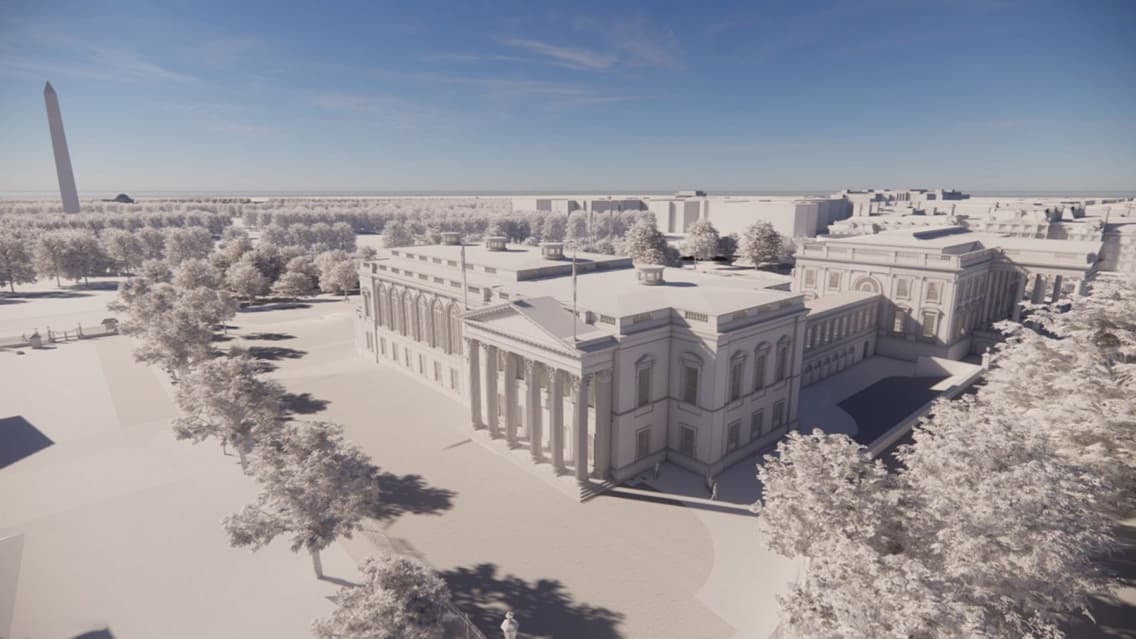 Aerial rendering of the supposed White House upgrade. Image: McCrevy Architects.
Homeland Security Secretary Markwayne Mullin told Republican lawmakers that Congress must fund the security aspects for precisely this reason. When asked about the legal justification as he left the meeting, Mullin declined to answer. “I gotta go,” he said. Senate Minority Leader Chuck Schumer called it a “ballroom blitz”. “Republicans looked at families drowning in bills and decided what they really needed was more raids and a Trump ballroom,” he wrote.
Meanwhile, the administration is also pursuing a 250-foot “Triumphal Arch” near Arlington National Cemetery — 86 feet taller than Paris’s Arc de Triomphe. The National Endowment for the Humanities has set aside USD 15 million. Vietnam War veterans are suing to stop construction, arguing that the arch would obstruct the historic sightline between the Lincoln Memorial and Arlington House.
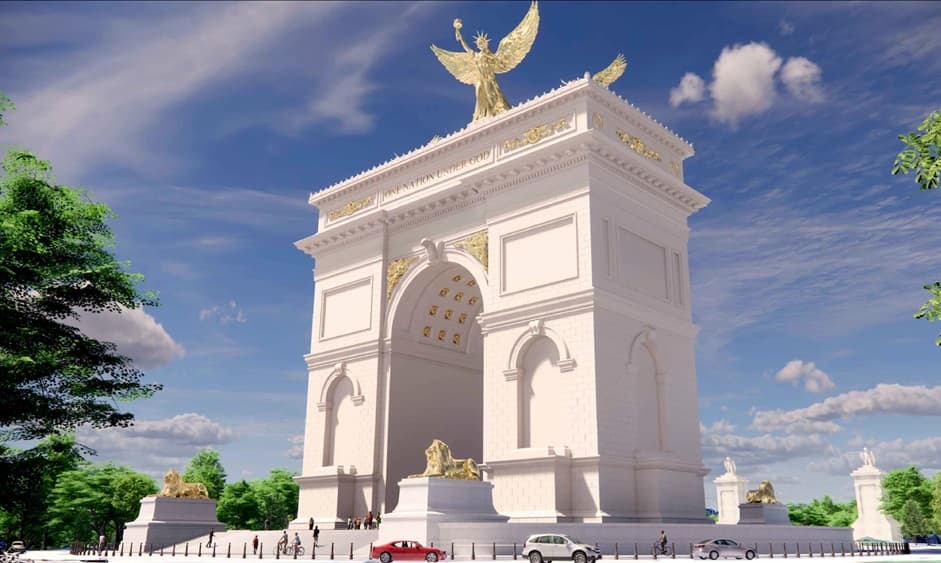 Rendering of “Triumphal Arch” near Arlington National Cemetery. Image: Harrison Design.
“If you’re standing at the cemetery honouring somebody who died fighting for our country, your view of the Lincoln Memorial would be blocked by this vanity arch,” said Susan Douglas of Third Act DMV.
Trump’s response: “The only thing they have is history”. The US Commission of Fine Arts voted to advance the arch project in April 2026, though revisions are pending. These projects are statements of power. To global capital, they signal: America is building. But to the ultra-wealthy in the Gulf, another signal has arrived: instability is about to get worse.
The Shock: Iran War Reshapes the Map
On 28 February 2026, the United States and Israel launched coordinated airstrikes on Iran, killing Supreme Leader Ayatollah Ali Khamenei. Iran retaliated with missile and drone attacks across the Gulf. Crucially, Iran closed the Strait of Hormuz, through which roughly a quarter of global seaborne oil passes. Oil prices climbed above USD 110 per barrel. The International Energy Agency described it as “the largest supply disruption in oil market history”.
For real estate, the transmission mechanism is brutal. Higher oil prices push up inflation. Central banks delay rate cuts. Borrowing becomes more expensive. Construction costs rise because steel, cement and aluminium are energy-intensive to produce. LaSalle Investment Management notes that a prolonged disruption could push oil prices to USD 90-100 per barrel, raising inflation and depressing growth.
Dubai: From Boom to Bust in 60 Days
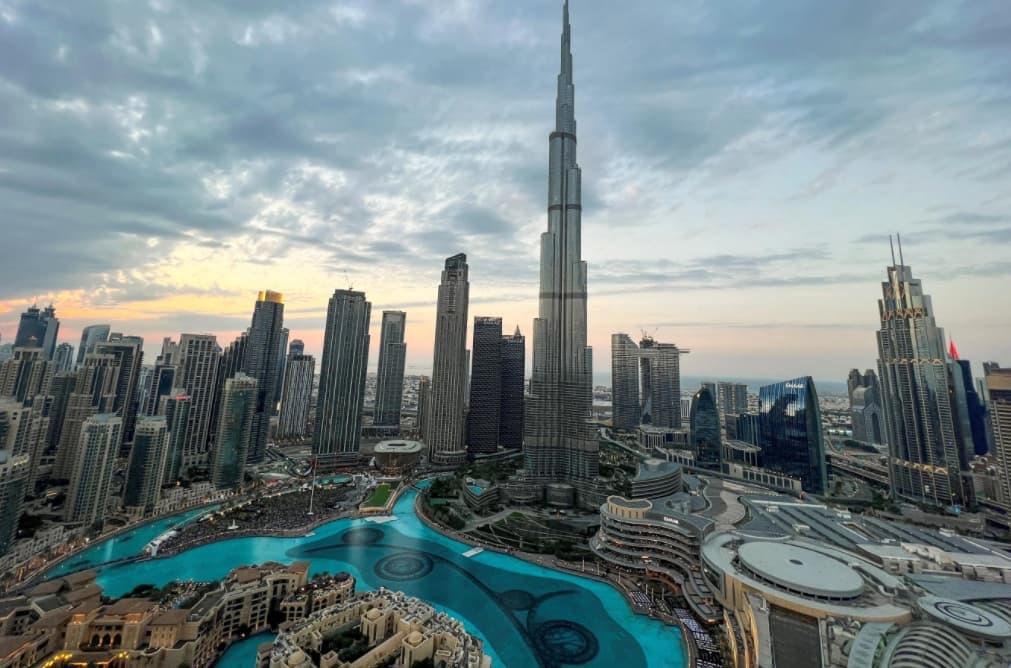 Dubai city skyline. Image: The Business Times.
Before the war, Dubai’s property market was on the rise. Knight Frank ranked it as the world’s second-best-performing luxury home market in 2025, with 25.1 percent price appreciation. The city recorded 500 sales above US 10 million, the most of any market globally. Savills confirmed Dubai’s appearance in its top-performing cities for 2025, alongside Tokyo, Seoul and Amsterdam.
Then came the missiles. The UAE FTSE EPRA Nareit (Financial Times Stock Exchange European Public Real Estate Association National Association of Real Estate Investment Trusts) index dropped 21 percent. Dubai’s malls grew quiet while airspace closures halted flights. Top hotels in Dubai and Riyadh reported booking cancellations of up to 40 percent, even though Ramadan traditionally accounts for more than 25 percent of annual business. The World Travel and Tourism Council estimates that the region is losing up to USD 600 million per day in international visitor spending.
Luxury retail collapsed as a leading indicator. Richemont — owner of Cartier and Van Cleef & Arpels — saw shares drop more than 5 percent. Hermes slumped 13 percent after warning of sharply weaker sales. Porsche and Audi showroom traffic dropped by 50 percent.
“Wartime psychology suppresses conspicuous consumption even among those who can afford it,” one analyst observed. The Dubai that agents celebrated in January became, by March, a cautionary tale. Luxury property’s greatest strength — its reliance on global confidence — became its greatest vulnerability.
Jenny From the 60 Million-Dollar Block
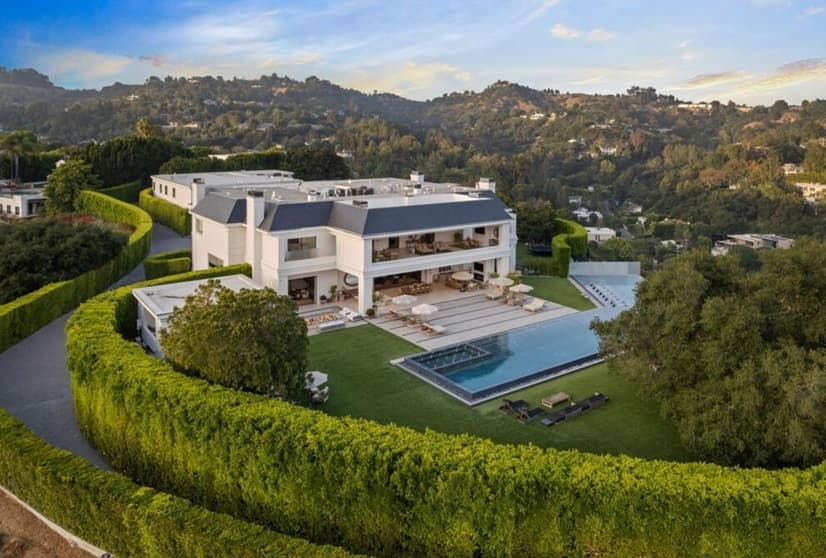 The “Bennifer” home was owned by Jennifer Lopez and Ben Affleck. Image: Stuff.co.nz.
Even before the war, cracks were appearing in the apex of the US luxury property market. One of the most telling examples sits in Beverly Hills: the 12-bedroom, 24-bathroom Wallingford estate that once served as the marital home of Jennifer Lopez and Ben Affleck. Dubbed “Bennifer”, the former Hollywood power couple purchased the sprawling compound in May 2023 for USD 60.85 million. By July 2024, the mansion was discreetly shown to select buyers through private channels before being publicly listed at US 68 million.
One month later, Lopez filed for divorce. After months on the market and several price cuts, the property reappeared in September 2025 with a reduced USD 52 million guide. It was subsequently pulled from sale in January 2026. Today, the property has returned to the market with an eye−watering discount: USD 49.95 million — a price almost USD 18 million below what the former couple originally hoped for.
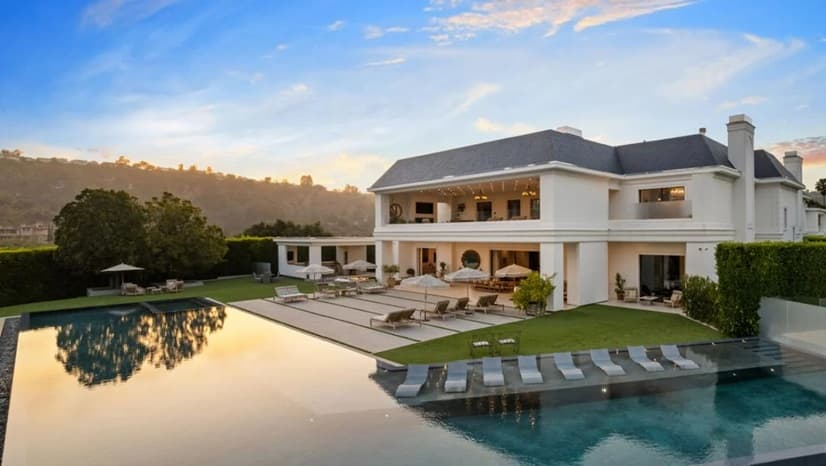 The sprawling home offers a large swimming pool and manicured gardens. Image: Stuff.co.nz.
“While they’ve been hoping to sell the property, they’ve also been hesitant to take a big loss,” an unnamed source told People magazine. “They lowered the price to get more interest, and when this didn’t happen, they were advised to take it off the market. It was a business decision that they made together.”
The latest listing comes just weeks after court documents revealed Affleck had transferred his share of the property to Lopez at no charge as part of their divorce settlement. Lopez has since moved into a USD 17.5 million home in Hidden Hills. Affleck reportedly purchased a USD 20.5 million “bachelor pad” in Pacific Palisades.
The failed sale is not an isolated celebrity drama; it is a fallout. When a trophy asset in one of America’s most stable luxury markets cannot find a buyer after three listing attempts and a USD 18 million price cut, the message is clear: even the wealthiest are hesitating. The uncertainty radiating from Washington has made every high-net-worth buyer pause. That uncertainty includes the funding fights over the White House ballroom, the installation of missile-resistant columns and the shifting geopolitical posture of the Trump administration.
London: The Reluctant Beneficiary
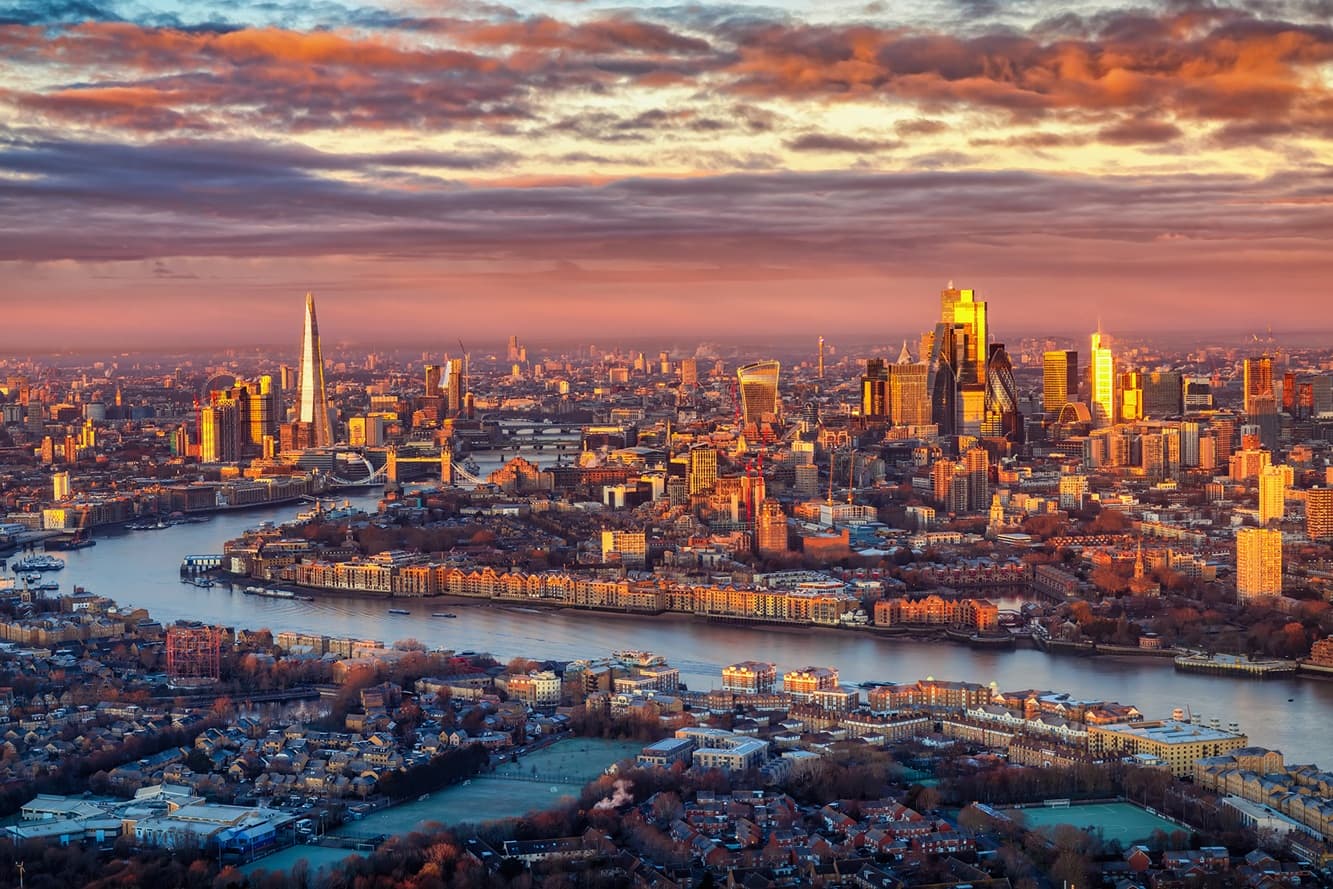 London is witnessing an influx of Middle Eastern clients wishing to stay in London because of the war in Iran. Image: Wink Worth.
Dubai’s loss appears to be London’s gain. Sam Edington — director of property finders Edingtons — observed a “marked uptick” in calls from Middle Eastern buyers and UK nationals based in the region. One family relocated to Dubai “a few years ago” but now has “a growing focus on long-term stability”.
Joanna Cocking of Hamptons International offered a cautionary note: “I’ve got clients who asked me to sell their house last year. When we gently touched base with them about a week ago, they said, “We’ve returned, and we’re now living back in the house.”
The most telling anecdote comes from Peter Ferrigno, global tax director at Henley & Partners: “I have a client who was in Dubai looking at properties. He had just gotten his wife to agree to move there. And then about five minutes later, there was this loud crashing noise.” It was an Iranian missile. The couple are staying in the UK.
Becky Fatemi — executive partner at the United Kingdom Sotheby’s International Realty — cautioned against regarding this as a long-term trend. London agents usually experience a spike in Middle Eastern inquiries around this time of year, “because it’s so hot” in the Gulf. That annual spike, Fatemi noted, has arrived “two or three weeks earlier than usual” this year, driven by the war, but not yet proof of a permanent shift. Joanna Cocking’s quote captures the awkwardness: “We’re all walking around trying not to look too gleeful.”
Savills data confirms the caution. Preliminary UK Q1 2026 investment turnover data totalled GBP 9.8 billion (approx. USD 13.99 billion), 41 percent below the five-year average for the first quarter. Geopolitical uncertainty has slowed investment activity, prompting investors to pause for thought.
However, prime rents tell a different story. In Central London, average prime rents rose by 7 percent in the city and 6 percent in the West End in 2025. Savills projects average prime rental growth of 6 percent per annum across major UK office markets over the next three years. This growth is driven by constrained supply rather than rising demand, a crucial distinction that insulates projections from broader macroeconomic uncertainty.
The Bigger Picture: A Permanent Repricing
The GRI Institute convened an emergency virtual roundtable in April 2026 with over 100 senior leaders from across the Gulf, Europe, the Americas and the Asia Pacific. The conclusion was sobering: sovereign geopolitical risk is no longer an episodic anomaly but a permanent structural factor driving “stag-flationary” (i.e. stagnating economic growth and inflation combined) supply shocks.
The United States has re-emerged as a traditional haven, drawing capital flows back toward the dollar and American assets. The US is energy-independent and geographically distant from the conflict. LaSalle Investment Management notes that the US may be less vulnerable to an oil price shock than Europe or much of Asia.
Europe and the UK are facing significant macroeconomic downgrades due to heavy reliance on imported oil and gas. Germany’s real estate market has seen substantial declines. In the Asia Pacific region, Singapore is positioned as a modest winner, capitalising on regional instability in Hong Kong. Its status as a haven of stability makes it an attractive alternative for capital seeking refuge from the Middle East.
Observe The Weathervane
Trump’s ballroom and his triumphal arch are designed to project American strength, but the irony is inescapable. Even as the administration builds, the instability that follows the Iran conflict is scattering global capital. The ultra-wealthy read the same headlines and the evidence is everywhere: a missile silences a shopping mall in Dubai, a funding fight delays a ballroom in Washington and a 21-percent index drop erases months of hard-won gains. These are not separate stories, but the same story told at different scales. Luxury real estate is not a safe harbour; it is a weathervane that spins with every missile, every tweet and every marble column. The White House ballroom will seat 1,000 guests, but the real question is whether anyone will still want to dance.
For more on the latest in real estate and property reads, click here.
 English (US)