We may earn revenue from the products available on this page and participate in affiliate programs. Learn More ›
The size of tiles have been growing over the past decade or so into what’s called large-format tiles (LFT). While it was originally only used in high-end homes, LFT has grown in popularity with its ability to create clean visual lines, reduce a cluttered look, provide a sophisticated aesthetic, and help a room appear larger and more open. But working with LFT isn’t the same as traditional smaller tiles, so we spoke to two tile experts to learn what they think are the most important considerations when choosing LFT for an interior home project. Keep reading to find out what they said.

What size is considered large-format?
Any tile with an edge that’s at least 15 inches long is considered a large format tile (LFT). Common sizes include 24×24 inches, 24×48 inches, and 32×32 inches. Enormous thin porcelain panels can reach 5×10 feet in size.
Large tiles only work well in certain areas of the home.
Large tile is a beautiful way to create a calm, seamless look, as fewer grout lines mean less visual clutter and easier cleaning, says Lindsay Fluckiger, designer relations and partnerships manager at Tile Club in California. “It’s wonderful in open floor plans, kitchens, entryways, living areas, shower walls, fireplace surrounds, and feature walls,” she explains. “And contrary to popular belief, it can make a small bathroom feel bigger, especially in a light, soft neutral.” She also recommends using large slabs to create a statement wall.
However, Mike Belk, owner and founder of BELK Tile in Columbus, Ohio, says that large tiles work best in large rooms. “Large tiles are great for installing on the living room floor, foyer floor, and even bathroom shower walls,” he says. “These tiles are amazing because of the few grout lines that make them appear as one big piece and thus give an impression of the increased size of the room.”
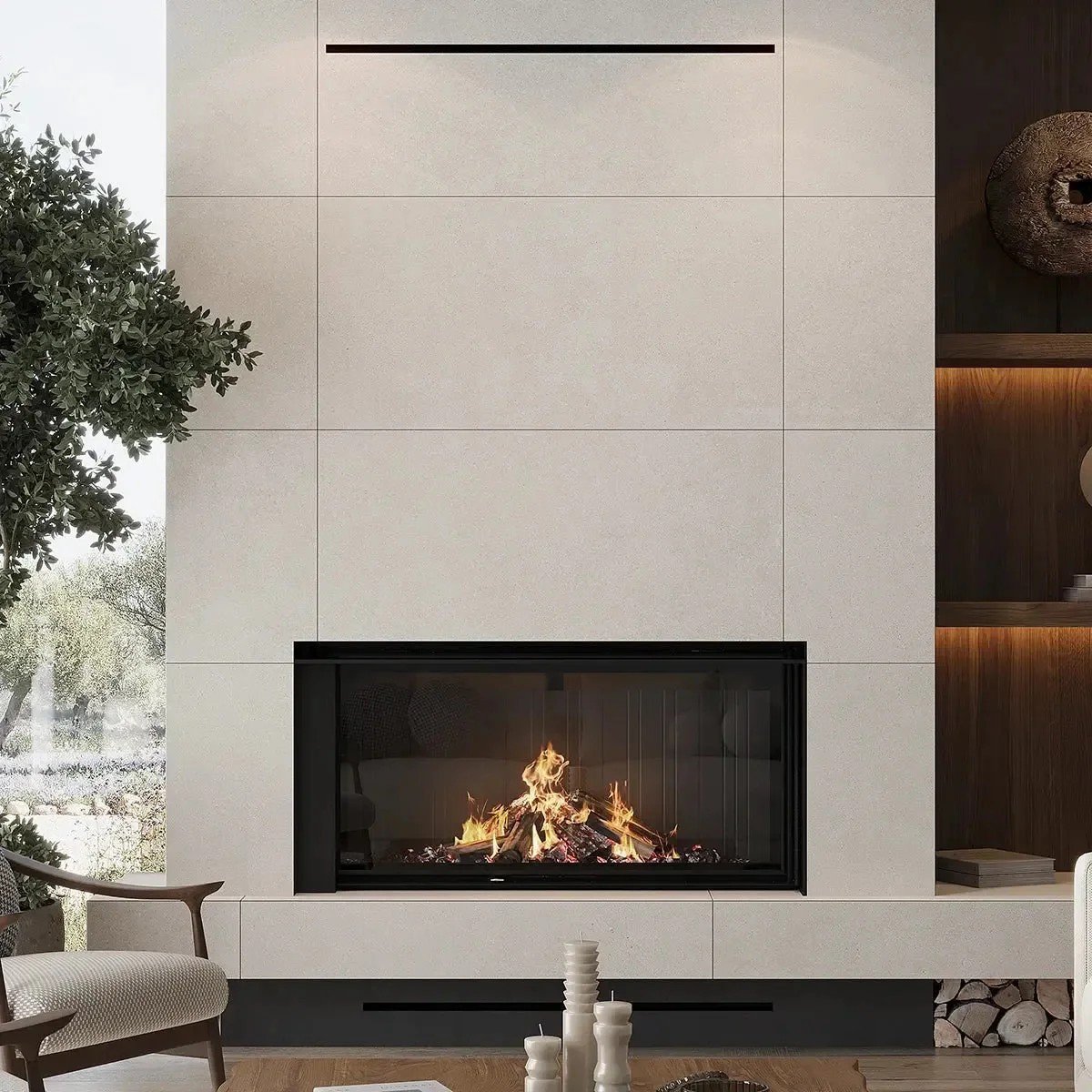 Photo: tileclub.com
 Installing large-format tiles requires special considerations.
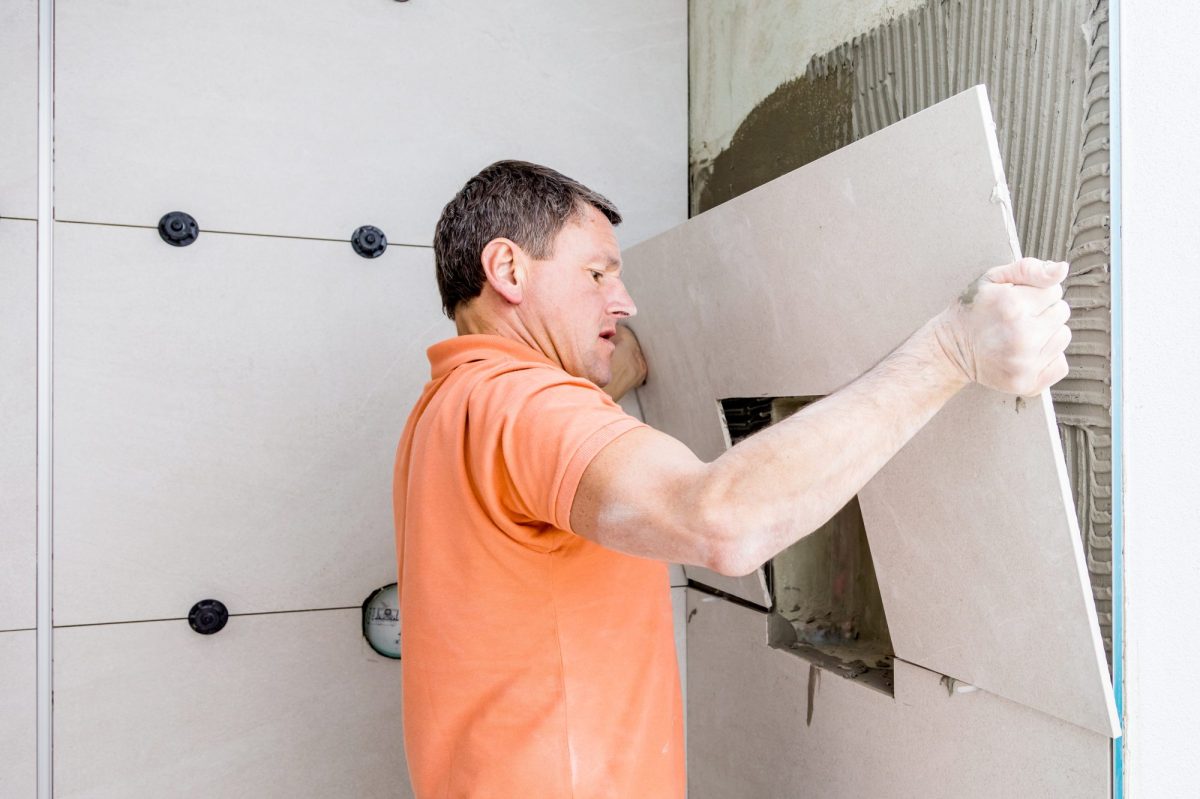
Installing large tile requires a certain level of knowledge and skill, so hiring a pro is probably the best approach. Installation is when most of the work either succeeds or fails, according to Belk. “It would be difficult for you to lay the tiles without a specialized medium bed mortar because standard mortar cannot be used with large slabs,” he explains. “In addition, back butting should be done to cover 95 percent of the floor with the tile.”
Most importantly, the sub-floor should be absolutely flat; any little bump in your concrete will result in large tile lipping or cracking, he notes. Also, avoid using large tiles on small, steeply sloped, or very irregular surfaces, warns Belk. “For example, one of the mistakes made by most people is laying 24×24 tiles in small shower pans, but because the floors of showers have to slope at an angle of four ways towards the drainage, a stiff large tile will tend to tent, develop dangerous edges, and never stay flat,” Belk explains.
Best Lifter for Large Tile
Photo: DeWaltLarge tile projects cost more overall due to higher installation costs.
While larger tiles aren’t necessarily pricier, expect to budget more to cover the additional costs related to installation, says Fluckiger. “A mass-produced 24×48 porcelain tile can easily cost less per square foot than a premium 3×12 ceramic, a handmade tile, or a marble mosaic,” notes Fluckiger. Initial cost is affected by the manufacturing process, materials, finishes, and extra handling, packaging, and shipping that larger formats require.
“The bigger difference shows up at installation: more prep to get the surface flat, specialty mortar, leveling systems, careful handling, and more waste from cuts, so labor typically runs a few dollars more per square foot.” Although some of that cost is offset by less grout and fewer pieces to set, you should still plan for a slightly higher installed price.
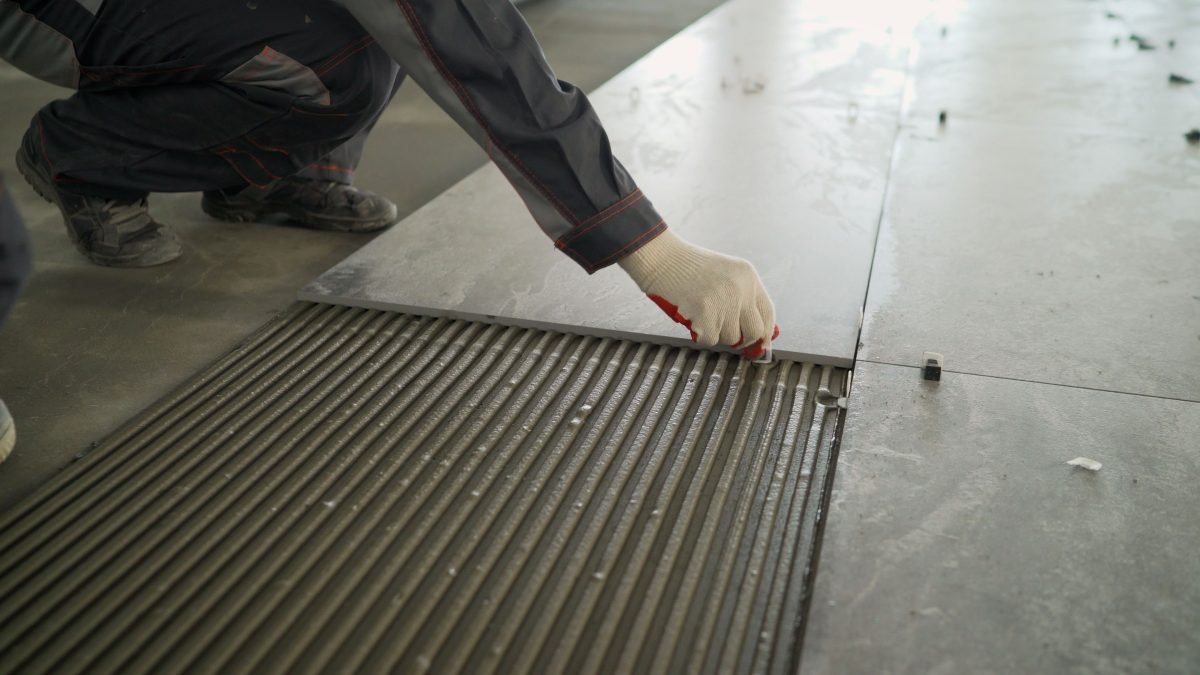 Photo: Sidorov_Ruslan via Shutterstock
 Stick to certain colors when decorating with large tiles.
Because larger formats make the chosen color stand out even more, both Belk and Fluckiger recommend choosing tiles in soft neutrals, warm grays, or delicate stone-look whites. “They will make the space appear bigger and give the room some breathing space,” notes Belk. “Large tiles also bounce light around and keep big surfaces feeling open,” adds Fluckiger.
On the other hand, dark colors are problematic because they will show the slightest footprint, and dust will be visible on such surfaces under the sunlight, says Belk.
Avoid busy patterns when using large tiles.
While it may be appealing to design tile in a checkerboard or other pattern in some spaces like an entry or kitchen, it should never be done with giant-sized tiles. “It is a very bad idea to try to make a strong black-and-white checkerboard pattern using giant-sized 24-inch tiles,” warns Belk.
“You will definitely end up with an ugly design that is too much for the room and overwhelming for your furniture.” If you need to use geometrical designs in a large format, use more subtle tonal changes or veining patterns.
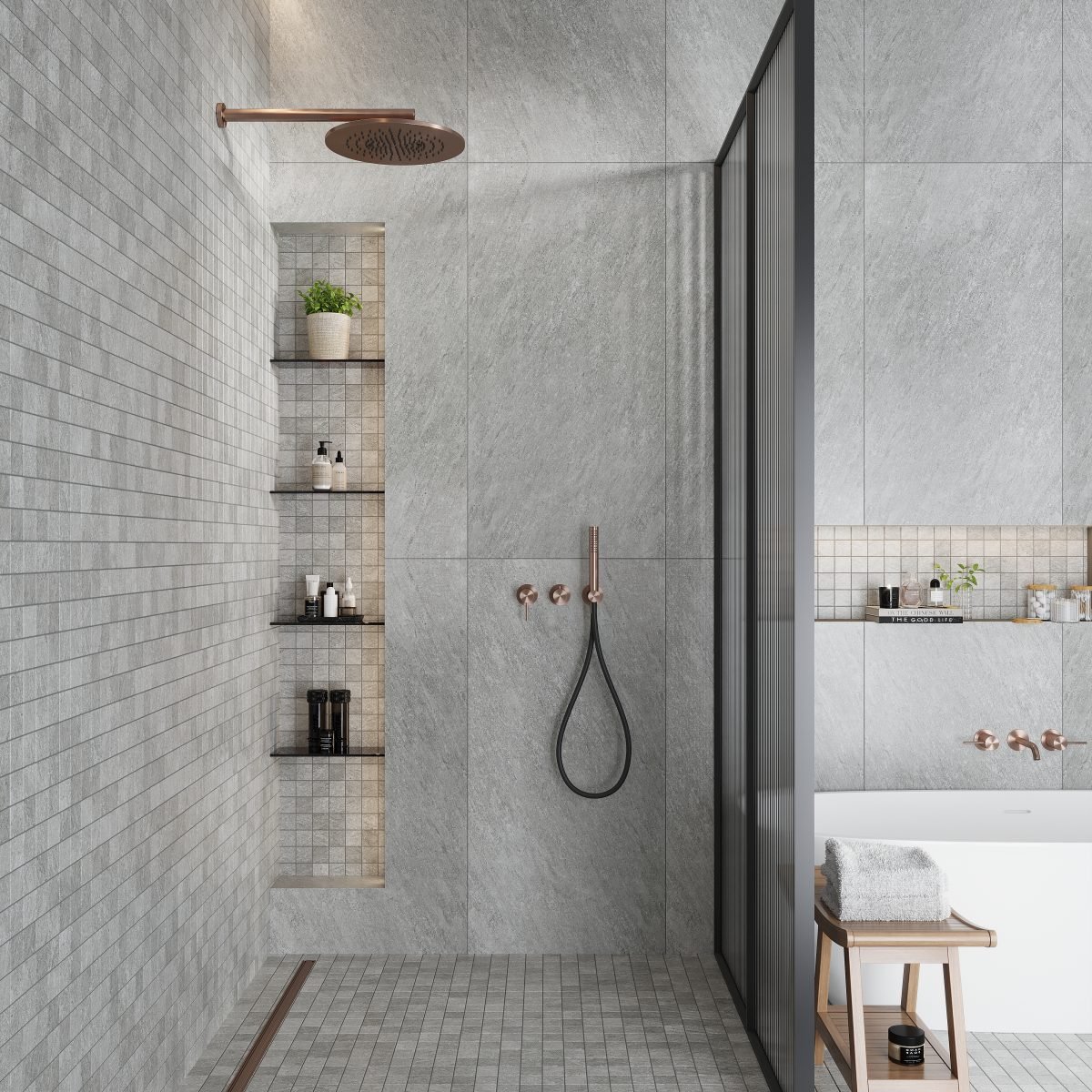 Photo: tileclub.com
 Mixing small and large tiles is up to you.
Our tile experts shared very different views when asked about mixing large-scale tiles in with smaller accent-sized tiles. Fluckiger loves the contrast. “Let the large tile be the calm backdrop, and then add one moment of smaller-scale interest like a mosaic shower floor, a niche, a backsplash strip, or a border.” She just recommends staying in the same color family to keep everything cohesive.
On the other hand, Belk prefers simplicity in tile design. “It doesn’t look well to mix small, intricate mosaic tiles within the large, sleek field tiles since they just clutter the flow and take away the minimalist quality you were looking for,” he explains. “If you still want to add accent tiles, you can always try using them in a different defined area, such as in a shower recess niche.”

Meet the 2026 Tools of the Year
After months of scouring the market and putting products through their paces, we’ve named the best of the best in new tools. There’s something for everyone, from veteran pros to average Joes.