
Published Oct 29, 2026, 4:00 PM EDT
Literally and metaphorically
 Image: Square Enix/Lancarse via Polygon
I had few expectations going into Final Fantasy Resonance, the premium game based on Square Enix's mobile gacha Brave Exvius. Those expectations lowered in the first 10 hours, thanks to its frankly atrocious writing. But after clearing most of the story and approaching the endgame, I find I've changed stances entirely. Resonance is everything Final Fantasy has struggled to achieve over the better part of two decades — confident, innovative, engaging, and, most importantly, completely and unashamedly itself. It's the blueprint Square Enix needs to follow for the series' future.
Whatever Resonance's faults, and there are many, it's a Final Fantasy game that cares little for anything outside itself. It's not struggling with some existential crisis about what a Final Fantasy game needs to be, or how to make it “relevant” for modern audiences. There's no craven devotion to the past or some vaguely formed notion of legacy. It's arguably even less concerned with legacy than Bravely Default, which, despite some clever uses of classic Final Fantasy, still relies heavily on the series' bygone era.
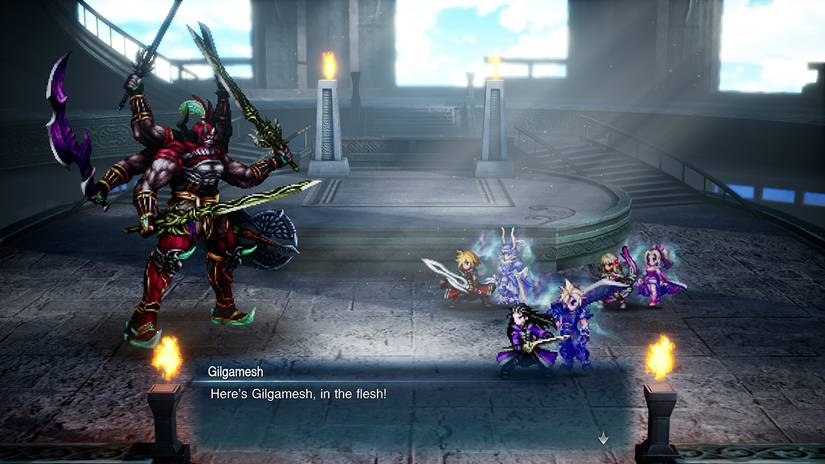 A look at the forthcoming Final Fantasy Resonance, due out in October.Image: Square Enix
Okay, there's some craven devotion to the past in Resonance, like when it throws out "spoony bard" or other painfully on-the-nose references. But once it settles into its groove after the mid-game, Resonance is just itself, for better and worse. Multiple planets? Witches turning into chocobos? Zombies, magic, and science coexisting without anyone batting an eye? Sure, why not. Anything goes, and Resonance is confident enough in its own logic to tie everything together so it feels natural instead of discordant.
If you're wondering why that kind of confidence matters, think about the past 15 years of mainline Final Fantasy. It's a period characterized by uncertainty and self-doubt. For Final Fantasy 13, Square Enix prioritized prestige over all else and delivered one of the loosest stories in the series that took two (equally loose) sequels to sort out. Then they sacrificed Final Fantasy 15 to the transmedia gods, splitting it into multiple parts distributed across books, movies, an anime series, and games, because that's What Media Did at the time. It capitulated to open-world trends without really needing to, as well. Yes, driving around a big world really underscores the bromance road trip feel of it all. But there's so much empty space and not a lot to do, so I always feel like the game is actively trying to make me not enjoy it. Final Fantasy 16 suffered the most from this approach, with its seemingly mandated 30-hour length, Sony-style action, and obligatory dark fantasy inclusions like swearing and nudity — all characteristic of modern gaming, but not Final Fantasy. Square Enix squandered opportunities by worrying too much about making its flagship series modern and appealing, when it didn't need to tick any boxes. It just needed to be itself.
Resonance is proof that you don't need over-the-shoulder action or unnecessary tweaks to battle systems to keep Final Fantasy relevant. Resonance's handful of changes to the series' classic job system — new combat roles, different spells, and a focus on team builds over individual ones — are enough to completely refresh it. The world map introduces an element of non-linearity without bogging down the experience. Later side quests expand on character development and subplots without requiring dozens of hours of animation, modeling, and voice work — or a full sequel — to explain itself. It's the most modern Final Fantasy's felt since FF12.
In fairness to Square Enix, it's hard to imagine a scenario where Final Fantasy's trajectory could've taken any other route. Back in 2015, there's no chance it, or any publisher, could've justified selling a game that looked like Final Fantasy Resonance at a premium price. The race toward photorealism and bigness as a mark of quality had yet to lead the games industry off the profitability cliff at that point. Indie games were yet to break through the way they have now. And the general consensus among consumers and the media held that turn-based games were just outdated. Asking people to by $50 for a 2D, turn-based game would have been a terrible idea.
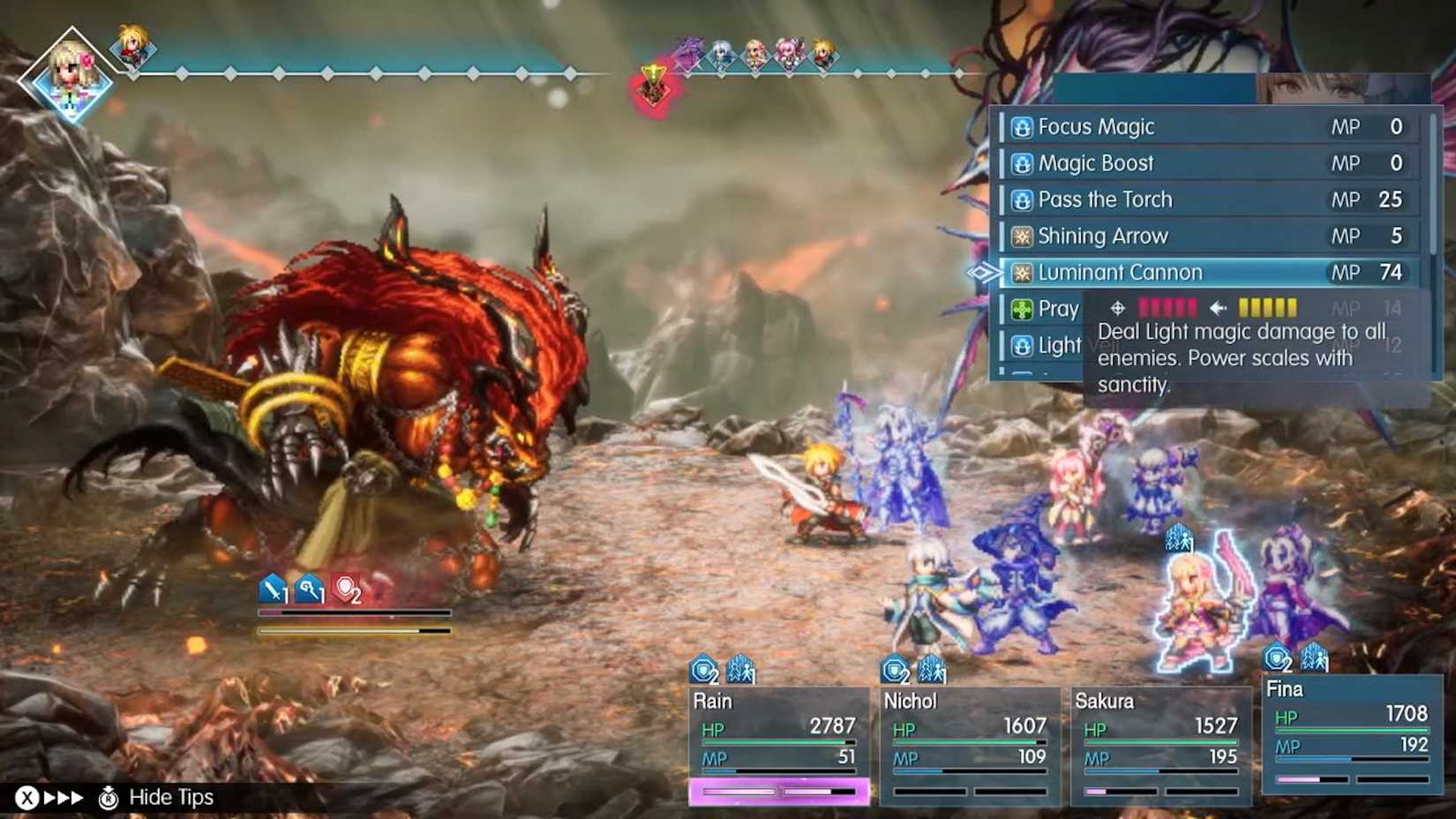 Image: Square Enix/Lancarse via Polygon
A lot's changed since then. Publishers learned the hard way that spending hundreds of millions on a game doesn't mean you get hundreds of millions back in revenue. Consumers learned that games can still be enjoyable even if they don't look like movies. Nostalgia likely deserves some credit for the latter revelation. People yearned for "classic" RPGs, and Square Enix delivered with Octopath Traveler. It's a stilted, overly formulaic game, but it kicked off the HD-2D trend that Square Enix has gradually refined over the years.
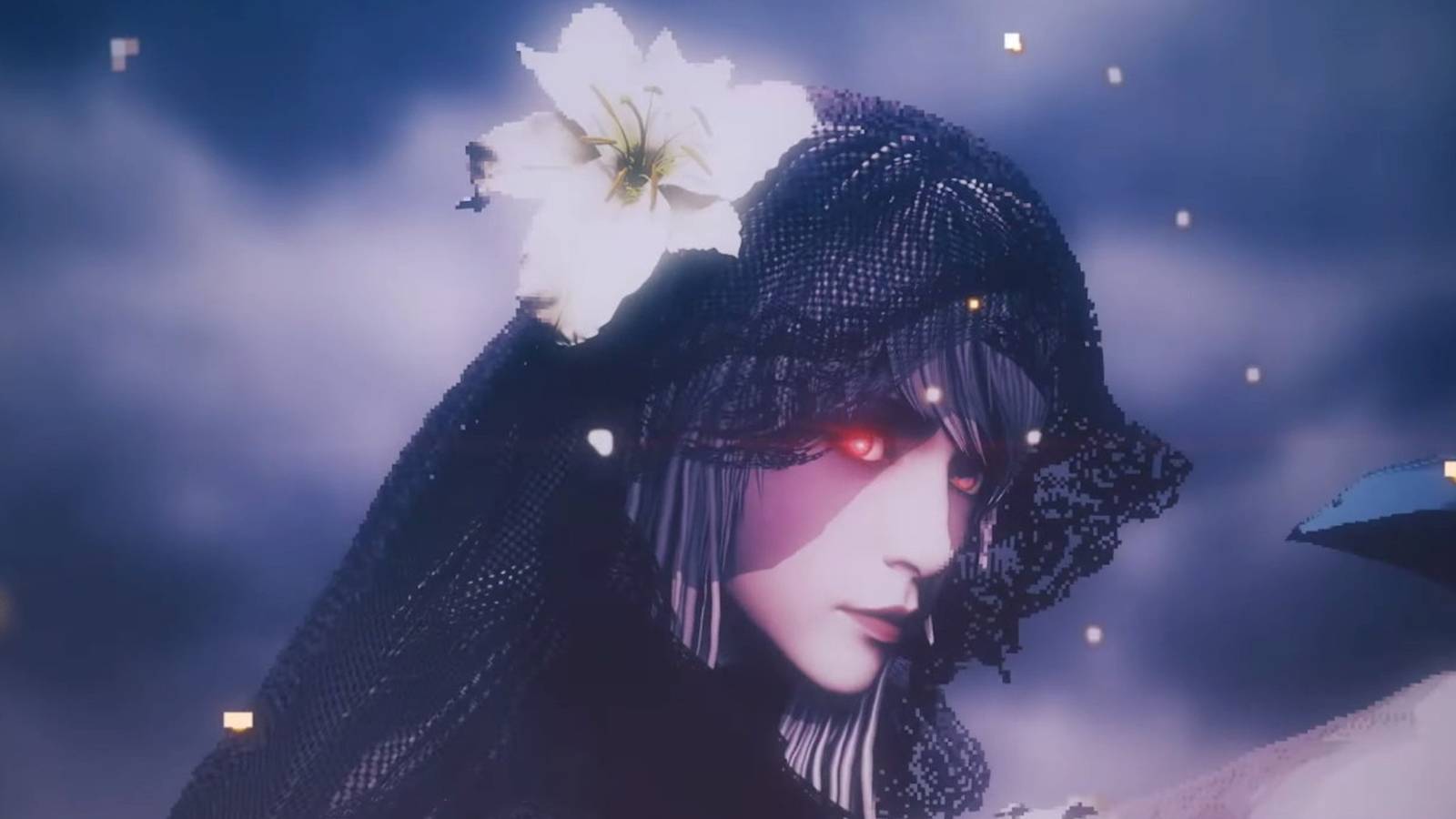
Resonance is one of the first HD-2D games that pushes the boundaries of what HD-2D can achieve, too. Other games, like the Dragon Quest remakes and even Octopath Traveler, are primarily backward-looking. HD-2D exists to make old-style art look decent for modern audiences. Resonance, by contrast, takes a cinematic approach to pixel art and even FMV-style cutscenes reminiscent of the ones you'd find in PS1-era Final Fantasy. The result is beautiful and occasionally even quite moving. You don't need realism to impress people. You just need style and good art direction.
And so I find myself thinking about the potential of another Final Fantasy game created with panache and confident vision at the forefront, not leftover trends other studios have already picked clean. Much as I'd love Square Enix to take a radical swerve and fully ditch its development patterns from the last decade, I fully expect it will remain committed to some outdated notion of prestige for Final Fantasy 17. But I hope there's another Final Fantasy alongside it that continues what Resonance started.