
.jpg) 19 hours ago
3
19 hours ago
3
Tanning beds may offer a convenient indoor alternative to sunbathing, but a new study suggests they could be worse for the skin than sunlight.
Indoor tanning can almost triple melanoma risk, the study finds, along with the first evidence that tanning beds cause specific, melanoma-enabling DNA damage across the entire exposed skin surface.
"Even in normal skin from indoor tanning patients, areas where there are no moles, we found DNA changes that are precursor mutations that predispose to melanoma," says co-first author Pedram Gerami, skin cancer researcher at Northwestern University.
"That has never been shown before."
Related: Tattoos May Not Save You From Getting Skin Cancer After All
Human skin is highly vulnerable to sunlight, a weakness we've invited by living indoors for millennia. Yet sunlight has health benefits, too, and many people enjoy basking in it. Others seek it for more cosmetic reasons, like tanning.
Like sunlight, however, ultraviolet radiation from tanning lamps is carcinogenic, triggering cellular mutations that set the stage for cancer. Despite claims by the indoor tanning industry, there is little evidence it's any safer than sunlight.
Previous research has linked indoor tanning with higher risk of melanoma, a dangerous form of skin cancer that claims about 8,500 lives per year in the US. Yet the molecular effects and mechanisms behind it remain unclear, as well as how that risk differs from the hazards of sunlight.
Hoping to learn more, the authors of the new study searched medical records from more than 32,000 patients treated by the dermatology service at Northwestern University, finding nearly 3,000 with a quantifiable history of tanning bed use.
They randomly selected a similar number of age-matched patients with no history of indoor tanning to serve as a control cohort.
Melanoma incidence was 5.1 percent in the tanning cohort, compared with 2.1 percent in the control cohort. Even after adjusting for age, sex, sunburn history, and family history of melanoma, indoor tanning was linked with a 2.85-fold increase in melanoma risk.
 Dr. Pedram Gerami examines a patient. (Ben Schamisso/Northwestern University)
The researchers also obtained skin samples from 26 donors and sequenced 182 individual melanocytes – the pigment cells where melanoma originates.
Skin cells of tanning bed users had nearly twice as many mutations as the control samples, the study found, and were more likely to exhibit specific mutations linked to melanoma.
"We found that tanning bed users in their 30s and 40s had even more mutations than people in the general population who were in their 70s and 80s," says co-first author Bishal Tandukar, a dermatology researcher at the University of California San Francisco (UCSF).
"In other words, the skin of tanning bed users appeared decades older at the genetic level."
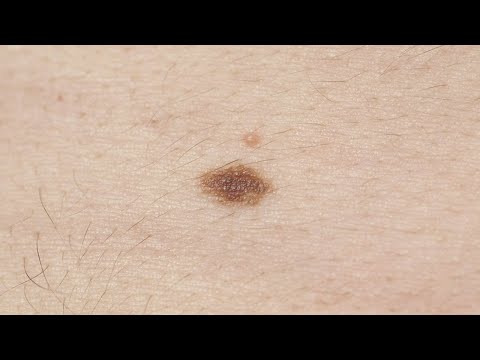
Melanoma was also more likely among tanning bed users on areas of skin normally shielded from sunlight, such as the lower back or buttocks, supporting the suspicion that indoor tanning causes more widespread DNA damage than sunlight exposure does.
"In outdoor sun exposure, maybe 20 percent of your skin gets the most damage," Gerami says. "In tanning bed users, we saw those same dangerous mutations across almost the entire skin surface."
The World Health Organization has classified indoor tanning devices as group 1 carcinogens, the same level as tobacco smoke and asbestos. The practice has been restricted or banned in many countries, yet remains readily available in others, including the US.

"We cannot reverse a mutation once it occurs, so it is essential to limit how many mutations accumulate in the first place," says senior author Hunter Shain, a UCSF skin cancer researcher.
"One of the simplest ways to do that is to avoid exposure to artificial UV radiation."
While more research is still needed, there is already ample evidence to warrant more regulation of indoor tanning, especially for children, the researchers say.
"At the very least, indoor tanning should be illegal for minors," Gerami says. "Most of my patients started tanning when they were young, vulnerable, and didn't have the same level of knowledge and education they have as adults."
The study was published in Science Advances.
 English (US)