
 1 hour ago
3
1 hour ago
3
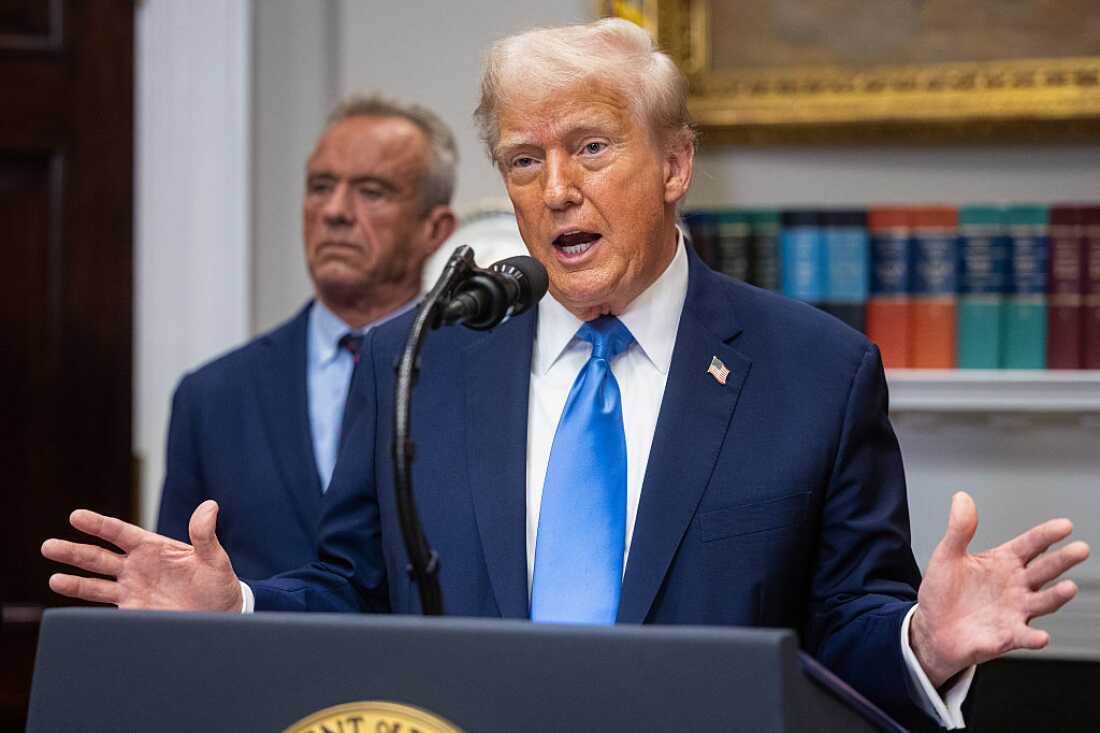
President Trump urged pregnant women to avoid taking Tylenol in a White House announcement in September 2025. Francis Chung/Politico/Bloomberg via Getty Images hide caption
toggle caption
Francis Chung/Politico/Bloomberg via Getty Images
President Trump told pregnant women in September 2025 to avoid Tylenol because taking it would increase their babies' risk of autism: "Taking Tylenol is not good — I'll say it: It's not good."

Doctors and scientists quickly said the data didn't support the president's claim, but emergency room orders for Tylenol, or acetaminophen, for pregnant patients went down 10% in the months that followed, according to a new study in The Lancet. There was no change in the acetaminophen orders for comparable women who weren't pregnant.
"It happened overnight," says Dr. Jeremy Faust, an emergency physician at Brigham and Women's Hospital in Boston who led the study. The president's words "had an immediate impact on how much Tylenol or acetaminophen was being ordered in emergency departments."
It's not clear from the study whether patients declined to take Tylenol or doctors prescribed it less. Faust says it's probably some combination of the two.
"This is thousands of women not getting pain control or not getting fever reduction when they need it, when they want it, when they would benefit from it," Faust says.
The study was limited to emergency department visits and didn't account for women considering Tylenol at home. The data came from electronic health records from more than 1,600 hospitals.
Dr. Caleb Alexander, an epidemiology professor at Johns Hopkins Bloomberg School of Public Health, says the response to Trump's White House announcement didn't surprise him.
"Words matter," he says. "And when they come from someone with as big an audience as the president of the United States, they can change prescriber and patient behavior."
Still, he says it's reassuring that the study found Tylenol use was returning to normal by December. He says it usually takes more than a single event to change prescribing patterns long term.
Although the president and his health team spoke in the fall about updating Tylenol's label, that hasn't happened. Tylenol consumption "improved" in December, Kenvue, the company that makes Tylenol, told investors last month.
"We stand with science and continue to believe that there is no credible data that shows a proven link between taking acetaminophen and autism," says Kenvue spokesperson Melissa Witt.

The study in The Lancet study also looked at prescriptions for leucovorin, a B vitamin, which rose sharply after the president suggested it as an autism treatment. And those had not fallen back by the end of the study period in early December.
There have not been large clinical trials to test leucovorin's efficacy in autism.
 English (US)