
 2 hours ago
3
2 hours ago
3
Michael Steele/Getty Images
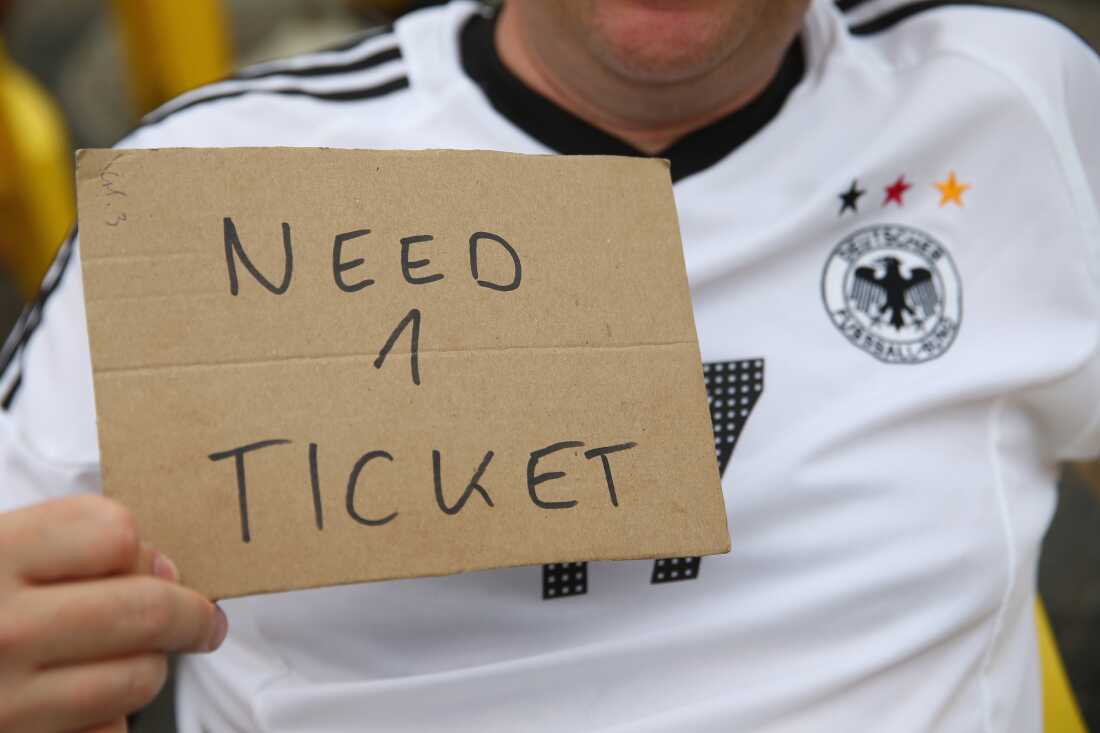
Last October, I had a decision to make. Did I want to spend around $775 on World Cup tickets? For the first time since 1994, the men's World Cup is being held in the U.S., as well as in Mexico and Canada. I had just hours to decide.
At this point, I also began to question the economic logic of FIFA's approach to World Cup tickets. Was FIFA, as soccer's governing body and the guardian of the beautiful game, bungling the ticket sales?
For millions of soccer fans, buying World Cup tickets has been an ordeal. My friends and I had signed up for updates from soccer's governing body, FIFA, and their emails about how to buy tickets felt a bit like receiving the fine print of an insurance policy in monthly digests.
First there was a presale—but it was sponsored by Visa and only for people with Visa cards, and it was a lottery. Winning the lottery didn't get you a ticket, though. You won the chance to buy a ticket. If you missed the presale, more lotteries followed. Winning one earned you the right to buy tickets. Another involved submitting an application for certain types of matches and then having your credit card charged automatically (how much exactly?) if you won and if your application was accepted. (Accepted?)
You could just browse and buy tickets on the FIFA website, but only expensive "hospitality packages" that included VIP perks. Or you could buy "special digital assets" (NFTs? really?) that resembled trading cards and could potentially earn you the right to buy tickets to certain matches.
I had won one of the first lotteries. Huzzah! I could buy tickets. But tickets weren't cheap. A package of three matches for $775 was among the cheapest I saw, and not for Team USA or elite matchups like Brazil vs Morocco. If buying a ticket to a single group-stage game was an option, I didn't see it. Plus I had to coordinate with friends and look up the cost of flights and hotels in cities hosting matches—all before an imminent deadline. I decided not to buy myself a ticket.
The best moments of World Cup soccer bring joy to millions. But for most fans not wealthy enough to buy VIP ticket packages, catching a glimpse in-person required navigating a complicated and convoluted system just for the chance to pay high prices.
Still, I have some sympathy for the challenge FIFA faced. And if I squint, their system almost resembles a smart and fair approach to ticket sales.
That's because I've spent the past two years writing a book about how economic thinking can improve our lives. (It's called Planet Money: A Guide To The Economic Forces That Shape Your Life. You can order it now!) During that time, I talked to economists about when high prices mean that something has gone wrong (perhaps due to a monopoly) vs when high prices are a smart method for allocating scarce resources. And about cases when prices alone fail to achieve fair or efficient outcomes.
Based on these conversations, I suspect that me staying home is a good outcome for society. I could have afforded the World Cup tickets, but I'm a bandwagon fan. So the high price nudged me toward instead spending my time and money on something I'd enjoy more. That's good!
But selling tickets to unique, uber-popular events like the World Cup is a profound economic challenge—it's one of those exceptions to the otherwise incredible ability of prices to coordinate economic activity.
World Cup tickets are incredibly popular and in short supply, so they should be expensive. But World Cup tickets shouldn't just be for rich people, so they should be affordable. How do you square that circle?
We at Planet Money have a modest proposal: FIFA should learn from other organizations that have faced this dilemma and triumphed. Among others, the team behind Hamilton the musical, the National Park system, and the NYC Marathon have developed clever ways to fairly distribute tickets, hiking permits, and marathon bibs despite overwhelming demand.
The case for high prices
What would have happened if FIFA sold every World Cup ticket for just $20?
In some ways, this would be more "fair" and pro-fan. But low prices can backfire. Instead of tickets going to true fans, they'd get scooped up by scalpers—or by bots and whoever happens to have enough schedule flexibility to buy tickets the second that sales start.
Plus, if tickets were only $20, some people with only mild interest in soccer would buy tickets. You could end up with empty seats at a Brazil–Argentina match because they saw rain in the forecast and skipped the game.
Alternatively, FIFA could sell every ticket for $20, but only to superfans. But how do you identify the superfans? Or the working-class octogenarian whose last wish is to see a World Cup game?
Do you make everyone write a personal essay? Ask people to rate their obsession with soccer from 1 to 10—and hope they don't lie?
Figuring out who most values World Cup tickets, or any scarce resource, is a hard problem, and high prices are often an elegant solution. Want World Cup tickets? Then prove how much you value them by paying the high ticket price.
This system works perfectly if everyone has the same amount of money. And it works well for goods that can be mass produced, like smartphones, or that only some people need or want, like Pokemon cards or Aspirin. But we live in a world where mildly interested millionaires can pay more for World Cup tickets than working-class families that live for soccer. That's probably why FIFA announced in December that it would sell some additional tickets for just $60—a move likely prompted by complaints from soccer fans.
So what should FIFA do instead?
A masterclass in fairness
FIFA could learn from another huge sporting event that we at Planet Money consider a master class in fairness: the New York City Marathon.
Watching the Marathon is free, but more people want to run than the course can accommodate. So New York Road Runners, the nonprofit that organizes the Marathon, has to sell or allocate spots.
In fact, NYRR faces a similar mismatch of supply and demand. In December, FIFA announced that demand for World Cup tickets—in terms of the number of people entering its drawings—outstripped supply 30 to 1. In 2025, meanwhile, NYRR reported that around 200,000 hopeful runners entered a drawing for ~6,000 spots. That's also a ratio of around 30 to 1!
NYRR could simply charge high prices and maximize their profits. But it's a nonprofit that relies on the goodwill of New Yorkers—the race shuts down dozens of busy streets across all five boroughs of New York.
The same is true of FIFA. It is, officially, a nonprofit—a FIFA spokesperson stressed to us that "the revenue FIFA generates from the World Cup is reinvested to fuel the growth of the game (men, women, youth)." And FIFA relies on the goodwill of the host country or countries, which shoulder the cost of building soccer stadiums and endure extra noise and traffic.
So what's a fair way to decide who should get to run the NYC Marathon? (Or attend the World Cup?) Fairness is subjective and debatable. But the genius of the NYC Marathon is that NYRR's system uses four main methods to allocate spots, each of which optimizes for a different form of fairness:
- Luck. As the marathon's popularity grew, the first tool NYRR reached for was a lottery, or random drawing. Aspiring marathoners mailed in a postcard with their name on it, and staff picked lucky winners who got to run 26.2 miles. Eventually an online form replaced the postcards. It's brute-force fairness: straightforward and perfectly egalitarian.
- Merit. If NYRR distributed every spot by luck of the draw, the Marathon would not be an elite athletic event. That's why NYRR directly invites elite runners and Olympic-level marathoners to participate, and nonprofessionals can earn a spot by running another marathon or half-marathon extremely fast. (Qualifying times vary by age and gender.)
- Prices. NYRR effectively allocates some spots through high prices. If you spend $5,000 or $10,000 a year for a charitable NYRR membership, rather than the standard $60, you're guaranteed a Marathon bib. Or international runners can buy marathon packages that include a bib, hotel stay, and flights. (NYRR gives spots to tour operators to attract more international runners, support the city's economy, and expand the Marathon's TV audience.)
- Effort. Another approach to fair allocation is to give marathon spots to people who value them highly, but measured in ways other than money. NYRR has developed a clever metric: People prove their enthusiasm by running nine of NYRR's qualifying local races and volunteering at another. They effectively pay in time and effort for a Marathon spot. This 9+1 program helps local New Yorkers qualify and filters out wealthy people who have minimal free time—or can spend their free time on expensive diversions—all while helping new runners train and stay motivated. Or runners can earn a spot by fundraising for pre-approved charities.
The NYC Marathon offers a smattering of other ways to earn a spot. But most race bibs are allocated through these methods. Each method has ways they feel fair and unfair. Each method has flaws and leaves people out. Taken together, though, they give just about everyone a shot at running the Marathon.
With this framework in mind, you can spot organizations around the world allocating extremely popular tickets and permits using a portfolio of fair methods. Yosemite National Park, which only allows 300 hikers per day up to the summit of Half Dome, distributes permits via one main lottery and smaller, daily lotteries (that favor locals). Many popular musicians offer discounted tickets to their followers during presales. The team behind Hamilton generated plenty of revenue by selling expensive tickets, but also ran lotteries for $10 tickets and partnered with local public schools so students could see $10 matinees.
Scoring FIFA
Tickets to the World Cup are frustratingly expensive, and the system for buying FIFA's mostly expensive tickets is complicated and exasperating. But there's some method there. With the NYC Marathon's example in mind, we can see FIFA using allocation methods that map to the four kinds of fairness:
- Luck. FIFA's random drawings allow them to sell tickets for less than the market-clearing price, but give everyone (or everyone with a Visa card, in the case of the presale) an equal shot at buying tickets that cost less than scalper prices.
- Merit. FIFA gives 16% of each match's tickets to the competing country's Member Associations. That way, the Canadian Soccer Association or Egyptian Football Association can come up with an application process or criteria to reward loyal fans with tickets. According to FIFA, 50% of the tickets sold by Member Associations are in the "most affordable range," although only 10% are those budget, $60 tickets.
- Prices. FIFA's "hospitality packages" that cost thousands of dollars and include VIP perks allow people to claim a ticket via high prices. And the far-from-inexpensive prices for lottery winners mean prices still play an allocation role in the random drawings.
- Effort. If I interpret FIFA's digital collectibles program generously, I can see an attempt to allow fans to get access to tickets through the effort of figuring out the rules and collecting the right cards. A less generous interpretation is that it was a cash grab. Last year, The Athletic reported that FIFA made more than $10 million from the collectibles before ticket sales had even started, and collectors at best won the right to buy tickets at prices that had not yet been announced.
That said, FIFA could make its World Cup ticket sales much simpler. Complexity itself is a way to restrict access, and if not done with intention, it usually rewards those with more resources and time to navigate it. So why not have just one lottery? Or at least not have an extra lottery just for people with Visa cards?
And FIFA could make its ticket sales more fair in multiple senses.
FIFA's random drawings introduce some fairness via luck, but since most winners still have to pay hundreds of dollars, it's far from the shining example of Hamilton's $10 lottery tickets. When we asked FIFA about $10 lottery tickets and fan criticism of FIFA's high prices, they pointed to their $60 tickets, and also said, tellingly, "The pricing model adopted for FIFA World Cup 2026 reflects the existing market practice for major entertainment and sporting events within our hosts on a daily basis."
FIFA could also offer would-be attendees a real path to earning tickets through effort. FIFA's digital collectibles involve effort, but fans had to buy them just to pay again for a ticket. It was not a way to pay in time (instead of money) in exchange for discounted tickets.
The genius of NYRR's 9+1 and fundraising programs is that marathoners pay for a spot with effort and time. But unlike standing in line or filling out tons of paperwork—which economists call "ordeals," because they filter people out by forcing them to waste their time—the marathoners do useful things: train for the big race or raise money for charity.
For FIFA, a comparable approach could be partnering with host countries' schools and soccer clubs, especially in low-income neighborhoods, to offer discount tickets to students who never miss a practice. Or rewarding fans who contribute to the growth of the game by coaching youth soccer or supporting women's soccer clubs in countries where the women's game is underfunded.
World Cup tickets are wildly popular, and there are only so many seats and matches. Not everyone will be able to see a World Cup match. Any approach to ticket sales, no matter how well-designed, will leave some fans disappointed.
But the incredible popularity of the tournament and people's passion for soccer and its stars mean FIFA could choose to model fairness and thoughtfulness, too.
The story of how the NYC Marathon became a masterclass in fairness comes straight from our new book: Planet Money: A Guide To The Economic Forces That Shape Your Life. Each chapter asks questions like: What's the deal with credit card points? Or: Why does my bank seem so eager to give me free stuff? And the book is filled with illuminating stories, like the time the president of Argentina tried to use tariffs to boost manufacturing—and force BlackBerry to manufacture smartphones on a remote island near Antarctica.
The Planet Money book comes out on April 7. You can pre-order it now and get a free poster. Or join us in April at any of our live events across the country. We've got a free tote bag to go with event ticket purchases while supplies last. Find tickets and details at planetmoneybook.com
 English (US)