
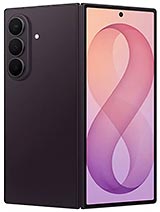
Amazon will kick off Prime Deal Days on October 6 (Tuesday next week). The sales event will run for two days, but you don’t have to wait for it to start as the retailer is already offering some great early Prime Day deals. For example, the Galaxy Z Fold8 is nearly €600 off and the Z Fold8 Ultra is nearly €700 off.
Most but not all of the deals below require an active Prime subscription (if you haven’t activated the free trial, now is the time). We’ve marked all the ones that require Prime.
Okay, let’s go by category starting with foldables. The Samsung Galaxy Z Fold8 is shaping up to be one of the hottest foldables of 2026 – but is it better than the Z Fold8 Ultra? Here are our thoughts on that. Anyway, the 256GB variant is 30% off, but if you want more storage, the 512GB variant only has a smaller (but still solid) discount.

And here’s the big guy, the Samsung Galaxy Z Fold8 Ultra. This one is 29% off for the 512GB variant this time. We already looked at Z Fold8 vs. Z Fold8 Ultra, so here’s how the Z Fold8 Ultra and the Z Fold7 from last year compare.
The Motorola Razr Fold has a relatively small discount, but it was cheaper to begin with. This is a large book-style foldable with a 6.6” cover and an 8.1” inner display. It’s powered by the Snapdragon 8 Gen 5 (non-Elite), so it’s not a direct rival to the Z Fold8 Ultra, but it comes quite close. It has a bigger, faster charging 6,000mAh battery (80W wired, 50W wireless), at the cost of being thicker (10.1mm) and heavier (243g). It has a solid set of cameras with a 50MP 1/1.28” main, 50MP 3x/71mm telephoto and a 50MP 122° ultra-wide.

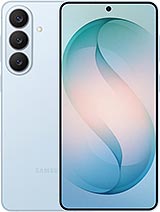
Moving on to clamshells, the Samsung Galaxy Z Flip8 is 42% off for the 256GB model. The 512GB variant is over €1,200, unfortunately, which we don’t think is worth it.

The Motorola Razr 70+ is a bit cheaper with more storage, but that one uses the old Snapdragon 8s Gen 3 instead of a current chipset like the Exynos 2600 inside the Z Flip8. The Moto has a slightly bigger 4,500mAh battery (+200mAh) with faster charging (45W/15W vs. 25W/15W). It has a 50MP main (1/1.95”) and 50MP ultra-wide, while Samsung’s flip has a 50+12MP setup.

There’s also the cheaper Motorola Razr 70. This one doesn’t require Prime, it just has a discount at checkout. It’s a mid-range foldable powered by the Dimensity 7450X.

Next up, slab flagships. The vivo X500 Pro Max is on its way to Europe, but it’s not here yet and we think it will be quite pricey (vivo hasn’t said anything on the matter, though). Anyway, the vivo X300 Pro is 21% off. This Dimensity 9500-powered phone has a 6.78” 1260p+ LTPO OLED display and a 5,440mAh battery (90W/40W). The cameras are where it shines with a 50MP 1/1.28” main, 200MP 1/1.4” 3.7x/85mm periscope and a 50MP 119° ultra-wide.

In case you missed it, Samsung hiked up the prices of the Galaxy S26 series – European models saw a €100 increase. However, the Galaxy S26, S26+ and S26 Ultra can still be bought at much lower prices – the 512GB S26 Ultra now officially costs €1,750, but Amazon has it at €1,015, a massive €735 discount.
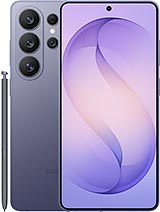
Here’s how the Galaxy S26 Ultra compares against the S25 Ultra and against the iPhone 17 Pro Max. You should also have a peek at our Galaxy S26+ vs. S26 Ultra article. We also compared the S26+ with its predecessor and did the same for the Galaxy S26 and S25.
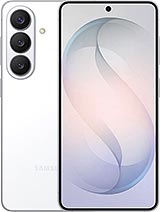
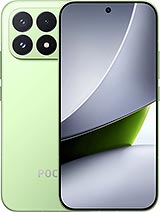
The Poco F9 Ultra offers Snapdragon 8 Elite Gen 5 performance on a sub-€800 budget. It also has a 6.9” 185Hz Dolby Vision OLED display and an 8,050mAh battery (100W/50W charging). It has a 200MP 1/1.56” main camera, a 50MP 5x/114mm periscope and a 50MP 102° ultra-wide.

The Poco F9 Pro has a pared-back version of the chipset, the Snapdragon 8 Elite Gen 5 V Series. It has a smaller 6.59” OLED display (185Hz Dolby Vision) and a 6,330mAh battery (100W/50W). It has a 200MP 1/1.56” main camera, a 50MP 2.5x/60mm telephoto and an 8MP 112° ultra-wide.
Next up, the non-folding Google Pixel 11 trio. The Pixel 11 Pro Fold is not part of the early Prime campaign, so we didn’t include it in the foldables section above. Anyway, here’s our Pixel 11 Pro vs. Pixel 11 Pro XL article for a closer look at the two Pros. And if you’re only considering the 6.3” models, here’s Pixel 11 vs. Pixel 11 Pro.



Moving a step below the flagship category, the Xiaomi 17T and 17T Pro offer an alternative to the Poco F9 duo. They are powered by the Dimensity 8500 Ultra and Dimensity 9500, respectively. They have 6.59” and 6.83” displays paired with 6,500mAh and 7,000mAh batteries, respectively. The Pro has the better cameras with a 50MP 1/1.31” main, 50MP 5x/115mm periscope and a 12MP 120° ultra-wide. The F9 Ultra has even better cameras, but it also costs €125 more. We have a Xiaomi 17T vs. 17T Pro article to help you decide between the two T-series phones.


The Poco X8 Pro and X8 Pro Max cover the more affordable side of things with prices under €300 and under €400, respectively. Here’s how they compare. Like the 17Ts, these come in small and big sizes – 6.59” and 6.83” screens with 6,500mAh and 8,500mAh batteries, respectively. The Poco X8 Pro Max uses the Dimensity 9500s (which is actually based on the Dimensity 9400), while the Pro has the same Dimensity 8500 Ultra as the 17T. The 17T has the better cameras, though, with a 50MP 1/1.55” main (vs. 50MP 1/1.95”), 50MP 5x/115mm telephoto (vs. none) and 12MP 120° ultra-wide (vs. 8MP). The 17T does cost a lot more, so the X8 Pro isn’t easy to dismiss.


We may get a commission from qualifying sales.