
The vivo X Fold6 launched on July 1 in China and is now starting its worldwide tour – it’s already available in Europe and is expected to launch in India next week. So, now the question is this – are you planning on buying one?
First, we have to look at the price and we immediately run into issues. vivo left the UK a while ago, the German site hasn’t been updated in ages. The company’s coverage in Europe is pretty spotty. We did find the phone in Spain where it costs €1,980 (down from an MSRP of €2,200) and comes with a 100W charger. While vivo Germany doesn’t have it, vivo Austria does, but there it costs the full €2,200. It’s also available in Italy where it costs the same €2,200.
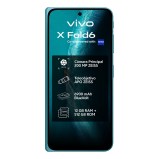
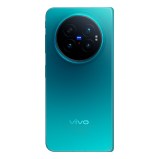
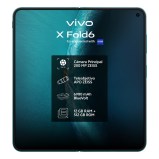
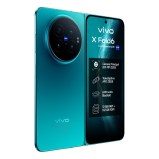
vivo X Fold6
Okay, so it’s not cheap, but cutting-edge foldables never are. And while we don’t have the price for India yet, it’s clear that it will be one of the most expensive devices around. For reference, the iPhone Duo starts at €2,320 / ₹300,000.
Now, let’s look at the phone itself. It measures 9.4mm thick when closed and weighs 228g. It’s not the slimmest or lightest, but it packs a huge (for a foldable and still pretty large in general) 7,000mAh battery with fast 80W wired and 40W wireless charging.
There’s a 6.51” cover display (20:9, 1-120Hz LTPO) and an 8.02” inner display (9:10, 1-120Hz LTPO). The X Fold6 is powered by the Dimensity 9500 Super with 12GB of RAM (some regions also get 16GB) and 512GB of storage (this is for Europe, elsewhere storage varies between 256GB and 1TB).



vivo X Fold6
There’s a serious set of ZEISS-branded cameras on the back with a 200MP main (1/1.4”, OIS), 50MP 3x/70mm periscope and a 50MP 119° ultra-wide, plus a pair of 20MP selfie cameras.
The Samsung Galaxy Z Fold8 Ultra is already official. It’s slimmer (8.9mm) and lighter (215g), but it has a smaller 5,000mAh battery (45W/20W charging). It has comparable displays and uses the Snapdragon 8 Elite Gen 5 chipset. The 200MP main has a larger 1/1.3” sensor and the 50MP 120° is comparable, but the 10MP 3x/69mm telephoto is a class below what the vivo has to offer. The base 12/256GB model is €2,200.
The Google Pixel 11 Pro Fold is both thicker (10.1mm) and heavier (239g) despite having a small 4,806mAh battery. This one is powered by the disappointing Tensor G6 and the cameras aren’t top-notch hardware either – 48MP main (1/1.56”, OIS), 10.8MP 5x/112mm telephoto and 10.5MP 127° ultra-wide. The phone starts at €2,000 for a 16/256GB unit.




Samsung Galaxy Z Fold8 Ultra • Google Pixel 11 Pro Fold • Honor Magic V6 • Xiaomi 18 Fold
The Honor Magic V6 has been around for a while now – since March – but still has the Snapdragon 8 Elite Gen 5 instead of an older chip. It’s slim (8.8mm) and light (219g) with a fairly large 6,660mAh battery (global version, 80W/66W charging). There’s a 50MP main camera (1/1.56”, OIS), a 64MP 3x/70mm telephoto and a 50MP 122° ultra-wide. A 16/512GB unit sells for €2,300 in Austria.
Oppo decided not to launch the Find N6 in Europe and it’s not available in India either. The Xiaomi 18 Fold may reach these markets, but it’s a wide foldable, anyway – like the Galaxy Z Fold8 (non-Ultra) and the iPhone Duo. It’s interesting because it uses Xiaomi’s own Oring X3 chipset and packs a 6,000mAh battery (67W/50W charging). It’s 10.7mm thick when closed and weighs 219g, but keep in mind that it has a 3:2 aspect ratio for the inner screen (2.8:2 to be more precise) and just about the same for the cover screen (2.9:2).
With all that in mind, are you interested in the vivo X Fold6?