
.jpg) 1 hour ago
3
1 hour ago
3
Article content
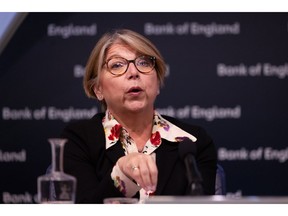
(Bloomberg) — Bank of England Deputy Governor Sarah Breeden played down the threat of a wage-price feedback loop in response to the Iran War, saying a weak economy means workers and firms have less bargaining power.

THIS CONTENT IS RESERVED FOR SUBSCRIBERS ONLY
Subscribe now to read the latest news in your city and across Canada.
- Exclusive articles from Barbara Shecter, Joe O'Connor, Gabriel Friedman, and others.
- Daily content from Financial Times, the world's leading global business publication.
- Unlimited online access to read articles from Financial Post, National Post and 15 news sites across Canada with one account.
- National Post ePaper, an electronic replica of the print edition to view on any device, share and comment on.
- Daily puzzles, including the New York Times Crossword.
SUBSCRIBE TO UNLOCK MORE ARTICLES
Subscribe now to read the latest news in your city and across Canada.
- Exclusive articles from Barbara Shecter, Joe O'Connor, Gabriel Friedman and others.
- Daily content from Financial Times, the world's leading global business publication.
- Unlimited online access to read articles from Financial Post, National Post and 15 news sites across Canada with one account.
- National Post ePaper, an electronic replica of the print edition to view on any device, share and comment on.
- Daily puzzles, including the New York Times Crossword.
REGISTER / SIGN IN TO UNLOCK MORE ARTICLES
Create an account or sign in to continue with your reading experience.
- Access articles from across Canada with one account.
- Share your thoughts and join the conversation in the comments.
- Enjoy additional articles per month.
- Get email updates from your favourite authors.
THIS ARTICLE IS FREE TO READ REGISTER TO UNLOCK.
Create an account or sign in to continue with your reading experience.
- Access articles from across Canada with one account
- Share your thoughts and join the conversation in the comments
- Enjoy additional articles per month
- Get email updates from your favourite authors
Sign In or Create an Account
or
Article content
Breeden said on Thursday that second-round effects “should be less likely,” adding that the UK central bank is in a different situation to 2022 when Russia’s invasion of Ukraine drove inflation to double digits.
Article content
Article content
Article content
“There’s slack in the labor market, and it’s rising, and the outlook for activity was lackluster, even before the energy shock,” she said at a Resolution Foundation event in London. “All of that means that firms and workers are likely to have less pricing power, less wage bargaining power, meaning second-round effects should be less likely.”
Article content
By signing up you consent to receive the above newsletter from Postmedia Network Inc.
Article content
While policymakers will remain alert to the possibility, there are risks on “both sides,” Breeden stressed.
Article content
Traders are betting on the BOE raising interest rates around three times this year after the Monetary Policy Committee said last week it “stands ready to act” in response to the turmoil in energy markets. The BOE expects a spike in motor fuel costs to drive inflation to 3.5% in March and economists warn price growth could hit double the 2% target later this year.
Article content
However, Breeden appeared to strike a cautious tone on Thursday against a backdrop of rising unemployment and tepid economic growth. Before the war, she was one of the rate-setters supporting faster rate cuts.
Article content
On Wednesday, hawkish official Megan Greene said that the committee faces a harder trade-off than in 2022 when the labor market was tight, interest rates low and growth was fueled by a post-pandemic boom. She still warned of a lasting impact on inflation even in a scenario where tensions de-escalate rapidly.
Article content
Breeden said that the BOE remains “alert” and noted that the latest shock comes after years of inflation being above the central bank’s 2% target. Bank rate is still in restrictive territory, she added.
Article content
“It’s not wise to act before we have sufficient information,” Breeden said. “We’ll learn a chunk more by the time of the April decision on the balance of these risks.”
Article content
 English (US)