
.jpg) 1 hour ago
2
1 hour ago
2
Article content
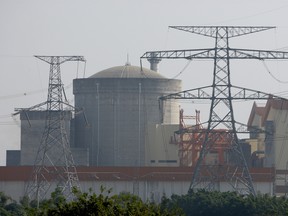
Many in the West are in awe of China’s apparent dominance in green energy, inspiring headlines like “China is becoming a green superpower.” And yes, the solar panels, wind turbines and electric vehicles and batteries China is flooding world markets with do seem to be proof of an inevitable green transition. But these green marvels are mainly built with fossil fuels, particularly coal. China’s real energy achievements — its energy-fuelled prosperity and its leadership on nuclear power — are overlooked.

THIS CONTENT IS RESERVED FOR SUBSCRIBERS ONLY
Subscribe now to read the latest news in your city and across Canada.
- Exclusive articles from Barbara Shecter, Joe O'Connor, Gabriel Friedman, and others.
- Daily content from Financial Times, the world's leading global business publication.
- Unlimited online access to read articles from Financial Post, National Post and 15 news sites across Canada with one account.
- National Post ePaper, an electronic replica of the print edition to view on any device, share and comment on.
- Daily puzzles, including the New York Times Crossword.
SUBSCRIBE TO UNLOCK MORE ARTICLES
Subscribe now to read the latest news in your city and across Canada.
- Exclusive articles from Barbara Shecter, Joe O'Connor, Gabriel Friedman and others.
- Daily content from Financial Times, the world's leading global business publication.
- Unlimited online access to read articles from Financial Post, National Post and 15 news sites across Canada with one account.
- National Post ePaper, an electronic replica of the print edition to view on any device, share and comment on.
- Daily puzzles, including the New York Times Crossword.
REGISTER / SIGN IN TO UNLOCK MORE ARTICLES
Create an account or sign in to continue with your reading experience.
- Access articles from across Canada with one account.
- Share your thoughts and join the conversation in the comments.
- Enjoy additional articles per month.
- Get email updates from your favourite authors.
THIS ARTICLE IS FREE TO READ REGISTER TO UNLOCK.
Create an account or sign in to continue with your reading experience.
- Access articles from across Canada with one account
- Share your thoughts and join the conversation in the comments
- Enjoy additional articles per month
- Get email updates from your favourite authors
Sign In or Create an Account
or
Article content
Article content
After China’s property bust, capital poured into solar panels, creating overproduction and overcapacity. Chinese solar production capacity is now more than twice the global market. The International Energy Agency (IEA) estimates every segment of China’s solar supply chain suffered losses throughout 2024, with margins often at minus 20 per cent or even lower. Over 40 companies have gone bankrupt, and the industry has slashed its workforce by a third. Ironically, Chinese solar panel production depends on coal: every Chinese silicon smelter requires its own coal-fired power station.
Article content
Article content
Article content
Article content
Investment is now pouring into electric cars. Auto-making has become an economic pillar for local governments once reliant on land sales and taxes on real estate. The auto industry and related services now account for a tenth of China’s GDP. Here, too, however, overcapacity is staggering: one forecast sees only 15 of the current 129 EV brands still being viable in 2030.
Article content
Article content
Chinese consumers buy nearly two-thirds of all EVs sold globally — pushed by a government that wants to reduce reliance on imported oil and lured by rock-bottom prices from surplus production. But EV battery packs are manufactured using coal energy and charged on a coal-dominated grid. A recent estimate shows that over its useful life a Chinese EV emits 85-90 per cent of the CO₂ of a gasoline car. And that may be optimistic, as many buyers of new EVs would have bought either no car at all or a less polluting hybrid. Chinese EVs are also driven much less than conventional cars, spreading the carbon debt from their construction over fewer miles and raising per-mile emissions.
Article content
EVs don’t help with air pollution, either. One study shows they reduce nitrogen oxides by about one per cent but increase far deadlier sulfur dioxide and particulate matter by 10 and 20 per cent, respectively.
 English (US)