
.jpg) 2 hours ago
2
2 hours ago
2
Richard Liu’s USD 700 million push into Sea Expandary claims to democratise luxury yachting at car-level prices, exposing a widening gap between rhetoric and reality.

A USD 700 Million Bet on Rewriting the Yacht Industry
Chinese e-commerce billionaire Richard Liu — who aims to democratise luxury yachting — has said he wants to make and sell luxury yachts at a fraction of the price of the average car with his new brand Sea Expandary, in which he has personally invested almost USD 700 million. The venture is reportedly backed by a wider investment framework of around USD 723 million (RMB 5 billion), spanning research and development, manufacturing, sales, operations and after-sales services across China’s Guangdong province.
Sea Expandary has also signed cooperation agreements with multiple regional authorities, including the Zhuhai Municipal Government, the Shenzhen Marine Development Bureau and the Qianhai Authority, signalling state-aligned industrial backing for what Liu frames as a new-generation marine manufacturing cluster.
The agreements also point to a wider industrial strategy in Guangdong, where authorities are actively promoting yacht tourism routes, experience programmes and the expansion of the province’s yacht fleet to more than 4,000 vessels as part of a broader marine economy push.

When a Yacht is No Longer a Yacht
At the centre of the debate is the unresolved ambiguity of Liu not clarifying what he defines as a “yacht.” Traditionally, yachts refer to vessels over 40 feet with bespoke engineering, luxury interiors and high-cost maritime systems. By contrast, the USD 14,000 price point sits closer to small fishing boats or used recreational craft than anything associated with luxury marine design.
So is Sea Expandary genuinely disrupting yacht manufacturing or is it simply rebranding mass-market boats under a luxury vocabulary? Liu has compared the ambition to the early automotive industry, suggesting that yachts — like cars once were — could become accessible to everyday households over time, reframing leisure boating as a scalable consumer category rather than an elite asset class. A USD 14,000 “yacht” would cost less than a third of the average new American car, which currently stands at approximately USD 49,191, collapsing a category that has historically sat far beyond everyday consumer spending into the price point of entry-level automotive ownership.
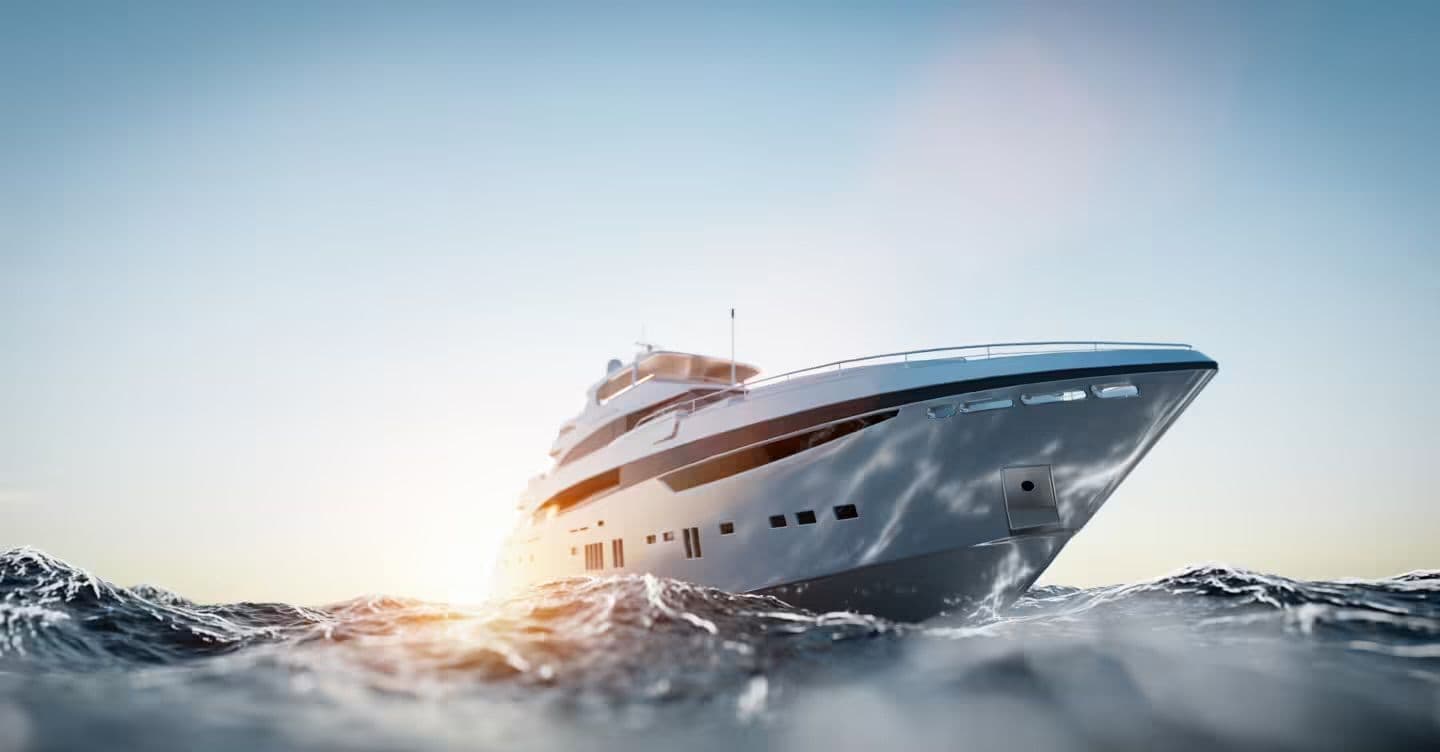
Luxury Pricing Meets Manufacturing Reality
The global yacht industry is one of the most capital-intensive luxury sectors in the world, with craftsmanship, materials and regulatory requirements placing hard limits on cost compression. Even in China, which dominates global shipbuilding, yacht manufacturing remains relatively small. In 2024, the country’s yacht export sector was valued at roughly USD 600 million — a fraction of European markets led by Italy, the Netherlands and Germany.
Italy alone accounts for more than half of global yacht production, with brands such as Ferretti Group and Sanlorenzo operating in a fundamentally different pricing universe. Despite this, China’s broader yacht fleet has nearly doubled in recent years — rising from roughly 4,500 vessels to close to 10,000 — driven by expanding wealth and a growing urban middle class. Against this backdrop, Liu’s pricing model appears less like incremental innovation and more like a structural contradiction.
Even China’s transport ministry has acknowledged the sector’s expansion, noting that newly registered vessels have accounted for more than half of the national fleet growth over the past three years, signalling accelerating domestic demand despite the industry’s relatively small export footprint.
The comparison with cars underscores the scale of the claim. A USD 15,000 price point would not only sit below entry-level automotive pricing in most developed markets but would also be closer to the cost of a used or compact vehicle than anything associated with marine luxury manufacturing, where even the smallest yachts routinely exceed USD 500,000.

The Silence Around the Model
What has intensified scrutiny is also the absence of an explanation behind it. Liu has not disclosed how Sea Expandary intends to reduce production costs to such an extreme level, nor what features, materials or performance standards these vessels would include. Instead, the narrative has relied on scale, investment figures and rhetoric around accessibility — a familiar pattern in tech-led disruption stories where discussions of valuation often precede tangible verification. Local reporting indicates that Sea Expandary is positioning itself as a vertically integrated platform, spanning R&D centres, manufacturing bases, bonded maintenance facilities and marina infrastructure across the Greater Bay Area, including planned developments in Shenzhen and Zhuhai.
Adding further irony to the situation is Liu’s own position within the ultra-luxury ecosystem. His reported 130-metre superyacht — valued at approximately USD 450 million and costing tens of millions annually to operate — sits at the opposite end of the spectrum from the product he is now attempting to democratise. This contrast raises the question of whether Sea Expandary represents genuine market expansion or a symbolic exercise in industrial storytelling.
Disruption or Rebranding?
The ambition to “democratise luxury yachting” sits within a broader trend of billionaires reframing high-cost industries as scalable consumer markets. But in doing so, the definition of luxury itself becomes unstable. If a yacht can be reduced to the price of a used car, the question is no longer whether the industry is being disrupted — but whether the category still holds meaning at all.
Sea Expandary has already reportedly secured orders for five 72-metre twin-hull superyachts from overseas clients, suggesting that while its “everyman” narrative dominates headlines, its early commercial traction may still be anchored in high-net-worth demand.
For now, the idea of Sea Expandary exists as a testament that even the most exclusive symbols of wealth can be re-engineered into mass-market goods. Whether that proposition is industrially viable — or simply rhetorically powerful — remains entirely unproven as of writing.
For more on the latest in luxury business reads, click here.
 English (US)