
.jpg) 2 hours ago
3
2 hours ago
3
A look at eight works by Kuala Lumpur architects and interior designers who are reshaping how we think about spatial aesthetics.
Kuala Lumpur may not yet occupy the global spotlight as a design capital, but the city is quietly cultivating a generation of architects and interior designers. Across homes, public spaces and commercial interiors, these creatives focus on functionality and clarity in design. Their projects use simple, deliberate forms, efficient layouts and thoughtful material choices. In a city shaped by dense urban development, a tropical climate and limited land, their work prioritises practicality and adaptability, resulting in spaces that feel comfortable and stand the test of time. LUXUO explores how these designers and their approaches are amplifying Kuala Lumpur’s design landscape.
Residential Scale and Landscape Integration: DRTAN LM Architect
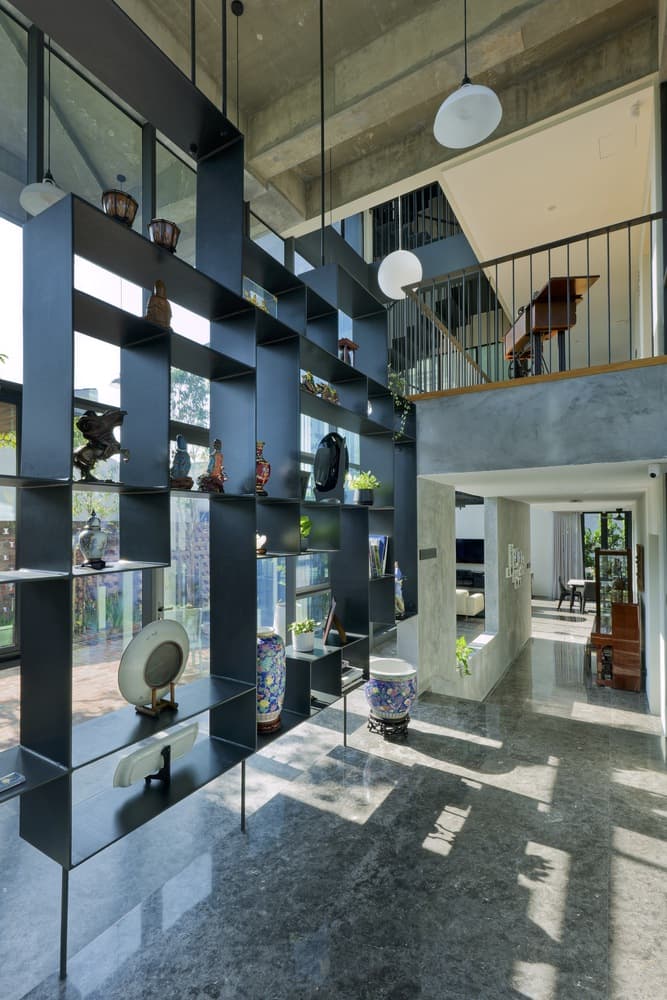
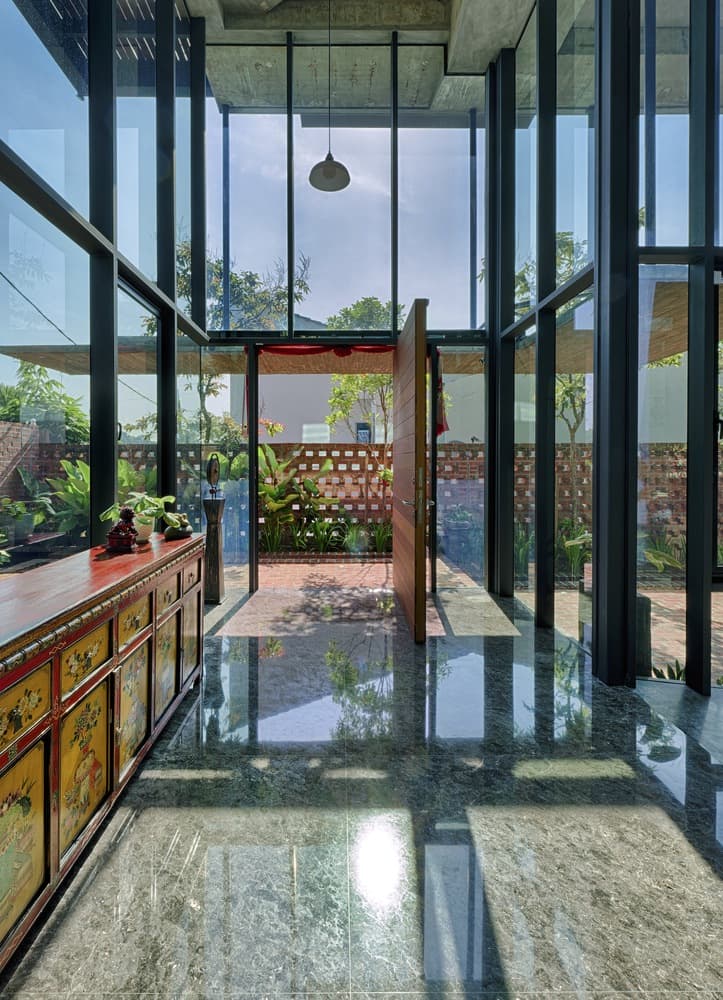
Left: Kemaris House has floor-to-ceiling windows to channel sunlight and make the space even bigger. Image: H.LinHo Photography. Right: High ceilings create a lofty feel in this entrance way. Image: H.LinHo Photography.
The layout of the 5,700-square-foot landed property consists of several connected volumes grouped around beautifully planted courtyards. Interior and exterior borders are blurred by the layout’s living areas, bedrooms and transitional outdoor spaces. A strong yet restrained architectural language is created using materials like stone, plaster and concrete. With apertures for cross-ventilation and shaded areas that lessen heat gain, the house places a high priority on environmental performance. The project is an example of a more comprehensive approach to tropical living in which the landscape is an essential part of spatial organisation.
Compact Living with Vertical Expansion: Futurground
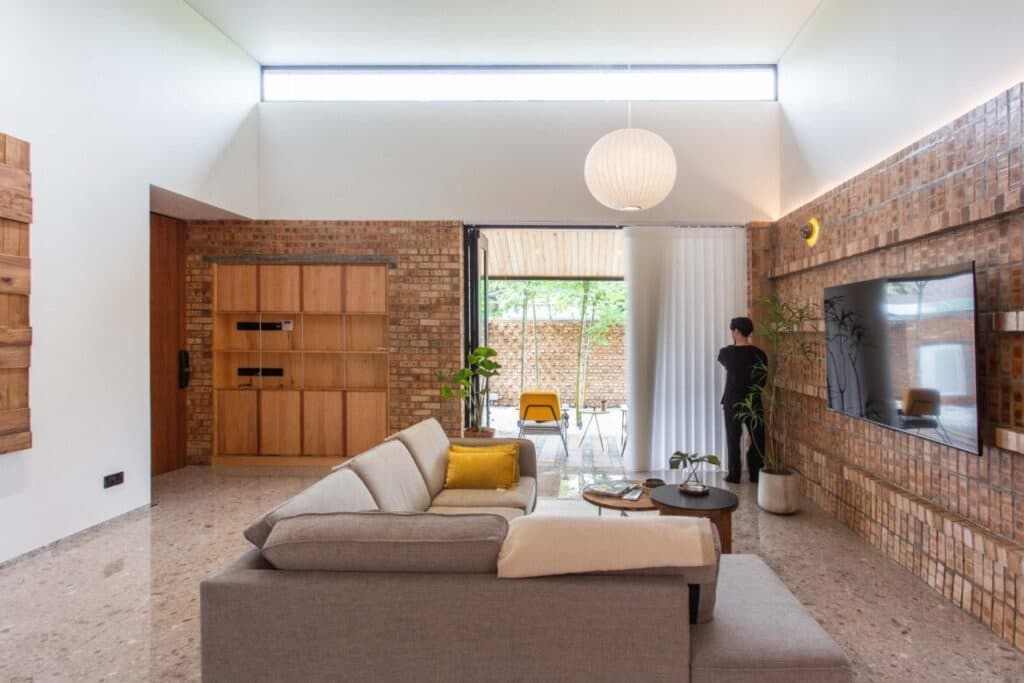
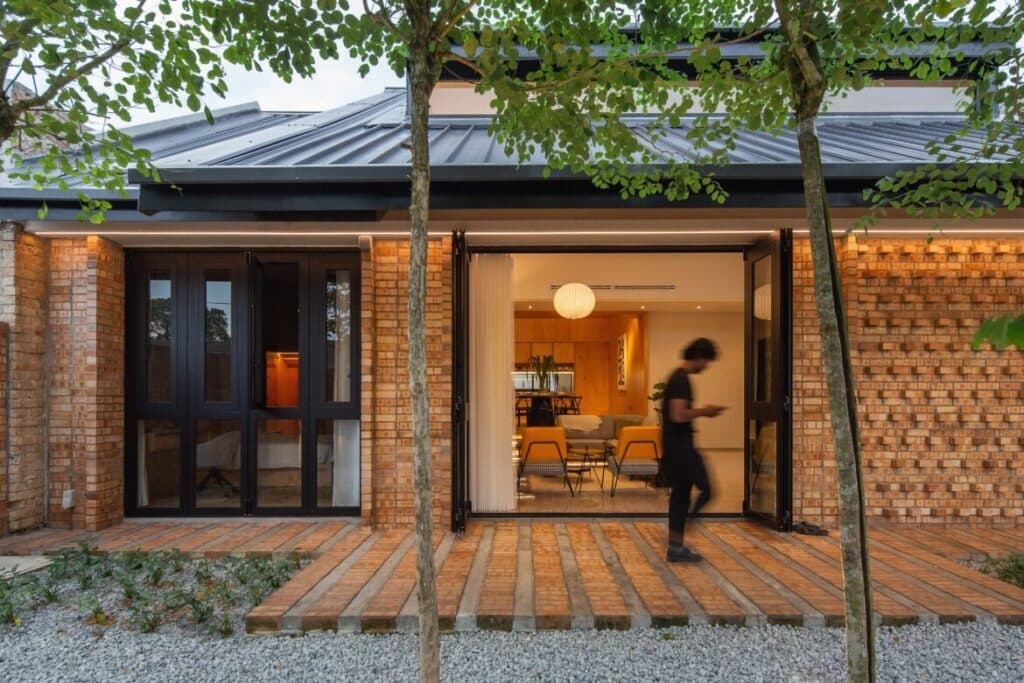
Left: The home’s brick-clad walls create warmth and cosiness. Image: Choong Wei Li, Ameen Deen, Wilber Ooi. Right: The project’s brick-led design is both striking and welcoming. Image: Choong Wei Li, Ameen Deen, Wilber Ooi.
By adopting vertical stacking instead of horizontal spread, a 3,000-square-foot multi-storey home reimagines suburban dwelling. There is a distinct hierarchy to the spaces, with individual bedrooms above, social areas below and transitional terraces in between. Brick, concrete and wood are used in the design to provide mass and enclosure, while apertures are thoughtfully placed to balance light and solitude. The interiors are open and continuous, but the façade conveys rigidity. The proposal suggests density without compromising spatial legibility, reflecting a larger concern with land scarcity. To ensure uniformity between levels, structural and façade systems must work together throughout construction to offer architectural cohesion.
Subtraction as Spatial Strategy: NDC Architects
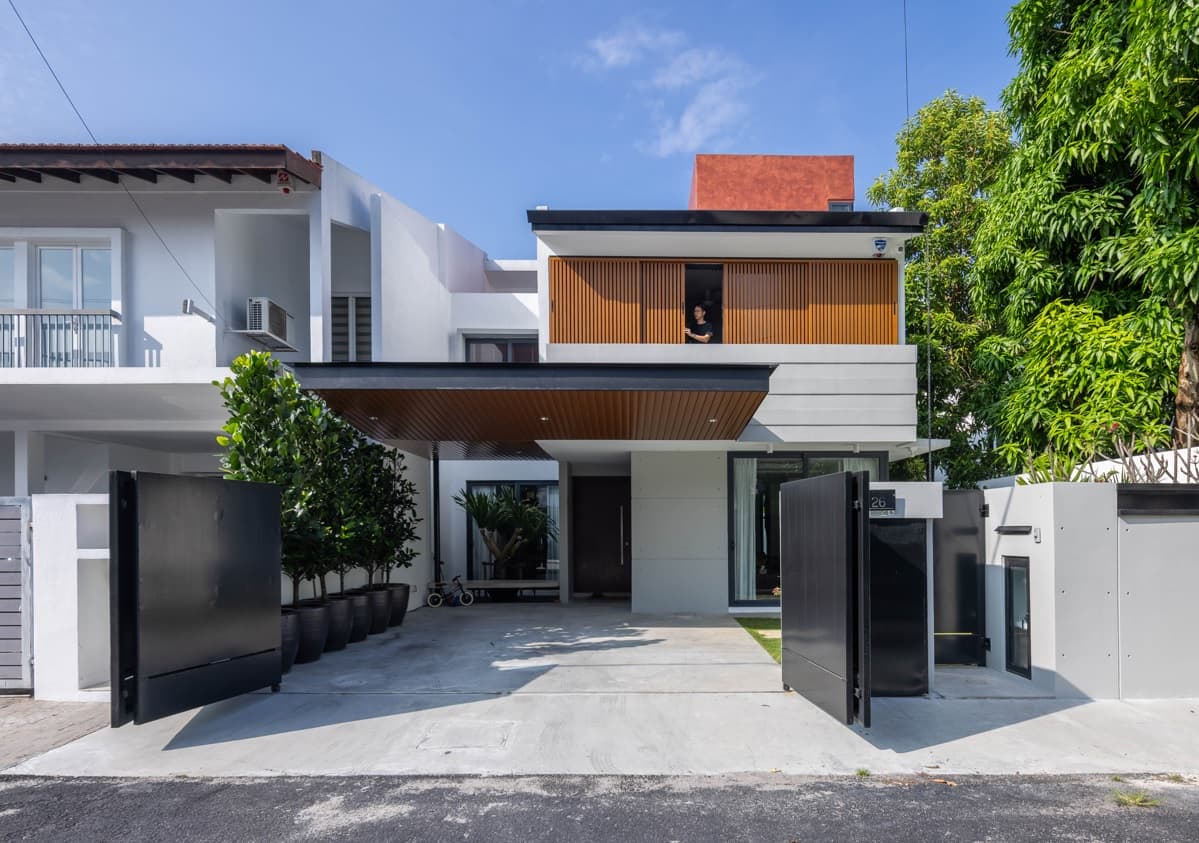
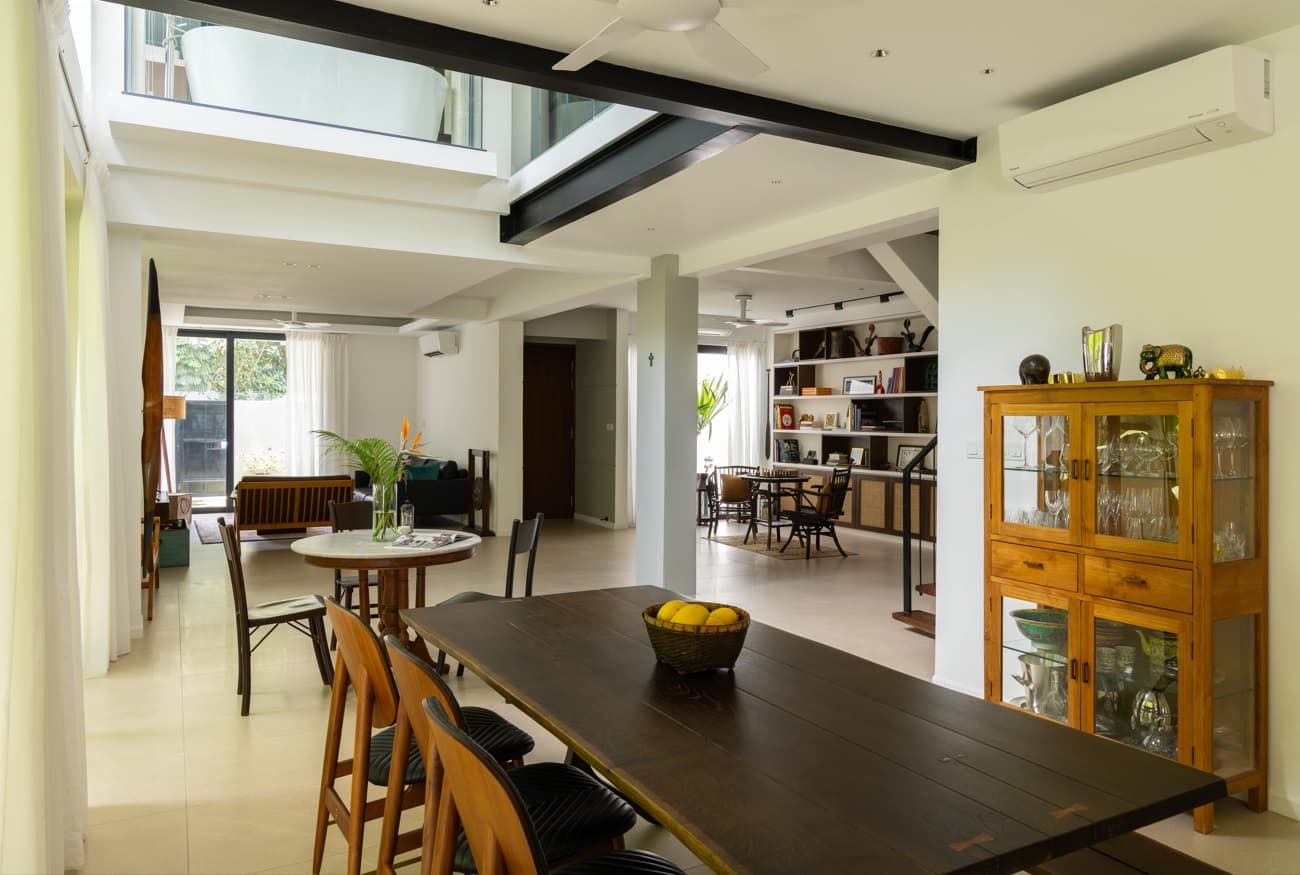
Left: The home’s facade is informed by minimalist and linear aesthetics. Image: Architzer. Right: The skylight in the home directs sunlight into the home to create an airy feel. Image: Architzer.
Strategic editing — rather than addition — transforms this two-storey, 3,000-square-foot terrace house. To create a double-volume living hall, parts of the slab are removed, allowing light to enter the space deeply. The design plan consists of bedrooms above, living and eating spaces on the ground floor and a rooftop slab that has been transformed into a “man’s cave.” Further spatial variety is introduced via a mezzanine layer. Material treatment creates a contrast between outside expression and inner tranquillity by combining neutral interior surfaces with metallic façade finishes. The project investigates how — under strict limitations — void-making might rethink typical terrace typologies.
Domestic Space as Controlled Composition: Fabian Tan Architect
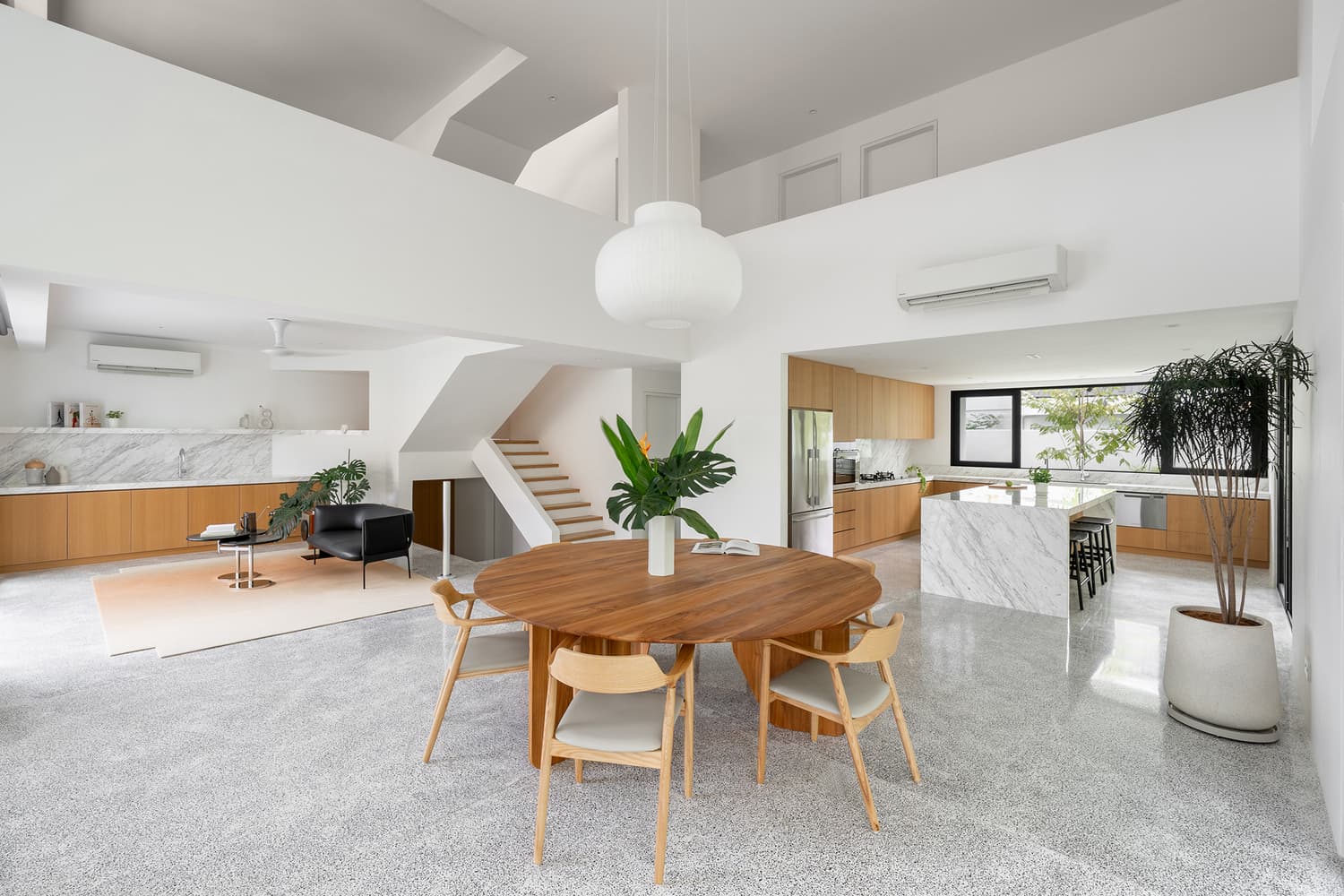
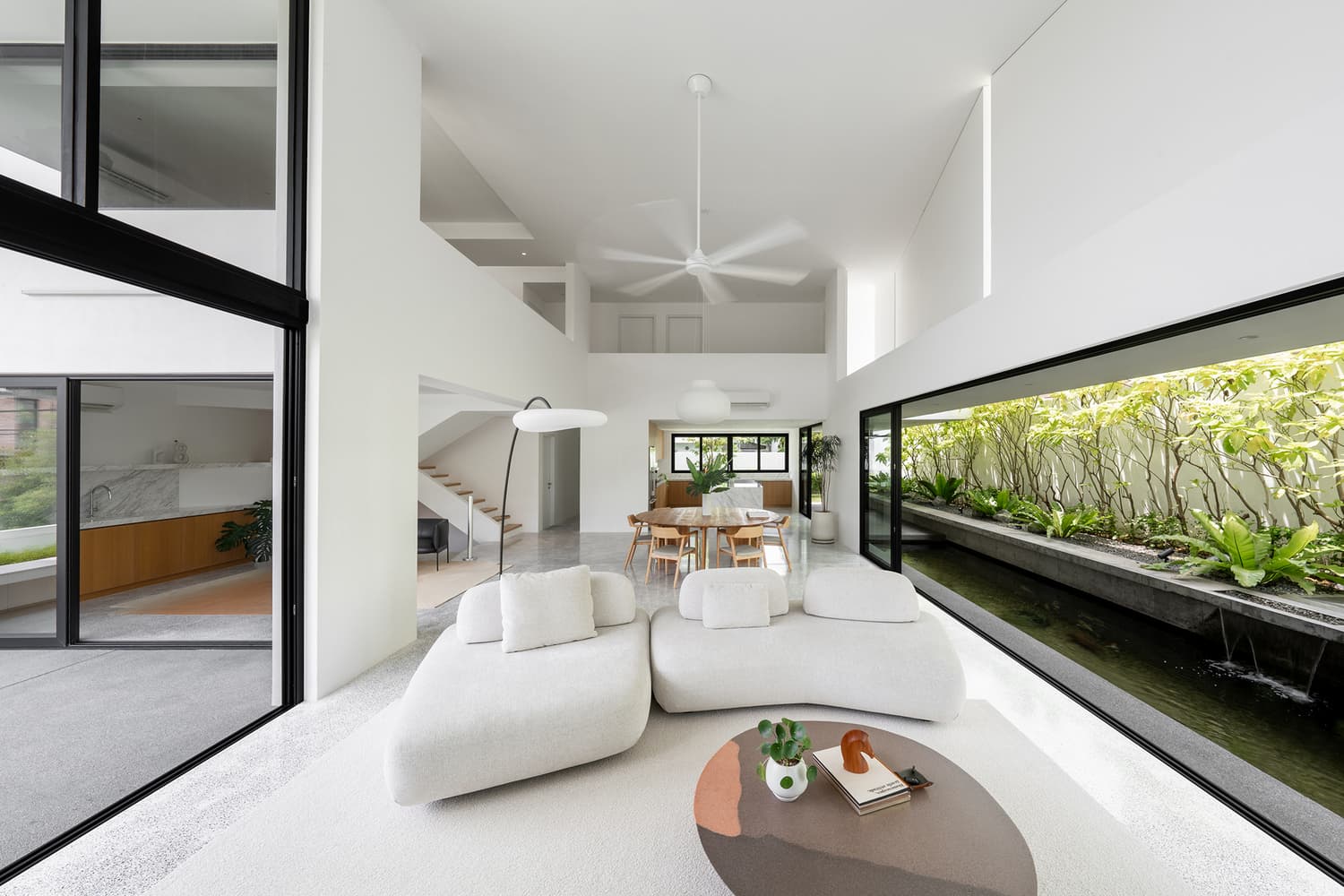
Left: A pale wood and white theme embraces the home’s Japandi feel. Image: Bricksbegin. Right: The living room accommodates a lush vista for the homeowners to enjoy. Image: Bricksbegin.
Instead of using open-plan continuity, a 4,000-square-foot landed home is arranged using a series of regulated volumes. The layout of living, dining and circulation areas is designed to control light and frame vistas. Stone flooring, wood surfaces and plastered walls make up the material palette, which creates a muted indoor setting. While communal areas are still visibly accessible but spatially delineated, bedrooms are arranged for seclusion on higher floors. An emphasis on restraint is evident in the project, which minimises formal gestures while honing proportion and detail.
Micro-Architecture as an Experience: Bunga Design Atelier
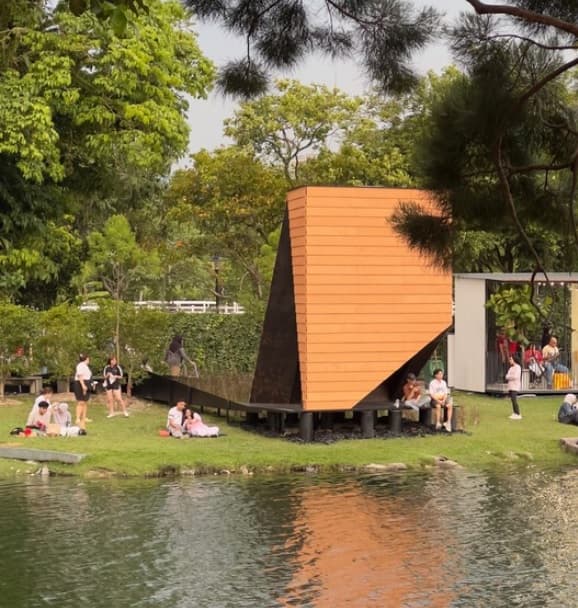
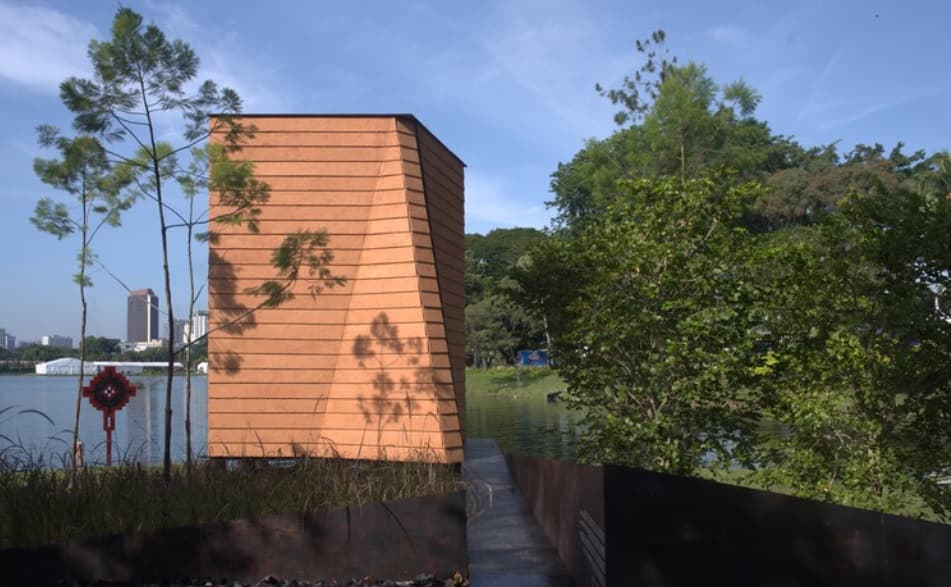
Left: The pavilion is a stylish communal space for people to enjoy. Image: Hafiz Sahar. Right: The pavilion’s modern design blends into the pond and verdant surrounds. Image: Hafiz Sahar.
A 107-square-foot pavilion uses minimal techniques to investigate spatial compression and sensory sensation. The building enhances the sense of light, smell and sound using clay plaster surfaces and a darker interior. With a single enclosed chamber that regulates access and movement, the design is purposefully small. A calibrated transition from outer brightness to inner darkness is produced by introducing light through small openings. Instead of being a traditional building, the project is an installation that explores ritual and reflection, drawing inspiration from the practice of burning bakhoor, where fragrant wood releases smoke and scent into the air. Formed through folded geometries and pyramid-like planes, the pavilion encourages small groups to gather, move deliberately and engage in shared sensory experiences, making it a contemplative yet socially engaging environment.
Compact Apartment Living Reconsidered: J Hous Studio
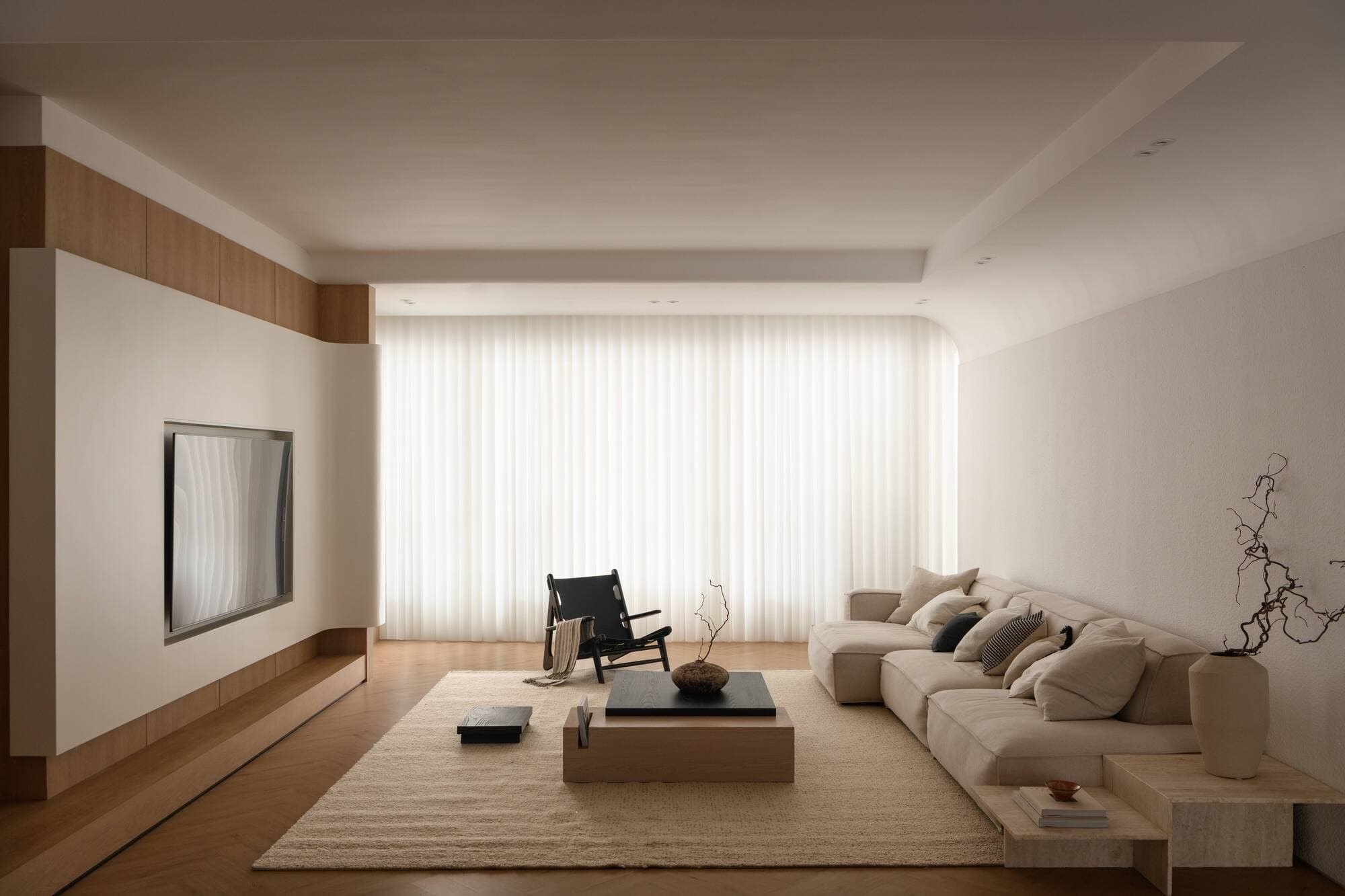
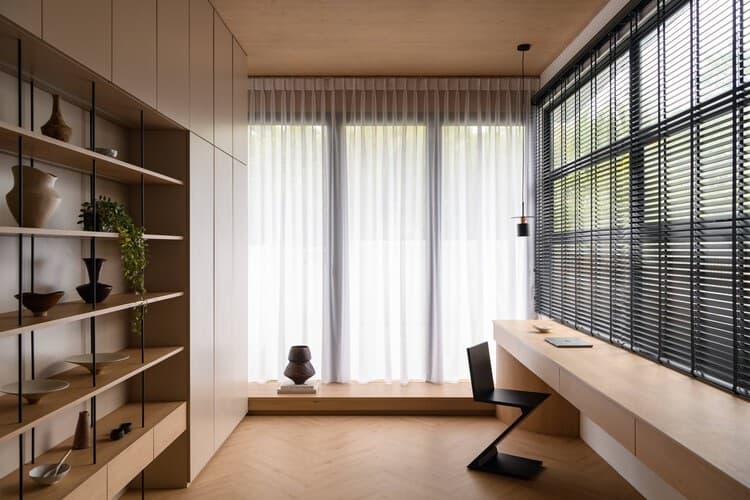
Left: A diffused, natural lighting is achieved through curtain sheers to create a soothing feel in the living area. Image: TWJPTO. Right: The sleek and minimalist aesthetic channels a Zen mood in this study room. Image: TWJPTO.
To create a fluid domestic plan, the interior of this 2,700-square-foot flat is arranged around openness and continuity, jettisoning traditional room dividers. Private spaces are delicately demarcated by level shifts and material transitions, while living, dining and kitchen zones are combined into a single spatial field. Visual purity is preserved with timber surfaces, soft finishes and hidden storage mechanisms. The proposal is a response to modern urban life, where adaptation and flexibility are more important than strict room typologies. Japanese spatial ideas are incorporated throughout the design, which emphasises material tactility, tranquillity and sensible proportions.
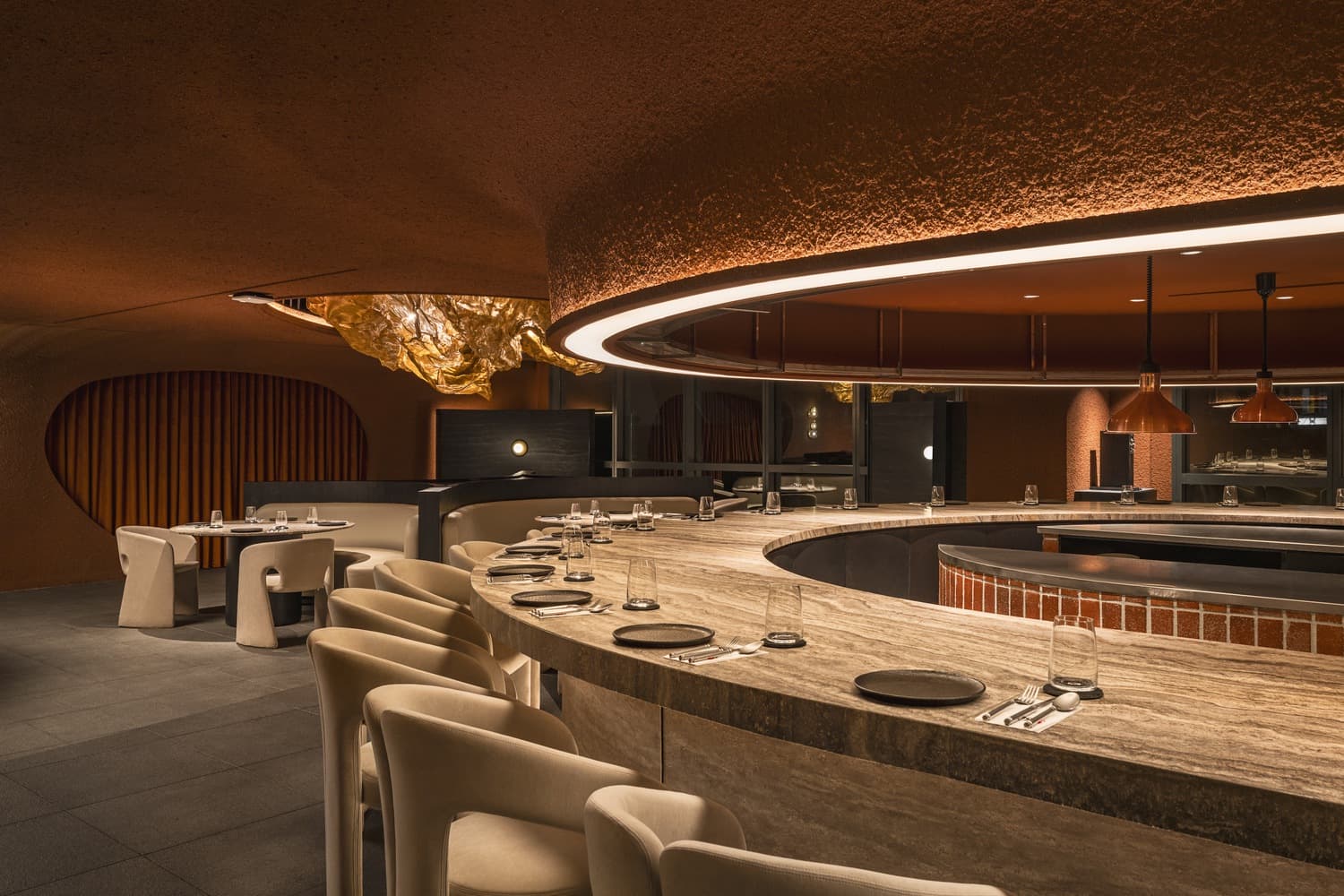
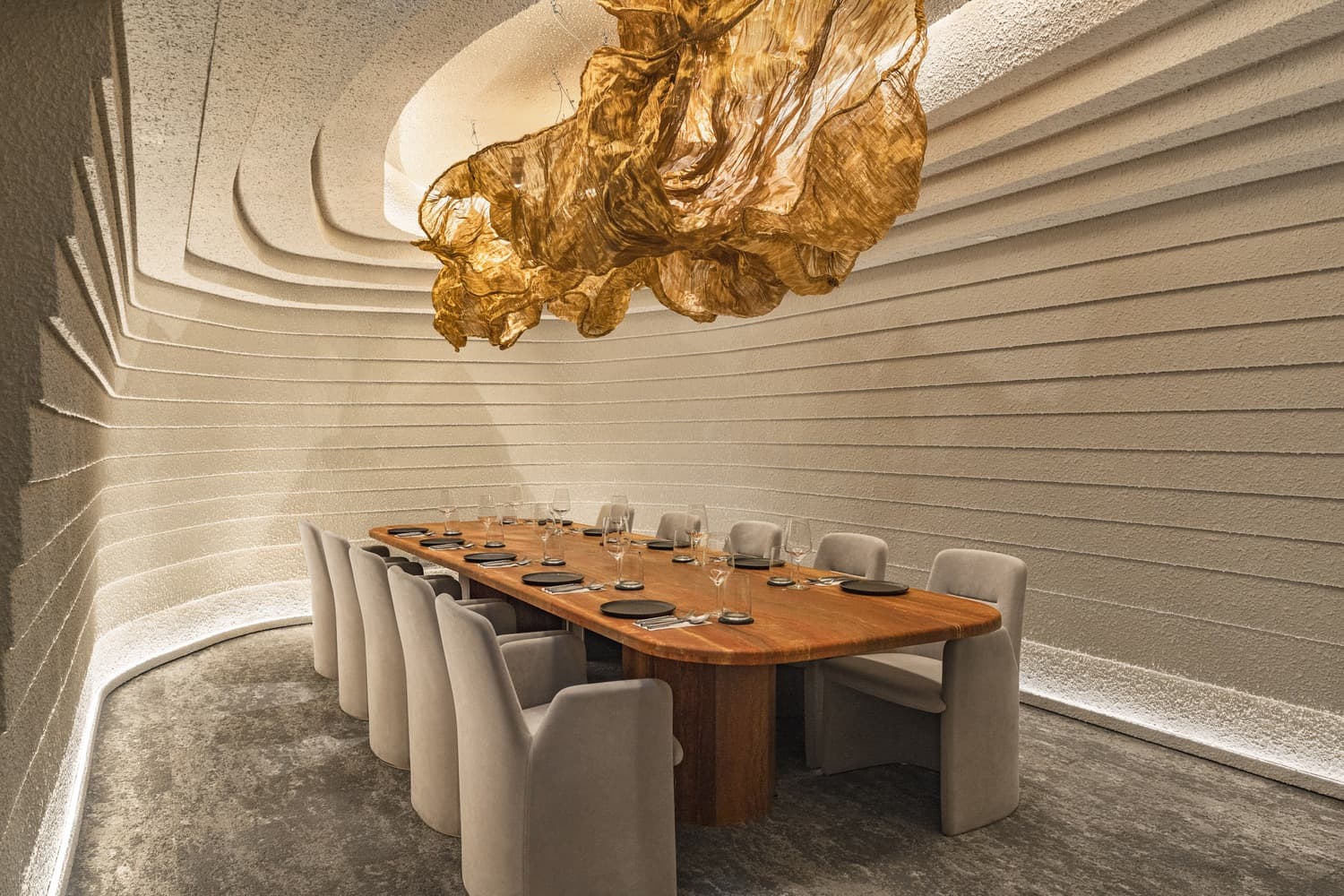
Left: The bar design encompasses many luxurious materials such as stone, concrete, moss and metal details. Image: Space Storyteller. Right: The chic, diaphanous light installation is artistic and purposeful in this private dining room. Image: Space Storyteller.
To balance intimacy and openness, this 4,413-square-foot bar and restaurant is divided into discrete zones. Stone, concrete, moss and metal finishes are used in the material palette to create layered textures on bar counters, sitting sections, and walkways. Within the same plan, lighting is adjusted to create different moods. The arrangement preserves spatial coherence while accommodating a variety of occupational forms, including small and large gatherings. The project is conceived as an immersive wood-fired dining environment centred on the idea of communal cooking. The spatial sequence begins at the entrance — marked by a distorted arch that introduces a cave-like atmosphere — before transitioning into a firewood-lined pathway leading deeper into the space. Internally, the design is anchored by two key elements: a circular bar counter in red travertine and a banquet seating zone defined by a suspended gold metal mesh installation, both referencing the elemental presence of heat and fire.
There are also specialised zones such as a U-shaped chef’s table in grey travertine accommodating up to 20 guests and a private dining room shaped as a cocoon-like enclosure with layered surfaces and controlled lighting. Terracotta-toned stucco walls and earthy finishes reinforce the narrative, transforming the interior into a cohesive environment where material, light and circulation collectively shape a spatial experience rooted in ritual and gathering.
Small-Scale Precision in Wellness Design: DualSpace Studio
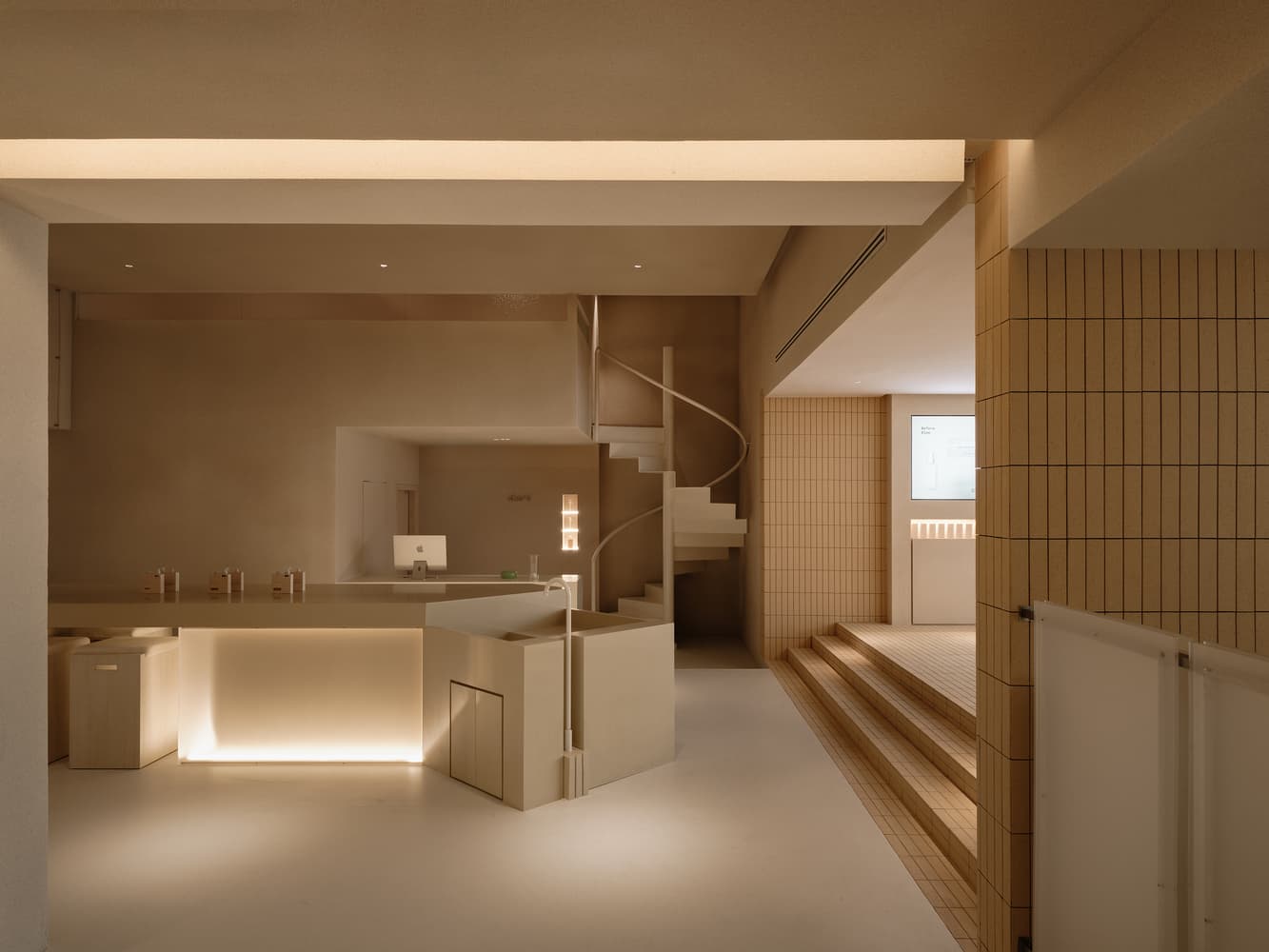
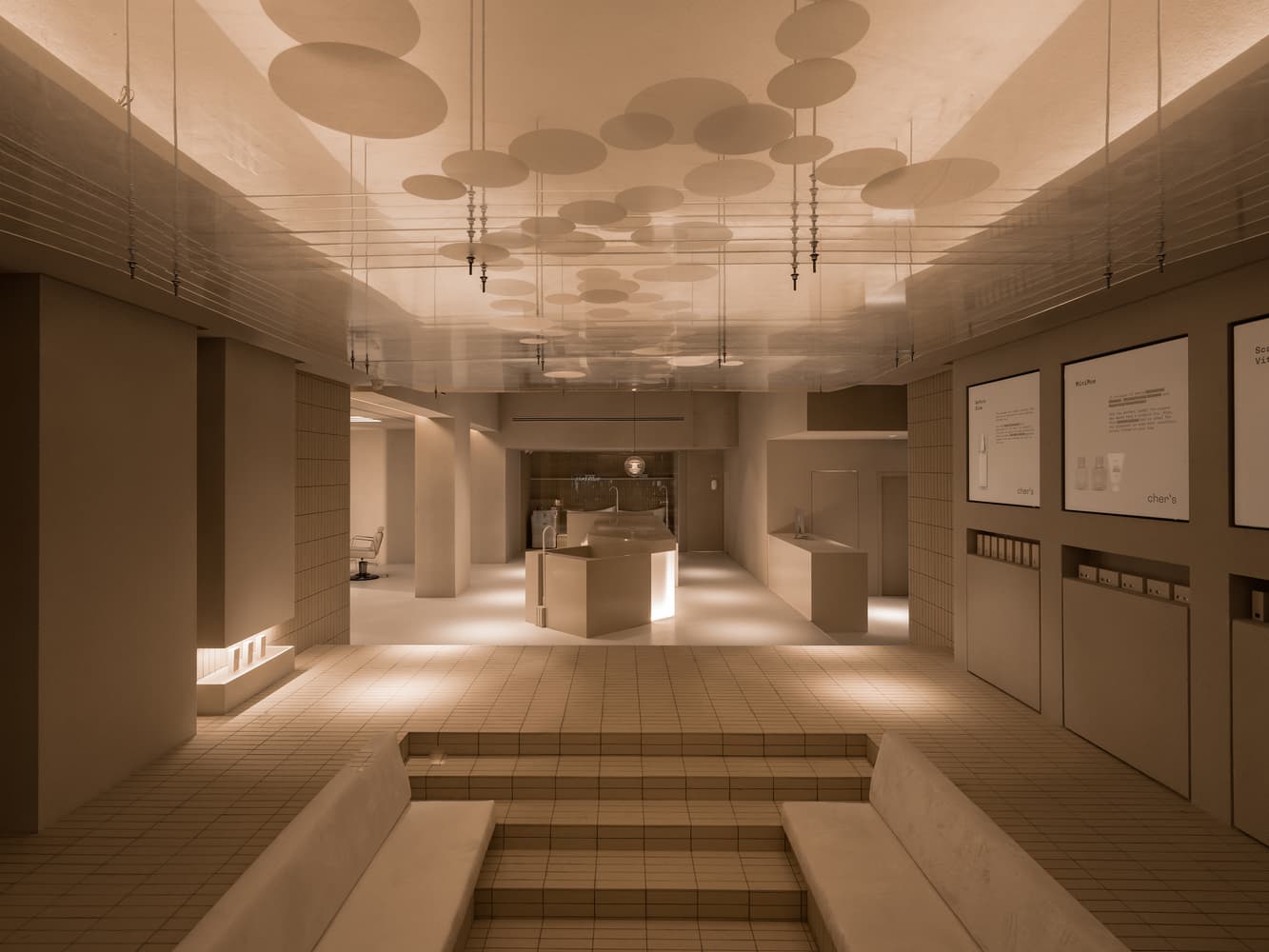
Left: The salon is all about neutrality and minimalism to create a calming ambience. Image: TWJ Photography. Right: The salon’s open plan creates a seamless feel for clients to enjoy. Image: TWJ Photography.
The interior of a 3,500-square-foot salon strikes a balance between spatial calmness and operational efficiency. Reception, styling stations, laundry rooms and individual treatment rooms are all part of the spatial planning, which is set up to facilitate easy movement. A neutral yet tactile atmosphere is produced by elements with the help of mirrors, polished concrete and wood accents. Lighting is strategically placed to enhance both atmosphere and function, especially at styling stations where clarity is crucial. A sunken seating area serves as a social and spatial anchor, while subtle transitions guide clients smoothly from one area to the next. The project demonstrates how careful planning and material detailing establish spatial discipline in modest commercial environments.
Spatial Intelligence in a Growing City
Doing more with less is a common approach among Kuala Lumpur’s emerging designers. Constraints are treated as opportunities rather than obstacles across these eight projects. Small footprints, dense surroundings and a tropical climate are addressed through careful planning, controlled volumes and a restrained material palette.
Each project shows how thoughtful design can improve how spaces feel and function without relying on excess, from courtyard homes and vertically stacked houses to small shops and communal areas. Materials are used clearly, openings are intentional and circulation is well resolved. Together, these works point to a quieter shift in Kuala Lumpur’s design scene — one focused on precision, adaptability and lasting value — improving everyday spaces rather than chasing spectacle.
For more architecture and interior design reads, click here.
 English (US)