Static Media
The 1990s were a complex time for cinema. It gave us some incredible technological advancements, but those advancements eventually overtook the industry in a bad way. There was a rise of independent filmmakers that changed the way movies were made and distributed ... but we also got the rise of Harvey Weinstein at this time, too.
Though 1999 gets most of the attention for the monumental pieces of cinema that were released, the year prior also gave us some phenomenal films. Steven Spielberg made the most successful WWII films of all time up until that point with "Saving Private Ryan," there were twin movies about asteroids threatening to destroy the Earth (but only "Armageddon" was utterly hated by Roger Ebert), "Titanic" continued to print money at the box office and became the first film to gross over $1 billion worldwide. It was also the year that saw the first film from DreamWorks Animation (one of two ant-centric animated film this year).
In the realm of sci-fi, 1998 was a very good year with some excellent movies that showcased the best the genre had to offer. Granted, it was also in 1998 that we got the single worst "Godzilla" movie of all time, but other than that it was a pretty good year. Let's explore the best sci-fi movies of 1998.
5. Pokémon: The First Movie
OLM, Inc.
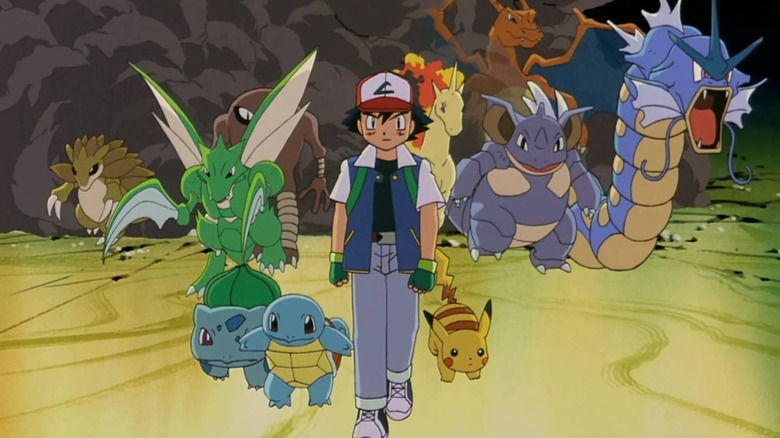
Yes, really. "Pokémon: The First Movie" is arguably best remembered for holding the record for the highest-grossing anime in the U.S. for over 20 years until "Demon Slayer: Infinity Castle" broke that record in 2025. It's not even a movie you necessarily think of as pure sci-fi, but rather as the anime movie based on the worldwide phenomenon that had an insane soundtrack that included songs by Christina Aguilera, *NSYNC, M2M, and many more (with most songs from the soundtrack not even featured in the movie).
And yet, it remains a pretty good sci-fi movie about clones in the middle of an existential crisis. The villain of the film, a Pokémon named Mewtwo, was created in a lab as a clone, and he goes through a bit of a crisis of self, killing a bunch of scientist, then erecting a fortress in an island where he invites some Pokémon trainers in order to clone their Pokémon.
Unfortunately, the version of the film that was dubbed in English and released internationally erased some of the more complex philosophical monologues in an attempt to simplify the plot. Still, "Pokémon: The First Movie" remains a great sci-fi movie about cloning and the value of life regardless of its origin.
4. The X-Files: Fight the Future
20th Century Fox
"The X-Files" was one of the biggest TV shows on the planet back in the 1990s, so of course it was going to eventually get its own feature film. Much like the problem facing anime movies today, the biggest issue facing "The X-Files: Fight the Future" is how it can move the plot and mythology of the series forward while also being accessible to brand new audiences. And yet, it is a testament to this movie that it manages to do both.
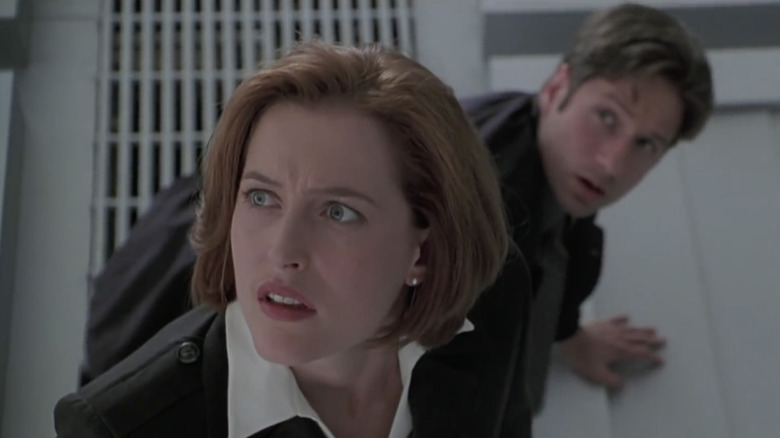
Sure, it very much feels like an extended and more expensive episode of the show, but it also delivers the platonic ideal of "The X-Files" in a compressed format. It starts out as just another case of the week, with Mulder (David Duchovny) and Scully (Gillian Anderson) investigating an office building bombing, until it escalates into a vast conspiracy involving the cover up of an incoming alien invasion of Earth.
The movie removes the ambiguity regarding the supernatural elements of the show and gives us a proper story of alien visitors, resulting in a gripping sci-fi conspiracy thriller worth watching. As an exercise in expanding the lore of a show, "Fight the Future" features some great work from show creator Chris Carter, with enough references and cameos to not just satisfy hardcore fans, but also show newcomers how vast the main conspiracy is, and how big the world of "The X-Files" is.
3. The Truman Show
Paramount Pictures
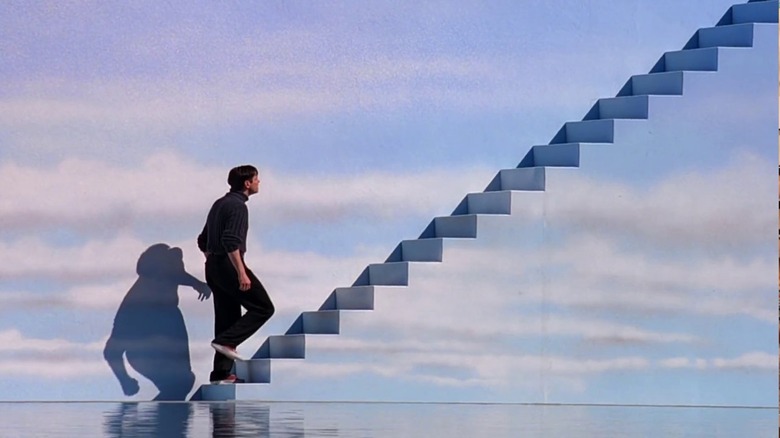
Peter Weir's brilliant sci-fi-adjacent satire remains a stellar piece of cinema over 25 years since its release. The film predicted our collective obsession with following the lives of strangers and the reality TV craze years before shows like "Big Brother" dominated the airwaves and social media took over our free time (and our democracy). The film follows an insurance salesman living an ordinary and banal existence, only to discover his whole life was fabricated for a reality TV show. It features Jim Carrey's best performance of his entire career, harnessing both his comedic and dramatic skills to great effect. He can be incredibly emotional and tragic, but also endlessly charming and funny.
Weir makes some brilliant choices in "The Truman Show," weaving in hidden camera and cinematography straight out of reality TV throughout the film, as the story goes from Truman's reality to the artifice of the titular show. It makes the very act of watching the movie an act of compliance, turning the audience into accessories for the horrors Truman experiences as "The Truman Show" goes from a film, to a show-within-a-movie, back to a film.
2. Pi
Protozoa Pictures
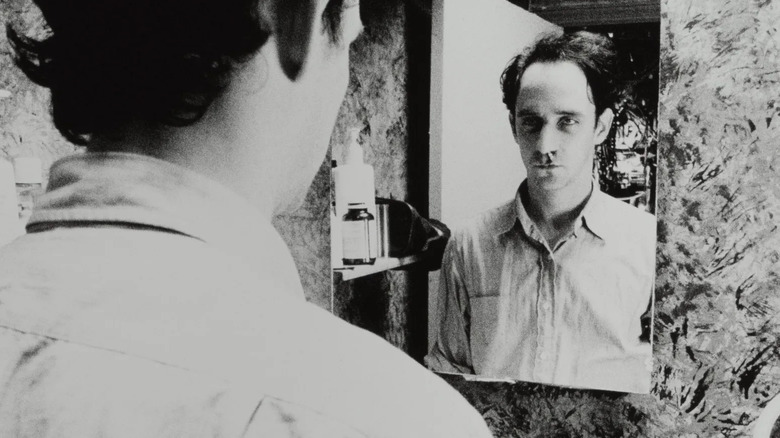
There are few debut films that are as strong a creative calling card as "Pi" was for Darren Aronofsky. For a director whose career has been nothing but weird and high concept, "Pi" feels like a jolt of electricity heralding the arrival of a singular filmmaker. This is a movie that encapsulates not only the themes, but the visual style that would define his career for decades, from his reliance on extremely tight closeups and long tracking shots, to the influence of the work of Shinya Tsukamoto ("Tetsuo: The Iron Man") in the thematics of his work.
"Pi" follows an obsessive mathematician using math to find the order in the real world while also potentially gaming the stock market. Aronofsky uses the simple premise as a springboard to explore themes of religion, identity, and existentialism. Despite the small scale of the film, "Pi" looks quite expansive, with Aronofsky shooting the film like a fever dream, a surreal reality that's like our own, but just off.
1. Dark City
New Line Cinema
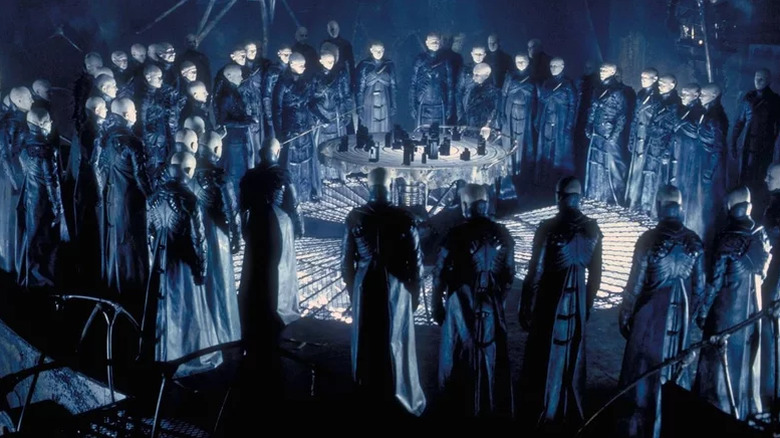
Alex Proyas took the brooding narrative and dark and gritty look of "The Crow" and turned it up to 11 for his follow-up film, "Dark City," a weird, building-bending, heavily dystopian, expressionistic, rain-drenched sci-fi noir film that you can easily lose yourself in, discovering new elements with each new viewing.
There's the moody grandeur of the set design, inspired by Fritz Lang's German expressionist masterpiece "Metropolis," or the bizarre trench-coated, pale beings that freeze the titular city and rearrange its buildings as they manipulate the memories of its citizens. Every element works to create a vision of a world you've never seen on film before, one that feels ahead of its time (especially considering the movie came out before "The Matrix").
Though the production design of "Dark City" is undoubtedly its biggest feature, with a city that looks both new and old, ancient yet modern, the film is also packed with philosophical ponderings, with Plato's Allegory of the Cave being key to the layered and complex plot. It's not hard to see why this film flopped at the box office when it was first released, or why it managed to become a cult classic in the time since, with a smart script, exquisite imagery and designs, and an impressive cast that includes William Hurt, Kiefer Sutherland, and Jennifer Connelly.