
.jpg) 1 hour ago
3
1 hour ago
3
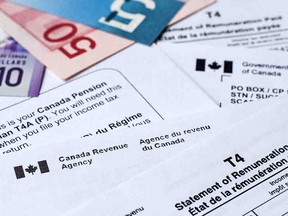
Article content
Here are 10 things to consider this January to save taxes in 2026 … and beyond.

THIS CONTENT IS RESERVED FOR SUBSCRIBERS ONLY
Subscribe now to read the latest news in your city and across Canada.
- Exclusive articles from Barbara Shecter, Joe O'Connor, Gabriel Friedman, and others.
- Daily content from Financial Times, the world's leading global business publication.
- Unlimited online access to read articles from Financial Post, National Post and 15 news sites across Canada with one account.
- National Post ePaper, an electronic replica of the print edition to view on any device, share and comment on.
- Daily puzzles, including the New York Times Crossword.
SUBSCRIBE TO UNLOCK MORE ARTICLES
Subscribe now to read the latest news in your city and across Canada.
- Exclusive articles from Barbara Shecter, Joe O'Connor, Gabriel Friedman and others.
- Daily content from Financial Times, the world's leading global business publication.
- Unlimited online access to read articles from Financial Post, National Post and 15 news sites across Canada with one account.
- National Post ePaper, an electronic replica of the print edition to view on any device, share and comment on.
- Daily puzzles, including the New York Times Crossword.
REGISTER / SIGN IN TO UNLOCK MORE ARTICLES
Create an account or sign in to continue with your reading experience.
- Access articles from across Canada with one account.
- Share your thoughts and join the conversation in the comments.
- Enjoy additional articles per month.
- Get email updates from your favourite authors.
THIS ARTICLE IS FREE TO READ REGISTER TO UNLOCK.
Create an account or sign in to continue with your reading experience.
- Access articles from across Canada with one account
- Share your thoughts and join the conversation in the comments
- Enjoy additional articles per month
- Get email updates from your favourite authors
Sign In or Create an Account
or
Article content
1. Rebalance your non-registered portfolio: If 2025 was a banner year for your non-registered portfolio, there’s a strong likelihood that your target asset allocation may be off. This can be the case if you’re heavily weighted in equities versus fixed income, or you own shares in one or more of the top-performing stocks that now represent a disproportionately large weighting in your portfolio.
Article content
Article content
Article content
If so, now is a great time to rebalance that portfolio by taking profits and realizing those capital gains. For example, if you put in a trade order during the first week of January, any capital gains taxes triggered won’t be due for 16 months, or April 30, 2027, which is the balance due date for 2026.
Article content
By signing up you consent to receive the above newsletter from Postmedia Network Inc.
Article content
2. Set up a charitable donation budget: January is also the perfect time to set up a charitable donation budget for the year. Once you decide on a number, consider whether it makes sense to make that contribution now to a donor-advised fund (DAF). This allows you to effectively create a mini-foundation for a fraction of the cost of setting up a private foundation. You get the donation receipt upfront at the time of the gift, and you can then allocate the funds over time to any of Canada’s 85,000-plus registered charities.
Article content
If you’re holding appreciated securities in your non-registered portfolio, consider donating them in-kind to your DAF. You will get a receipt equal to the fair market value of the securities donated and you won’t pay any capital gains tax on the accrued appreciation. If you still want to own the stock, buy it back with cash, resetting the adjusted cost base to the current fair market value.
Article content
Article content
3. Get a head start on your 2026 RRSP contribution: For 2026, you can contribute 18 per cent of your 2025 earned income to your registered retirement savings plan (RRSP) — less any pension adjustment — up to a maximum of $33,810. This maximum is reached if your 2025 income was $187,833 or higher.
Article content
Article content
4. Contribute to a TFSA: As of Jan. 1, you can now contribute another $7,000 to your tax-free savings account (TFSA). If you’ve never opened up a TFSA, you can immediately contribute a cumulative $109,000, provided you were at least 18 in 2009 and a resident in Canada throughout those years.
Article content
5. Make a 2026 RESP contribution: If you’ve got kids, and you’re saving for their postsecondary education, consider contributing at least $2,500 for each kid’s registered education savings plan (RESP) to get the maximum Canada Education Savings Grant of 20 per cent, or $500. If you’ve missed a prior year, consider doubling up — $5,000 per kid — to get $1,000 of grants all at once.
Article content
6. Contribute to an FHSA: If you’re a first-time homebuyer who is a resident of Canada and at least 18 years of age, the first home savings account (FHSA) allows you to save on a tax-free basis toward the purchase of a home in Canada. For 2026, you can contribute another $8,000 to your FHSA, and up to $16,000 if you have carry-forward room available.
 English (US)