
.jpg) 1 hour ago
3
1 hour ago
3
A life that leads to dementia can take many paths, but there are some common risk factors that make a diagnosis more likely.
An extensive new study shows, however, that among older adults, the effect of those risk factors differs.
Some risk factors seem to hit women's cognition harder than men's, and accruing multiple risk factors over a lifetime seems to worsen women's brain function more so than men's.
In other words, certain risk factors may not mean the same thing in a woman's brain as it does in a man's, which has implications for dementia research and treatments.
It's well known that dementia is more common in women than in men, and longer life expectancy does not fully explain the gap.
There's something else going on that these findings could also help us understand.
"Our study suggests that women may be at greater risk of dementia because they experience a greater number of risk factors, and because these risk factors reduce cognition to a greater degree than [in] men," the researchers write.
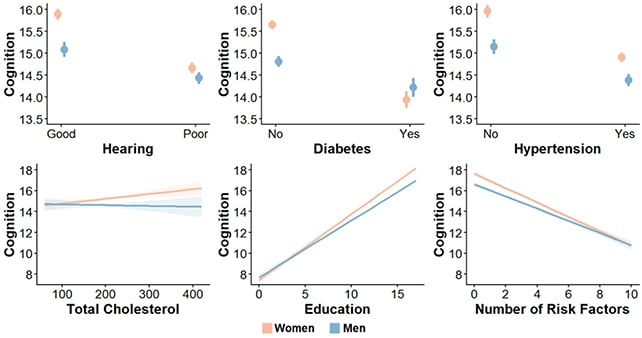 The researchers looked at the correlation between dementia risk factors and cognition among men and women. (Fitzhugh and Pa, Biol. Sex Differ., 2026)
Study co-authors Megan Fitzhugh and Judy Pa, two neuroscientists from the University of California, San Diego, say their results provide further evidence that dementia risk needs to be assessed and managed in a personalized way.
"Looking beyond which risk factors are most common, we found that some have a disproportionately larger impact on women's cognition," says Fitzhugh.
"This suggests that prevention efforts may be more effective if they are tailored not just to risk factor prevalence, but to how strongly each factor affects cognition in women versus men."
The researchers analyzed health data from 17,182 individuals aged 40 or older, examining 13 risk factors linked to dementia.
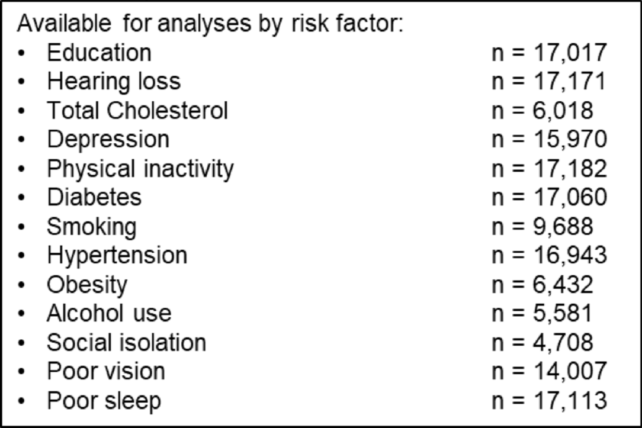 The 13 dementia risk factors analyzed in the study. Sample sizes varied as some data were missing. (Fitzhugh and Pa, Biol. Sex Differ., 2026)
Depression, physical inactivity, and sleep problems were more common in women, compared to men.
Higher rates of hearing loss, diabetes, and heavy alcohol use, on the other hand, were more often reported by men.
Some risk factors were linked to greater reductions in cognitive scores in women – an indication that they affect women's brains more negatively than men's.
These factors included high blood pressure, hearing loss, and diabetes.
Higher BMI was also associated with poorer cognitive performance in women in their 50s and 60s, but not at older ages.
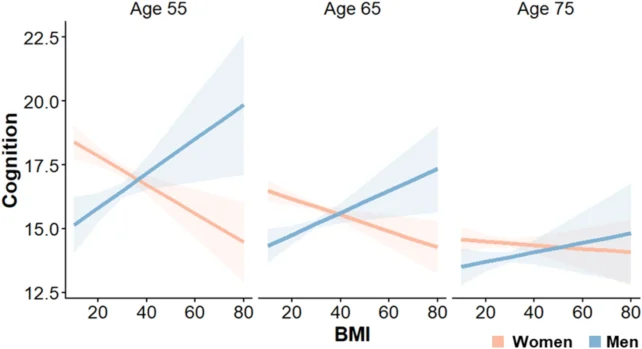 Correlations between BMI and cognitive performance, shown at three representative ages. (Fitzhugh and Pa, Biol. Sex Differ., 2026)
Amid that picture of cognitive decline, there were some positive trends suggesting that certain factors might help preserve cognitive function in women compared to men.
"Two risk factors, years of education and total cholesterol, showed positive associations with cognition, such that higher levels were correlated with greater cognition," write the researchers in their published paper.
Given their links to cognitive performance, it's possible these factors may be especially important to investigate in women's dementia risk.
However, this observational study can't prove cause and effect. A longer-term analysis could provide stronger evidence that these risk factors were contributing to the cognitive test scores.
While 'women' and 'men' are recognized as gender categories, this study uses these terms to refer to individuals' self-reported biological sex.
"It is important to distinguish between sex differences in the prevalence of risk factors and their impact on cognition, because prevalence and impact may not correspond," writes the team.
"Targeting only the most prevalent risk factors within each sex may overlook certain risk factors that more markedly influence cognitive decline."

The new findings fit with previous research suggesting that dementia risk factors may affect men and women in different ways, though these studies have tended to look at only one risk factor at a time.
Alzheimer's disease now affects an estimated one in nine US adults aged 65 and older, and two-thirds of those affected are women.
While the figures for dementia may be bleak, there are real and practical ways to reduce risk, while work on treatments continues.
The researchers emphasize that all these risk factors are potentially modifiable. That means they're real targets that people and their doctors can try to address, whether it's drinking less, moving more, or seeking help for depression.
 Two-thirds of US adults aged 65 and older with Alzheimer's are women. (Daisy-Daisy/Canva)
Next steps here could include research to determine why women's cognition may be more vulnerable to certain factors.
Hormonal changes around menopause may be involved, but the mechanisms remain unclear.
Related: One Vital Bodily Function Could Link Many Dementia Risk Factors
"These differences highlight the importance of considering sex as a key variable in dementia research," says Pa.
The research has been published in Biology of Sex Differences.
 English (US)