
.jpg) 1 hour ago
2
1 hour ago
2
The dust has settled in the aftermath of last week's giant New Glenn rocket explosion, which shook Florida's Space Coast and the space industry itself.
Blue Origin was conducting a fueling test on May 28, ahead of New Glenn's fourth mission, when a yet unknown event led to the total destruction of the vehicle and significant damage to the ground infrastructure at Launch Complex-36 (LC-36). No one was hurt in the incident, but the loss dealt a serious blow to Blue Origin's ability to meet NASA's timeline to support the Artemis missions to return astronauts to the moon, and further stalls the growth of the Amazon Leo wireless internet constellation meant to compete against SpaceX's Starlink satellite network.
The explosion caused extensive damage to LC-36, Blue Origin's only launchpad capable of supporting a rocket as large as New Glenn. So extensive, in fact, that the damage can be measured from space, as seen in images captured by Planet Lab's SkySat-C9 satellite, and processed by Spacefromspace.
Satellite imagery shows charred vegetation stretched out in nearly every direction around the half-mile-wide (1 kilometer) New Glenn pad. Blue Origin leases LC-36, which is located at Cape Canaveral Space Force Station (CCSFS). Visible damage across the scorched facility, now in ruin, can be seen on the launch tower, flame trench and other support systems.
Blue Origin is currently working out how to repair the damage. "We will start clearing the pad soon and have a good rebuild plan in place," Blue Origin CEO Dave Limp said in a post to X on May 31. Limp and Blue Origin founder Jeff Bezos toured LC-36 with NASA administrator Jared Isaacman on May 30, according to Isaacman, who promised the agency's full support in the investigation ahead.
New Glenn is one of the rockets NASA is counting on to land astronauts on the moon during future Artemis missions. Blue Origin's Blue Moon lander is one of two spacecraft contracted by NASA to carry out those landings — the other is SpaceX's Starship — and until Blue Origin can complete repairs to LC-36, Blue Moon doesn't have a ride to space.
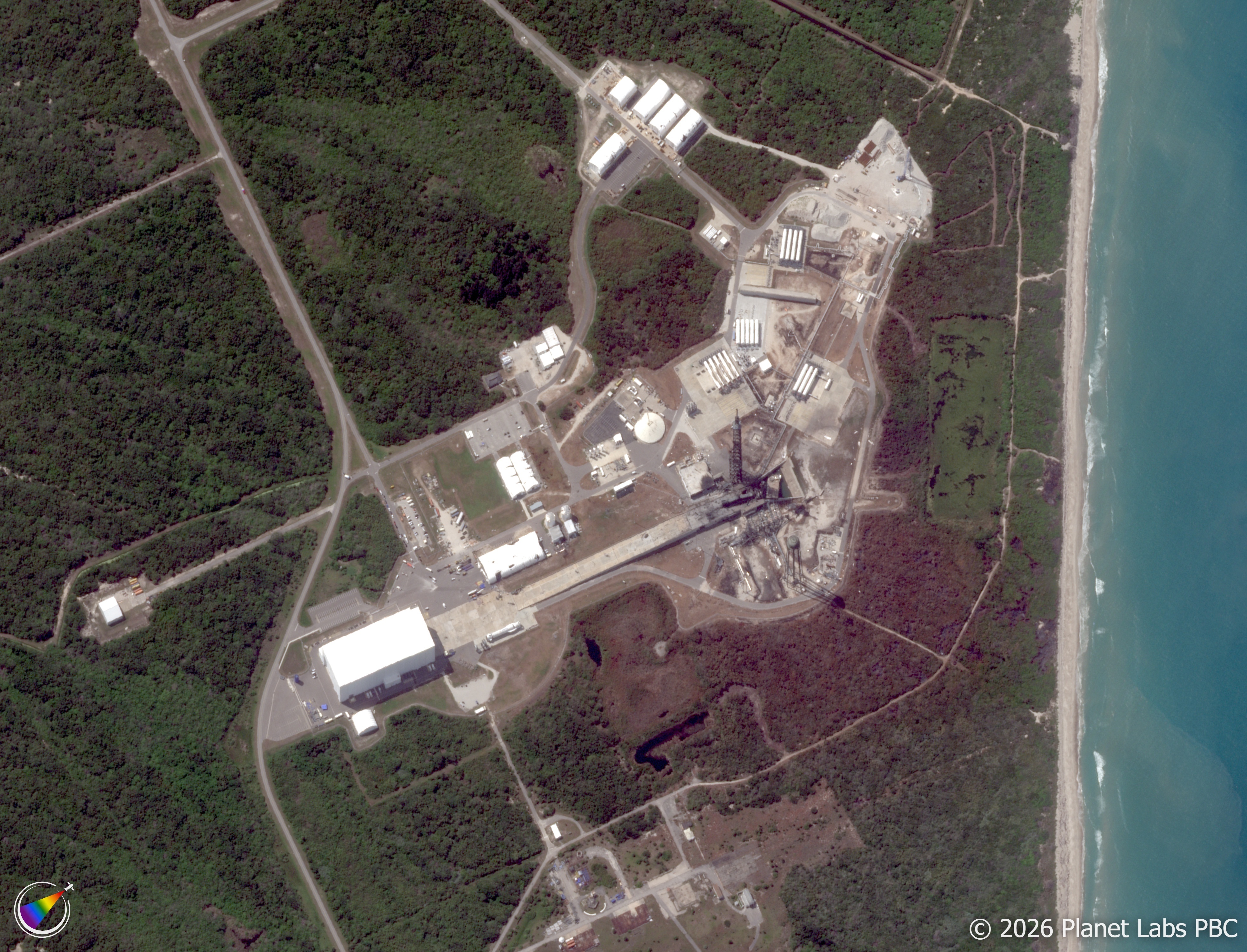
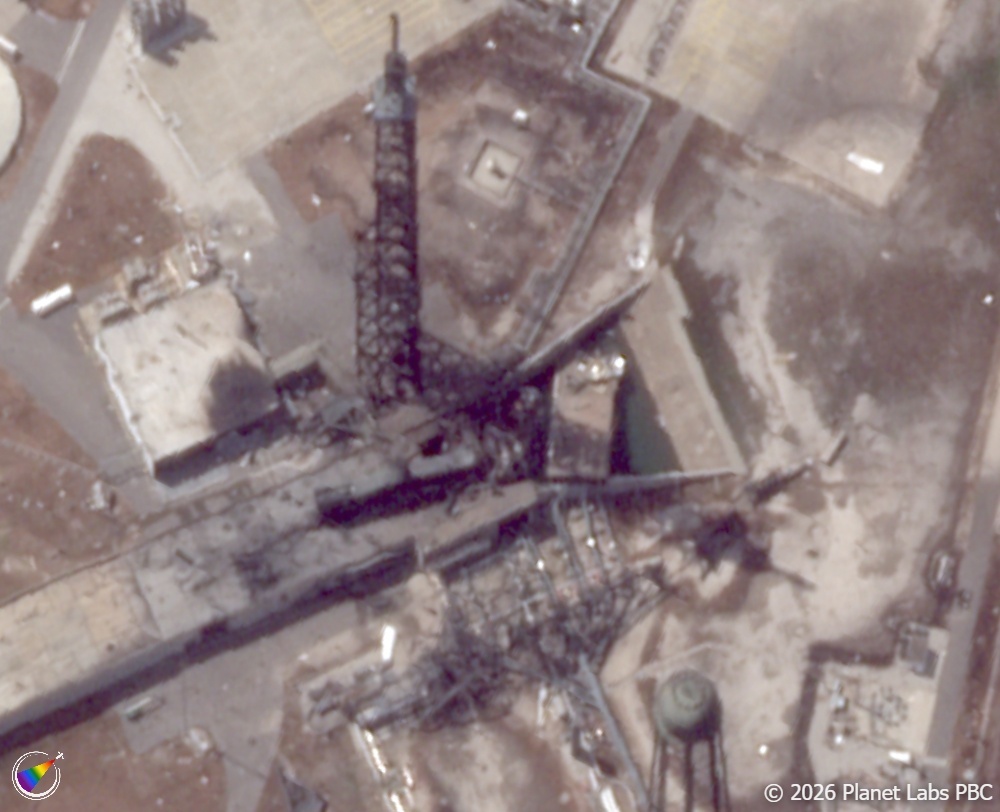
Blue Origin had planned to launch the first Blue Moon Mark 1 (MK1), a smaller cargo variant of the eventual MK2 model designed to support a crew, on a mission to the lunar surface this fall, and stood to deliver a suite of NASA payloads as part of the agency's Moon Base 1 phase to establish a future permanent outpost. But the restoration of LC-36 will very likely delay that launch for several months. That will have ripple effects for Blue Origin's readiness to supply a Blue Moon vehicle for the upcoming Artemis 3 mission to launch the lunar landers to Earth orbit to practice rendezvous and docking maneuvers with the Orion spacecraft. That, in turn, could either delay Artemis 3 or create an untenable timeline for Blue Moon to gain its certification to carry astronauts in time for the first Artemis mission lunar landing on Artemis 4.
When an Antares rocket exploded on its launchpad in 2014, it was nearly two years until the affected facilities at NASA's Wallops Space Flight Center supported another launch. SpaceX suffered a similar static test fire accident to New Glenn's in September 2016, when a Falcon 9 rocket exploded at CCSFS's Launch Complex-40 leading up to the launch of the Amos-6 communications satellite. SpaceX spent just over a year repairing its facilities there, launching a mission from LC-40 in December 2017.
Blue Origin hasn't come out with an estimated repair time for LC-16, and has yet to release an overall assessment of the damage. Following his tour with Isaacman, Bezos voiced his determination for the company to press onward, and his appreciation to the administrator for NASA's support. "Thank you for being here today," Bezos said in a post on X. "We will get back to flight, and we will get to the moon. Gradatim Ferociter."
 English (US)