
.jpg) 1 hour ago
3
1 hour ago
3
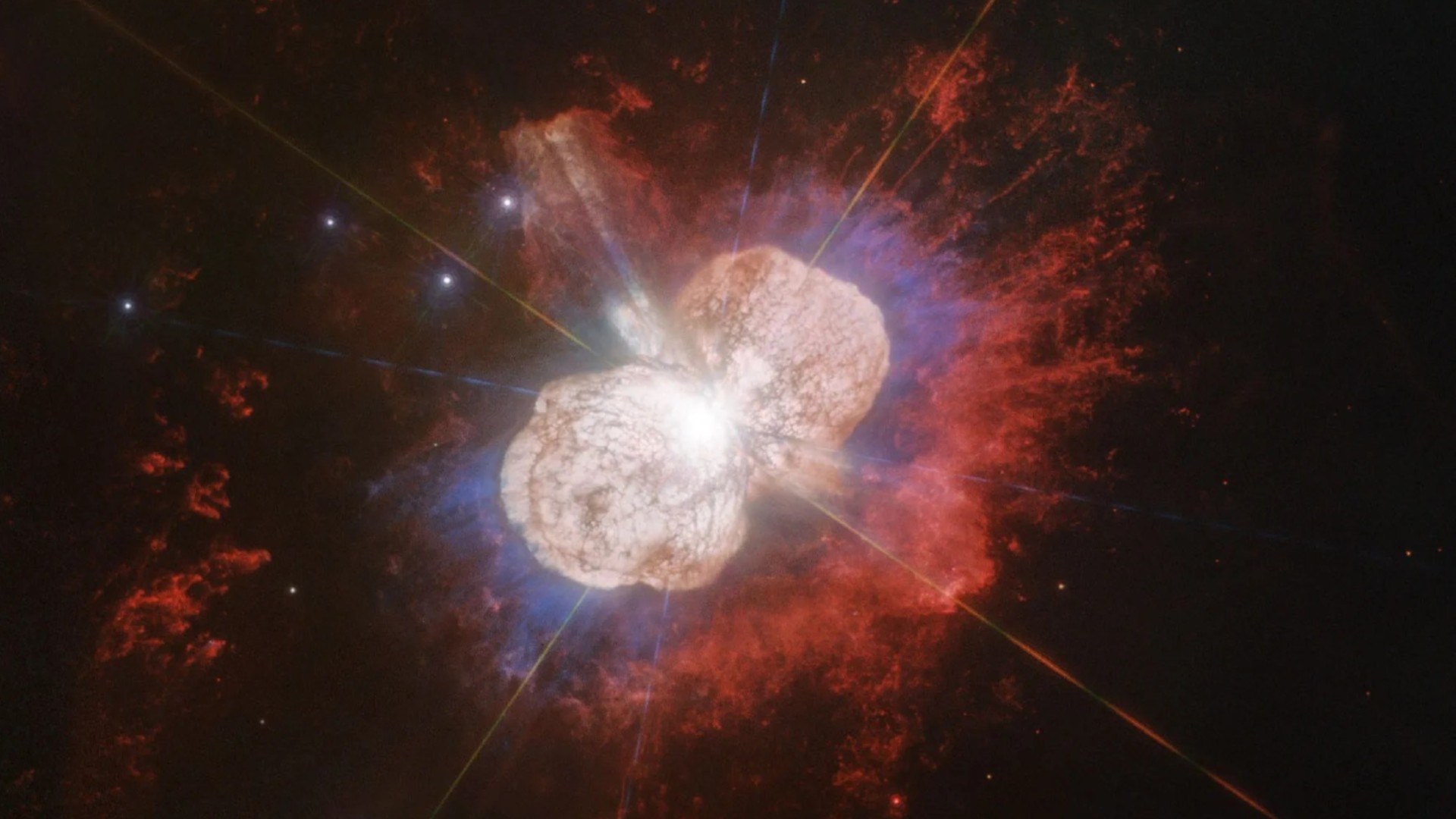
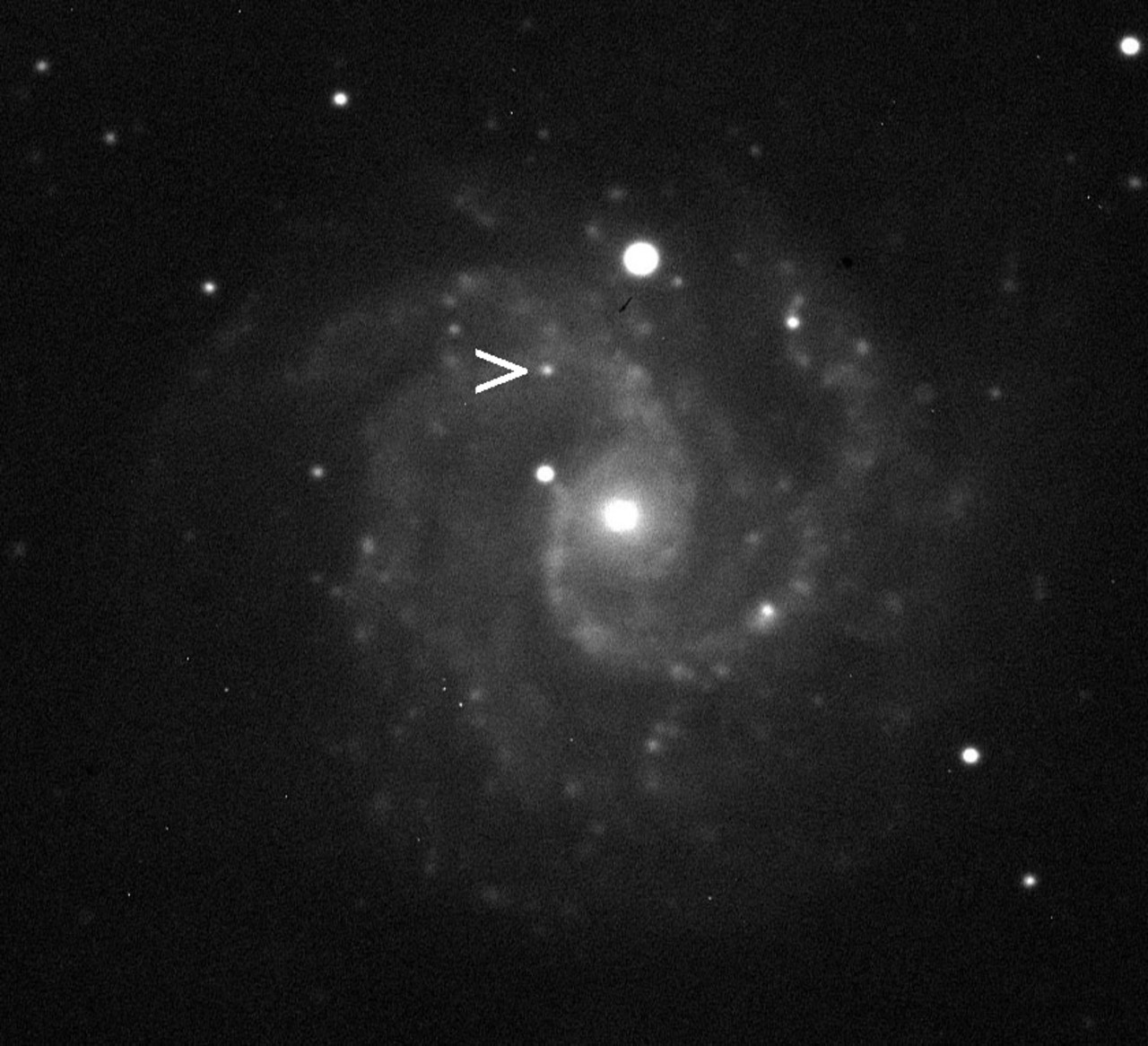
Staring up at the night sky, you might envision a star flaring up, burning thousands of times brighter than usual. That's a cosmic explosion — a supernova! Except it isn't. The star lives on.
These violent, non-fatal eruptions can make a star mimic a true supernova — leading to what we affectionately call "supernova impostors."
Trying to understand these supernova impostors is like trying to weigh a raging volcano's output without getting too close. We know it's important, but measuring how much material these stars eject, and what makes them do it, is surprisingly hard.
Current ways of measuring mass loss from, say, infrared or radio observations, typically only show us what's happening right now. But these stars spit stuff out in fits and starts, not a steady stream. And when we try to average it all out across stellar populations, we lose the juicy details of individual star behavior.
For decades, astronomers have concocted intricate computer models to predict how stars live and die. These stellar evolution tracks are our cosmic crystal balls. But for truly gargantuan stars, the models often sputter out, unable to complete their lives in the simulation. One big sticking point? This very same eruptive mass loss.
Models include a way to describe it, imagining light pressure pushing material off the star, exceeding its stable luminosity limit – what scientists call super-Eddington conditions.
But the key to making this work is a free-floating efficiency parameter – a dial that controls the strength of the outburst. And nobody knew where to set it. It was a crucial, unconstrained value, holding back our understanding of how these cosmic giants evolve.
The struggle to accurately model these phenomena means that despite growing observational evidence of violent eruptions, the underlying physical mechanisms remain poorly understood.
But astronomers are a clever bunch. A team led by Shelley J. Cheng at the Center for Astrophysics | Harvard & Smithsonian, along with Charlie Conroy and Jared A. Goldberg, decided to tackle this problem head-on in a new study posted to arXiv.
Their idea? Instead of trying to measure every little burp from a single giant, they'd take a census of red supergiants across our nearby galactic neighbors – what we call the Local Group stellar populations. These are massive stars in their later stages, swollen and ruddy, shining bright across the cosmos. We know where they live. We know what they look like.
Wide-field surveys, like the PanSTARRS1 Medium-Deep Survey, have revolutionized our ability to spot these peculiar transients and luminous outbursts, helping us map out these red giants in distant galaxies. This observational power is crucial for gathering the data needed to calibrate eruptive mass loss.
The team used sophisticated MESA stellar evolution models, tweaking that mysterious efficiency parameter to see what happened. Then, they created mock stellar populations – basically, fake galaxies brimming with these modeled stars, sampling different initial masses and ages, just like real star-forming regions.
They then compared the predicted brightness distributions of these mock stars to actual observations of red supergiants in the Small Magellanic Cloud, the Large Magellanic Cloud, and the Andromeda galaxy (M31). It was like trying to match a blurry photo of a crowd to a lineup of suspects, carefully adjusting until the picture clicked.
What they found was that the efficiency parameter wasn’t just some random number. It showed a clear, positive trend with metallicity — the amount of heavy elements baked into a star.
More heavy elements, more violent eruptions. It's a bit like adding more baking soda to a volcano experiment – things get livelier.
With this calibrated eruptive mass loss, stars that start out truly massive – over about 20 times the sun's heft – are prevented from ever even becoming red supergiants in the models. Instead, these colossal stars shed so much material in their dramatic outbursts that they skip that red supergiant phase entirely, evolving down a different path.
But the universe, as always, holds more cards. This relationship between mass loss and metallicity looks solid, but we need to test it in more galaxies, not just our immediate neighbors, to confirm the trend is truly widespread. Future simulations will also need to dig into the nitty-gritty: Does metallicity affect what triggers an eruption, or just how much stuff escapes?
The saga of these spitting stars is far from over. Each new burst of observation, each refined model, peels back another layer, showing us just how dynamic and surprising the life of a star can be.
 English (US)