
.jpg) 23 hours ago
3
23 hours ago
3
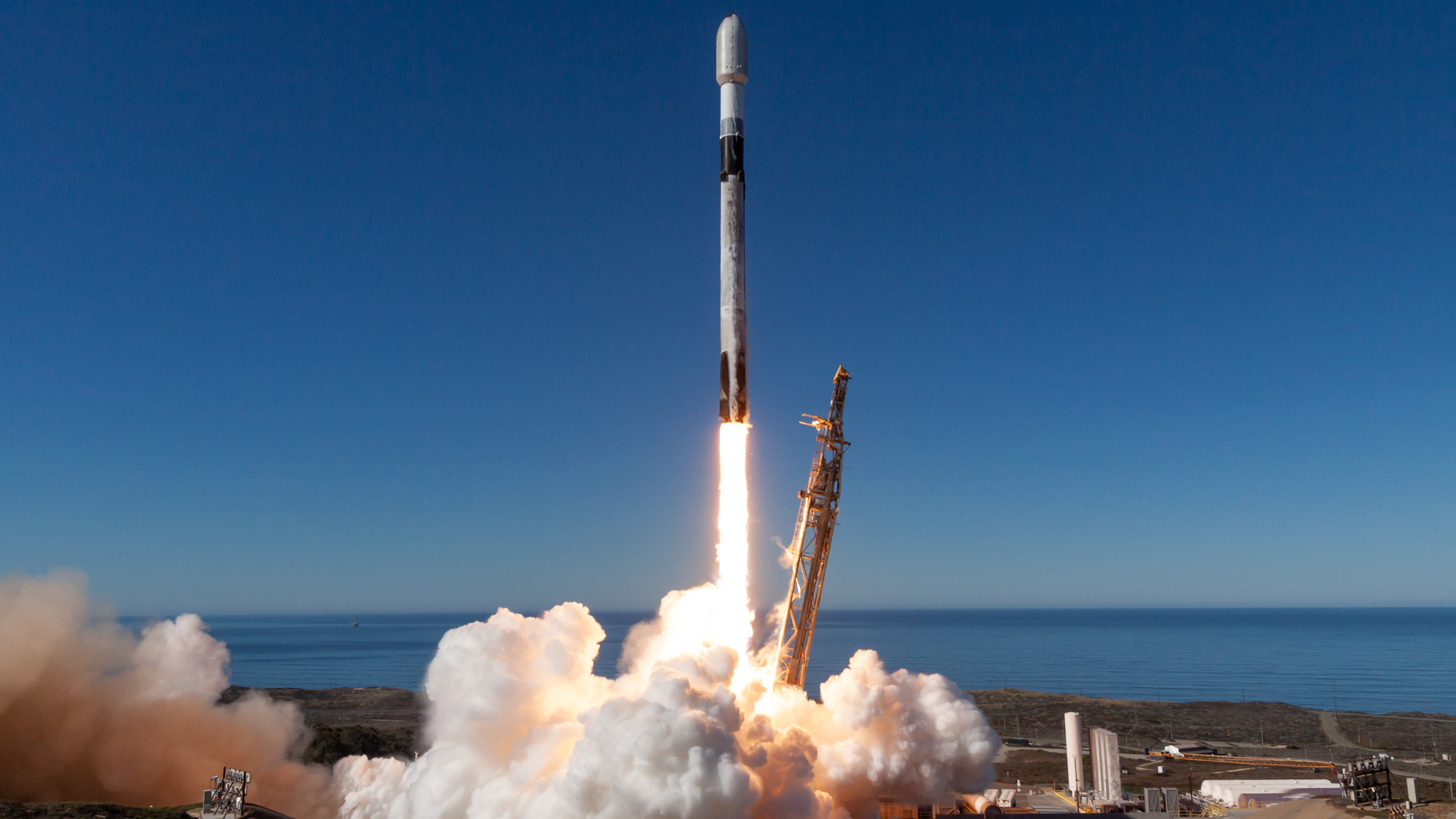
SpaceX will launch more than 100 satellites to orbit from California early Monday morning (March 30), and you can watch the action live.
A Falcon 9 rocket is scheduled to lift off from Vandenberg Space Force Base in California on Monday during a 57-minute window that opens at 6:20 a.m. EDT (1020 GMT; 3:20 a.m. local California time).
Article continues below
As its name suggests, Transporter-16 will be the 16th mission of SpaceX's Transporter rideshare series. The company also operates another rideshare program called Bandwagon, which has four launches under its belt so far.
Together, these two programs have lofted a total of more than 1,600 payloads to orbit — including 143 on Transporter-1 in January 2021, which still holds the single-launch record.
Transporter-16 will loft 119 payloads, "including cubesats, microsats, hosted payloads, a reentry vehicle, and orbital transfer vehicles carrying eight of those payloads to be deployed at a later time," SpaceX wrote in a mission description.
If all goes to plan on Monday morning, the Falcon 9's first stage will land about 8.5 minutes after launch on the SpaceX droneship "Of Course I Still Love You," which will be stationed in the Pacific Ocean. It will be the 12th launch and landing for this particular booster, according to the mission description.
The rocket's upper stage, meanwhile, will haul the 119 payloads to low Earth orbit, where they'll be deployed starting about 55 minutes after liftoff.
 English (US)