
.jpg) 1 hour ago
2
1 hour ago
2
Article content
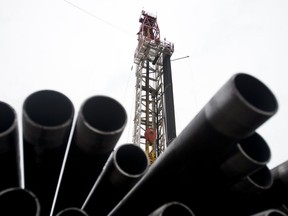
U.S. shale drillers cannot increase production quickly enough to solve an oil supply crisis caused by Donald Trump‘s war in Iran, industry bosses have warned, saying a big rise in output would take months to materialise.

THIS CONTENT IS RESERVED FOR SUBSCRIBERS ONLY
Subscribe now to read the latest news in your city and across Canada.
- Exclusive articles from Barbara Shecter, Joe O'Connor, Gabriel Friedman, and others.
- Daily content from Financial Times, the world's leading global business publication.
- Unlimited online access to read articles from Financial Post, National Post and 15 news sites across Canada with one account.
- National Post ePaper, an electronic replica of the print edition to view on any device, share and comment on.
- Daily puzzles, including the New York Times Crossword.
SUBSCRIBE TO UNLOCK MORE ARTICLES
Subscribe now to read the latest news in your city and across Canada.
- Exclusive articles from Barbara Shecter, Joe O'Connor, Gabriel Friedman and others.
- Daily content from Financial Times, the world's leading global business publication.
- Unlimited online access to read articles from Financial Post, National Post and 15 news sites across Canada with one account.
- National Post ePaper, an electronic replica of the print edition to view on any device, share and comment on.
- Daily puzzles, including the New York Times Crossword.
REGISTER / SIGN IN TO UNLOCK MORE ARTICLES
Create an account or sign in to continue with your reading experience.
- Access articles from across Canada with one account.
- Share your thoughts and join the conversation in the comments.
- Enjoy additional articles per month.
- Get email updates from your favourite authors.
THIS ARTICLE IS FREE TO READ REGISTER TO UNLOCK.
Create an account or sign in to continue with your reading experience.
- Access articles from across Canada with one account
- Share your thoughts and join the conversation in the comments
- Enjoy additional articles per month
- Get email updates from your favourite authors
Sign In or Create an Account
or
Article content
Scott Sheffield, a veteran shale boss, said producers would resist costly new drilling programmes until they were certain oil prices — which hit an 18-month high above US$80 a barrel this week amid fears of supply disruptions from the Gulf — would last.
Article content
Article content
Article content
A lack of good drilling prospects would also hold back companies, which have cut spending, idled rigs and laid off workers in the past 12 months during a period of weak oil prices, he said.
Article content
“It’ll just give them extra cash flow. They can reduce debt. They can do buybacks. They can pay dividends,” Sheffield said of the price surge this week. “But once the war ends, then it’s gonna fall back pretty quickly.”
Article content
He added: “Also, you got to remember the companies are running out of [drilling] inventory . . . I do not anticipate anybody adding any rigs.”
Article content
The joint U.S.-Israeli attacks on Iran and assassination of its supreme leader Ayatollah Ali Khamenei on Saturday drew a swift response from Tehran, which has targeted energy infrastructure in Arab neighbours and vowed to shut the Strait of Hormuz, the chokepoint for a fifth of global oil supply.
Article content
Some huge oilfields in Iraq and Qatar’s giant gas export facilities have already shut as the war intensifies. Trump said on Tuesday that the U.S. could escort oil tankers out of the Gulf but details of the plan were scant.
Article content
Goldman Sachs and consultancy Wood Mackenzie have warned that a sustained supply disruption from the Gulf could send crude prices above US$100 per barrel, pushing up fuel prices and inflation and hitting global growth.
Article content
Article content
But the Trump administration has been sanguine. “The world is very well supplied with oil right now, and I think it gives President Trump more leverage in his geopolitical actions to not worry about a crazy spike in oil prices,” energy secretary Chris Wright told CNBC in an interview shortly before the US attacked Iran.
Article content
Article content
The International Energy Agency met to discuss the crisis on Tuesday and circulated a document saying US shale would be the “most significant” source of near-term output to offset any shortfall, mainly from recently drilled wells that had not started producing.
Article content
Those wells could add “an additional 400,000 barrels per day” in the second half of the year, it said, with 240,000 barrels per day in May.
Article content
But those are small volumes compared with the 20 million b/d exported from the Gulf. The most recent prediction from the U.S. government’s own Energy Information Administration said American output, currently at a record high of about 13.6 million b/d, would fall this year.
Article content
Reversing that trend would take much more time, even at higher oil prices, said analysts.
 English (US)