
.jpg) 1 hour ago
3
1 hour ago
3
This week in science: legendary natural historian David Attenborough turns 100; a mummy found wrapped in something never seen before; a tiny, frozen world discovered on the outskirts of our Solar System; and much more!
Scientists Develop New Antibody For Virus That Infects 95% of People
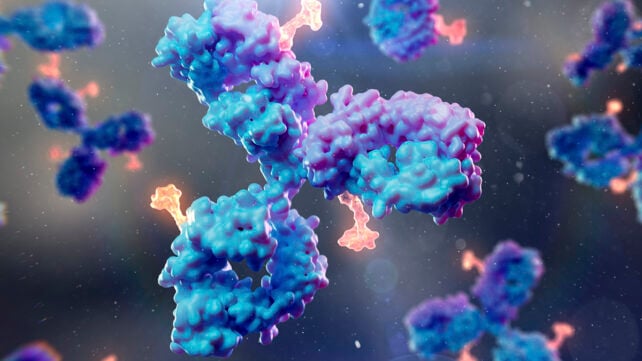 (Thom Leach/Science Photo Library/Getty Images)
Researchers have developed antibodies against Epstein-Barr virus, which infects around 95 percent of adults and can cause serious complications.
"Not only did we identify important antibodies against Epstein-Barr virus, but we also validated an innovative new approach for discovering protective antibodies against other pathogens," says pathobiologist Crystal Chhan.
Read the full story here.
Sir David Attenborough Is 100 Years Old! This Could Be The Secret of His Longevity.
 (Tim P. Whitby/Stringer/Getty Images Entertainment)
Beloved natural historian Sir David Attenborough celebrated his 100th birthday on Friday 8 May. He chalks his longevity up to sheer luck.
That's not just cynicism; increasingly, evidence suggests he might be right, at least to a certain extent.
Read the full story here.
Ancient Egyptian Mummy Found Wrapped In Something Never Seen Before
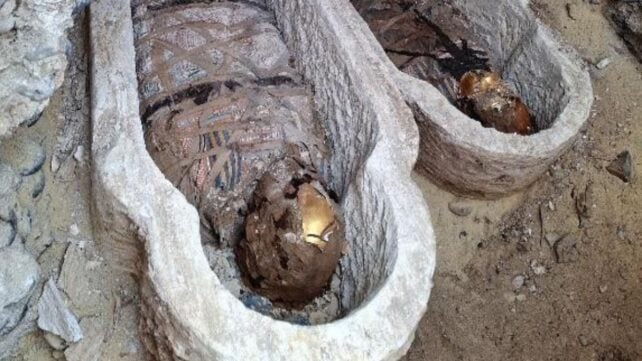 (Egyptian Ministry of Tourism and Antiquities/Facebook)
In a new first, a 1,600-year-old Egyptian mummy has been found wrapped in an excerpt from the 2,700-year-old Greek poem, the Iliad.
While the papyrus is in poor condition, the team has determined that it contains an extract from Book 2 of the Iliad, comprising a catalog of ships. It's a novel finding that sheds more light on the funeral and mummification processes of the time.
Read the full story here.
Movement Triggers a Hidden 'Brain Cleaning' Mechanism, Study Shows
 (Andriy Onufriyenko/Moment/Getty Images)
Neuroscientists have found that movements of abdominal muscles flush the brain with fluid that helps wash away waste.

It's tangible evidence that what goes on in our brains and our bodies isn't so separate after all, and a good reminder to get that body moving, in whatever way works for you, throughout the day.
Read the full story here.
Scientists Found an 'Impossible' Atmosphere on a Tiny World Beyond Neptune
 An artist's impression of the occultation of 2002 XV93. (NAOJ/Ko Arimatsu)
A tiny, icy world has been discovered beyond Pluto, complete with its own atmosphere – which shouldn't be possible given its size.
The object represents the first atmosphere detected in a small trans-Neptunian object (TNO), other than Pluto. The results suggest that even small bodies can host atmospheres, and, even more excitingly, with a bit of luck, we can detect them even when they are next to nonexistent.
Read the full story here.
An Existing Drug Could Be Repurposed to Help Treat Panic Attacks
 (Mixmike/iStock/Getty Images Plus)
The common antibiotic minocycline could have a second life as a drug that helps calm panic attacks, according to a new study in mice.
After 14 days of treatment, mice were consistently less jumpy when exposed to CO2. In addition, the mice on minocycline showed slightly calmer breathing patterns and changes to their metabolism.
Read the full story here.
 English (US)