
.jpg) 2 hours ago
3
2 hours ago
3
Underlying, less visible health problems sometimes manifest themselves through connected changes in the body that show up before any actual symptoms.
These can be useful 'warning signs' for getting scans done and putting treatments in place.
In a review of case studies published in the American Journal of the Medical Sciences, researchers from the Rutgers New Jersey Medical School have clarified the link between reddish lunulae – those half-moon shapes at the base of your fingernails – and a wide range of conditions, including heart failure, liver cirrhosis, and rheumatoid arthritis.
Lunulae only rarely turn red from their normal white shade, but when it happens, it's often due to a hidden health issue elsewhere in the body – though the researchers acknowledge that they aren't sure exactly why this relationship is there.
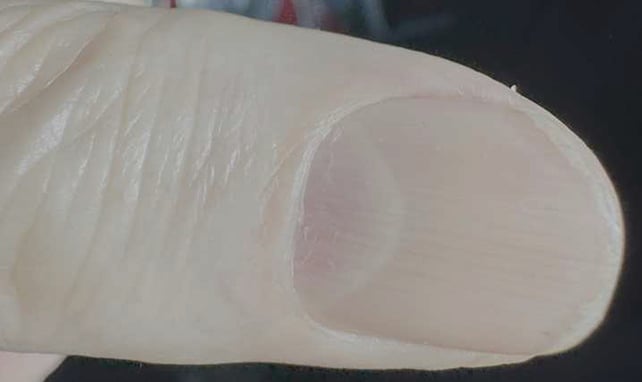 The reddening isn't necessarily dramatic. (Karim and Schwartz, Am. J. Med. Sci., 2026)
The review concludes by calling for full health checks for people with signs of red lunulae, to see if there might be something else going on.
"First described in 1954, numerous other cases have since been delineated and an association with cardiovascular, hepatic, hematologic, dermatologic, and rheumatologic disorders has been apparent," write the researchers in their published paper.
"Though the precise etiology remains unclear, red lunulae may reflect both systemic disease activity or local pathology such as subungual tumors."
The job of a nail lunula is to create new cells made of the protein keratin, which then push forward and harden to create the rest of the nail. They're usually more prominent on big thumbs and big toes.
And while red lunulae have been linked with heart disease and other problems for decades, this is the most comprehensive review of the cases to date.

One of the more recent studies analyzed by the researchers found that these discolored nail sections were associated with connective tissue diseases, for example, though not everyone with these diseases has red lunulae, and not everyone with red lunulae turns out to have an underlying condition.
There have also been case studies showing red lunulae in people with alopecia areata and carbon monoxide poisoning. Cardiovascular, autoimmune, and rheumatologic conditions turned up most often in the literature, the researchers found.
The review does note that systemic disease is most likely when the red coloring is seen on several nails, not just one.
With discoloring in a single nail, a subungual (under-the-nail) problem is usually more common.
"If further examination reveals the presence of red lunula on a single nail along with a nail bed infection, subungual tumor, subungual hemorrhage, or red discoloration of the entire nail plate or that exceeding the borders of the lunula, the clinical diagnosis of red lunula should probably not be rendered," write the researchers.

The next steps might include looking at the biological mechanisms linking these red nail parts to these various health issues. Capillary vasodilation seems to be what's happening, which is when the tiny blood vessels under the nail get wider, increasing blood flow.
And the review includes a test for doctors to try: pressing down on red lunulae will make them turn white if capillary vasodilation is indeed the cause, pointing to something that needs attention in the vascular system.
There are actual multiple colors that a lunula can turn – blue can indicate diabetes, while brown is associated with kidney disease, for instance – but the main point from this review is not to ignore any red discoloration if it shows up.
These easily overlooked nail parts are actually useful windows into the body's health.
"Given the rarity of the occurrence, its potential diagnostic relevance is often overlooked," write the researchers.
Related: Your Toenails Can Reveal if You've Been Exposed to an Invisible Lung Cancer Cause
"When identifying red lunulae, clinicians should consider connections to underlying systemic or dermatologic disease. This subtle clinical sign may facilitate early detection and identification of salient systemic disease."
The research has been published in the American Journal of the Medical Sciences.
This article was fact-checked by Fiona MacDonald and edited by Fiona MacDonald. While we pride ourselves on our process, we are only human. If you spot a mistake, please let us know.
 English (US)