
.jpg) 17 hours ago
4
17 hours ago
4
From landmark buildings to iconic furniture, the designers whose ideas continue to shape how the world lives.
What makes an architect or designer an icon? Beyond fame and recognition lies a more enduring measure: ideas that continue to influence buildings, objects, and spaces long after the original work is complete
What makes an icon? LUXUO examines what earns this status in the world of architecture and design.
It is tempting to say recognition. A building you can identify by its silhouette, a chair whose shape is familiar even without its designer’s name, a piece of furniture that has appeared in countless interiors. But fame alone does not make a design icon.
The more enduring icons do something harder. They change the way people think about space, objects and the act of living. Their influence can outlast a building, a collection or even the designer who created it. Ideas become absorbed into the design language of subsequent generations, sometimes so completely that the origins are easy to forget.
Le Corbusier’s vision of modern living, I.M. Pei’s dialogue between modernism and history, Norman Foster’s fusion of architecture and engineering, and Zaha Hadid’s radical approach to form each expanded the possibilities of architecture in different ways. In furniture and product design, Philippe Starck made design part of everyday culture, Ron Arad challenged the boundary between furniture and sculpture, Patricia Urquiola pushed material and sensory experience in new directions, while Antonio Citterio demonstrated how restraint and functionality can endure.
The eight names do not share a single aesthetic. Nor does an icon necessarily need a recognisable shape or an instantly identifiable signature. What the eight names share is influence. The real test of an icon is not whether the world remembers the name. It is whether the idea continues to shape the world after the name has become familiar.
Le Corbusier: Changing The Rules Of Modern Living
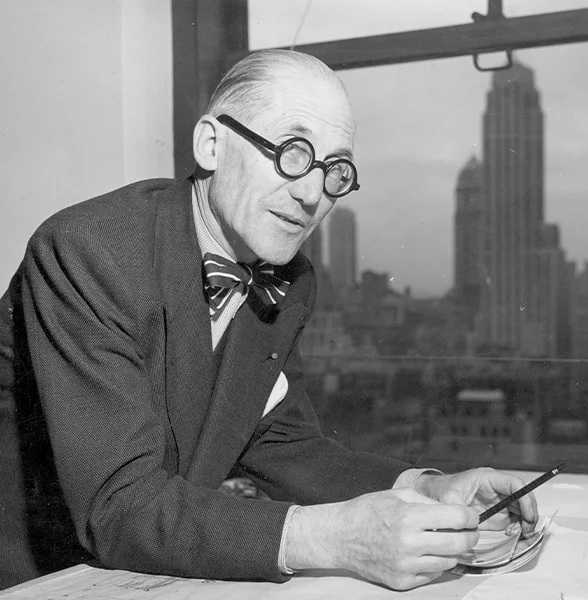 Charles-Édouard Jeanneret or more famously known as Le Corbusier was a renowned Swiss architect (1887 to 1965). Image: fondationlecorbusier.fr
A visit to Villa Savoye begins with a deceptively simple white box set against greenery in Poissy, outside Paris. The building appears almost weightless, lifted above the ground on slender columns. A ramp draws movement through the house, gradually revealing rooms, terraces and framed views of the landscape.
Completed in 1931, Villa Savoye was not simply a fashionable modern house. The Fondation Le Corbusier describes the building as a manifesto of the architect’s “five points of modern architecture”, including pilotis, free façades, long horizontal windows, open planning and the roof garden. The circulation through the building was conceived as an architectural promenade, turning movement itself into part of the experience.
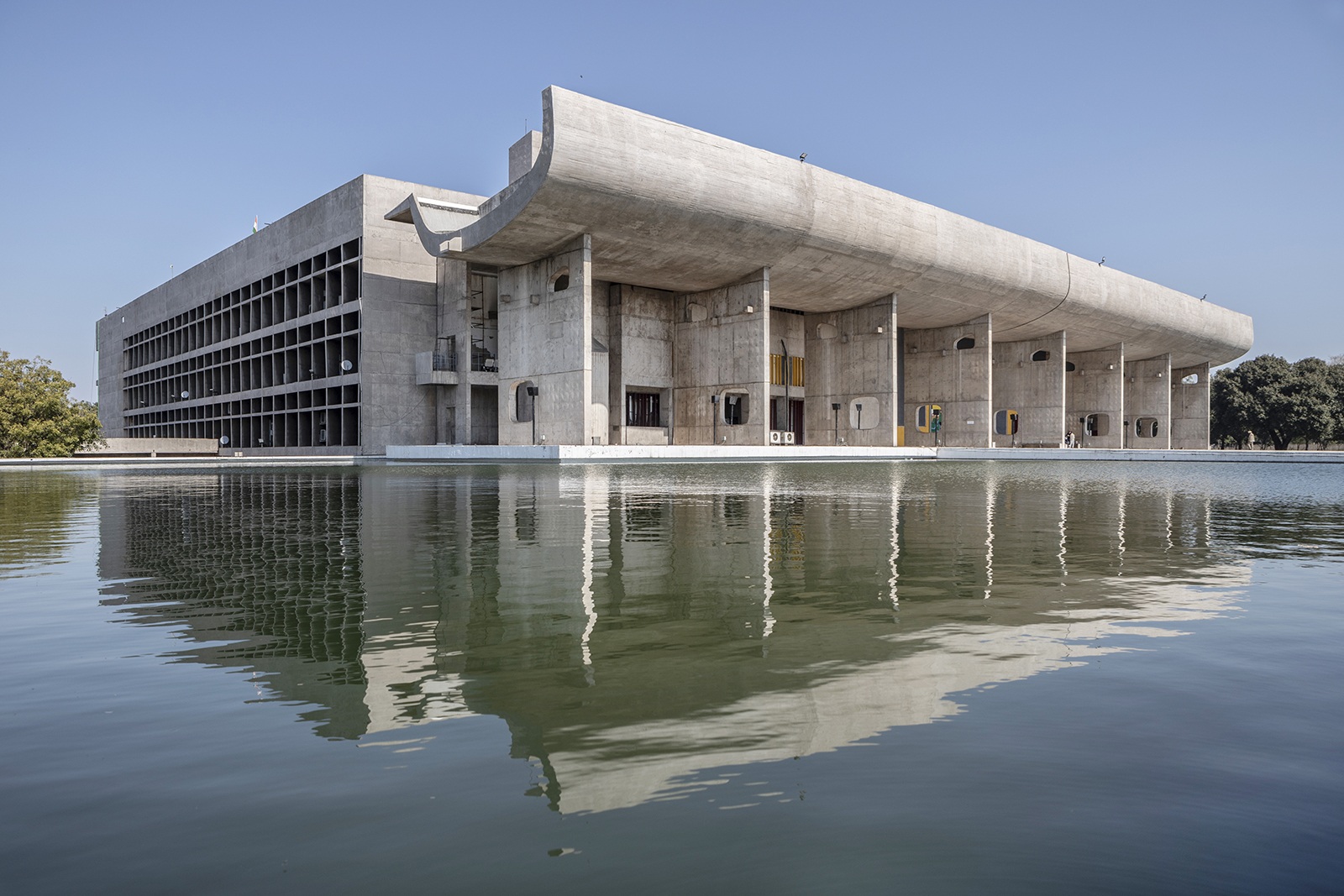 Palace of Assembly (1963), Chandigarh, India. Image: Roberto Conte.
The same thinking extended into furniture. Le Corbusier developed a furniture programme with Pierre Jeanneret and Charlotte Perriand, producing pieces such as the Grand Confort armchair and the continuously adjustable Chaise Longue. Furniture was not treated as decoration added after architecture. It formed part of a broader idea about how modern life could be organised.
That distinction remains important. Le Corbusier’s legacy is not simply a collection of white buildings or famous chairs. The deeper influence lies in a new relationship between structure, movement, furniture and everyday life.
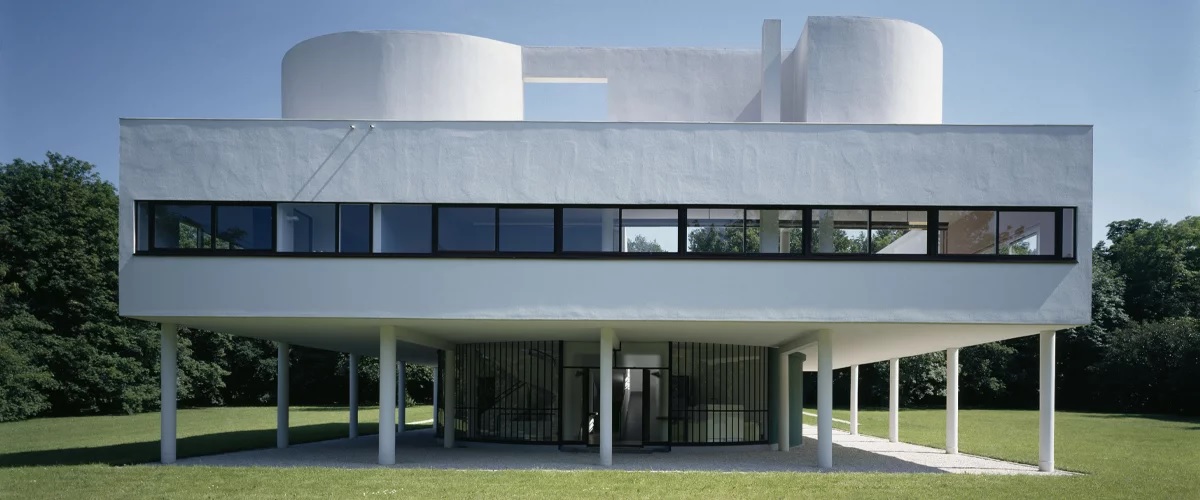 Villa Savoye (1931) in Poissy, France. Image: fondationlecorbusier.fr
2026 provides a timely reminder of that reach. On 17 July, the tenth anniversary of the inscription of 17 Le Corbusier works across seven countries on the UNESCO World Heritage List was marked by an exhibition at Maison La Roche in Paris. The UNESCO designation recognises the work’s universal significance and its influence on 20th- and 21st-century architecture.
I.M. Pei: Making Modernism Belong
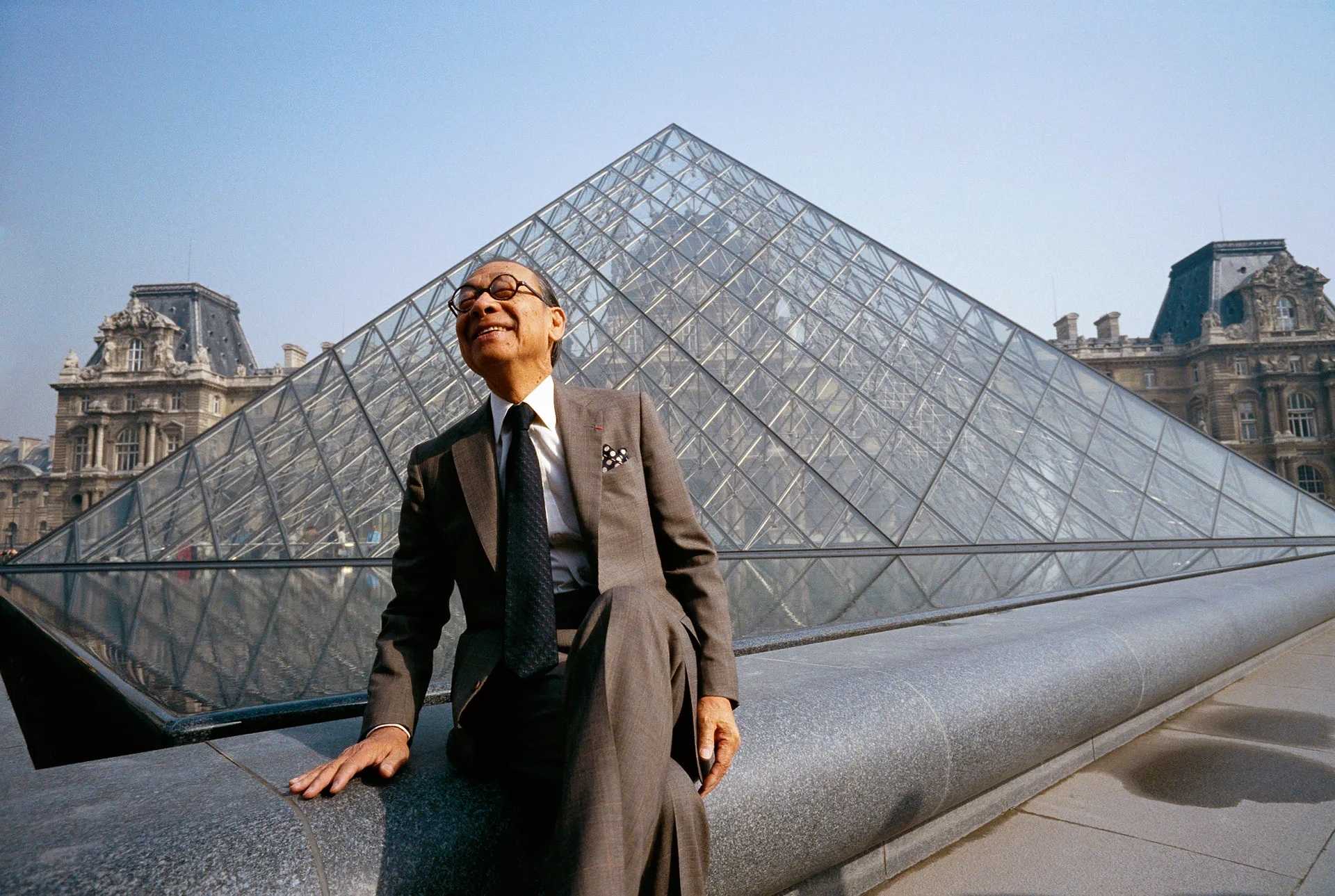 Ieoh Ming Pei, or I. M. Pei, was a Chinese-American architect. (1917 – 2019). Image: Bernard Bisson, Sygma, Getty.
Few architectural interventions demonstrate the risk of becoming an icon as clearly as the Louvre Pyramid.
When I.M. Pei’s glass pyramid opened in 1989, the project had already generated considerable criticism. A transparent geometric structure in the historic Cour Napoléon seemed, to some observers, an uncomfortable intrusion into one of Europe’s most important architectural ensembles. Yet Pei approached the Louvre as a problem of connection rather than imitation.
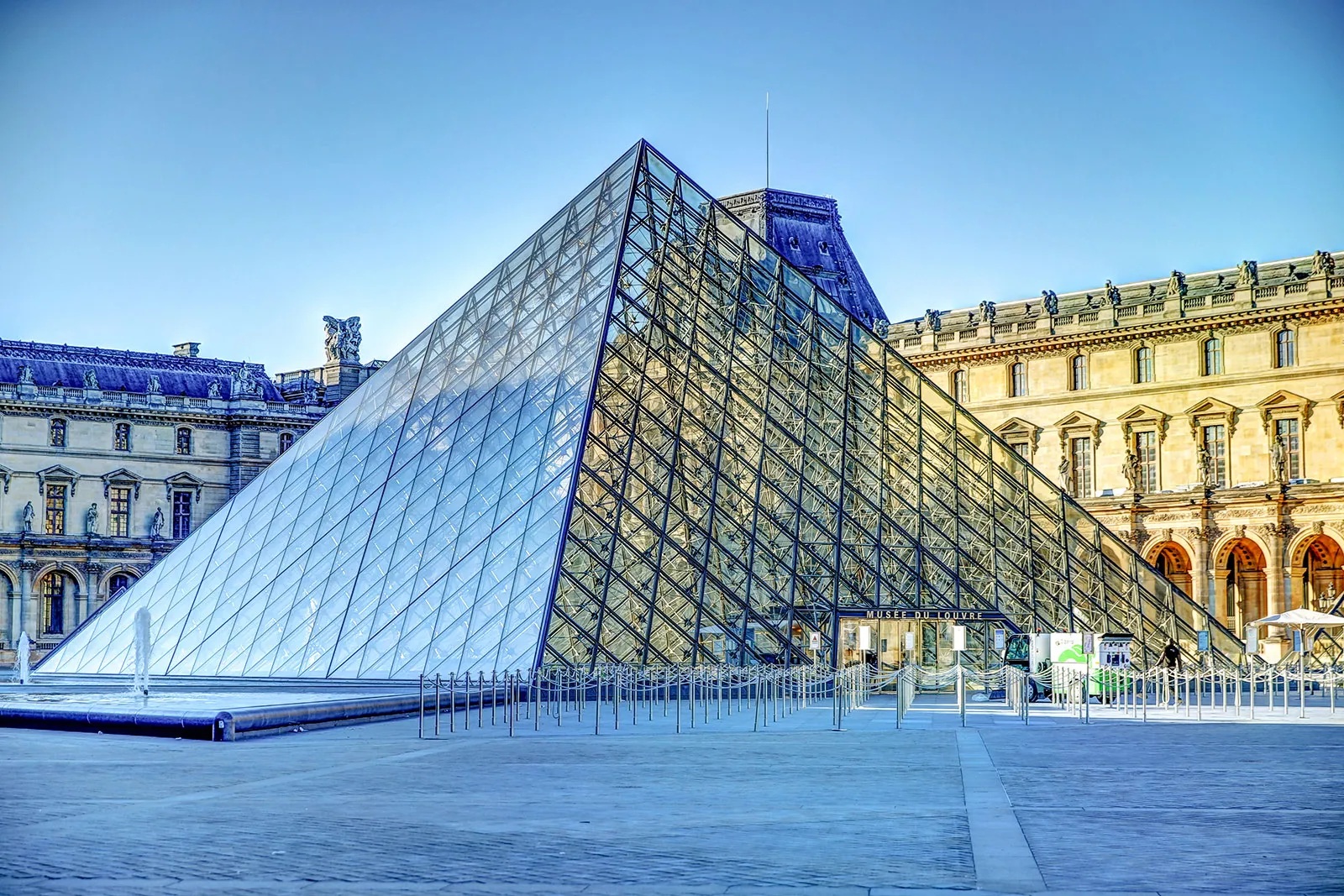 The Lourve (1989), Paris, France. Image: britannica.com.
The Pyramid created a new underground entrance and reorganised visitor circulation between the museum’s three wings. The Louvre notes that Pei retained the palace’s principal lines and perspectives while introducing a transparent structure based on simple geometric forms. Extra-clear glass was developed specifically for the project, with 2,000 square metres of glazing forming the Pyramid’s envelope. The once-controversial intervention subsequently became a symbol of the museum itself.
Singapore offers another example. Completed in 1976, OCBC Centre became the tallest building in Southeast Asia and established a strong vertical presence at Raffles Place. Its twin concrete cores and column-free office floors created a bold modern structure without decorative excess.
Pei’s relevance has gained another contemporary dimension in 2026. MIT announced the acquisition of Pei’s project archive, comprising approximately 1,500 rolls of drawings, 50 architectural models and 1,000 linear feet of manuscripts and other material covering more than 60 projects. The archive will become a major resource for research into the architect’s work.
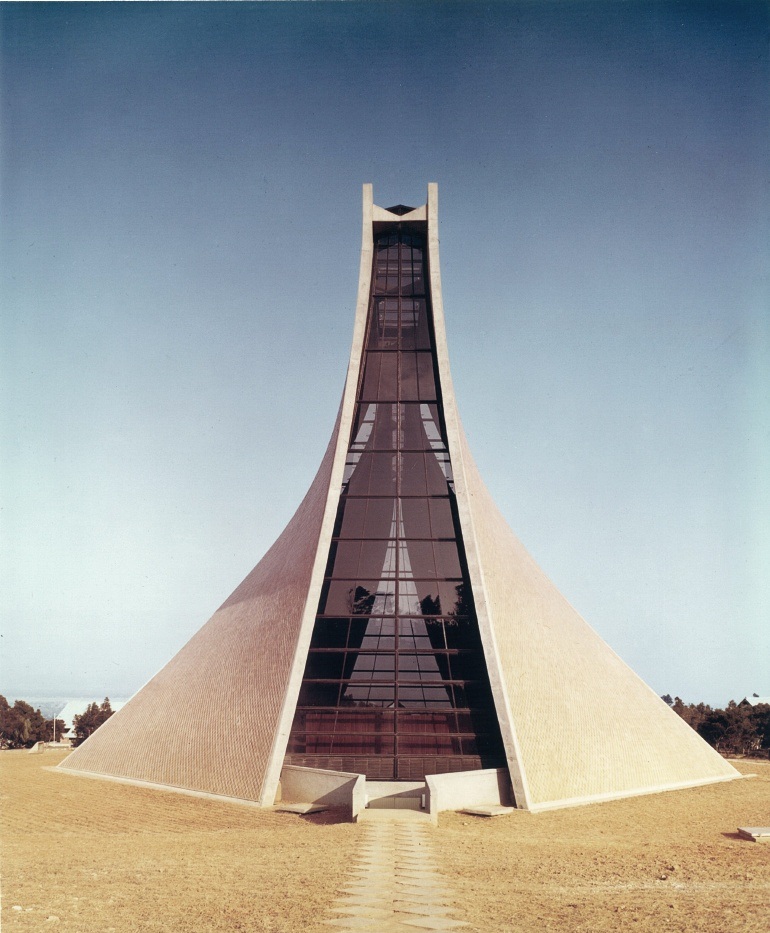 Luce Memorial Chapel (1965) in Taichung, Taiwan. Image: Pei Cobb Freed & Partners Architects.
The significance is larger than preservation. Pei’s archive offers a record of an architect constantly negotiating between geometry, history, culture and contemporary use. That ability to make modernism belong to a particular place is central to the Pei legacy.
Norman Foster: When Engineering Became An Architectural Language
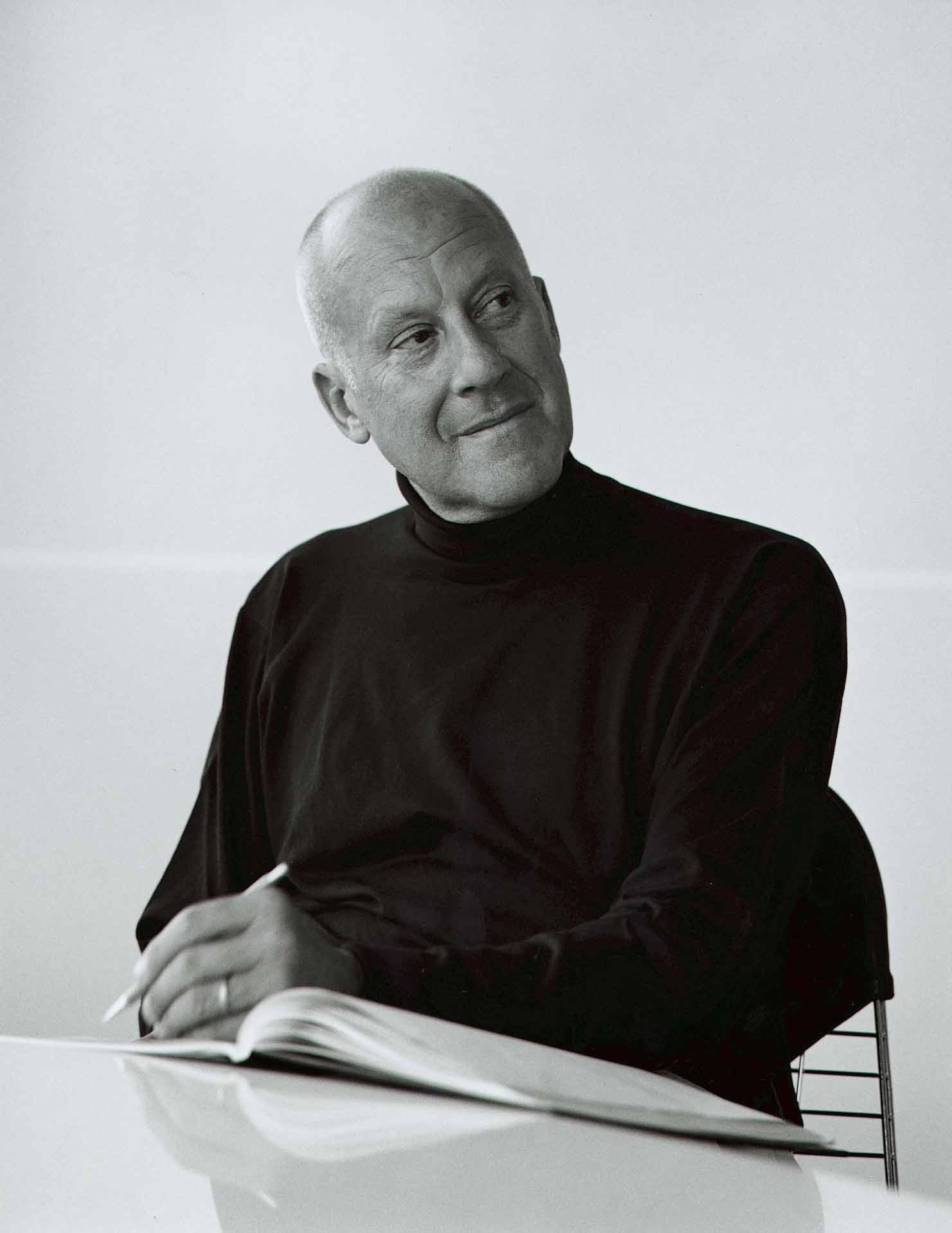 Knighted and Pritzker Architecture Prize architect Norman Foster. Image: sheldrakepress.co.uk
The silhouette of 30 St Mary Axe, better known as The Gherkin, is instantly associated with London. Yet the building’s importance goes beyond an unusual profile.
Norman Foster’s architecture repeatedly makes structure, engineering and environmental performance visible. The Reichstag in Berlin provides another example. The historic parliamentary building retained the weight of its masonry while a contemporary glass dome introduced daylight, public circulation and a new relationship between citizens and the parliamentary chamber. The German Bundestag describes the dome as a connection between 19th-century architecture and the end of the 20th century.
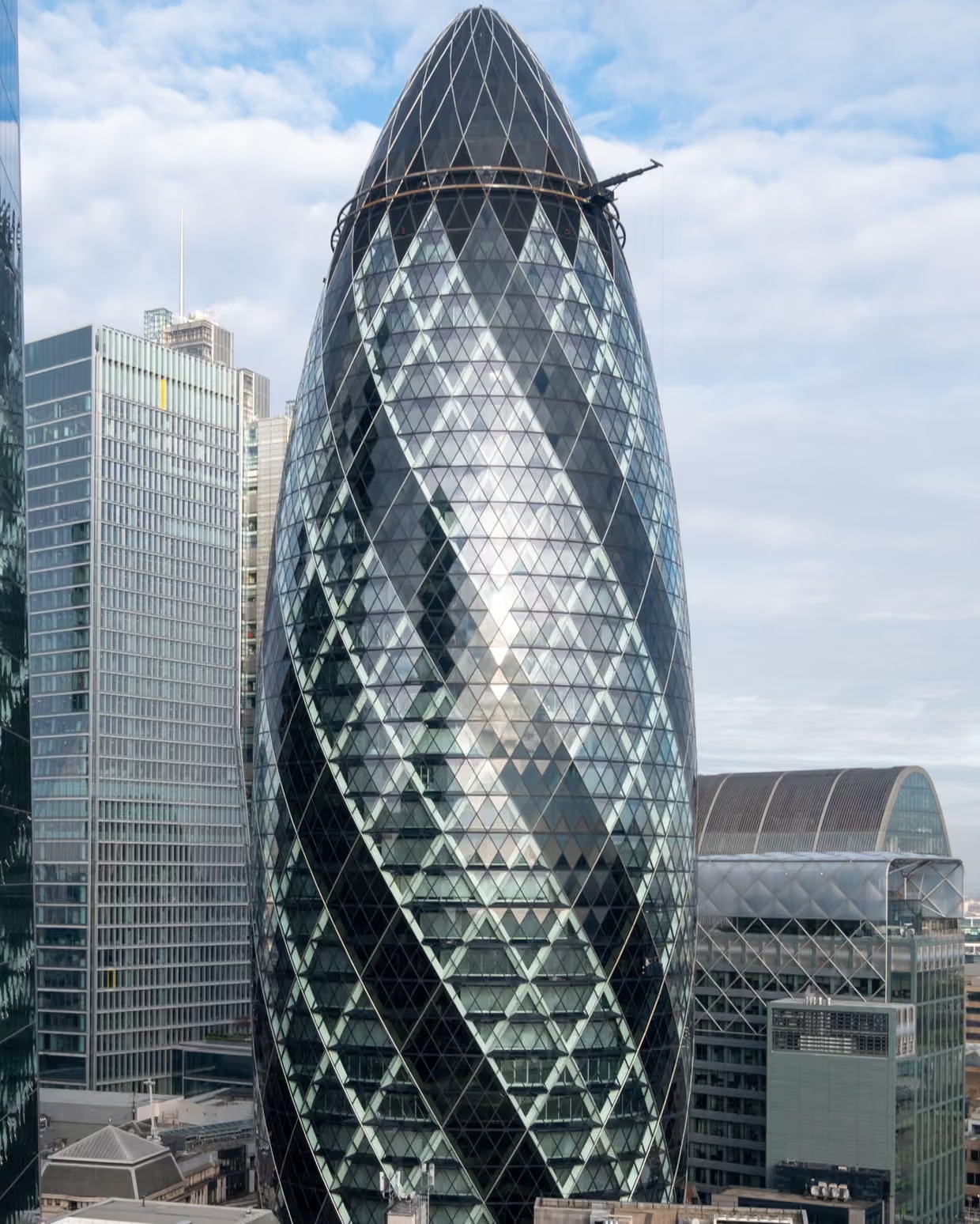 The Gherkin (2003) in London, United Kingdom. Image: Lois GoBe, Alamy.
The same design philosophy now extends well beyond buildings. Foster + Partners Industrial Design describes a practice rooted in the “art, craft, and science of making”, with products ranging from tables and lighting to furniture systems and industrial objects.
The furniture work is particularly revealing. In 2026, the studio launched new collections including Aion with Walter Knoll and BEAM and COLUMN with Punt. Recent work has explored timber, modularity, craftsmanship and disassembly, demonstrating how architectural thinking can move into objects used at human scale.
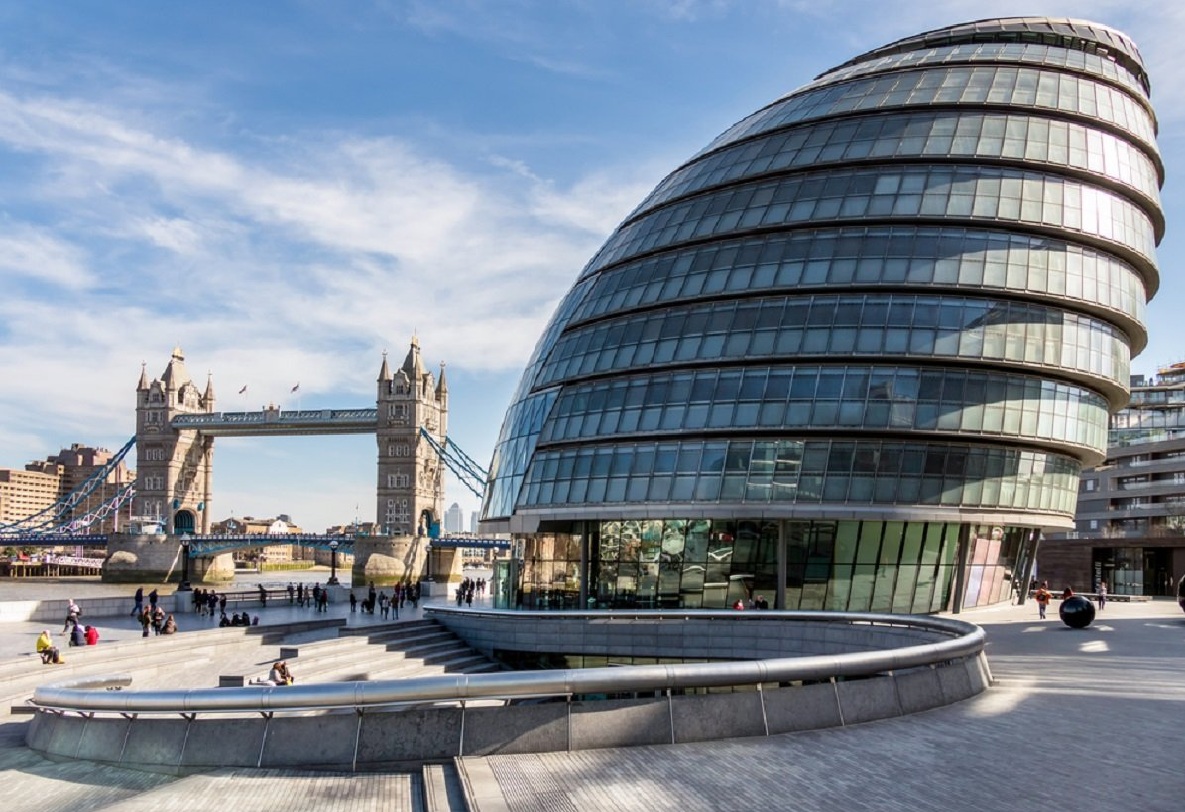 London City Hall Building (2002), London, United Kingdom. Image: 24housing.co.uk.
The result is a different definition of iconic design. Foster’s signature is not limited to a recognisable building shape. It is a belief that engineering can improve the experience of architecture and that technical decisions can become part of design rather than remain hidden behind the finished surface.
Zaha Hadid: Imagining The Future Before It Could Be Built
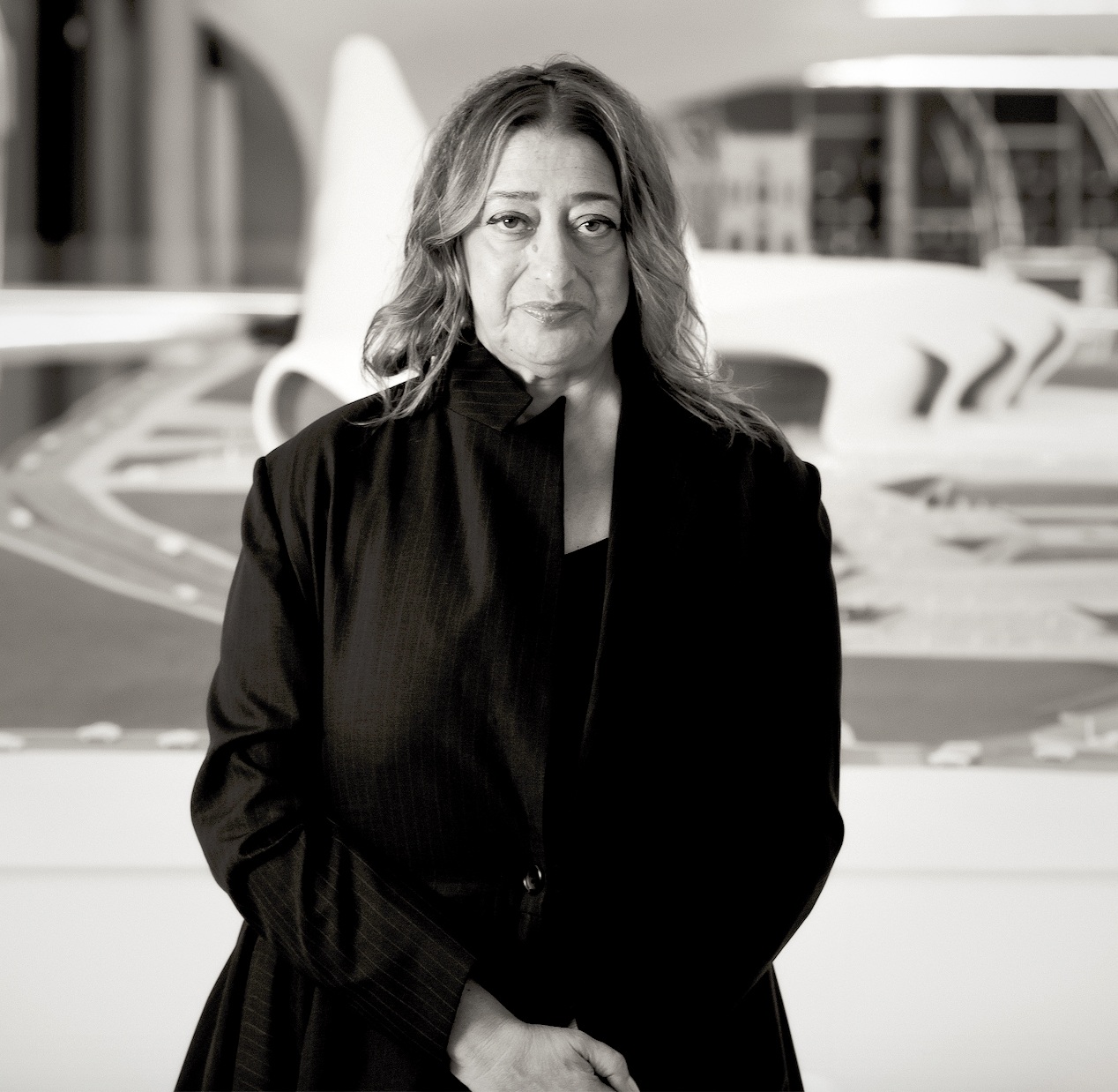 Zaha Mohammad Hadid (1950 – 2016). Image: Wikipedia.
Zaha Hadid’s early architectural drawings often looked more like paintings than conventional plans. Angular fragments, sweeping lines and distorted perspectives suggested buildings that appeared to move rather than sit still.
That quality mattered because much of Hadid’s early influence emerged before the technology required to realise such complexity was widely available. The Vitra Fire Station, completed in 1993, became the first realised building from the practice and translated the language of those earlier drawings into built form. The project uses intersecting concrete planes and carefully controlled lines to create a sense of movement frozen in space.
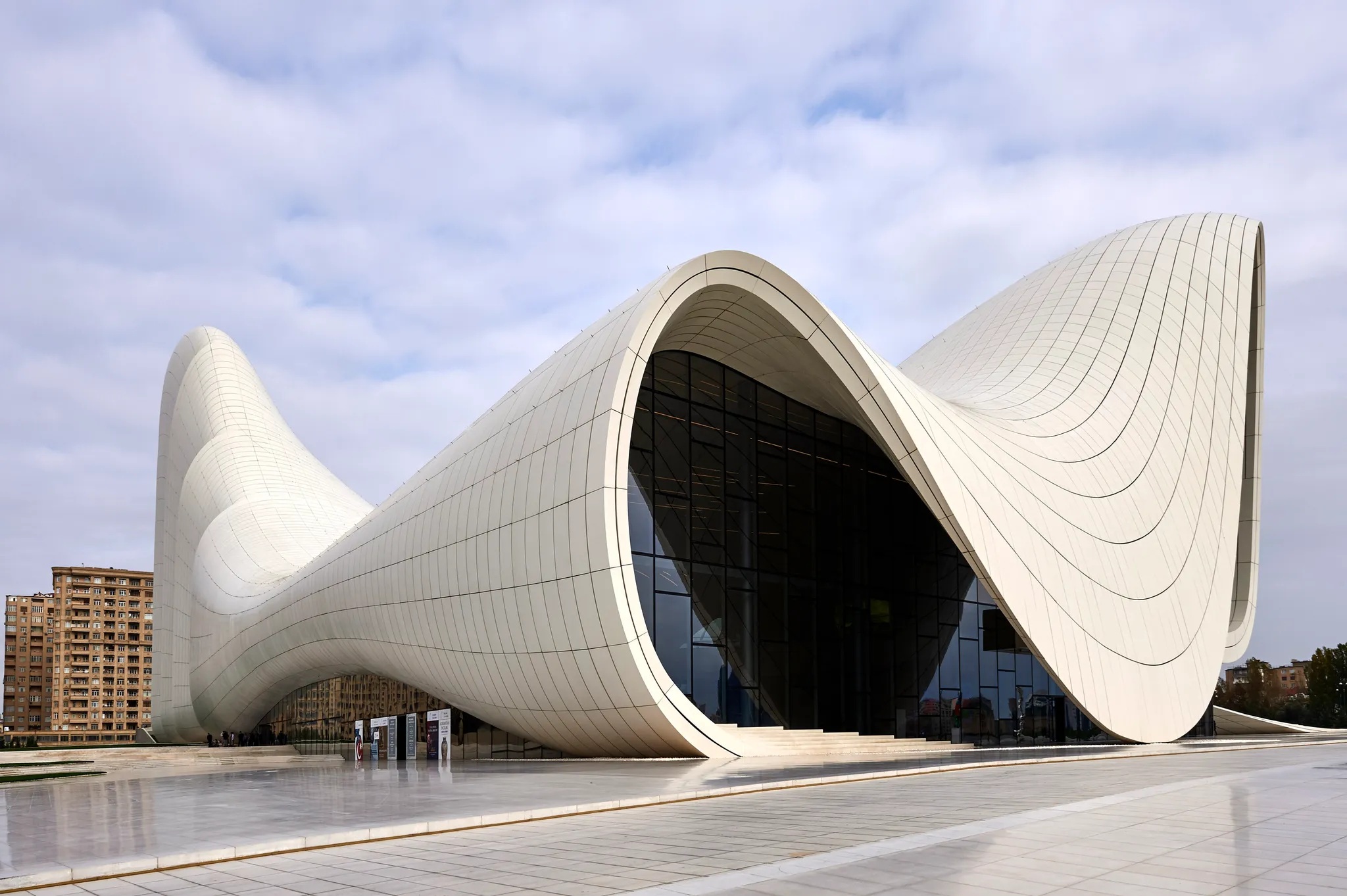 Heydar Aliyev Center (2012), Baku, Azerbaijan, 2012. Image: Andrea Pistolesi for Getty Images.
Hadid’s legacy remains particularly visible in 2026, ten years after her death. LUMA Arles opened an exhibition in May, bringing together early paintings, notebooks, archival material and previously unseen video interviews, tracing the development of ideas that later appeared in projects such as the Vitra Fire Station and CMA CGM Tower.
A separate 2026 programme also marks the continuing influence of the inaugural Serpentine Pavilion, designed by Hadid in 2000. The Zaha Hadid Foundation and Serpentine have established a programme of talks and architectural discussions around experimentation and the continuing development of new ideas.
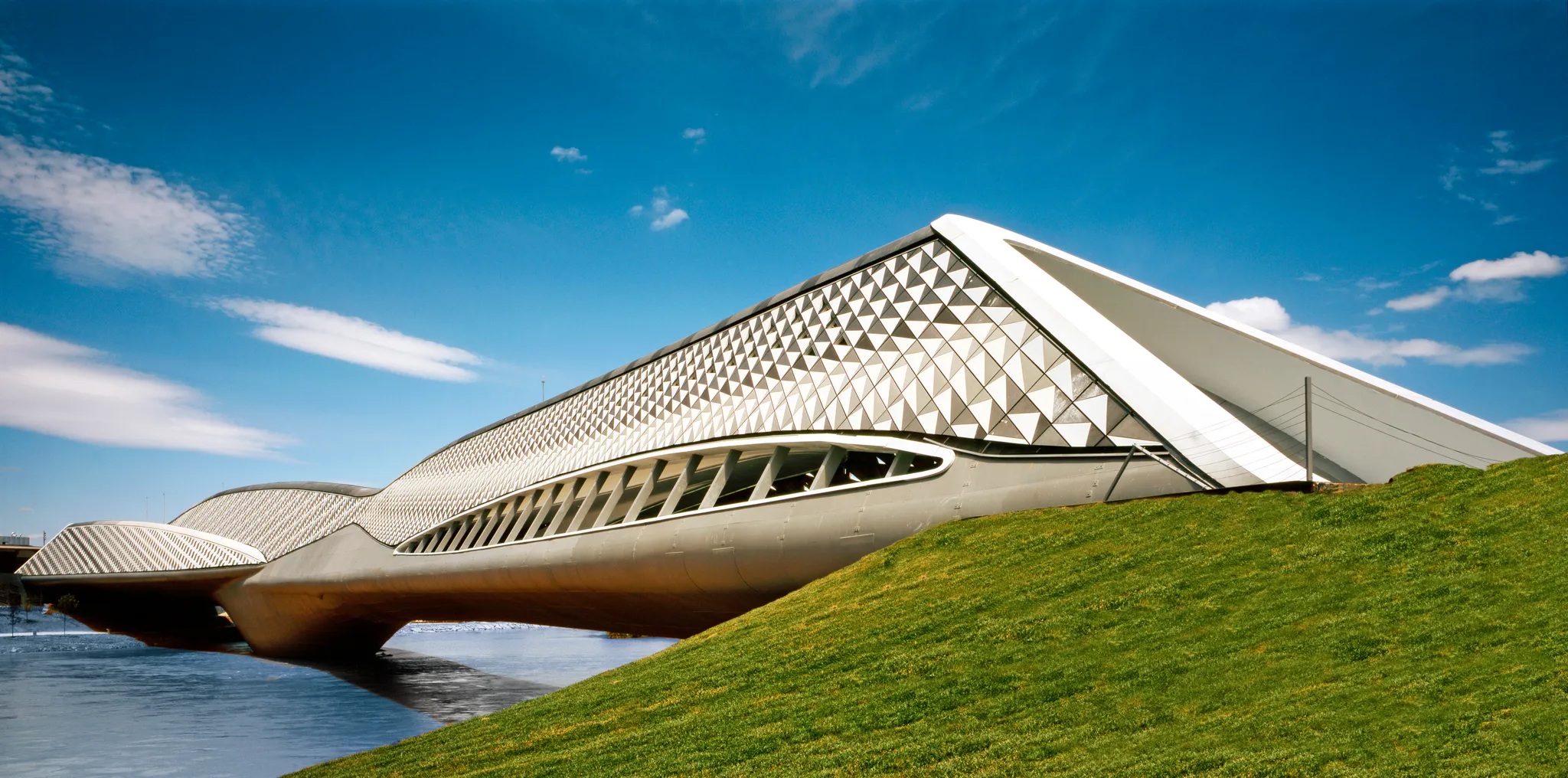 Zaragoza Bridge Pavilion (2008), Zaragoza, Spain. Image: Getty.
Hadid demonstrates that an icon can emerge from a way of imagining rather than a catalogue of finished buildings. The drawings mattered because the drawings contained a proposition about space. Digital tools eventually made many of those propositions more achievable, but the intellectual shift came first.
Philippe Starck: Turning Design Into Everyday Culture
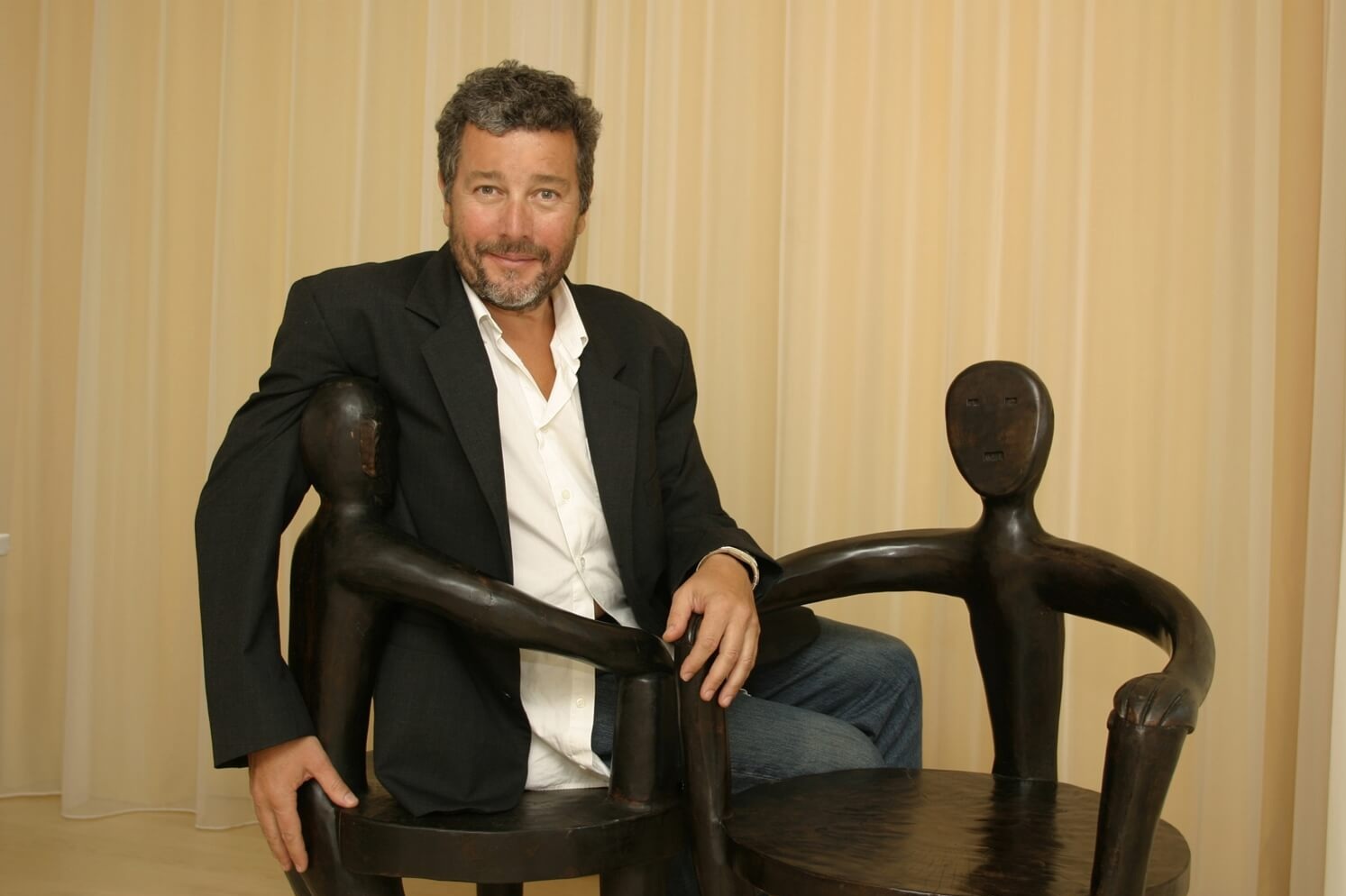 The renowned and lauded French designer Philippe Starck. Image: Starck.com
A design object becomes genuinely familiar when recognition survives outside the design industry.
Philippe Starck’s Louis Ghost chair is a useful example. The transparent polycarbonate chair takes the proportions and visual language of the Louis XV chair and reduces the form to a single moulded object. The result is recognisable as a traditional armchair and distinctly contemporary at the same time. Kartell describes the chair as stable, stackable and suitable for both domestic and professional settings.
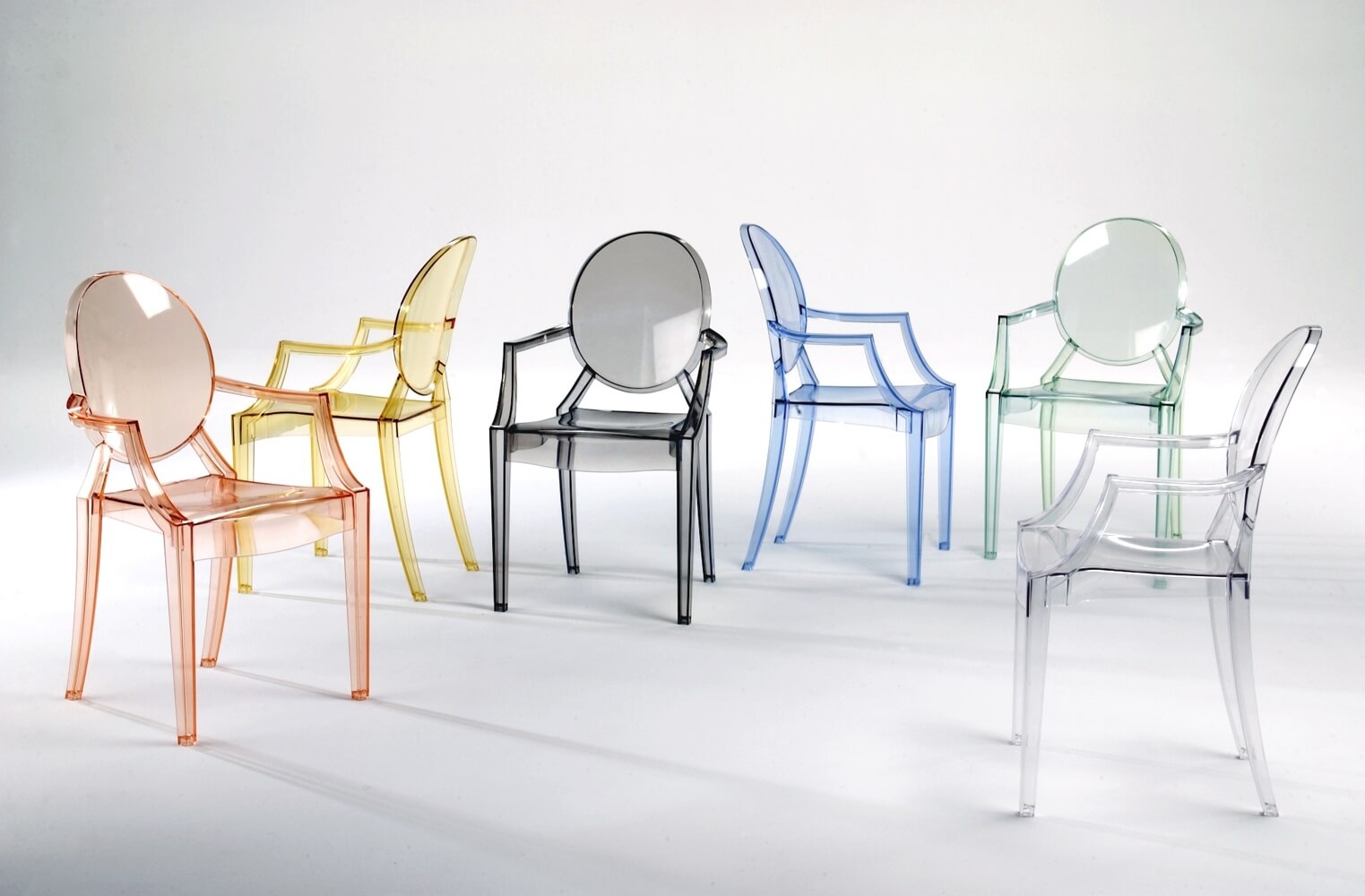 The “Louis Ghost” chairs (2002) designed by Philippe Starck for Kartell. Image: Kartell.
The idea goes beyond appearance. Starck has long treated design as a means of improving everyday life, with work spanning furniture, industrial products, lighting, vehicles and interiors. The Louis Ghost became particularly significant because its material and manufacturing process allowed a visually elaborate historical form to translate into a relatively accessible contemporary product.
Current production also gives the object a new chapter. Kartell now describes the Louis Ghost in Polycarbonate 2.0, a material developed from cellulose and paper waste.
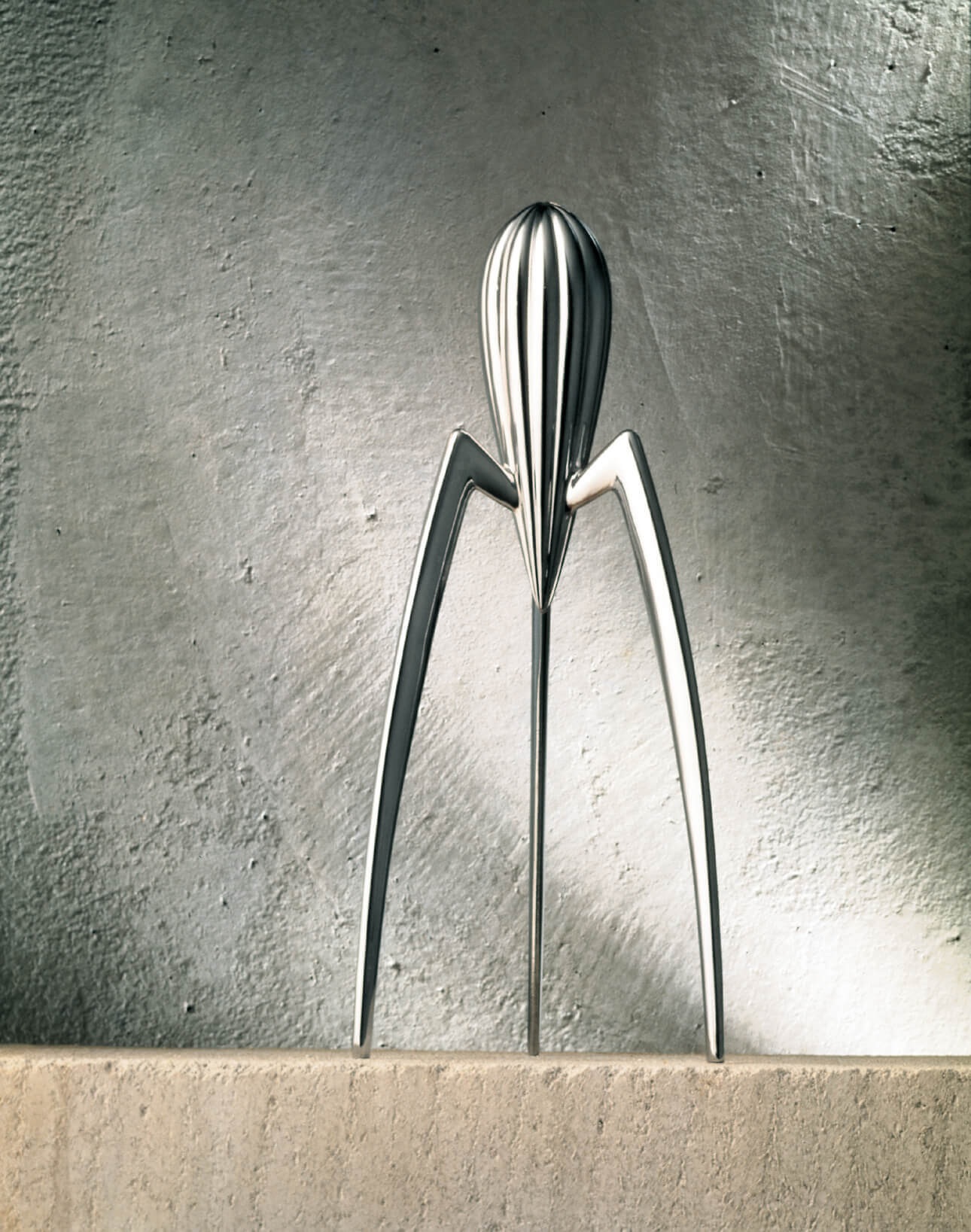 The “Juicy Salif” lemon juicer (1988) made by Alessi. Image: Alessi.
Starck’s contribution to design therefore rests less on one particular silhouette than on a broader shift in attitude. Furniture could be humorous, democratic, commercially produced and culturally recognisable without losing design intent.
An icon, in this sense, does not have to remain behind museum glass. An icon can become part of ordinary life.
Ron Arad: When Furniture Became Something Else
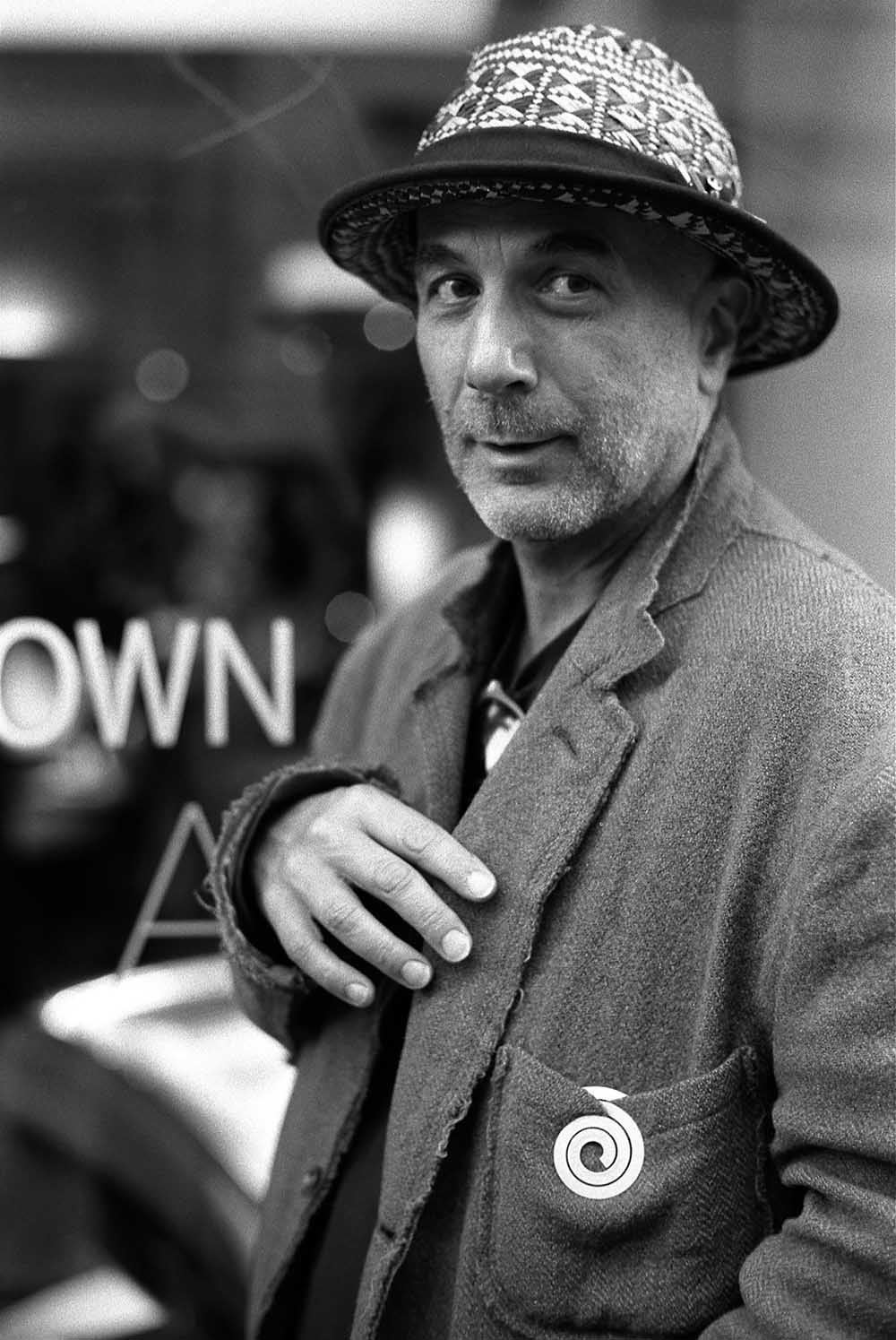 Israeli product designer Ron Arad. Image: theinvisiblecollection.com
Ron Arad’s Rover Chair from 1981 began with a discarded Rover car seat mounted onto a tubular steel frame. The result looked familiar enough to suggest a chair but strange enough to challenge conventional ideas about what a chair should be.
MoMA’s collection records the Rover Chair as a work made from tubular steel, leather and cast-iron joints. The Big Easy pushed the idea further. Originally produced in bent sheet steel, the oversized armchair borrowed the proportions of a conventional club chair while making the material and construction impossible to ignore. Vitra Design Museum notes that Arad regarded the Big Easy as an art object that could also function, rather than furniture designed solely around conventional practicality.
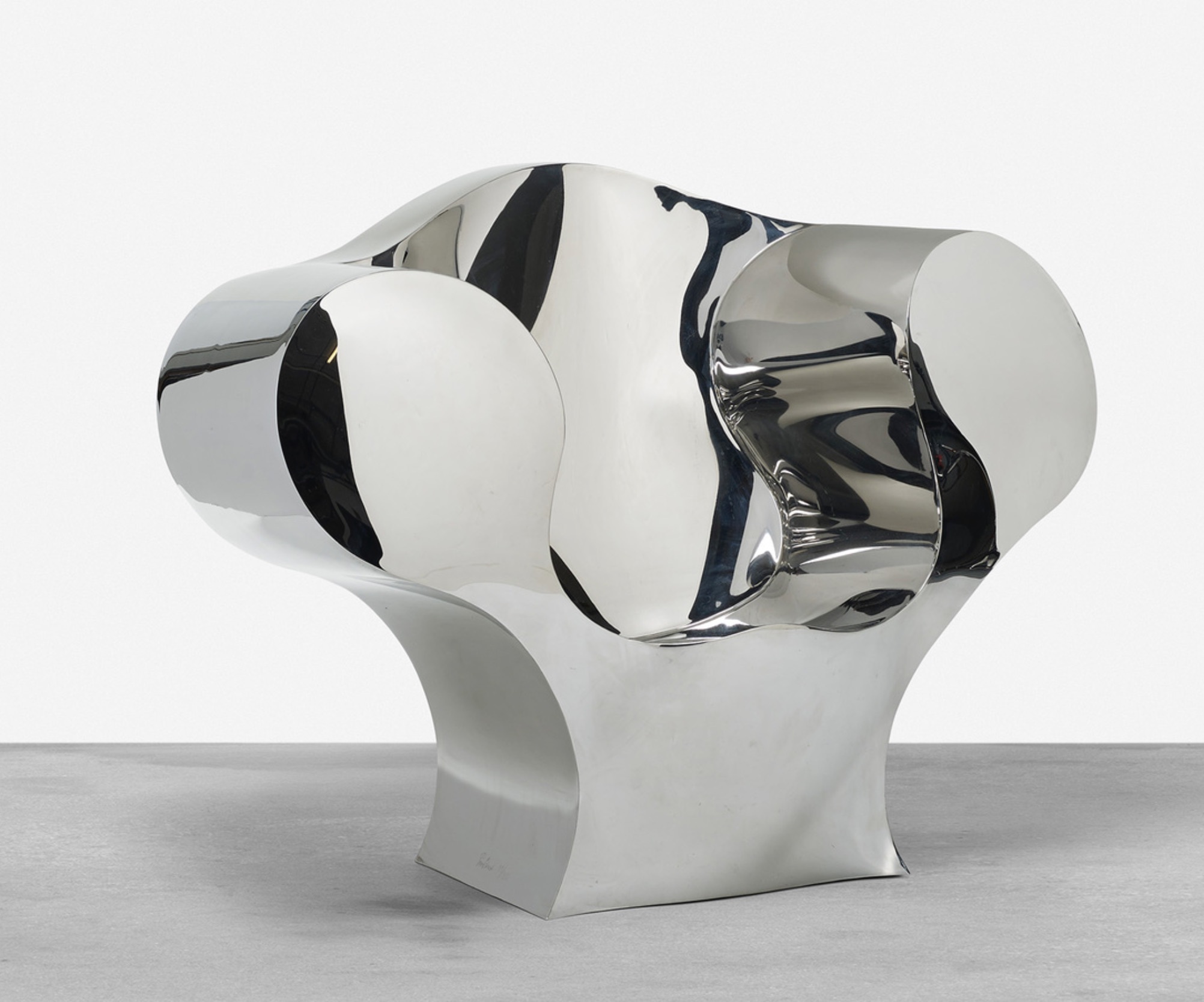 The “Big Easy” chair (1988). Image: noma.org
That tension is central to Arad’s importance. A chair can provide somewhere to sit, but it can also provoke questions about sculpture, manufacturing, materials, and function.
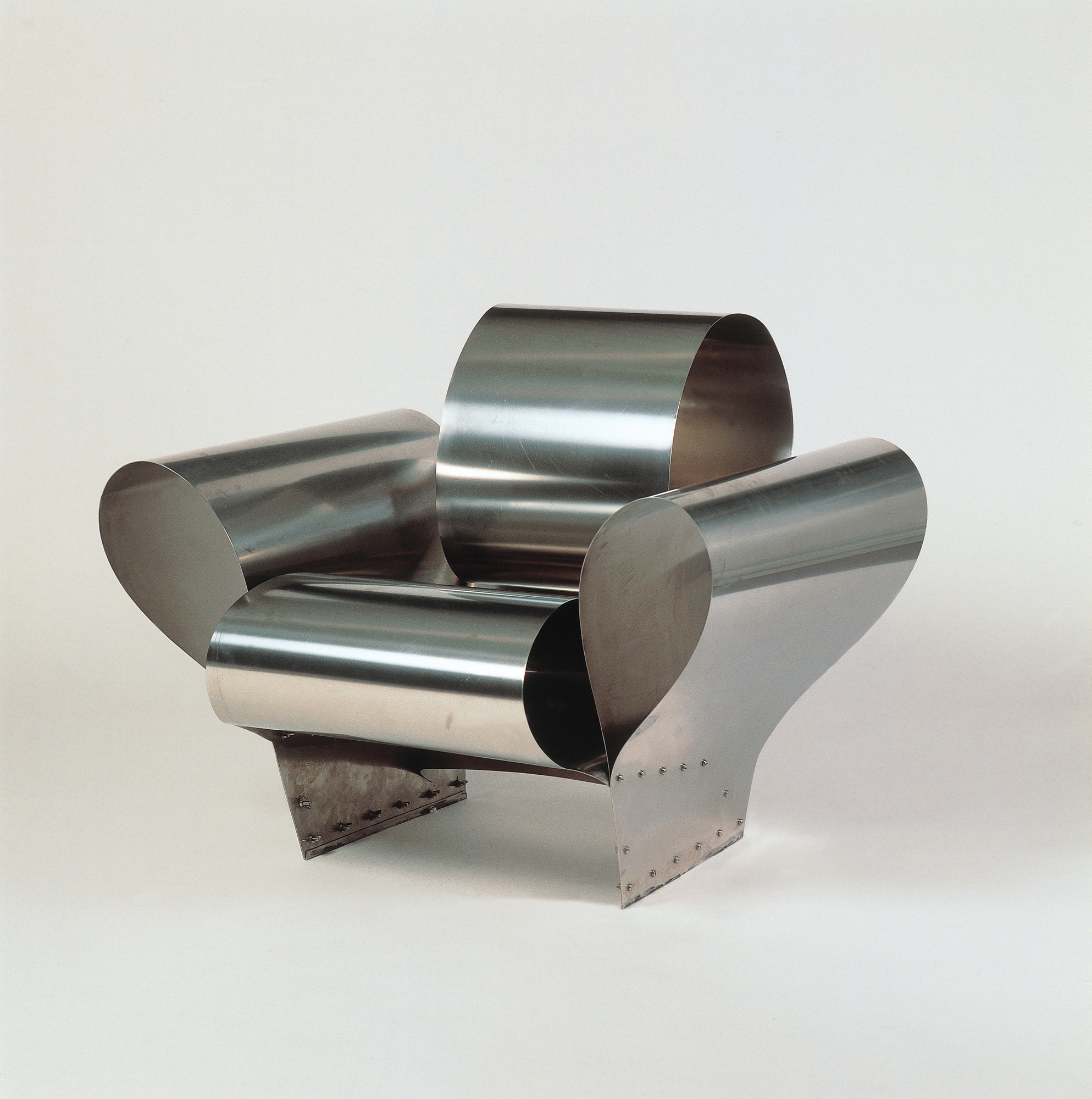 The “Well Tempered” chair (1986). Image: moma.org
A 2026 exhibition in Monaco examining more than three decades of Arad’s work reinforces the continuing interest in this boundary between art and design. The work remains relevant because the original challenge has not disappeared: where does functional design end and art begin?
Arad’s answer has never required a neat boundary.
Patricia Urquiola: Making Material Part Of The Experience
 Patricia Urquiola and her team. Image: Haworth.
Patricia Urquiola represents a more contemporary form of iconic design, where a recognisable signature can emerge through material, texture and human experience rather than a single formal gesture.
Studio Urquiola works across product design, architecture, interiors and strategy, with projects ranging from furniture and textiles to hotels and residential spaces. The studio describes an approach based on an empathic connection with the person interacting with a design, alongside research into technology, craftsmanship and production.
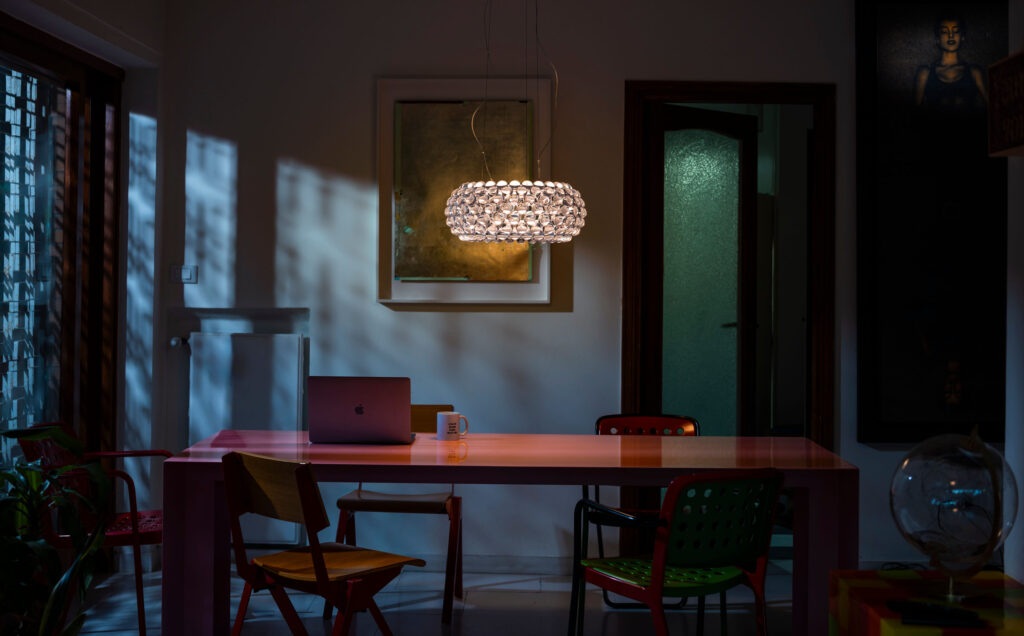 The “Caboche” pendant light (2005) for Foscarini. Image: Foscarini.
The breadth of current work illustrates that approach. The 2026 product archive includes collections such as SoSu for Haworth, Brezal for Andreu World, Vidalenta for Cassina, Glacier for Glas Italia and Mosso for Cimento. At Milan Design Week 2026, Urquiola also transformed the entrance and concierge area of the Convey Building with CIMENTO, using soft organic forms within the rational structure of a late-1950s building.
Recognition arrived in a particularly direct form this year. Urquiola received the 2026 iF Design Lifetime Achievement Award, with the organisation citing a combination of sensuality, material exploration and technological innovation.
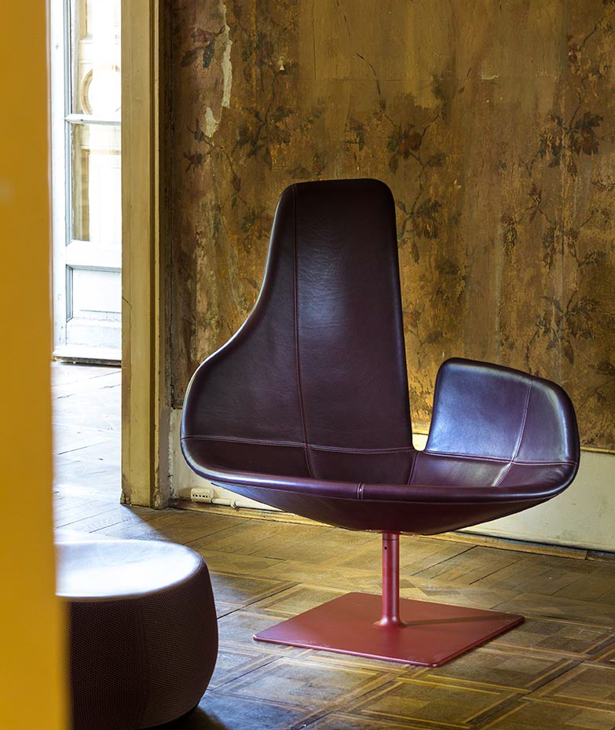 The “Fjord” lounge chair (2002) designed by Patricia Urquiola for Moroso. Image: Moroso.
The award matters because Urquiola’s influence doesn’t depend on one universally known chair. The signature lies in a consistent willingness to reconsider how colour, texture, technology and craftsmanship affect the experience of a space or object.
That may be one of the defining characteristics of contemporary design icons: influence can exist as a method as much as a shape.
Antonio Citterio: Proving That Restraint Can Endure
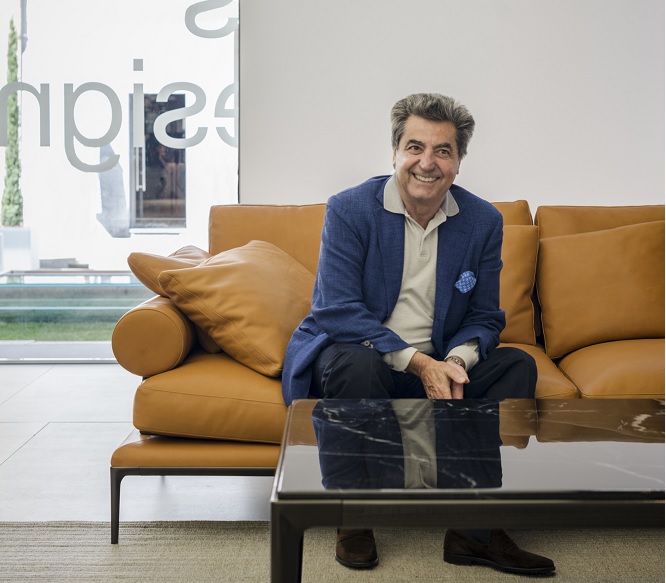 Antonio Citterio on the “Atoll” sofa designed for B&B Italia. Image: B&B Italia.
Not every icon announces itself. Antonio Citterio’s work offers a quieter argument about longevity, particularly through furniture designed around comfort, ergonomics and everyday use. The Grand Repos lounge chair, developed with Vitra in 2011, conceals a synchronised reclining mechanism beneath the upholstery, allowing the backrest to move with the sitter and lock at different positions. The result is a generous, enveloping chair without an elaborate visual gesture.
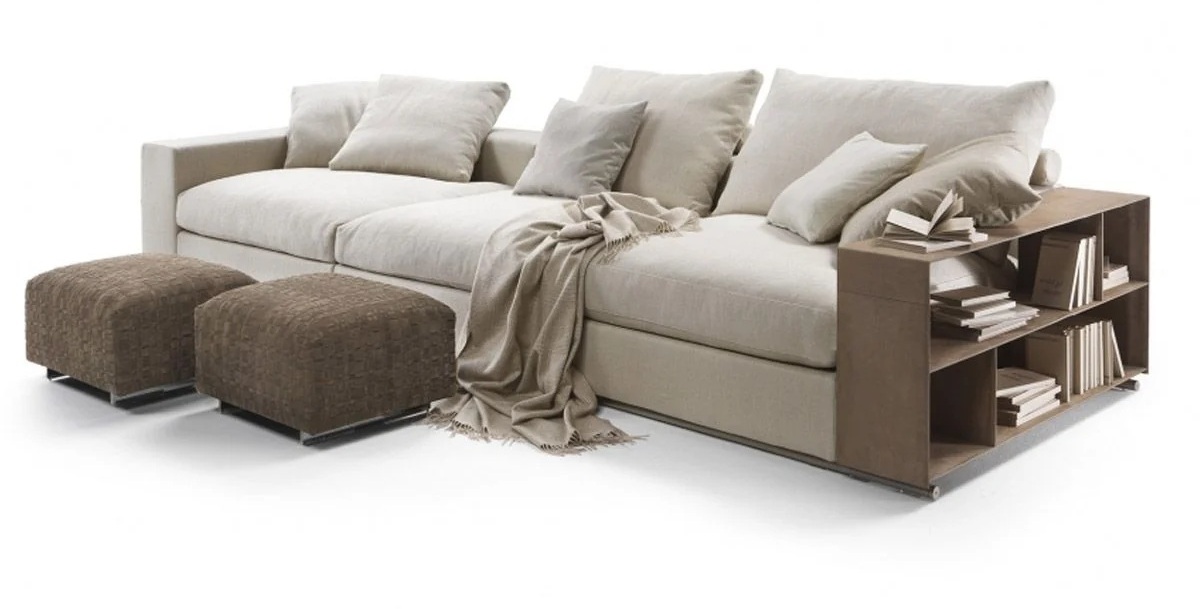 The iconic “Groundpiece” sofa system (2001) designed by Antonio Citterio for Flexform. Image: Flexform.
The principle remains visible in current work. Citterio’s ACX chair, introduced in 2023 and expanded with new 2026 versions, uses a self-adapting mechanism that requires little adjustment beyond seat height. The design is intended for a long life cycle, with current variants incorporating recycled materials.
Citterio’s importance therefore lies partly in what the design leaves out. An exaggerated silhouette is unnecessary when proportion, comfort, adaptability, and durability can carry the design.
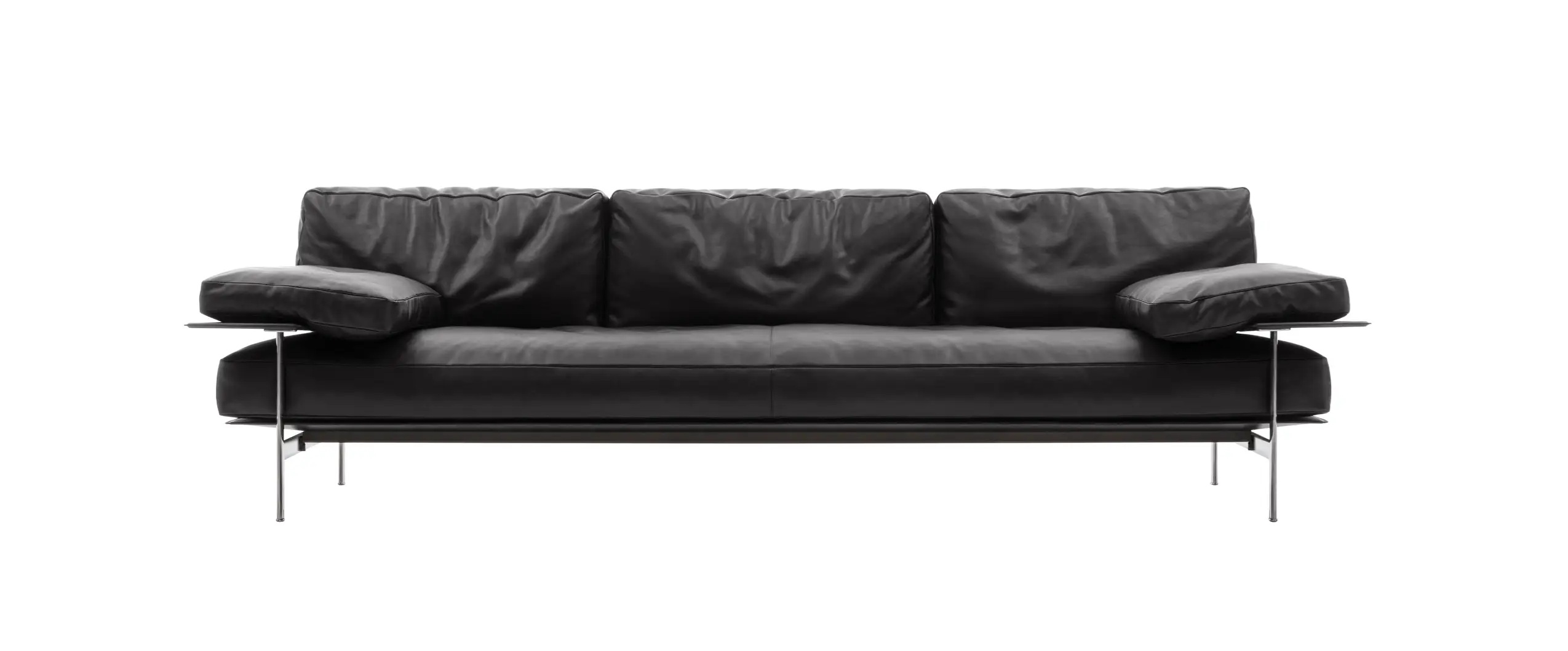 The “Diesis” sofa (1979) designed for B&B Italia. Image: B&B Italia.
The approach offers an important counterpoint to the conventional image of an icon. Recognition does not always come from visual drama. A chair used repeatedly over many years can become just as influential as an object that attracts immediate attention.
In that sense, Citterio brings the argument back to the most basic measure of design: how well an object lives with people.
The Name Is Not The Legacy
A familiar name can open a conversation about design, but fame alone cannot sustain one. A more meaningful measure is what remains after the award, opening ceremony or magazine cover has passed: ideas that continue to influence how buildings, objects and spaces are conceived and experienced.
Le Corbusier changed the vocabulary of modern architecture and furniture; I.M. Pei showed how modernism could engage with history; Norman Foster made engineering and technology part of architectural expression; and Zaha Hadid turned speculative drawings into a new language of space. In design, Philippe Starck brought design into everyday culture; Ron Arad challenged the boundaries of furniture; Patricia Urquiola expanded the role of material and sensory experience; and Antonio Citterio showed how restraint and functionality can endure.
Different generations produced different answers, but the principle remains the same: an icon creates an influence that outlives the original work. A chair continues to occupy a home, hotel or office; a building becomes part of a city’s identity; an idea becomes absorbed into the work of subsequent generations. The name becomes history, but the idea remains. That is what makes an icon.
 English (US)