
.jpg) 23 hours ago
3
23 hours ago
3
At about 11,942 feet (3,640 meters) below the surface of the Greenland Sea, methane is leaking steadily from the seafloor. Along the Molloy Ridge, gas bubbles rise through the water column, oil seeps from buried sediments, and clusters of animals gather in total darkness, feeding on chemistry instead of sunlight.
The site, known as the Freya Hydrate Mounds, lies deeper than any previously documented gas hydrate cold seep. Footage from remotely operated vehicles shows methane and oil seeping from the seabed, surrounded by dense communities of animals living without sunlight. Described in Nature Communications, the find pushes known hydrate systems nearly 5,905 feet (about 1,800 meters) deeper than expected and links this seep to life typically found at Arctic hydrothermal vents.
“This discovery rewrites the playbook for Arctic deep-sea ecosystems and carbon cycling,” said Giuliana Panieri, Chief Scientist of the expedition, in a press release. “We found an ultra-deep system that is both geologically dynamic and biologically rich, with implications for biodiversity, climate processes, and future stewardship of the High North.”
Read More: This Rare Deep-Sea Squid May Trick Predators and Prey by Sticking Its Head in Mud
A Deep-Sea System That’s Still Changing
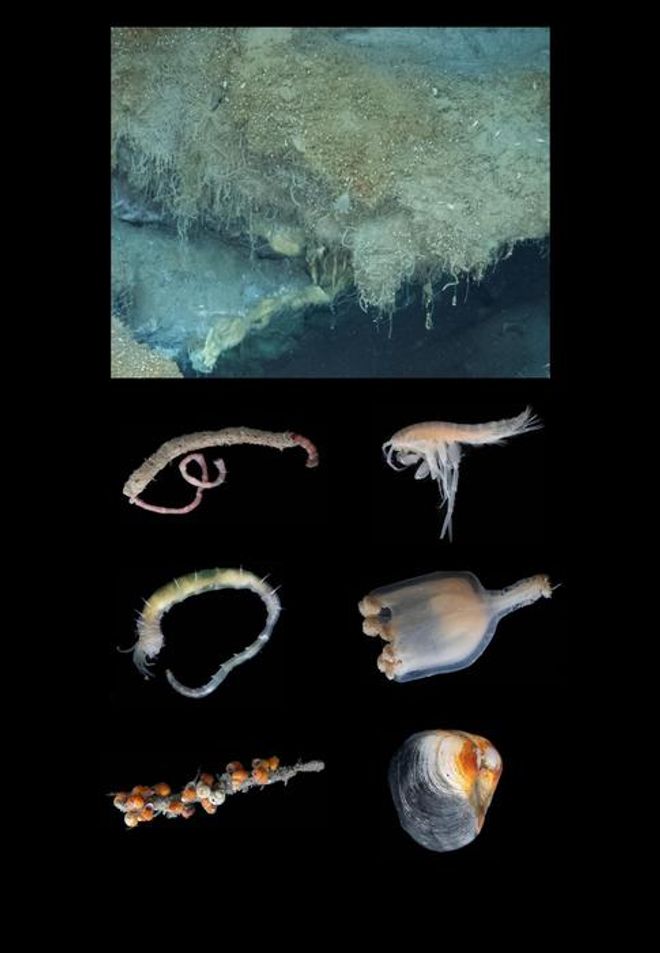
Various fauna were discovered in the Freya Hydrate Mounds.
(UiT / Ocean Census / REV Ocean/CC BY-ND)
What sets the Freya Hydrate Mounds apart is not only their depth but also their apparent activity. Seafloor images show the mounds in different states — some intact, others breaking down — suggesting that the system is constantly changing rather than frozen in place.
Chemical evidence helps explain what’s driving that change. The methane released at the site formed deep underground, rather than being produced by microbes near the seafloor. Samples of crude oil point to a source millions of years old, indicating that fluids have been slowly moving upward through the Earth’s crust over long stretches of time. That steady movement appears to both build and destabilize the hydrate mounds.
One of the clearest signs of this activity is how far the methane travels. Gas flares were observed rising more than 10,826 feet (around 3,300 meters) through the water column — among the tallest ever recorded — carrying carbon from deep below the seafloor into the ocean above.
“These are not static deposits,” Panieri said. “They are living geological features, responding to tectonics, deep heat flow, and environmental change.”
What the Freya Hydrate Mounds Could Mean for the Arctic’s Future
Beyond biology, the Freya Hydrate Mounds offer scientists a rare window into how methane behaves at extreme depths. The site provides an ultra-deep setting for studying how gas moves from buried geological sources into the ocean, particularly in the Fram Strait, where changing ocean conditions may influence hydrate stability. Observations from the seafloor indicate that hydrate structures form, destabilize, and collapse over time, underscoring the dynamic role these systems play in Arctic carbon cycling.
The same conditions that allow methane to escape from the seafloor also support life. At the site, researchers documented chemosynthetic communities living alongside active seepage — an unusual combination at such depth. When the team compared these communities with those found elsewhere in the Arctic, they found a notable overlap with animals living near hydrothermal vents. According to the researchers, this similarity suggests that ultra-deep cold seeps may contribute to the biodiversity of the deep Arctic.
"There are likely to be more very deep gas hydrate cold seeps like the Freya mounds awaiting discovery in the region, and the marine life that thrives around them may be critical in contributing to the biodiversity of the deep Arctic," said Jon Copley, who led the biogeographic analysis, in the press release.
"The links that we have found between life at this seep and hydrothermal vents in the Arctic indicate that these island-like habitats on the ocean floor will need to be protected from any future impacts of deep-sea mining in the region," Copley Concluded.
Read More: Carnivorous Death-Ball Sponge and Other New Species Have Been Found in the Deep Sea
Article Sources
Our writers at Discovermagazine.com use peer-reviewed studies and high-quality sources for our articles, and our editors review for scientific accuracy and editorial standards. Review the sources used below for this article:
- This article references information from a study published in Nature Communications: Deep-sea gas hydrate mounds and chemosynthetic fauna discovered at 3640 m on the Molloy Ridge, Greenland Sea
 English (US)