Image via Newmarket

Updated Oct 22, 2026, 6:03 AM EDT
Luc Haasbroek is a writer and videographer from Durban, South Africa. He has been writing professionally about pop culture for eight years. Luc's areas of interest are broad: he's just as passionate about psychology and history as he is about movies and TV. He's especially drawn to the places where these topics overlap.
Luc is also an avid producer of video essays and looks forward to expanding his writing career. When not writing, he can be found hiking, playing Dungeons & Dragons, hanging out with his cats, and doing deep dives on whatever topic happens to have captured his interest that week.
Sign in to your Collider account
The best thrillers get under your skin. They play with perception, twist narratives until they snap, and leave the viewer haunted long after the credits roll. They become mirrors to our darkest impulses, and we can’t look away. The genre has existed since cinema's beginnings, but the last thirty years have seen its best filmmakers getting even more complex and ambitious with their stories.
With this in mind, this list ranks some of the must-see thrillers of the past three decades. These films span continents and cultures, from shadowy American cities to the rain-soaked alleys of South Korea. Though they vary in tone and content, each entry here is a masterclass in tension-building, narrative sleight of hand, and unforgettable performances.
15 'Zodiac' (2007)
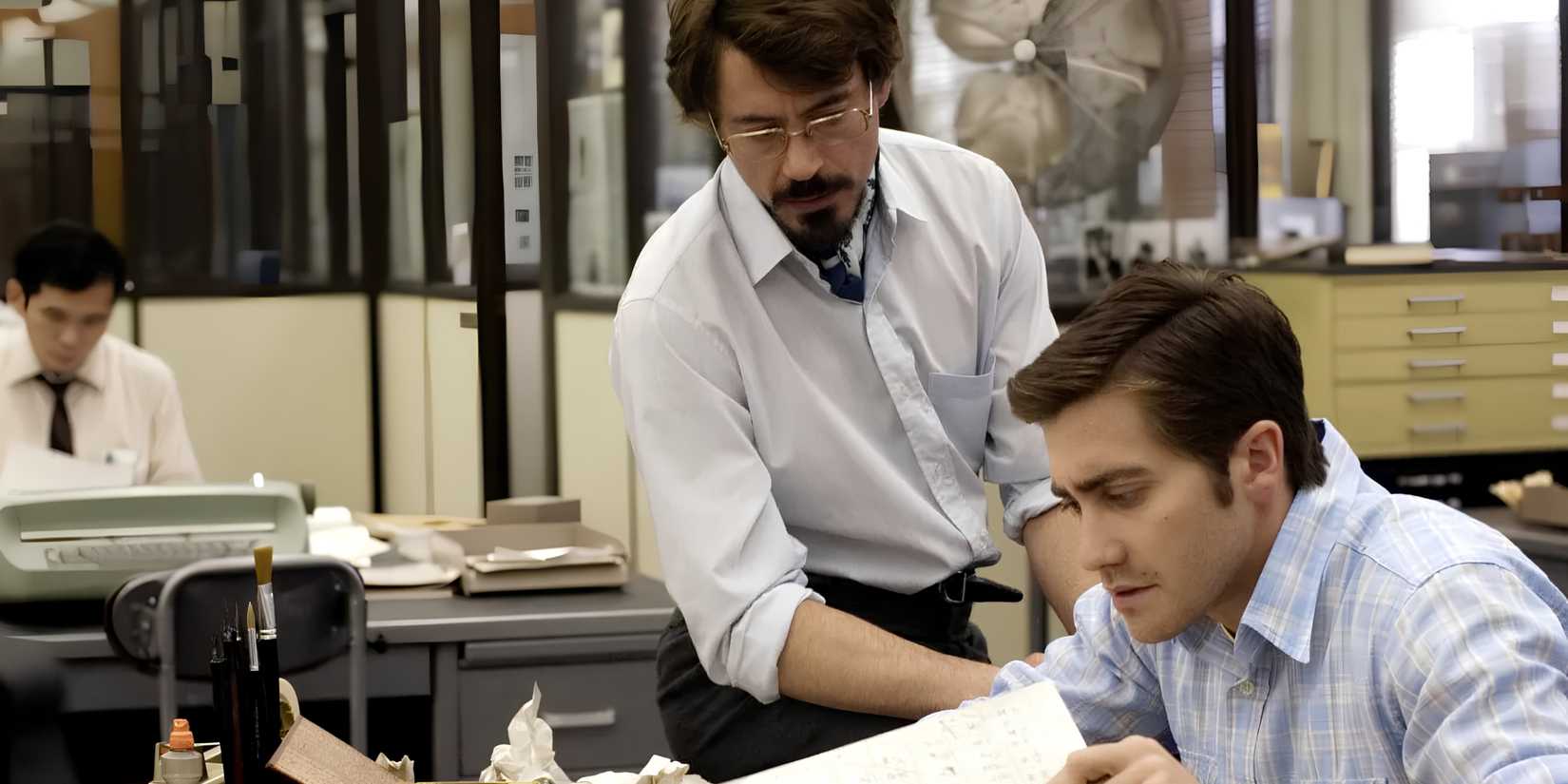 Image via Paramount Pictures
Zodiac is a masterclass in suspense that took a procedural, clinical look at one of the most puzzling true crime cases in American history. No one knows how to do serial killer stories quite like David Fincher, but Zodiac is quite different in tone from what he achieved with Se7en. While it does point to a potential solution, Zodiac leaves the viewer begging for answers because the case is fundamentally unresolved.
Zodiac is an achievement because it effectively understands what it is like to be obsessed with true crime, as the story is seen through the eyes of a cartoonist (Jake Gyllenhaal) who lets the killings take over his life. While being set in the ‘70s, Zodiac understands something fundamental about the nature of unsolved mysteries that might explain the persistence of true crime media and content in society today. —Liam Gaughan
14 'Burning' (2018)
 Image via CGV Arthouse
Burning is the ultimate 21st-century thriller because it understands the fractured relationship between the haves and the have-nots. Those who desire what they cannot have are willing to cross ethical lines in order to achieve it, and those who embody privilege may act without consequences in a manner that would seem inexplicable to those outside of their inner circle of like-minded cohorts.
Burning is one of the more exciting films to come out of the Korean New Wave, as the theme of economic inequity is not just relevant to South Korea. It’s something that is seen within every society all over the world. Burning also features one of the greatest performances of the century in Steven Yeun, who contrasts his inherently likable screen persona by playing a charismatic psychopath whose affinity for arson has made him completely unreliable. —Liam Gaughan
13 'Good Time' (2017)
 Image via A24
Good Time is the inverse of what is typically seen in a heist thriller because it opens with a bank robbery going wrong, forcing the protagonist (Robert Pattinson) to go on a desperate, dangerous odyssey to ensure that his brother (Benny Safdie) is released from prison. Good Time presents one of the most unlikable main characters in recent memory, but that only makes Pattinson’s performance more compelling; he is caught in a situation where his goals are seemingly to serve the greater good of his family, even if he ends up screwing over more people as a result.
Good Time solidified the Safdie brothers as a fascinating duo because they were able to add a cosmic, existential sense of dread to a gripping thriller about all the madness and mayhem that goes on over the course of a single 24-hour period of time. —Liam Gaughan
12 'Bringing Out the Dead' (1999)
 Photo via Paramount
Bringing Out the Dead is the most underrated collaboration between Martin Scorsese and screenwriter Paul Schrader, and serves as both a spiritual continuation of their work on Taxi Driver and the rare instance in which the duo dipped into the horror genre. Bringing Out the Dead understands insomnia better than virtually any other film ever made, with Nicolas Cage giving one of his most understated, subtle performances as an ambulance driver losing his grip on reality after he strikes up a relationship with a drug-addicted woman (Patricia Arquette).
Scorsese explores the liminal state of paranoia that comes when someone is deprived of sleep and feels to be in a waking nightmare, and is able to merge his unparalleled ability to capture the vivaciousness of New York City with themes of Catholic guilt that have been resonant throughout his entire career. —Liam Gaughan
11 'Affliction' (1997)

Affliction is proof that Paul Schrader is just as talented a director as he is a screenwriter for other people’s films, as it’s perhaps the most grounded and nihilistic script that he’s written (which is no small statement). Schrader often works to subvert pinnacles of masculinity by showing paranoid, self-destructive characters in the midst of personal crises, but Affliction ranks among his most personal works because of the powerful dynamic between a grizzled detective (Nick Nolte) and his abusive father (James Coburn).
Affliction is a thrilling mystery that ties into a disturbing personal history, featuring some of the most stunning visuals of any of Schrader’s work. It’s not only one of the best performances that Nolte has ever given, but a true late-career masterclass in acting from Coburn, who deservedly took home the Academy Award for Best Supporting Actor. —Liam Gaughan
10 'The Talented Mr. Ripley' (1999)
 Image via Miramax
"Whatever you do, however terrible, however hurtful, it all makes sense, doesn't it? In your head." Matt Damon leads this one as Tom Ripley, a young man with a talent for mimicry and a bottomless well of envy. When he’s sent to Italy to retrieve the wealthy and carefree Dickie Greenleaf (Jude Law), Tom becomes intoxicated by the extravagant lifestyle he’s only ever dreamed of. But fascination turns into obsession, and obsession twists into something far more sinister.
The Talented Mr. Ripley is a sun-drenched nightmare dressed up as a glamorous European vacation. It ranks among the very best adaptations of Patricia Highsmith's work. Few thrillers manage to be this emotionally intricate and visually ravishing at the same time. Damon’s portrayal of Ripley is a career-defining achievement, equal parts seductive and pitiable; an Oscar-nominated Law is irresistible as the golden boy; and Anthony Minghella's direction deftly balances beauty and dread.
9 'Nightcrawler' (2014)
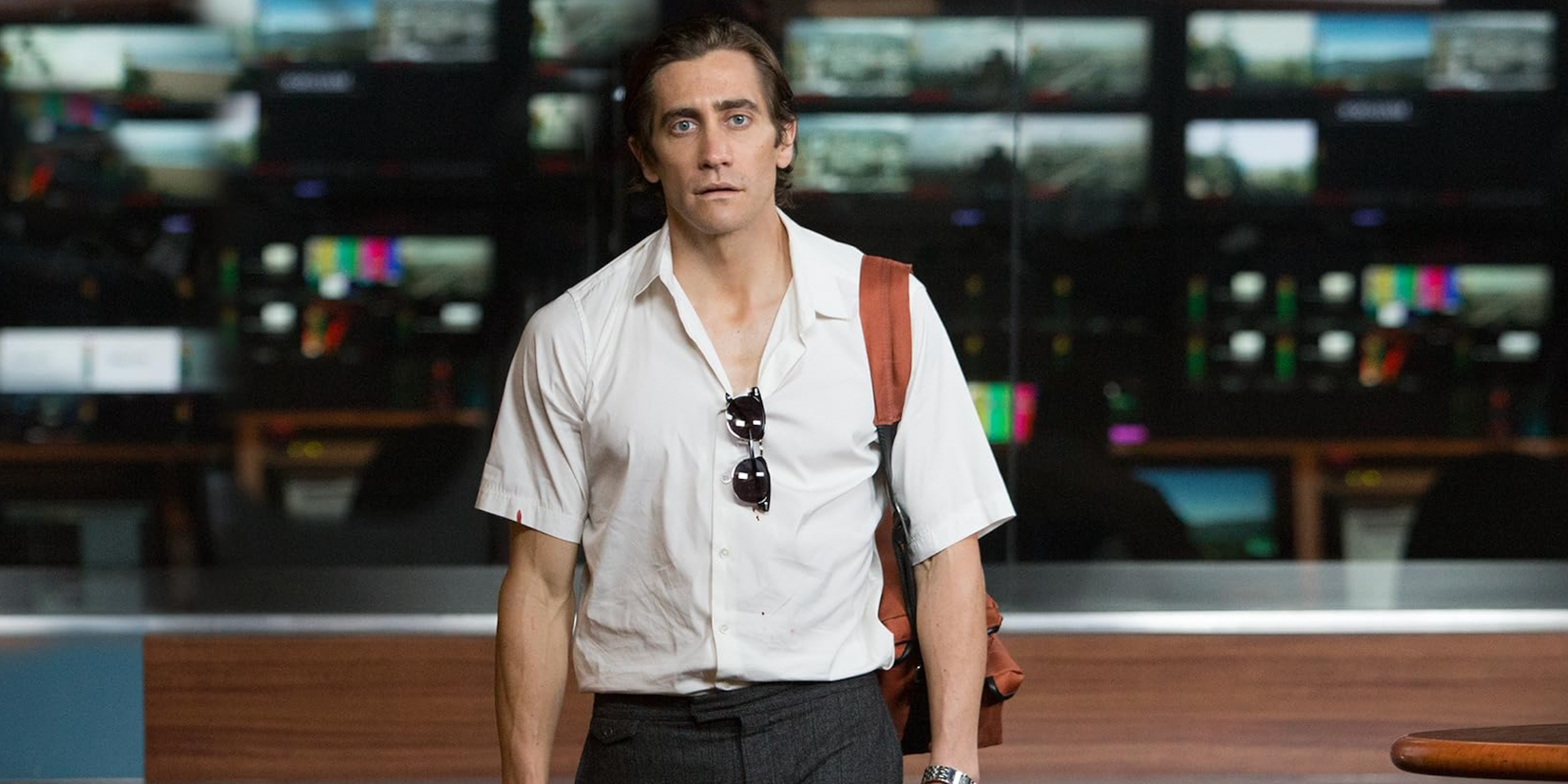 Image via Open Road Films
"If you want to win the lottery, you have to make the money to buy a ticket." Jake Gyllenhaal turns in one of his strongest performances here as Lou Bloom, an unsettlingly eager drifter who discovers the darkly lucrative world of crime journalism. He begins selling the grisly footage to a desperate local news station. But as Lou’s appetite for sensationalism grows, so too does his willingness to cross moral lines — or erase them entirely.
Nightcrawler is as gripping as it is grimy, a nocturnal noir that exposes the predatory nature of the media and the vulturous people who feed it. Gyllenhaal transforms himself physically and psychologically for the role. His gaunt frame and unblinking stare are almost reptilian. Yet his character is also darkly funny in his own absurd way. Finally, on the visual side, director Dan Gilroy frames Los Angeles as a playground of vice and ambition, capturing both the city’s gleam and grit.
Collider Exclusive · Villain Personality Quiz Which Criminal Mastermind Would Be Your Nemesis? Lecter · Joker · Moriarty · Chigurh
Four of the finest criminal minds ever put on screen. One of them would look at you and see something worth their time. Eight questions decide which one comes for you, why they picked you, and what they would want when they arrived.
🍷Lecter
🃏Joker
♟️Moriarty
🪙Chigurh
MEET YOUR NEMESIS →
01
What would a criminal mastermind notice about you first? Great villains choose their opponents carefully. Something about you got their attention.
AMy manners, and everything I am careful not to say. BThat I still believe people are basically decent. CThat I am clever, and quietly enjoy proving it. DThat I handle things myself, and always have.
NEXT QUESTION →
02
How do they make first contact? The introduction tells you everything about what is coming next.
AA polite letter. Beautiful handwriting. Quietly wrong. BSomething on fire, with a message left beside it. CA puzzle, left where only I would look. DNo contact. Just the aftermath, and a coin.
NEXT QUESTION →
03
What do you actually believe about right and wrong? Every nemesis is really an argument about the thing you believe most.
AThere are lines. Mine are private and absolute. BRules are the only thing keeping us from being animals. CMorality is a system, and systems can be solved. DThings happen. Most of it was never up to me.
NEXT QUESTION →
04
What finally gets under your skin? Everybody has a pressure point. Finding yours is the whole plan.
ABeing seen clearly by somebody I cannot read. BWatching good people do something ugly. CLosing to someone who was simply better prepared. DHaving no move left that changes anything.
NEXT QUESTION →
05
They have made their move. How do you fight back? This is the part of the film where the audience finds out who you are.
ACarefully, and never where they expect to be touched. BLoudly. I would rather lose than play their game. CWith a better plan. I can out-think this. DDirectly, once, with whatever is closest to hand.
NEXT QUESTION →
06
What would they use against you? A good villain never brings a weapon you have not already handed them.
AMy privacy. I have kept far too much to myself. BMy conscience. I will not cross the line they want. CMy ego. I cannot resist a worthy opponent. DMy certainty that I can handle it alone.
NEXT QUESTION →
07
What do they actually want from you? The money is never the point. Something else always is.
ATo understand me better than anyone ever has. BTo prove I am no better than they are. CTo finally be beaten by someone worth the trouble. DNothing at all. I stepped into the wrong path.
NEXT QUESTION →
08
How does it end between the two of you? Eight questions in, this is the one that decides who comes for you.
AA conversation I will be replaying for years. BA choice forced on me that has no clean answer. COne final move, and the better mind wins. DA coin in the air, and nothing I can say.
REVEAL MY NEMESIS →
The Case File Is Complete Your Nemesis Is…
Four criminal masterminds. One of them was always going to be yours. Here is who comes for you, why they picked you out of everyone available, and what they want from the encounter.
Hannibal Lecter
Your nemesis does not want to beat you. He wants to know you completely, and he is patient enough to wait for it. The frightening part is how good the conversation is.
- Lecter is the most dangerous kind of opponent: the one who finds you interesting. He never raises his voice, because he has never needed to.
- You keep a great deal to yourself and you are careful about what you show. That reserve is exactly the door he would knock on.
- The films understood something other thrillers missed. The horror is not the violence. It is being perfectly understood by the wrong person.
- He would be unfailingly polite about all of it. That is the worst part.
The Joker
Your nemesis is not after money, territory or revenge. He is after a demonstration, and you are the person he has chosen to prove his point on.
- The Joker only picks opponents who believe in something. Your decency is not a defence against him. It is the entire reason he showed up.
- He has no plan you can predict and nothing you can take away, which removes every tool you would normally reach for.
- His whole argument is that you are one bad day away from being him, and you would spend the rest of your life proving him wrong.
- He would call it a magic trick. You would call it the worst night of your life.
Moriarty
Your nemesis respects you, which sounds flattering until you work out what it means. He chose you because nobody else was worth his time.
- Moriarty is the original criminal mastermind, the template every later one borrows from: a mind the equal of the hero's, pointed the wrong way.
- You enjoy being the cleverest person in the room. He is counting on exactly that, and he has already built the room.
- This is the rare nemesis who would be genuinely disappointed if you lost badly. He needs the game to be worth playing.
- It ends the way these things always end. Two people, one problem, and only one way down.
Anton Chigurh
Your nemesis has no personal interest in you whatsoever, and that is precisely what makes him unsurvivable. You are not a rival. You are a stop on the way.
- Chigurh does not negotiate, gloat or explain. He arrives, he asks one question, and the answer was decided long before you opened your mouth.
- You trust yourself to handle things. He is the one problem in the world that has no interest in how capable you are.
- No Country for Old Men rewrote the screen villain by removing the thing audiences quietly rely on: the sense that talking might work.
- Call it. He will wait.
↻ RETAKE THE QUIZ
8 'The Sixth Sense' (1999)
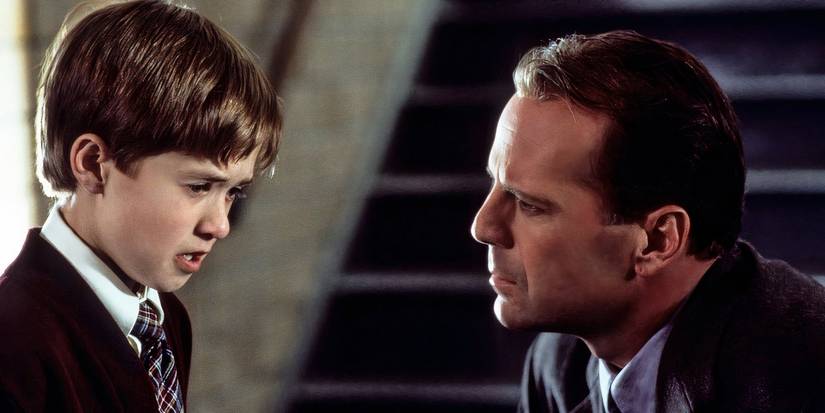 Image via Walt Disney Studios Motion Pictures
"I see dead people." Bruce Willis plays against type in this one as Dr. Malcolm Crowe, a child psychologist haunted by a case he failed to resolve. His path crosses with Cole Sear (Haley Joel Osment), who confesses that he can see the dead. From here, The Sixth Sense plays out as a psychological drama shot through with scenes of pure horror, culminating in one of cinema's most famous twists.
In the decades since, M. Night Shyamalan has become synonymous with storytelling gimmicks, but when The Sixth Sense first came out, its narrative misdirection was still fresh and daring. But scares and tricks aside, the movie is also just nuanced and human. It's well-written and convincingly acted (both Willis and Osment are fantastic), boasting layered characters and a somber commentary on loss, connection, and unfinished business. In the end, The Sixth Sense is cathartic as well as creepy.
7 'Prisoners' (2013)
 Image via Warner Bros.
"Pray for the best. Prepare for the worst." When two young girls vanish from a quiet Pennsylvania suburb, their families are plunged into a nightmare of uncertainty. Father Keller Dover (Hugh Jackman) refuses to wait for the police to deliver answers, taking matters into his own increasingly brutal hands. Meanwhile, Jake Gyllenhaal is Detective Loki, the enigmatic cop racing against time to solve the case.
This could have been a bog-standard police procedural, but Denis Villeneuve crafts Prisoners into a relentless exploration of parental desperation and moral compromise. On the aesthetic side, he tightens the screws with masterful precision, making every shadow and silence feel like a threat. The director refuses to moralize here or provide easy answers. Neither do the lead actors, both turning in impressively layered performances. The finished product is a brooding, morally thorny thriller that sinks its hooks in deep from the opening moments and refuses to let go.
6 'Shutter Island' (2010)
 Image via Paramount Pictures
"Which would be worse: to live as a monster, or to die as a good man?" Leonardo DiCaprio stars here as U.S. Marshal Teddy Daniels, sent to investigate the disappearance of a patient from a remote asylum for the criminally insane. But as he digs deeper, Teddy begins to suspect that something far more sinister lurks beneath the institution’s cold walls. Visions of his traumatic past bleed into the investigation, blurring the lines between reality and hallucination.
Basically, Shutter Island is a gothic psychological puzzle masquerading as a pulp detective story. Scorsese conjures a nightmarish atmosphere, suffused with stormy weather, shadowy corridors, and a creeping sense of dread. DiCaprio rises to the occasion with a fevered, desperate performance, pushing himself into new acting terrain. Once again, this is a movie that tends to be remembered for its twist, but really it's much more than that. Shutter Island is a tale of unresolved trauma, of identities constructed only to be violently torn down.