 Image via Mobius Digital

Published Oct 28, 2026, 6:22 PM EDT
Diego Pineda has been a devout storyteller his whole life. He has self-published a fantasy novel and a book of short stories, and is actively working on publishing his second novel.
A lifelong fan of watching movies and talking about them endlessly, he writes reviews and analyses on his Instagram page dedicated to cinema, and occasionally on his blog. His favorite filmmakers are Andrei Tarkovsky and Charlie Chaplin. He loves modern Mexican cinema and thinks it's tragically underappreciated.
Other interests of Diego's include reading, gaming, roller coasters, writing reviews on his Letterboxd account (username: DPP_reviews), and going down rabbit holes of whatever topic he's interested in at any given point.
Sign in to your Collider account
Throughout the years, science fiction video games have found many potentially fascinating settings, whether that's a gritty cyberpunk version of a futuristic Earth or a special location where the laws of physics don't apply. There's one particular setting, however, that has provided a noteworthy number of the best sci-fi video games in history: outer space.
From wildly underrated gems like Elite Dangerous to foundational classics like Halo 3, many games have proven that the cosmos can make for a title that feels expansive and worthy of exploration. Even if a game is only partially set in outer space, as long as that setting is a major pillar of the narrative, it counts for the purposes of this list.
10 'Elite Dangerous' (2014)
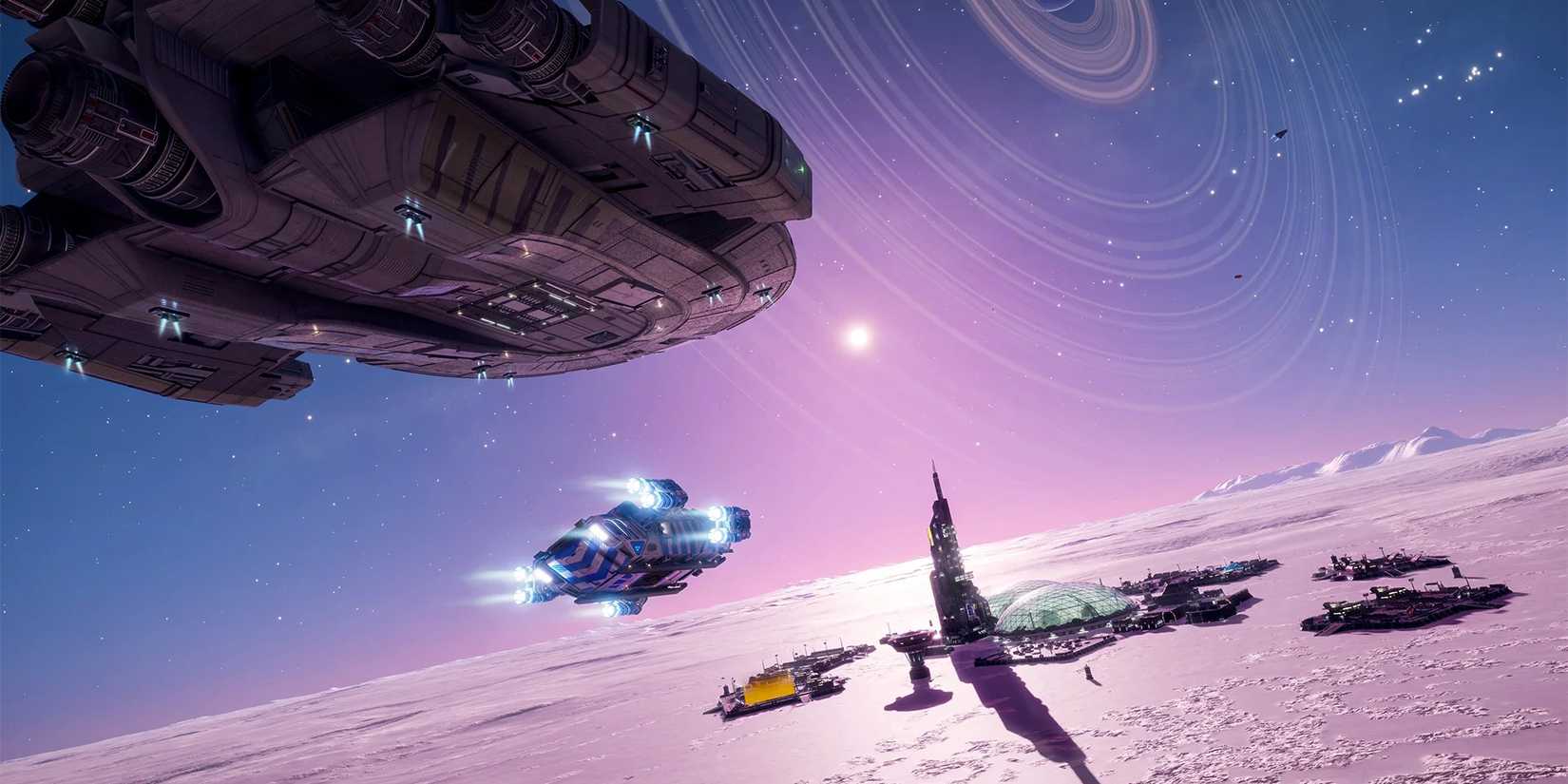 Image via Frontier Developments
Developed and published by Frontier Developments, Elite Dangerous functions as a massively multipleyer online (MMO), an open-world sandbox, a space flight simulator, and a space trading and combat simulator. Set on a realistic 1:1 scale open-world representation of the Milky Way, the game allows the player to explore the procedurally-generated galaxy on their spaceship.
Calling it one of the most massively ambitious science fiction video games of the 21st century would be an understatement, yet Elite Dangerous rarely receives nearly as much love as it deserves. Thanks to its impressive scale and scope, the complexity of its flight mechanics, and the complete freedom that it grants the player, it deserves to be counted among the best space sci-fi games of the 2010s.
9 'Prey' (2017)
 Image via Arkane Studios
Published by Bethesda Softworks, Prey is a first-person shooter (FPS) about a scientist who must fight to survive aboard a space station overrun by shape-shifting aliens. Inspired by RPGs, stealth games, Metroidvanias, and roguelikes from the past, Prey immediately earned praise as one of the most layered and sophisticated games of its kind, with an unsettling atmosphere and a satisfyingly high difficulty.
Indeed, it's one of the best sci-fi video games of all time, masterfully combining an immersive sim framework with space horror and incredibly dense environmental design. The game takes place on the orbital space station Talos I, an absolutely enrapturing setting that allows the player to find countless different ways of solving different problems. It's scary, it's complex, and it's irresistibly fun.
8 'No Man's Sky' (2016)
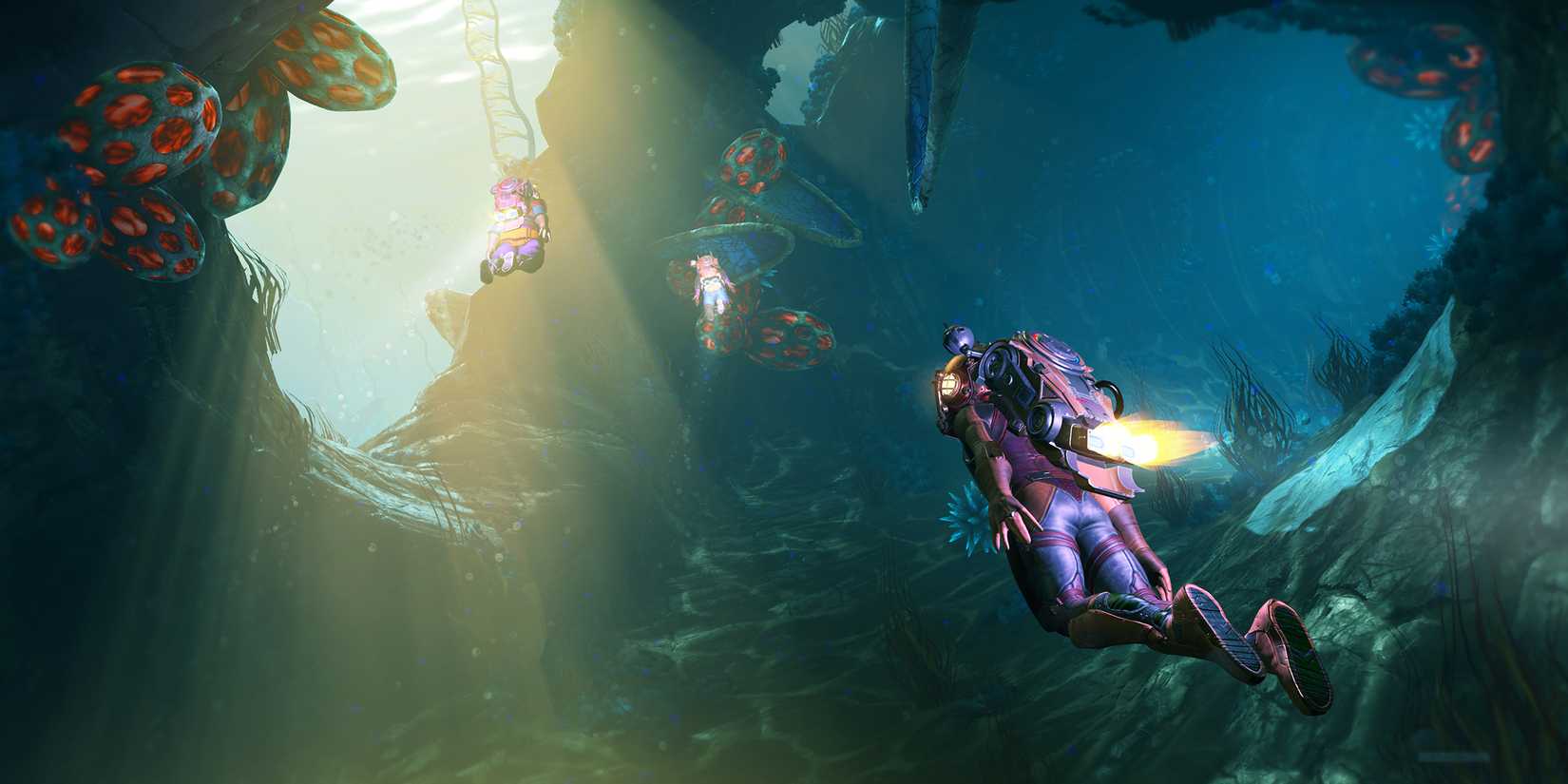 Image via Hello Games
Hello Games' No Man's Sky is built around four pillars: exploration, survival, combat, and trading. At launch, it received reviews that were mixed at best; but in one of the biggest comeback stories in the history of gaming, updates allowed it to become one of the greatest sci-fi video game masterpieces of all time.
No Man's Sky allows players to explore a procedurally-generated universe whose sheer scale is still jaw-dropping a decade later. Bolstered by its delightfully retro art style and some incredible cross-platform co-op, the game allows players to let their imaginations run free as they hop across billions upon billions of planets, never seeing two that feel quite the same.
7 'Alien: Isolation' (2014)
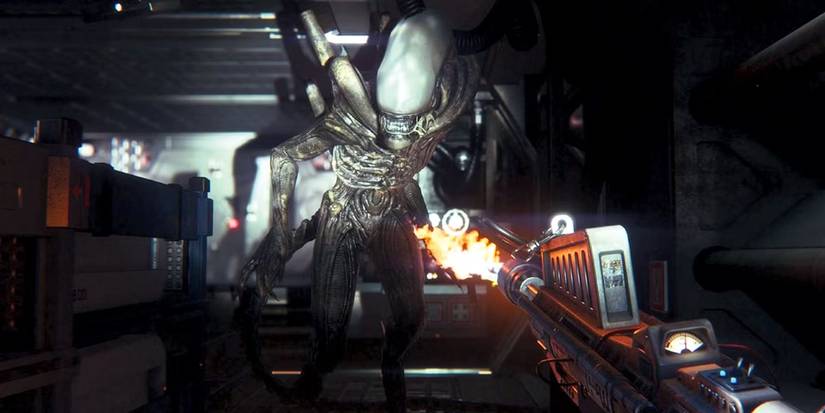 Image via Creative Assembly
Back in 1979, Ridley Scott's Alien radically transformed the sci-fi horror genre, cementing itself as one of the most groundbreaking films of the New Hollywood movement. It spawned a multimedia franchise that eventually found its way to game consoles, delivering Alien: Isolation in 2014. Set 15 years after Ellen Ripley's disappearance, this Creative Assembly title sees her daughter, Amanda, fight to survive a Xenomorph attack aboard a decaying space station.
Regarded by many as the undisputed king of pure space survival horror, Alien: Isolation is both a love letter to the franchise and one of the most essential horror video games ever. The way the Xenomorph hunts the player is based on a two-tiered system that makes for one of the most effectively nail-biting cat-and-mouse video games the world has ever seen.
6 'Dead Space' (2023)
 Image via Electronic Arts
EA's original Dead Space came out back in 2008, revolutionizing survival horror games and being massively praised by critics and audiences alike, in spite of its slow sales. However, it's almost undisputed that the definitive way to play this 2000s classic is the remake developed by Motive Studio that came out in 2023, one of those game remakes that are better than the original.
For one, there's the iconic setting of the USG Ishimura, which allows for some absolutely riveting environmental storytelling. Then, there's the way dismemberment is introduced as a vital part of combat, something the genre had never seen before. Add to all of that the unmatched sound design and body horror, and it should be no surprise that Dead Space is as much of a cult classic as it is.
5 'Outer Wilds' (2019)
 Image via Annapurna Interactive
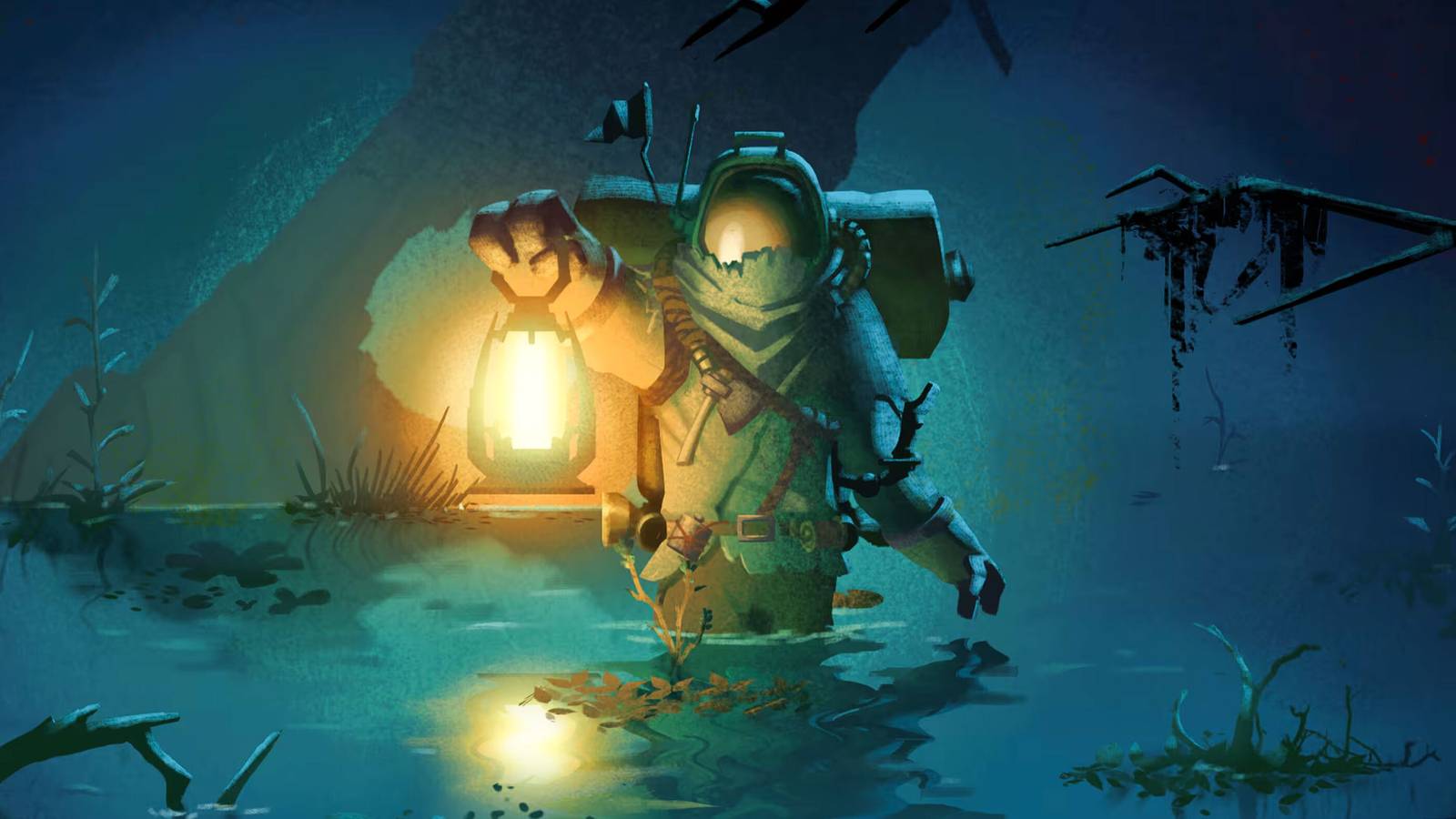
In Mobius Digital's Outer Wilds, the player explores a planetary system stuck in a 22-minute time loop, which resets after the Sun goes supernova and destroys the system. This makes for a deliriously addictive gameplay loop that makes Outer Wilds one of the best titles for people who love games where the entire experience is driven purely by their curiosity.
The only barrier stopping players from reaching any given location or solving any given mystery is the player's own understanding of how the solar system works.
Indeed, the only barrier stopping players from reaching any given location or solving any given mystery is the player's own understanding of how the solar system works, imbuing the whole experience with a sense of discovery and urgency that not many other space sci-fi games have ever offered. It's one of the best adventure video games of the last decade, further anchored by its incredible atmosphere and music.
4 'Halo 3' (2007)
 Image via Microsoft Game Studios
Halo: Combat Evolved, the first title in the Halo series, was such a critical and commercial hit that it immediately made this one of the most iconic video game franchises in history. Most fans would agree, however, that the series peaked with Halo 3, one of the best video games of all time, about the Master Chief and his allies having to stop a fanatical alien coalition from wiping out all life in the galaxy.
There's a myriad of reasons why Halo 3 represents the pinnacle of epic space-opera military sci-fi in games, from the timeless sandbox combat mechanics to one of the greatest multiplayer modes in the history of FPS games. The world-building is phenomenal, the pacing of the campaign is flawless, and the groundbreaking mechanics completely revolutionized the genre.
3 'Metroid Prime Remastered' (2023)
 Image via Nintendo
It takes a truly special franchise to have an entire video game genre named after it, and there is nothing that the Metroid franchise is if not special. However, after years of its being confined to 2D, the announcement that Nintendo was working on a 3D Metroid game was met with skepticism. In the end, 2002's Metroid Prime ended up becoming one of the greatest titles on the GameCube; and Metroid Prime Remastered is undeniably the definitive way to play this classic.
Where the original was one of those 2000s video games that are amazing from start to finish, its remastered version makes it look, sound, feel, and control even better. The environmental storytelling and world-building are masterful, the first-person gameplay is deeply immersive, and the traditional Metroidvania gameplay loop is perfectly intact in the third dimension.
2 'Mass Effect 2' (2010)
 Image via BioWare
There are plenty of 2010s video games that are considered classics in 2026, but few are better-regarded than BioWare's Mass Effect 2. The whole Mass Effect series has been foundational in the history of action RPGs, but the second title in particular re-defined its genre with its continuation of the story of the iconic Commander Shepard.
What's not to praise here? Mass Effect 2 is the peak of character-driven sci-fi storytelling through the medium of video games, and even though its RPG mechanics are relatively simple compared to the first game, that ends up working in the game's favor far more often than not. Those RPG elements are perfectly balanced with elements of a third-person shooter, streamlining the gameplay loop and constantly raising the stakes of the narrative. It's richly designed, it's highly cinematic, and it's about as close to perfect as space sci-fi games come.
1 'Super Mario Galaxy' (2007)
 Image via Nintendo
Saying that Super Mario Galaxy is simply one of the best Mario games of all time would be the understatement of the century. Saying that it's just the greatest title to have come from the Wii era would be just as far from the exact truth. Admittedly, when hearing that the newest 3D Mario title that Nintendo was developing would be set in outer space, fans didn't exactly know what to expect. They certainly can't have possibly expected this platformer to end up enshrining itself as one of the greatest video games in history.
Super Mario Galaxy's space setting may not be quite as expansive or open-ended as the setting of many other of history's greatest-ever space video games, but that streamlining is precisely the point. A masterclass in level design, gravity-defying mechanics, and perfect controls, Super Mario Galaxy is a game so infinitely enjoyable that anyone and everyone who would consider themselves a fan of the video game medium should consider it a must-play.
Collider Exclusive · Sci-Fi Survival Quiz Which Sci-Fi World Would You Survive? The Matrix · Mad Max · Blade Runner · Dune · Star Wars
Five universes. Five completely different ways the future went wrong — or sideways, or up in flames. Only one of them is the world your instincts were built for. Eight questions will figure out which dystopia, galaxy, or desert wasteland you'd actually make it out of alive.
💊The Matrix
🔥Mad Max
🌧️Blade Runner
🏜️Dune
🚀Star Wars
TEST YOUR SURVIVAL →
01
You sense something is deeply wrong with the world around you. What do you do? The first instinct is often the truest one.
APull on every thread until I understand the system — then figure out how to break it. BStop asking questions and start stockpiling — food, fuel, weapons. Questions don't keep you alive. CKeep my head down, observe carefully, and trust no one until I know who's pulling the strings. DStudy the patterns. Every system has a rhythm — learn it, and you learn how to survive it. EFind the people fighting back and join them. You can't fix a broken galaxy alone.
NEXT QUESTION →
02
In a world of scarcity, what resource do you guard most fiercely? What we protect reveals what we believe survival actually requires.
AKnowledge. If you understand the system, you don't need resources — you can generate them. BFuel. Everything else — movement, power, escape — runs on it. CTrust. In a world of fakes and informants, a truly reliable ally is rarer than any commodity. DWater. And after water, information — the two things empires are truly built on. EShips and credits. The galaxy is big — you survive it by being able to move through it freely.
NEXT QUESTION →
03
What kind of threat keeps you up at night? Fear is useful data — if you're honest about what you're actually afraid of.
AThat reality itself is a lie — that everything I experience has been constructed to keep me compliant. BA raid. No warning, no mercy — just the roar of engines and then nothing left. CBeing identified. Once someone with power decides you're a problem, you're already out of time. DBeing outmanoeuvred — losing a political game I didn't even know I was playing. EThe Empire tightening its grip until there's nowhere left to run.
NEXT QUESTION →
04
How do you deal with authority you don't trust? Every dystopia has a power structure. Your approach to it determines everything.
ASubvert it from the inside — learn its rules well enough to weaponise them against it. BIgnore it and stay out of its reach. The further from any power structure, the better. CAppear to comply while doing exactly what I need to do. Visibility is the enemy. DManoeuvre within it carefully. You can't beat a system you refuse to understand. EResist openly when I have to. Some things are worth the risk of being seen.
NEXT QUESTION →
05
Which environment could you actually endure long-term? Survival isn't just tactical — it's physical, psychological, and very much about where you are.
AUnderground bunkers and server rooms — cramped, artificial, but with access to everything that matters. BOpen wasteland — brutal sun, no shelter, constant movement. At least the threat is honest. CA dense, rain-soaked city where you can disappear into the crowd and nobody asks questions. DMerciless desert — extreme heat, no water, and something enormous living beneath the sand. EThe fringe — backwater planets and busy spaceports where the Empire's attention rarely reaches.
NEXT QUESTION →
06
Who do you want in your corner when things fall apart? The company you keep is the clearest signal of who you actually are.
AA tight crew of believers who've seen behind the curtain and have nothing left to lose. BOne or two people I'd trust with my life. Any more than that and someone talks. CNobody, ideally. Alliances are liabilities. I work alone unless I have no choice. DA community bound by shared hardship and mutual survival — people who need each other to last. EA ragtag team with wildly different skills and total commitment when it counts.
NEXT QUESTION →
07
Where do you draw the line — if you draw one at all? Every survivor eventually faces a moment that tests what they're actually made of.
AI won't harm the innocent — even the ones who'd report me without hesitation. BI do what I have to to protect the people I've chosen. Everything else is negotiable. CThe line shifts depending on who's asking and what's at stake. DI draw a long-term line — nothing that compromises my people's future, even if it'd help now. ESome lines, once crossed, can't be uncrossed. I know which ones they are.
NEXT QUESTION →
08
What would actually make survival worth it? Staying alive is one thing. Having a reason to is another.
AWaking others up — dismantling the illusion so no one else has to live inside it. BFinding somewhere — or someone — worth protecting. A reason to keep moving. CAnswers. Understanding what I am, what any of this means, before time runs out. DLegacy — shaping the future in a way that outlasts me by generations. EFreedom — for myself, for others, for every world still living under someone else's boot.
REVEAL MY WORLD →
Your Fate Has Been Calculated You'd Survive In…
Your answers point to the world your instincts were built for. This is the universe your temperament, your survival instincts, and your particular brand of stubbornness were made for.
The Matrix
You took the red pill a long time ago — probably before anyone offered it to you. You're a systems thinker who can't help but notice the seams in things.
- You're drawn to understanding how the system works before figuring out how to break it.
- You'd find the Resistance, or it would find you — your instinct for spotting constructed realities is the machines' worst nightmare.
- You function best when you have access to information and the freedom to act on it.
- The Matrix built an airtight prison. You'd be the one probing the walls for the door.
Mad Max
The wasteland doesn't reward the clever or the well-connected — it rewards those who are hard to kill and harder to break. That's you.
- You don't need comfort, community, or a cause larger than the next horizon.
- You need a vehicle, a clear threat, and enough fuel to outrun it — and you're good at all three.
- You are unsentimental enough to survive that world, and decent enough — just barely — to be something more than another raider.
- In the wasteland, that distinction is everything.
Blade Runner
You'd survive here because you know how to exist in moral grey areas without losing yourself completely.
- You read people accurately, keep your circle small, and ask the questions others prefer not to answer.
- In a city where humanity is a legal designation rather than a feeling, you hold onto something that keeps you functional.
- You're not a hero. But you're not lost, either.
- In Blade Runner's world, that distinction is everything.
Dune
Arrakis is the most hostile environment in the known universe — and you are precisely the kind of person it rewards.
- Patience, discipline, and political awareness are your core strengths — and on Arrakis, they're survival tools.
- You understand that the long game matters more than any single victory.
- Others come to Dune and are consumed by it. You'd learn its logic and earn its respect.
- In time, you wouldn't just survive Arrakis — you'd begin to reshape it.
Star Wars
The galaxy far, far away is vast, loud, and in a constant state of violent political upheaval — and you wouldn't have it any other way.
- You find meaning in being part of something larger than yourself — a cause, a crew, a rebellion.
- You'd gravitate toward the Rebellion, or the fringes, or whatever pocket of the galaxy still believes the Empire's grip can be broken.
- You fight — not because you have to, but because standing aside isn't something you're capable of.
- In Star Wars, that willingness is what makes all the difference.
↻ RETAKE THE QUIZ