 Image via Paramount+

Published Nov 7, 2026, 2:27 PM EST
A features writer at Collider, Shreejit hails from a country known for its unabashed love for its cinema. During his postgrad in Journalism, Shreejit discovered his love for film analysis through his Film Studies class. From De Sica's 'Bicycle Thieves' to Satyajit Ray's 'Pather Panchali', the films he explored for the class enabled Shreejit's conversion from a passionate film follower to an ardent student of the art. At Collider, Shreejit shares his love for cinema and television with fellow writers and readers who have been impacted by the power of the medium as much as he has. Shreejit has written for some of the most popular entertainment websites in his country, including one of India's biggest entertainment outlets, 'Film Companion.' Shreejit's most widely read feature on Collider amassed 200k+ page views within a few days of its publishing. From MCU to Korean thrillers to Bollywood, Shreejit writes about everything and anything that fascinates him, thanks to his ability to binge through any amount of content, if he puts his mind to it!
Sign in to your Collider account
Starring Sylvester Stallone in his first leading role in a television series, Taylor Sheridan's Tulsa King follows a Mafia capo released from prison after 25 years. It's clear that a man who has spent so much time away from the rest of the world will struggle to adjust, but Tulsa King captures this spirit amazingly well, with Stallone serving as the figure who must cope with change. The problem is that getting a Mafia capo, himself a product of his time, to evolve can't be settled in the blink of an eye. Through Stallone's performance as Dwight "The General" Manfredi, Tulsa King adopts a different approach from the many mafia movies and shows audiences are familiar with.
Tulsa King isn't the story of a man who rises in the ranks to attain glory — something that has been depicted countless times. It is the story of a Mafioso who knows how to build a strong criminal empire but doesn't know exactly how to go about it in a setting very different from what he's familiar with. Sheridan's crime epic manages to give the "rising mafia boss" trope new colors, breaking the mold one stereotype at a time while also shattering streaming records in the process.
'Tulsa King's Dwight Manfredi Is Different From Traditional Mob Bosses
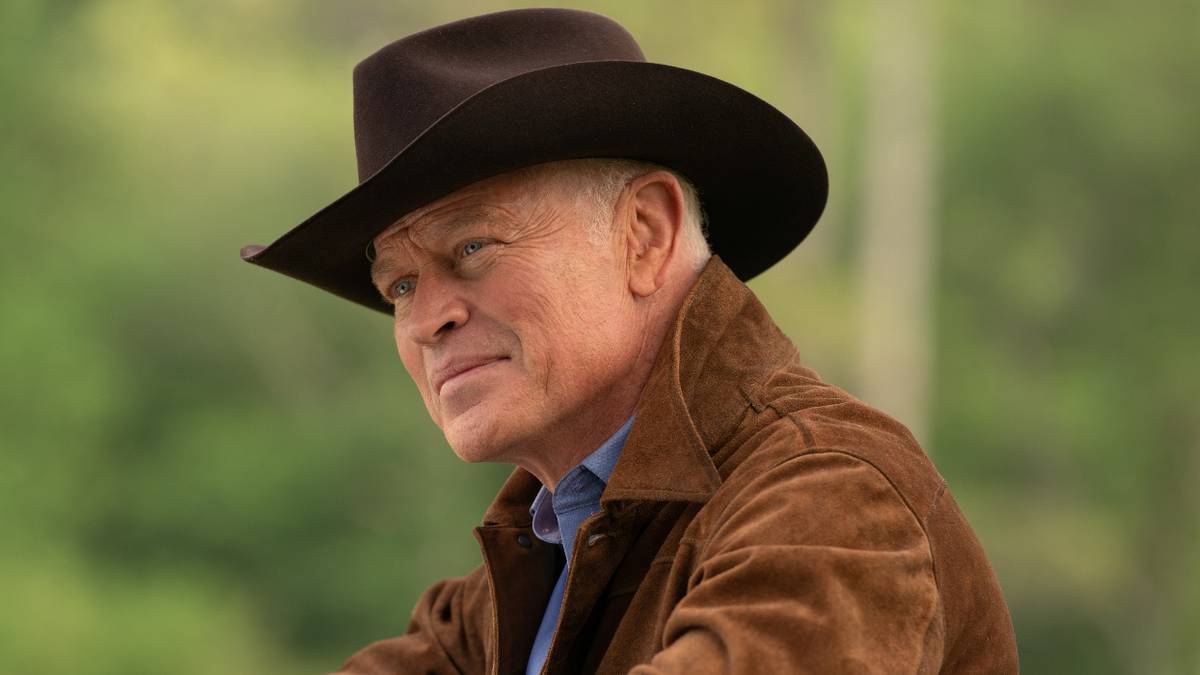
Like most mafia story protagonists, Tulsa King's Dwight Manfredi isn't the guy from the streets trying to climb the ladder to the inner circle of the criminal underworld. Instead, he's a 75-year-old veteran toughened by his life in the mafia and time in jail. After spending a third of his life behind bars on behalf of his boss, Manfredi expects a royal welcome when he's released. Instead, Don Charles "Chickie" Invernizzi (Domenick Lombardozzi), the son of Manfredi's boss, quickly reveals that his reward for celebrating a silver jubilee in jail is a trip to Tulsa, where he must establish a new base for the family. Manfredi, aware of the hay to reap in New York, realizes that the offer at its best is merely a banishment, away from where the real action and money are.
The first few episodes of Tulsa King depict Manfredi struggling with the changed rules of the era. For a man who hasn't been in touch with the outside world for so long, getting out after such an extended period almost equals a rebirth. From opening a bank account to understanding how Uber works, there's a lot to Manfredi's journey of exploration as he gets introduced to the power of credit cards and the internet. While he still prefers to stick with age-old principles such as "cash is king," he is smart enough to use the resources at his disposal for his benefit. After all, you don't survive with a criminal record, which began even before the Beatles became famous, without being street smart, and the character's attempts to acclimate make for some truly joyful moments in the show.
'Tulsa King's Setting Provides an Opportunity That New York Doesn't
With its setting, Tulsa King sets itself apart by ditching the city whose landscape has provided the setting for all legendary mafia sagas from The Godfather to Goodfellas, which is also referenced by Manfredi's right-hand, Tyson (Jay Will), in Episode 3. Not only does Manfredi need to adapt to the changes of the time, but his attempt to build his empire has to begin with decoding new unspoken rules.
From getting a free ride from the local car dealer to becoming the unofficial owner of a local dispensary that sells weed, Manfredi gets ahead merely on the back of his confidence and a bit of jaw-cracking violence. Tulsa proves to be a blessing in disguise to help him start out again with possibly minimal resistance, and at his own pace. In a city that doesn't wholly understand how the mafia operates, Manfredi's swagger makes room for hilarious encounters. The fact that he brings a money-making dispensary under his control with the help of just a water bottle emphasizes both Manfredi's criminal capabilities and the town's lack of caution in its daily business.
Collider Exclusive · Taylor Sheridan Universe Quiz
Which Taylor Sheridan
Show Do You Belong In?
Yellowstone · Landman · Tulsa King · Mayor of Kingstown
Four worlds. All of them brutal, complicated, and built on power, loyalty, and the price of survival. Taylor Sheridan doesn't write heroes — he writes people who do what they have to do and live with the cost. Ten questions will reveal which one of his worlds you were made for.
🤠Yellowstone
🛢️Landman
👑Tulsa King
⚖️Mayor of Kingstown
FIND YOUR WORLD →
01
Where does your power come from? In Sheridan's world, everyone has leverage. The question is what kind.
ALand, legacy, and a name that's been feared and respected for generations. BKnowing the deal better than anyone else in the room — and being willing to walk away first. CReputation. I've earned it the hard way, and everyone in the room knows it. DBeing the only person both sides will talk to. That makes me indispensable — and dangerous.
NEXT QUESTION →
02
Who do you put first, no matter what? Loyalty in Sheridan's universe is always absolute — and always costly.
AFamily — blood or chosen. The ranch, the name, the people who carry it with me. BThe company — or whoever's signing the cheques. Loyalty follows the contract. CMy crew. The men who stood with me when it counted — I don't abandon them for anything. DMy community — even when my community is a powder keg and I'm the only thing stopping it from blowing.
NEXT QUESTION →
03
Someone crosses a line. How do you respond? Every Sheridan protagonist has a line. What matters is what happens after it's crossed.
AQuietly, decisively, and in a way that sends a message to everyone watching. BI outmanoeuvre them legally, financially, and politically before they even know I've moved. CDirectly. Old school. You cross me, you hear about it to your face — and then you deal with the consequences. DI absorb it, calculate the fallout, and find the move that keeps the whole system from collapsing.
NEXT QUESTION →
04
Where do you feel most in your element? Sheridan's worlds are as much about place as they are about people.
AWide open land — mountains, sky, silence. Somewhere you can see trouble coming from a mile away. BThe oil fields of West Texas — brutal, lucrative, and indifferent to whoever happens to be standing on top of them. CA mid-size city where the rules haven't quite caught up yet — fertile ground for someone with vision and nerve. DA rust-belt town built around a prison — where everyone's life is shaped by what's inside those walls.
NEXT QUESTION →
05
How do you feel about operating in the grey? Nobody in a Sheridan show has clean hands. The question is how they carry the dirt.
AI do what has to be done to protect what's mine. I'll answer for it eventually — but not today. BGrey is just business. The line moves depending on what's at stake, and I move with it. CI have a code — it's not the law's code, but it's mine, and I don't break it. DI've made peace with it. Keeping the peace requires compromises most people don't have the stomach for.
NEXT QUESTION →
06
What are you actually fighting to hold onto? Every Sheridan character is fighting a war. The real question is what they're defending.
AA way of life that the modern world is doing everything it can to erase. BMy position — and the leverage that comes with being the person everyone needs to close a deal. CRelevance. I've been away, I've been written off — and I'm proving that was a mistake. DWhatever fragile order I've managed to build — because without it, everything burns.
NEXT QUESTION →
07
How do you lead? Authority in Sheridan's world is never given — it's established, maintained, and constantly tested.
ABy example and force of will. People follow me because they believe in what I'm protecting — and because they know what happens if they don't. BThrough negotiation and leverage. I don't need people to like me — I need them to need me. CBy being the smartest, most experienced person in the room and making sure everyone quietly knows it. DBy being the calm centre of a situation that would spiral without me — and accepting that nobody thanks you for it.
NEXT QUESTION →
08
Someone new arrives and tries to change how things work. Your reaction? Every Sheridan show has an outsider disrupting an established order. Sometimes that outsider is you.
AThey'll learn. Or they won't. Either way, the land was here before them and it'll be here after. BI figure out what they want, what they're worth, and whether they're an asset or a problem — fast. CI was the outsider once. I give them a chance — one — to show they understand respect. DNew players destabilise everything I've built. I assess the threat and manage it before it manages me.
NEXT QUESTION →
09
What has your position cost you? Nobody gets to where these characters are without paying for it. The bill is always personal.
AMy family's peace — maybe their innocence. The ranch demands everything, and I've let it take too much. BRelationships, time, any version of a normal life. The job eats everything that isn't nailed down. CYears. Decades in some cases. Time I can't get back — but I'm not done yet. DMy conscience, mostly. And the ability to ever fully trust anyone on either side of the wall.
NEXT QUESTION →
10
When it's over, what do you want people to say? Sheridan's characters all know the ending is coming. The question is what they leave behind.
AThat I held the line. That the land is still ours and everything I did was worth it. BThat I was the best at what I did and that no deal ever got closed without me at the table. CThat I built something real, somewhere nobody expected it, and I did it on my own terms. DThat I kept the peace when nobody else could — and that the town is still standing because of it.
REVEAL MY SHOW →
Sheridan Has Spoken You Belong In…
The show that claimed the most of your answers is the world you were built for. If two tied, both are shown — you're complicated enough to straddle two Sheridan universes.
🤠 Yellowstone
🛢️ Landman
👑 Tulsa King
⚖️ Mayor of Kingstown
You are a Dutton — or you might as well be. You understand that some things are worth protecting at any cost, and that the modern world's indifference to history, to land, to legacy, is not something you're willing to accept quietly. You lead from the front, you carry your family's weight without complaint, and when someone threatens what's yours, you don't escalate — you finish it. You're not cruel. But you are absolute. In Yellowstone's world, that combination of ferocity and loyalty doesn't make you a villain. It makes you the only thing standing between everything that matters and everyone who wants to take it.
You thrive in the chaos of high-stakes negotiation, where the money is enormous, the margins are thin, and the wrong word in the wrong room can cost everyone everything. You're a fixer — the person called when a situation is already on fire and needs someone with the nerve to walk into it. West Texas oil country rewards exactly what you are: sharp, adaptable, unsentimental, and absolutely clear-eyed about what people want and what they'll do to get it. You're not naive enough to think this world is fair. You're smart enough to be the one deciding who it's fair to.
You are a Dwight Manfredi — someone who has served their time, paid their dues, and arrived somewhere unexpected with nothing but their reputation and their wits. You adapt without losing yourself. You build loyalty through respect rather than fear, though you're not above reminding people that the two aren't mutually exclusive. Tulsa King is for people who are still standing when everyone assumed they'd be finished — who find, in an unfamiliar place, that they're more capable than the world gave them credit for. You don't need a throne. You build one, wherever you happen to land.
You carry the weight of a system that is broken by design, and you do it anyway — because someone has to, and because you're the only one positioned to do it without the whole thing collapsing. Mike McLusky's world is for people who are comfortable operating where there are no good options, only less catastrophic ones. You speak every language: law enforcement, criminal, political, human. That fluency makes you invaluable and it makes you a target. You've made your peace with both. Mayor of Kingstown belongs to people who understand that keeping the peace is not the same as being at peace — and who do the job regardless.
↻ RETAKE THE QUIZ
Sylvester Stallone's Performance Allows 'Tulsa King's Dwight Manfredi to Flourish
 Image via Paramount+
Tulsa King deviates from the trend of making mafia stories about blazing guns and tough guy acts. In this aspect, this show knows it's catering to an audience who's probably interested in watching for the legacy of the actor at its helm. While it'd be interesting to see the action star getting a beating, Tulsa King begins by placing Stallone's Dwight Manfredi as the undisputed king of the land — one who's jovial, sensitive, and dangerous all at once.
At a juncture when mafia stories feel as if they are preparing a dish made from different proportions of the same ingredients, Tulsa King achieves something truly enjoyable by choosing not to stick to any existing formula. As a result, the Stallone-starring crime drama doesn't feel restricted by the legacy of what has come before (looking at you, Tony Soprano). Much like Dwight Manfredi, Tulsa King remains aware of the past but doesn't shy away from accepting a lesson or two from the present — and in doing so, the series offers a protagonist that doesn't fit into any classic mob boss mold.