
.jpg) 1 hour ago
3
1 hour ago
3
Article content
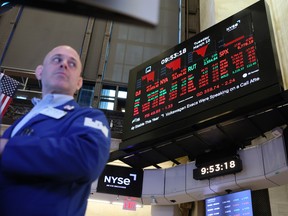
Markets have been volatile since the United States and Israel started military strikes on Iran on Feb. 28, but the fallout may not be as bad as feared.

THIS CONTENT IS RESERVED FOR SUBSCRIBERS ONLY
Subscribe now to read the latest news in your city and across Canada.
- Exclusive articles from Barbara Shecter, Joe O'Connor, Gabriel Friedman, and others.
- Daily content from Financial Times, the world's leading global business publication.
- Unlimited online access to read articles from Financial Post, National Post and 15 news sites across Canada with one account.
- National Post ePaper, an electronic replica of the print edition to view on any device, share and comment on.
- Daily puzzles, including the New York Times Crossword.
SUBSCRIBE TO UNLOCK MORE ARTICLES
Subscribe now to read the latest news in your city and across Canada.
- Exclusive articles from Barbara Shecter, Joe O'Connor, Gabriel Friedman and others.
- Daily content from Financial Times, the world's leading global business publication.
- Unlimited online access to read articles from Financial Post, National Post and 15 news sites across Canada with one account.
- National Post ePaper, an electronic replica of the print edition to view on any device, share and comment on.
- Daily puzzles, including the New York Times Crossword.
REGISTER / SIGN IN TO UNLOCK MORE ARTICLES
Create an account or sign in to continue with your reading experience.
- Access articles from across Canada with one account.
- Share your thoughts and join the conversation in the comments.
- Enjoy additional articles per month.
- Get email updates from your favourite authors.
THIS ARTICLE IS FREE TO READ REGISTER TO UNLOCK.
Create an account or sign in to continue with your reading experience.
- Access articles from across Canada with one account
- Share your thoughts and join the conversation in the comments
- Enjoy additional articles per month
- Get email updates from your favourite authors
Sign In or Create an Account
or
Article content
Markets are still “relatively well behaved,” said Philip Petursson, chief investment strategist at IG Wealth Management. The caveat? The longer the war goes on, the worse the outlook is for equity markets and the global economy as a whole, he said.
Article content
Article content
Article content
“Every day that oil prices are at this level, every week that goes by, if this stretches in two months, then the risk of recession increases,” he said.
Article content
By signing up you consent to receive the above newsletter from Postmedia Network Inc.
Article content
The U.S. market is showing “resilience” compared to others, said Craig Basinger, chief market strategist at Purpose Investments. International stock markets, including Europe and Asia, have been hit harder because they’re more exposed to global trade upheaval and rely heavily on oil from the Middle East.
Article content
“People are concerned about if this is going to have a broader economic impact. And as a result, that’s hitting markets that have more economic sensitivity,” Basinger said.
Article content
While energy stocks make up 16 per cent of the S&P/TSX Composite Index, higher oil prices didn’t shield the index from Monday’s global selloff. Looking at energy stocks and energy futures positions, Petursson said investors don’t seem to be pricing in higher oil prices sticking around for a long time.
Article content
“You would have thought oil getting to $90 a barrel would have provided a nice pop for the energy producers, but it’s been rather muted, so that tells me that the energy investors are saying this is probably going to be short lived,” Petursson said.
Article content
Article content
Coming off three years of a bull market, a slump of a few per cent is relatively small in the grand scheme of things. Even if the TSX loses 10 per cent from its all-time high in March, Petursson said, it would be back to levels seen in December. If the S&P 500 drops 10 per cent from its January high, it would be roughly at the same level as last August.
Article content
Article content
The greater concern, he said, is how persistently high oil prices are a headwind to economic growth and a “tax on the consumer.” Petursson said the worst-case scenario is the least probable — a drawn-out conflict that constricts the global energy supply chain and keeps oil prices high for a prolonged period of time.
Article content
“We would need to see oil in the $140 range to be really, really negative for the global economy. We’re not there yet,” Petursson said. “Who’s to say if we’ll get there or not? But if we were to get closer and closer to that, then the recession risk and the more meaningful downside of the equity markets would be a higher risk overall.”
Article content
David Rosenberg, president and founder of Rosenberg Research, said high oil prices could cause short-term statistical inflation but he doesn’t expect it to over the long term.
 English (US)