
.jpg) 3 hours ago
3
3 hours ago
3
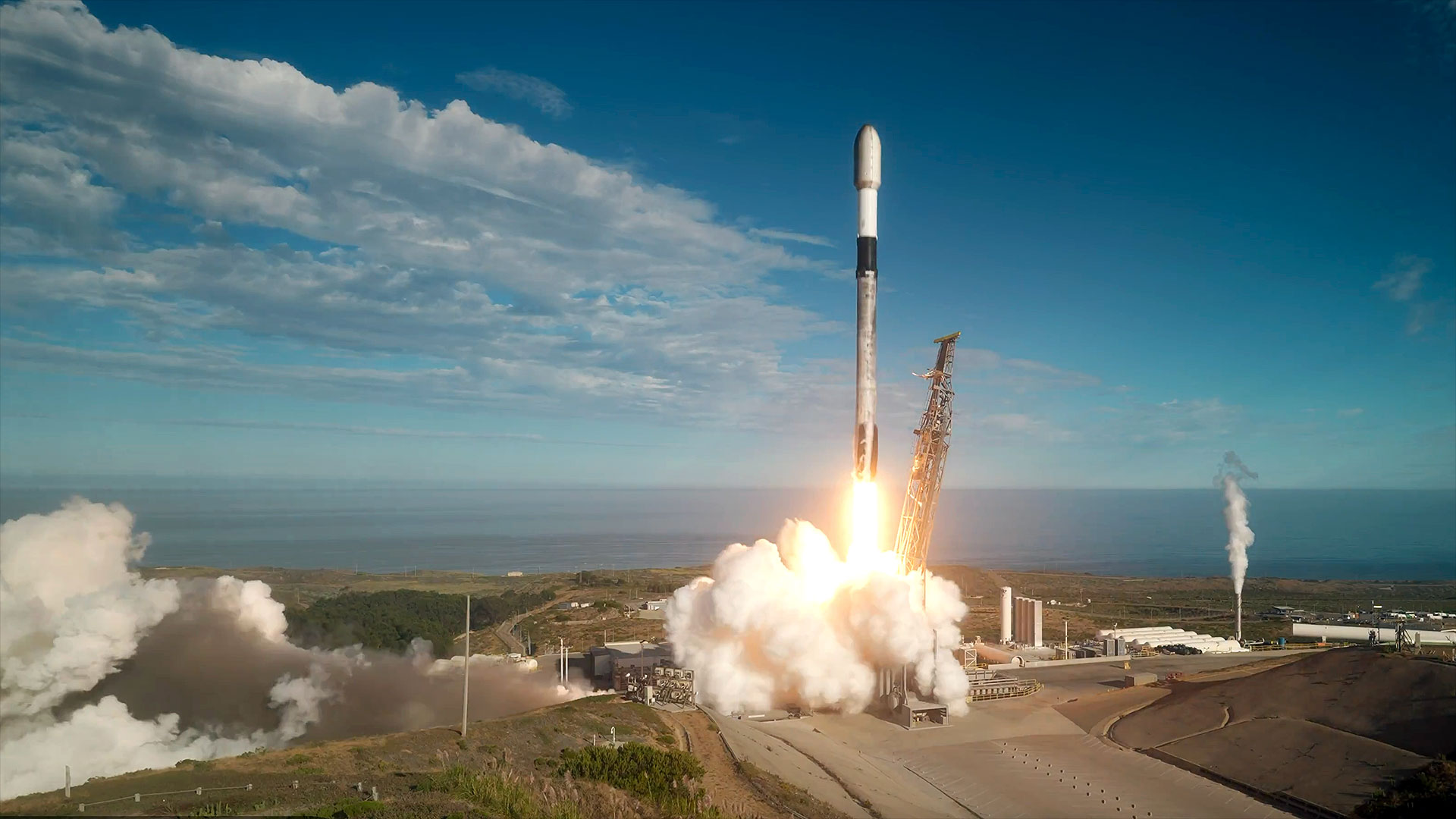
Twenty-four Starlink satellites reached low Earth orbit on Tuesday (July 21), a day later than originally scheduled due to a last-second rocket engine abort.
SpaceX at first tried to launch the broadband internet relay units on a Falcon 9 rocket on Monday morning (July 20), but an unexpected engine cutoff at the point of ignition scrubbed the day's attempt. The company did not provide a reason for the abort.
By Tuesday, whatever the problem was had been addressed and the Falcon 9 was ready to fly. It liftoff off at 10:49 a.m. EDT (1449 GMT; 7:49 a.m. PDT local time) from Space Launch Complex 4 East at Vandenberg Space Force Base in California. About an hour later, after a normal ascent, the new Starlink batch (Group 17-39) were deployed into their intended orbit.
"Deployment of 24 Starlink satellites confirmed," SpaceX posted on social media.
Previous Booster B1082 missions:
The Falcon 9 rocket's first stage, Booster 1082, completed its 23rd mission by touching down atop the droneship "Of Course I Still Love You" positioned in the Pacific Ocean.
The Starlink network provides worldwide access to the internet, especially to areas where other means of connection are not possible. The megaconstellation also enables in-flight wifi and direct-to-cell services for select providers.
Tuesday's Starlink launch was SpaceX's 85th Falcon 9 launch of the year. SpaceX experienced a similar but unrelated last-second abort on its first attempt at launching its 13th test flight of its Starship megarocket on Thursday (July 16). That flight has now been rescheduled for Thursday (July 23).
 English (US)