
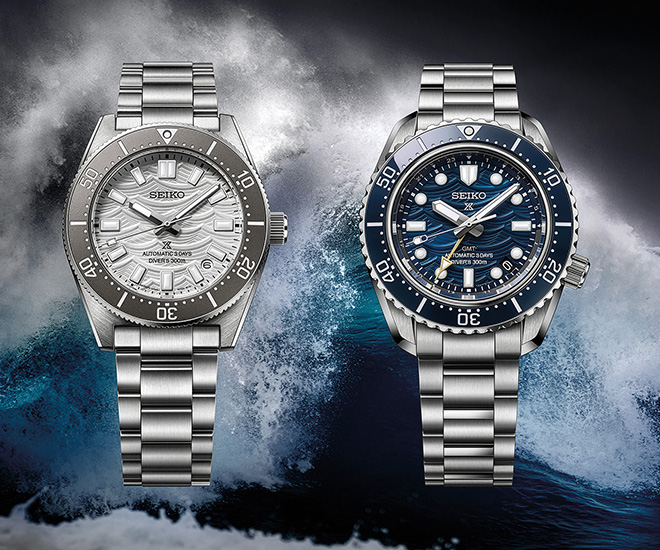
Six decades after Japan’s first diver entered the field, Seiko Prospex executes a calculated evolution by marrying historical silhouettes with modular crown architecture and micro-adjustable ergonomics.
For more than six decades, the Seiko Prospex line – short for “Professional Specifications” – has occupied a singular place in sports timekeeping, if not in timing. Rather than treating dive watches as luxury signifiers styled after functional templates, Seiko developed this type of watch through rigorous field trials in extreme environments. From the freezing isolation of Antarctica with the Japanese Antarctic Research Expedition in 1966 to the oceanic abyss aboard JAMSTEC (Japan Agency for Marine-Earth Science and Technology) submersibles, the Prospex lineage is defined by pragmatic engineering.
As Seiko marks both the 60th anniversary of its foundational diver (1965) and the brand’s 145th anniversary (in 1881 Kintaro Hattori established what would become Seiko), Prospex is executing a sophisticated evolution that marries historic tool-watch architecture with leading-edge movement and case engineering.
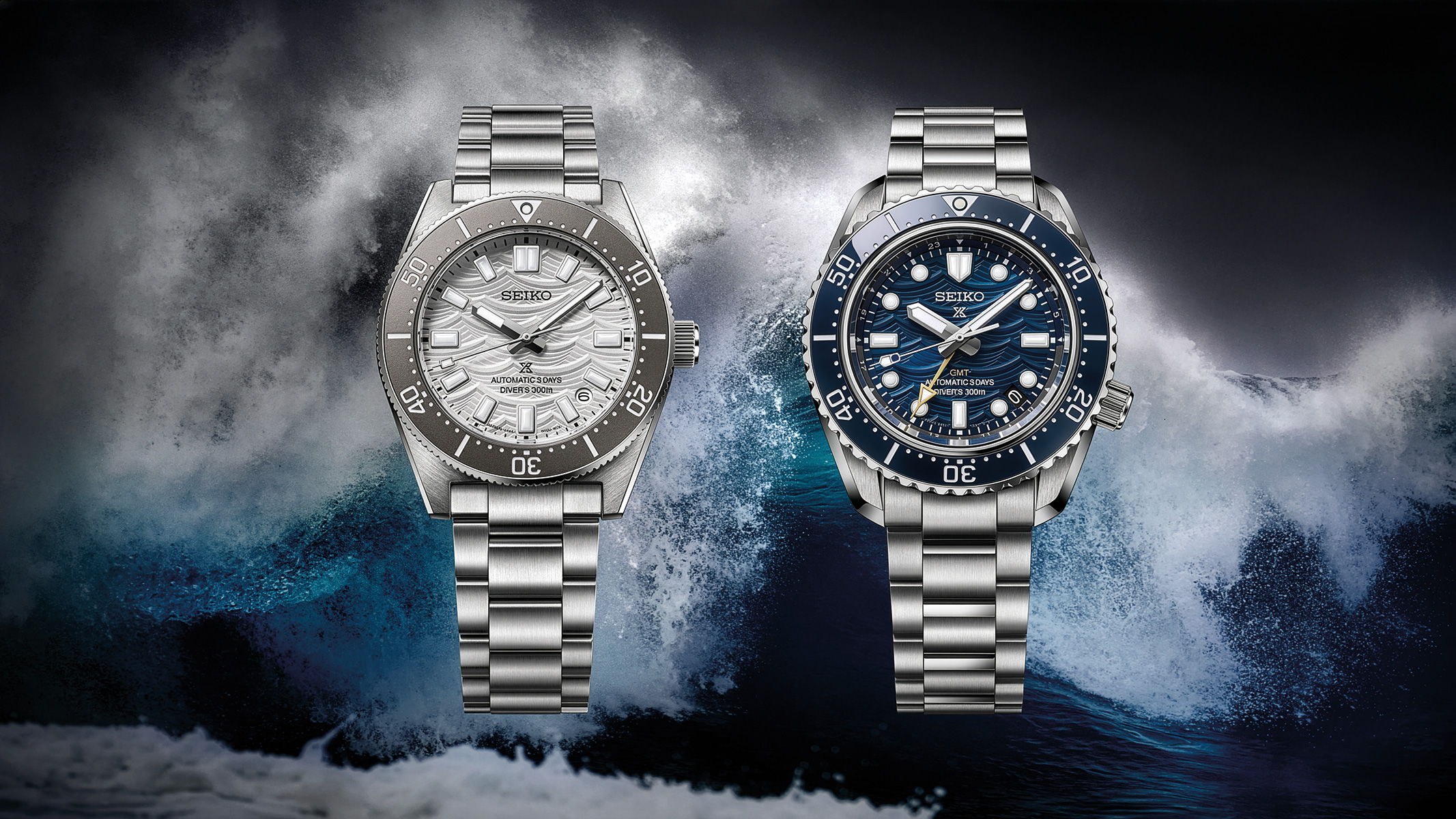 From left: 1965 Heritage Seiko Diver’s 60th Anniversary Limited Edition SPB511 40mm in stainless steel; 1968 Heritage Diver’s GMT Seiko Diver’s 60th Anniversary Limited Edition SPB509 42mm in stainless steel
FORM FOLLOWS SURVIVAL
At the helm of this contemporary direction is Masanori Kawamura, who took over as Design Leader for Prospex in 2024 after previously leading design for the tech-forward Astron line. Transitioning between these distinct pillars demanded a fundamental reorientation of design principles.
“In Astron, the focus was primarily on how to organise and present functions and information clearly,” Kawamura explains. “In Prospex, however, the top priority is ensuring that the watch performs reliably in real-world environments where it is actually used. As a result, the design approach shifts significantly – from conveying information clearly to deriving form based on physical usability and reliability.”
This philosophy underscores how Seiko navigates the delicate line between historical veneration and contemporary horology. Rather than producing direct vintage facsimiles, Kawamura preserves essential design codes, such as characteristic silhouettes, legibility standards, and tactile operability, while reengineering proportions, tolerances, and materials to meet evolving performance demands.
Mechanical Apex
The high point of this design approach, as we see it, is embodied in the Marinemaster series, arguably the most Prospex of all Prospex watches. Central to its latest chapter is Calibre 8L45, an automatic movement operating at 4 Hz (28,800 vibrations per hour), built specifically to anchor Seiko’s elite mechanical tool watches. The calibre has an interesting pedigree, as we and other observers have noted.
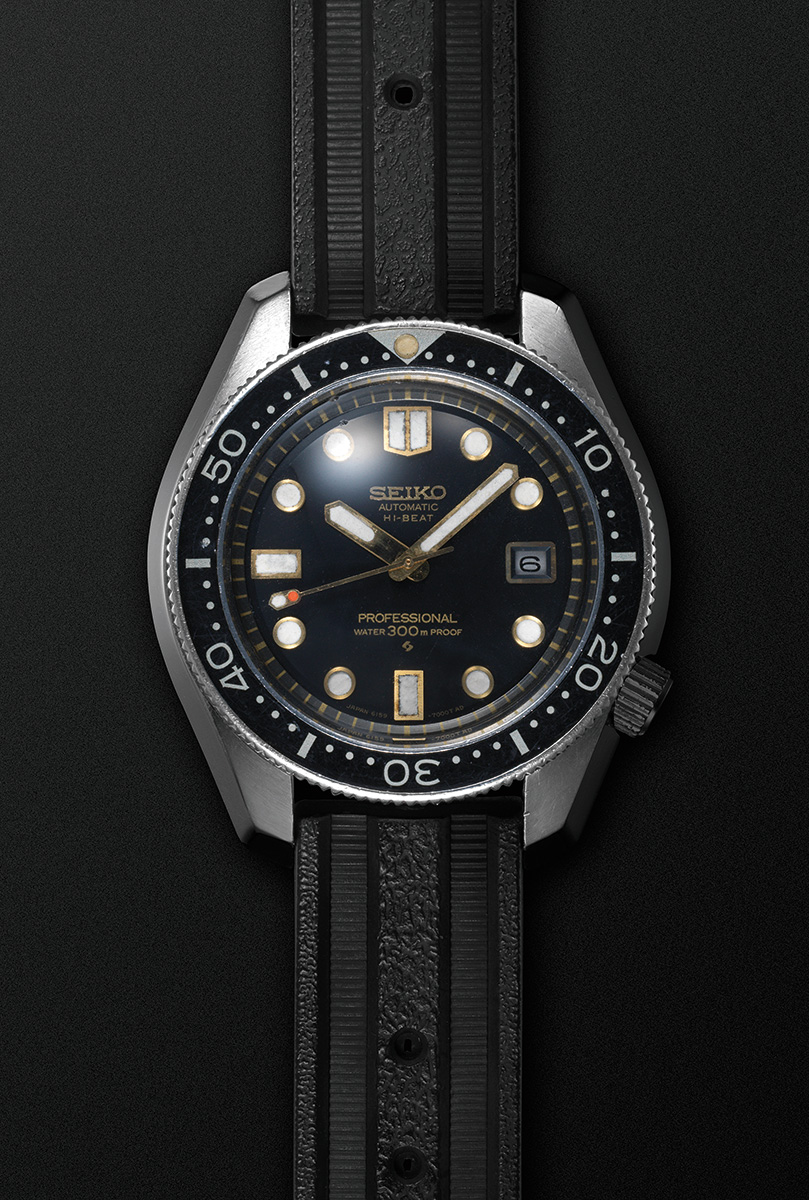
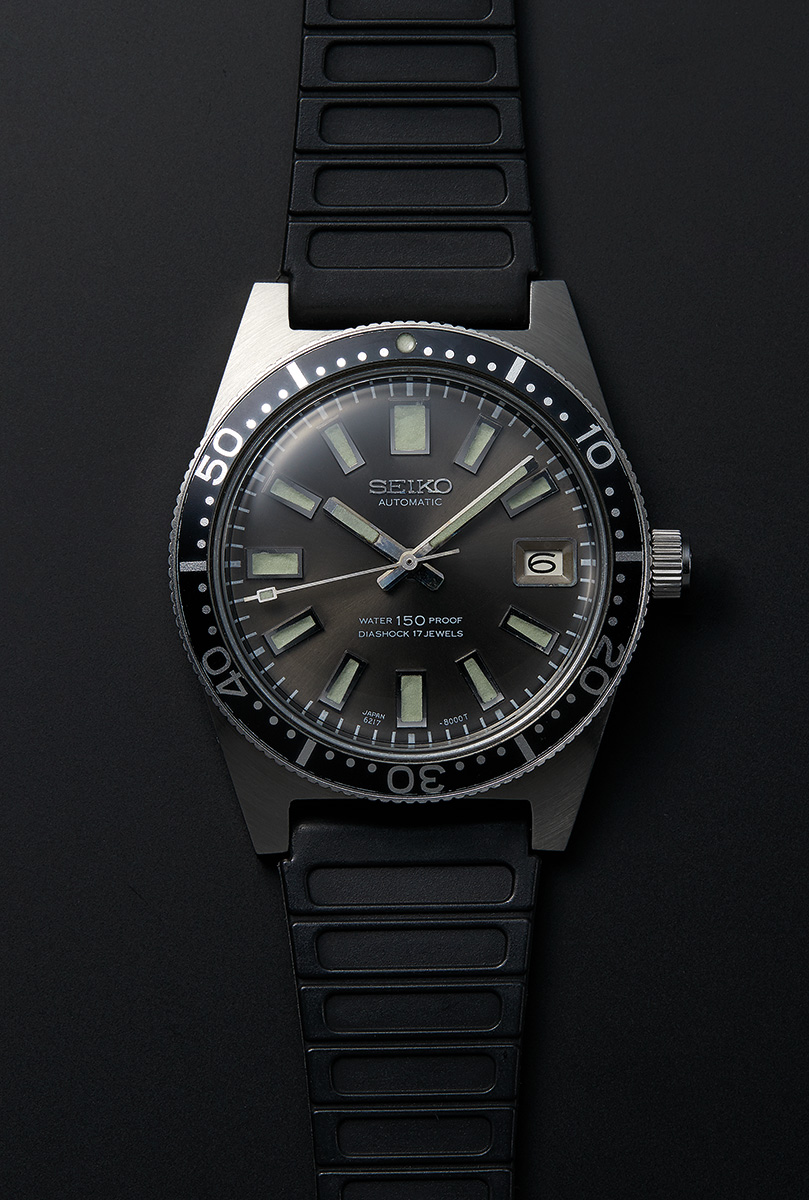
From left: Japan’s first 300m water-resistant diver’s watch, from 1968; Japan’s first diver’s watch, resistant to 150m, from 1965
Calibre 8L45 incorporates Seiko’s proprietary Spron alloy for its mainspring and balance spring, providing elevated resilience against rust, wear, and shock. By utilising a thinner and elongated mainspring, the calibre achieves its impressive 72-hour power reserve while maintaining an operational accuracy tolerance of +10 to -5 seconds per day.
In this form, the movement made its debut in the 60th Anniversary Marinemaster Professional Limited Edition (SLA081). Featuring a 45.4mm monobloc titanium case, the watch is rated for 600 metres of saturation diving capability without an external helium escape valve. Instead, it relies on the impervious L-shaped gasket architecture first developed by Seiko in 1975. The dial features a moulded wave texture finished in a deep shinkai (deep sea) blue gradient under thick polished clear lacquer, framed by a DLC-treated stainless steel bezel insert engineered to six times the hardness of standard steel.
Marinemaster expanded Caliber 8L45 into continuous production with the 1968 Heritage Diver (HBF001) in deep black alongside the JAMSTEC Limited Edition (HBF002). Commemorating Seiko’s decades-long partnership with the agency, and coinciding with the 2026 completion of Japan’s Arctic research icebreaker, Mirai II, the HBF002 showcases a textured turquoise-and-blue dial evoking ice channels cut through polar seas. Both 42.6mm stainless steel references incorporate scratch-resistant ceramic bezel inserts and are depth-rated to 300 metres.
Micro-engineering Excellence
Beyond aesthetic refinement, recent Prospex models incorporate structural innovations aimed at extending maintenance longevity. A prime example is the modular crown construction integrated into the 1968 Marinemaster case architecture.
“We use a ‘detachable screw-down crown pipe structure’ for the internal construction of the screw-lock crown,” Kawamura notes. “Instead of fixing the crown directly to the case body, it is attached via a dedicated replaceable component. This allows only the pipe to be replaced in the event of thread wear or damage, eliminating the need to replace the entire case and significantly improving long-term durability and maintenance efficiency”.
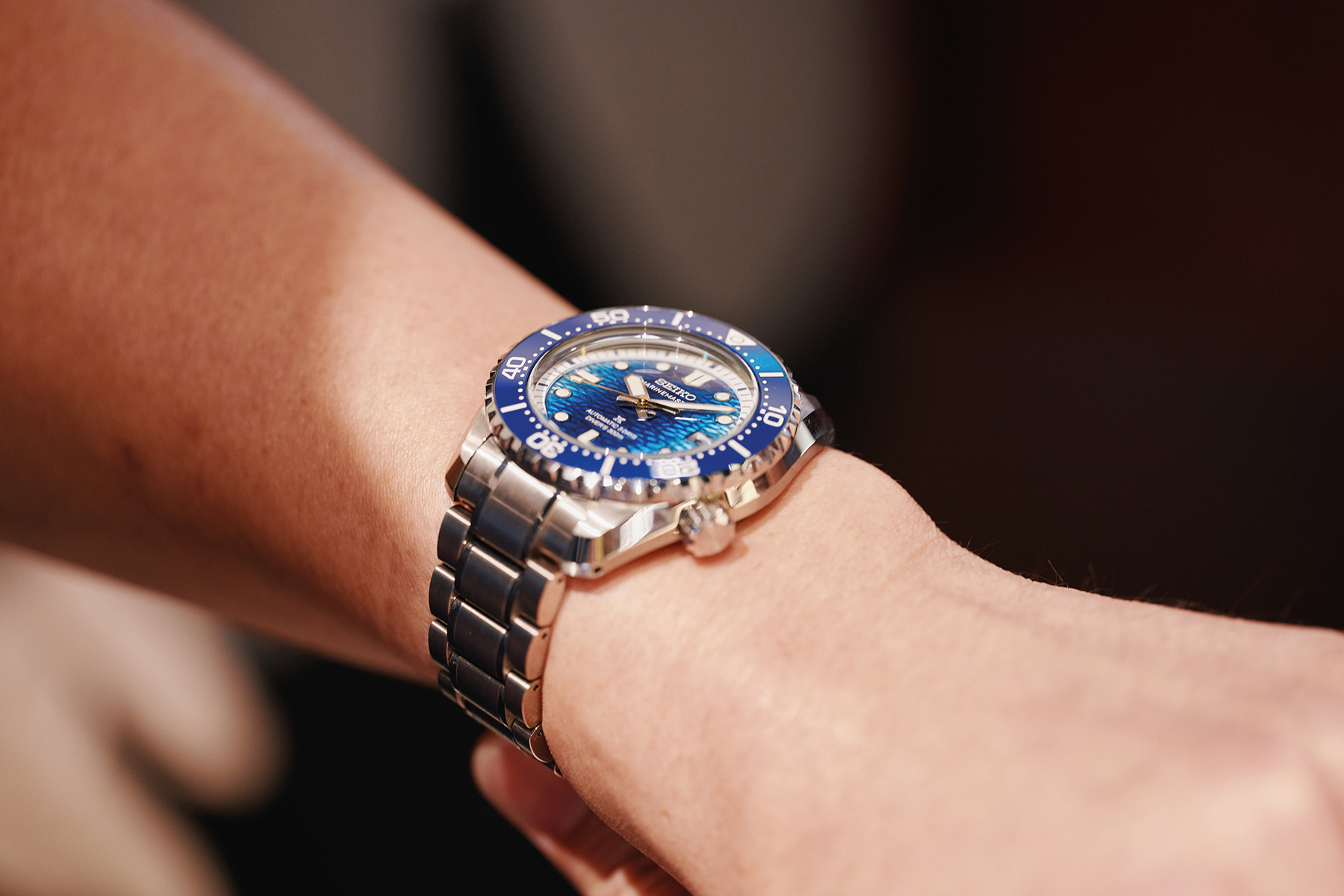 Prosper Marinemaster 1968 Heritage Diver’s Watch JAMSTEC Limited Edition HBF002 42.6mm in stainless steel
A similar technical discipline is evident in how Prospex engineers increased water resistance across its core collection. On the 60th Anniversary 1965 Heritage Diver (SPB511), Seiko upgraded the depth rating from 200 metres to 300 metres while limiting case thickness growth to a mere 0.2mm.
“Typically, increasing water resistance requires making the case thicker to withstand pressure, which conflicts with maintaining a compact size,” Kawamura states. “This was achieved by optimising the inner shape of the case back and utilising the space between the movement and the case to distribute stress more effectively. Areas where pressure concentrates were locally reinforced with additional thickness… reducing the expected thickness increase by approximately 40%”.
Tactile Touchpoints
This user-centric engineering extends directly to the bracelet and clasp mechanics. Acknowledging that the clasp is the primary tactile touchpoint for wearers, Seiko instituted rigorous testing protocols – spanning repeated drop tests, salt-spray corrosion trials, and revised spring metallurgies – to design new on-the-fly adjustable clasp systems.
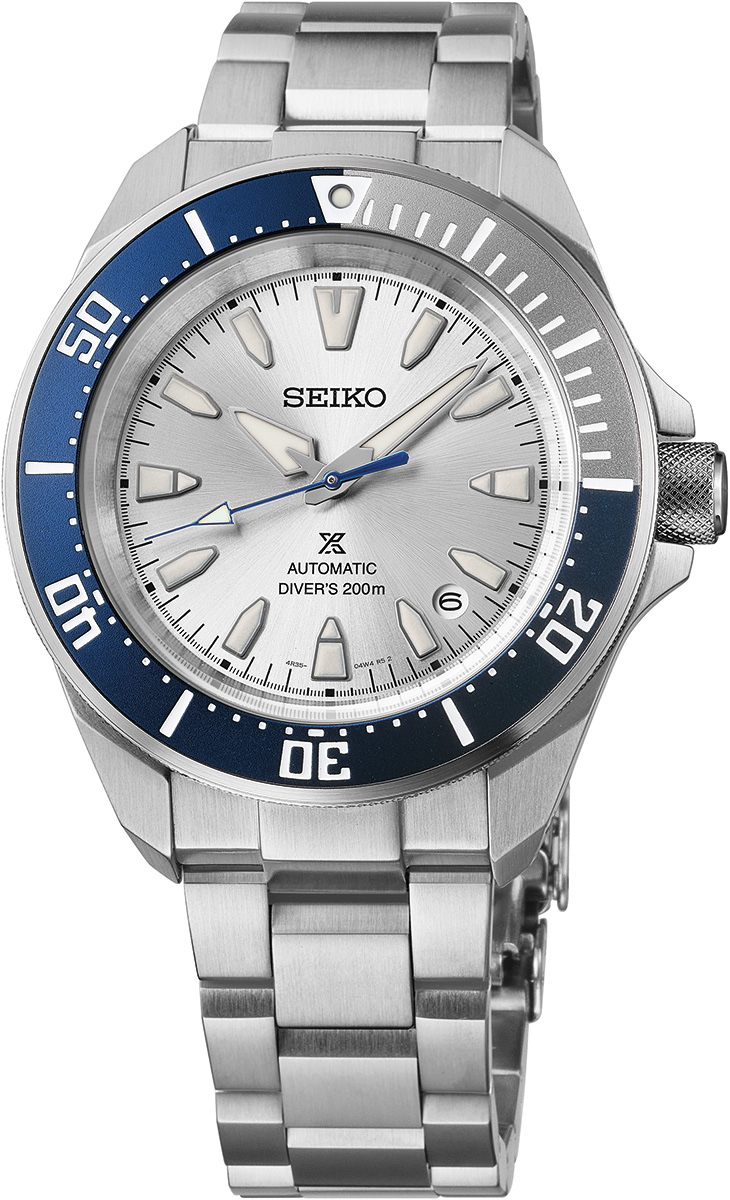
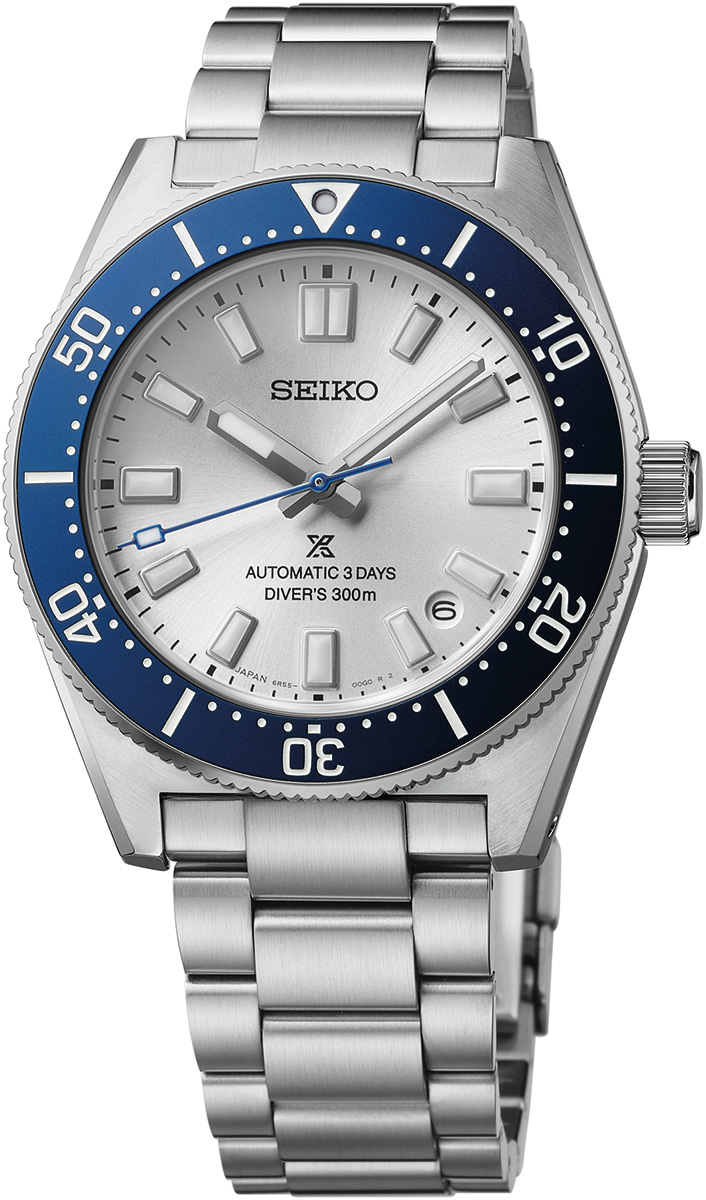
From left: Prosper “Samurai” HBB001 41.7mm in stainless steel, Prosper 1965 Heritage Diver HBC005 40mm in stainless steel
Prominent examples include the Caliber 6R Heritage Series, specifically the 60th Anniversary references. These are the silverdialled 1965 Heritage Diver (SPB511, Caliber 6R55) and the bluedialled 1968 Heritage GMT (SPB509, Caliber 6R54), all of which incorporate clasps offering 15mm of tool-free adjustment across six 2.5mm push-button increments. The Calibre 8L Marinemasters go a little further, as one might expect. The HBF001 and HBF002 feature an advanced internal sliding adjustment mechanism providing 16mm of expansion in 2mm steps, capable of retracting even while the clasp remains secured.
The broader Prospex catalogue also celebrates Seiko’s 145th corporate anniversary with dedicated limited editions featuring signature “Seiko Blue” accents. The 1965 Heritage Diver Limited Edition (HBC005) pairs a classic 40mm case and 300-metre water-resistance rating with a silver-white dial and vibrant blue bezel insert. Alongside it, reference HBB001 delivers a dynamic, angular aesthetic with faceted lugs, a two-tone silverand-blue bezel, and the proven Calibre 4R35 movement.
Through the synthesis of submergence testing partnerships, movement manufacturing, and subtle architectural problem-solving, the contemporary Prospex collection demonstrates that purpose-built utility remains the ultimate luxury in tool-watch design.
This story was first seen as part of the WOW #86 Autumn 2026 issue.
For more on the latest in luxury watch reads, click here.


