 Credit: Dave Starbuck/Future Image/Cover Images
Published Oct 10, 2026, 2:45 AM EDT
Sign in to your Collider account
Summary
- Collider's Steve Weintraub talks with Sebastian Stan and Cristian Mungiu for Fjord.
- Stan discusses his time with Marvel, his physical transformation in Fjord, and the roles he takes on now.
- Mungiu discusses uncomfortable films, Fjord's "murky" moral dilemma, and challenging audiences.
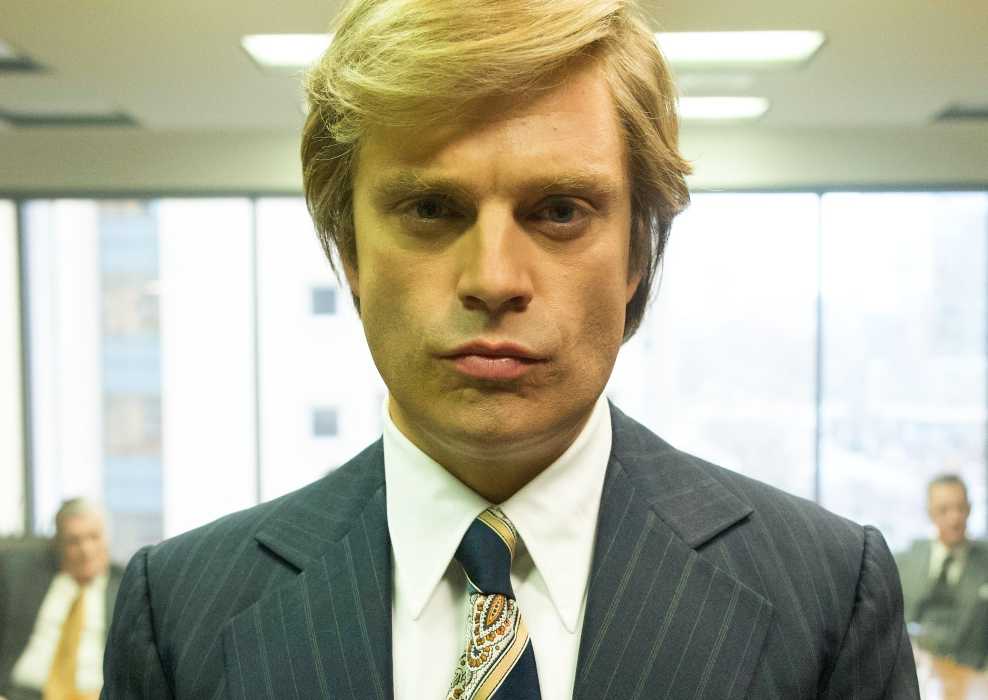
After 15 years as Marvel’s Bucky Barnes in the MCU, Sebastian Stan tells Collider’s Steve Weintraub he’s grateful for the freedom the role gave him, but that he’s finally finding his stride within the industry. The Oscar nominee credits films like Mimi Cave’s 2022 horror, Fresh, and acclaimed features like A Different Man and The Apprentice for putting him on the radar of directors he greatly admires. Neon’s Fjord, with lauded writer-director Cristian Mungiu, however, is a collaboration a long time in the making.
Opposite Academy Award nominee Renate Reinsve (Sentimental Value), Stan stars in Fjord as Mihai Gheorghiu, a family man and devout Christian who moves his family from Romania to a rural Norwegian town with his wife Lisbet (Reinsve). Already, the family’s rigid religious practices make the family a target of scrutiny, but when allegations of abuse emerge, tensions escalate, and lines between concern and prejudice are blurred.
In this interview, Stan discusses his wide-ranging roles, the liberation his physical transformation in Fjord allowed him, and why Mungiu’s single-shot techniques created a claustrophobic environment for his performance. He also reveals whether he knows the full details of Mihai’s story, and how it affected the film. You can watch the full conversation in the video above, with a transcript provided below.
Sebastian Stan Says Recent Roles Have Finally Put Him on the Radar
"I'm certainly finally getting to meet the type of directors that I've always wanted to work with."
COLLIDER: I'm doing a supercut of everyone I'm talking to right now, and the question is, where do you like to sit in a movie theater?
SEBASTIAN STAN: Oh, I love that question. Maybe the aisle. Or the back, actually. Or the aisle of the back of the theater.
When you say the aisle, do you mean the front, middle, or back?
STAN: I think the middle or the back, if it's the aisle, is usually where I'm at. I'm definitely not one that needs to be in the very middle, which is always the most favorable area.
I've been very impressed with your work the last few years, and especially in this. Do you feel like your career has taken a turn, or do you feel like people are looking at you in a new way, based on what you've been doing the last few years?
STAN: Yeah, I think the latter, for sure. I'm certainly finally getting to meet the type of directors that I've always wanted to work with, and I think finally they’re paying a little bit more attention to me than they used to. I mean, Cristian [Mungiu], though, I've known for 10 years, and this was an ongoing conversation.
Timing really is a huge piece of every movie's puzzle. It is people being aware of you, but it's the right timing and the right project, and this sort of was serendipitous in a way, and really so was The Apprentice and A Different Man. I mean, I think Fresh, also. A lot of these films in the last couple of years have kind of come at the right time. I don't know how long that's going to last because you don't control that, but yeah, I've been certainly having a lot of fun with it.
The fact of the matter is, and not to bring Batman into this, but you're shooting Batman now — that's a long shoot. If you get offered something else that needs to shoot soon, that's a pass. You can't do it.
STAN: That's correct. But sometimes, if they really want you, they will wait. It depends on the situation. Or they'll go after. They'll wait until you finish, and when that happens, then you're lucky. But it all depends.
Sebastian Stan's 'Fjord' Transformation Was "Liberating"
He also reflects on what playing Bucky Barnes for 15 years offered him.
 Image via TIFF
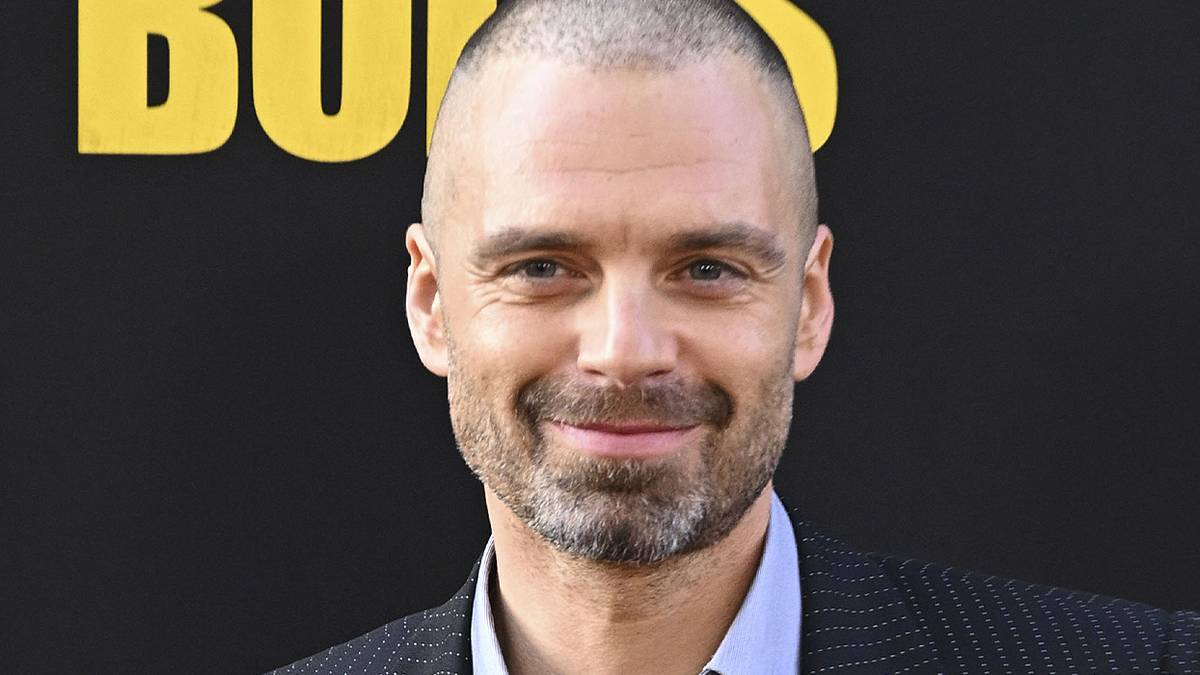
I definitely want to discuss your look in the film, and the fact that you did a very unique haircut, like the growth on the sides, bald on the top. Obviously you're wearing that offset. That is your look. Did you feel a little bit self-conscious, or were you able to be a little more anonymous, because no one's going to think that you look like that?
STAN: I didn't even think twice about it. I didn't even take the glasses off when we weren't shooting, to be honest, because we were living, essentially, in that house. We were living in that village that you see in the movie. I mean, there was a hotel there, the crew was in all of the rest of the houses, and so we would get up in the morning and walk to set. Pretty much we would get in, I would just put my clothes on, and that was it. So, I don't know, it didn't cross my mind.
For me, whatever decisions get made before the movie starts, usually that's kind of when I forget about everything else, and I just end up going along with it. So, I don't think too much about it.
These sort of different looks that these last couple of movies have required, I have found to be quite liberating in a way, because it really is sort of just like a door opening into another world for a minute. It reinforces that belief system when you don't recognize yourself sometimes. And so, it just is what it is, as you go.
Yeah, I think Jack Nicholson talked about how he loved having the bandage in Chinatown on his nose. Brad Pitt has talked about how he loves being beat up or wearing shit on his face, because it transports you into that character that much easier.
STAN: Yeah, yeah. I remember when I was growing up, and I started acting in high school and so on, it almost felt like you just had no judgment over whatever character you were playing because you were a kid. It's not like you were going to play a kid part, right? It was these plays or these musicals or whatever that were just big characters, big parts, and so you would just wear different facial hair or wigs, or you would dress a certain way, or whatever it was. So there was an element to that that I loved about that extended sort of reality that came from that. It just felt like great freedom to me, and I never lost that, I guess.
So again, I've spoken about this before, but I think obviously Marvel and playing the role of Bucky Barnes for 15 years also contributed to that, because I consistently had a character to go to that did look like me in a lot of ways, so I was serving that part for myself. So then when I wasn't doing that, then it was going to be a great opportunity to do other things, because I could always come back to a version of myself, if you will, where I looked like myself, or something. And so, that also kind of played into how I was choosing things or what I was being drawn to.
Cristian Mungiu's One-Shot Approach Made 'Fjord' Feel Like a "Prison"
"There's an aspect of claustrophobia that's happening."
 Image via TIFF
One of the things about great art is it makes people want to talk after something ends, and there's a lot of debate, and that's this film. I think that this really can spark conversations. I’m curious, have you been to Q&A's with audiences, and what have those discussions been like?
STAN: Yeah, we've started to do these Q&As now, and they're really interesting. It's always been incredibly positive. Anything that I've gone to afterwards, the conversations have been really interesting because obviously you have a lot of parents who, when they see the movie, immediately understand what's happening on a much visceral level.
But I think also for anybody who's been an immigrant or who has felt at any point in time that self-awareness that you do sort of sticking out and being a fish out of water, there's something there. I think the movie is very timely in the sense that it is where it is that it is happening, which is in Scandinavia, but the things that are happening in the movie and the themes and the questions that are being brought up can also be applied very much to what's happening in the Middle East and very much what's happening on the borders, our borders. I mean, it's the same elements in terms of families being torn apart if you look at it from that way.
It's also in the same elements where extremism and absolutism are driving people apart, or are causing people to be incredibly judgmental and make these extreme choices that have repercussions, more than ever, on the future, the kids, the younger people, because they're the ones that have to inherit all of this conflict and a lot of the stuff that we pass on, particularly as parents.
One of the things that I love about Cristian’s work is that he lets scenes play for a long time. He's not doing a lot of coverage.
STAN: There's no coverage. It's all one shot, every scene.
 Image via TIFF
What was that environment like to work in? And also, what was it like to play a character who is not doing the typical thing of screaming and getting upset over the situation, but is internalizing his frustration? It's like the opposite of what an American movie might do.
STAN: Obviously, whenever you take on anything, the first thing that happens is when you read it, and you look at it, you ask yourself, or at least I do, “What do I have in common with this character and what do I not have in common? What are the things that I can understand about the experience, or things that I have no clue about?”
Obviously, I've been drawn to really very, sort of drastically different characters than myself because I would never act that way if I was in that situation. Of course, I would go ballistic. But how do you go ballistic when there are allegations against you that call you out for being violent and potentially harmful, and so on? I mean, what does it do for you to display aggression? It doesn't help your case.
The same thing is, though, as it pertains to this family, there's a very particular belief system that they have, and we kind of got to know a little bit of that when, in Romania, Renate [Reinsve] and I and Cristian went to visit a couple Pentecostal services and immersed ourselves, and just kind of were witnesses. We were very welcomed, and everybody was extremely kind. It was just very interesting to sort of understand a little bit what the experience was. But part of that was also seeing that there was a real belief system and point of view that no matter what's happening, how hard, how painful, hurtful, it will be okay if you continue to trust in the higher power and everything being okay. So, the family is, I think, doing their best to sort of be agreeable and go along with faith that it will all turn out okay. But they're human beings, and they're flawed.
So playing with that restraint, I think a lot of Cristian’s tactics, if you will, or the way he constructs these scenes, very much feel like a prison. I mean, you feel the walls closing in. There's an aspect of claustrophobia that's happening, and that was kind of what was going on in a lot of the scenes, because I felt I couldn't express myself in ways that I wanted to — but I think that was the experience of the character.
I think for me, to be honest, it felt much closer to life because we dream, and like you said, we see in the movies situations happening, and I think we envision ourselves like, “Well, if something happened to me on the street, I would go in there, and I would do this.” But people don't always react that way when that happens in life. It's much more restrained. You're shocked. You don't know. So, that's just particularly his movies, which are highly immune to sentimentality and melodrama. And it was also just a different kind of restraint coming off of these bigger characters that I’ve played.
Why 'Fjord' Refuses to Give Audiences All the Answers
"It was not going to be the right approach."
 Image via Neon
Did you and Cristian ever decide what your character might be guilty of in terms of how far he might have gone? Were you purposely playing it a certain way, or were you sort of like, “It doesn't matter if he did or didn't do it?”
STAN: I couldn't be that objective at that point. It was not going to be the right approach to sort of be mindful of what would be good or what wouldn’t be good. He and I, with Renate, had spent a long time really building a real history, very specifically, about these two people and how they met in Romania — what were the circumstances, how they got married, why did they move back to Norway? How did she even speak Romanian? Why did she even go to Romania? How did they find their way in the system, in this way of life, this belief system?
So, all of the things that were not dealt with in the script we had kind of built and spent time with. But I think, ultimately, you’ve got to serve the script. It was much more interesting, I think, from a viewer's perspective, to let the audience sit with their own thoughts and their own instincts about these people, because that ultimately can reflect something back about ourselves, and I think that's part of the experience, rather than giving them the answer.
'Fjord' Director on Why Audiences Should Be Watching Uncomfortable Films
"We should challenge people to understand that it's also okay to think about, to ask questions after we watch a film."
"In real life, reality is not interpreted." Two-time Palme d’Or-winning filmmaker Cristian Mungiu (Beyond the Hills) briefly summed up why his latest film with Neon, Fjord, won’t neatly package its answers for audiences.
In his interview with Weintraub, which you can watch in the video above, Mungiu discusses his approach to filmmaking after 20 years, why morally “murky” themes appeal most to him, and why it’s so crucial that films aren’t just for entertainment. He talks about tackling difficult subjects, how Fjord has sparked debates, why he kept a neutral perspective for the movie, and what he’s currently working on. Time codes for the conversation are provided below.
- 01:06 - Cristian Mungiu reflects on being the tenth filmmaker to win two Palme d’Ors at Cannes.
- 03:40 - He discusses why morally challenging stories appeal most to him.
- 05:35 - Mungiu argues for films that challenge audiences and encourage critical thinking.
- 07:50 - The film has sparked debates around social services, media bias, and difficult moral decisions.
- 12:41 - The director shares what he’s currently working on for the future.
- 14:38 - He hopes to release more Tales from the Golden Age in 2027.
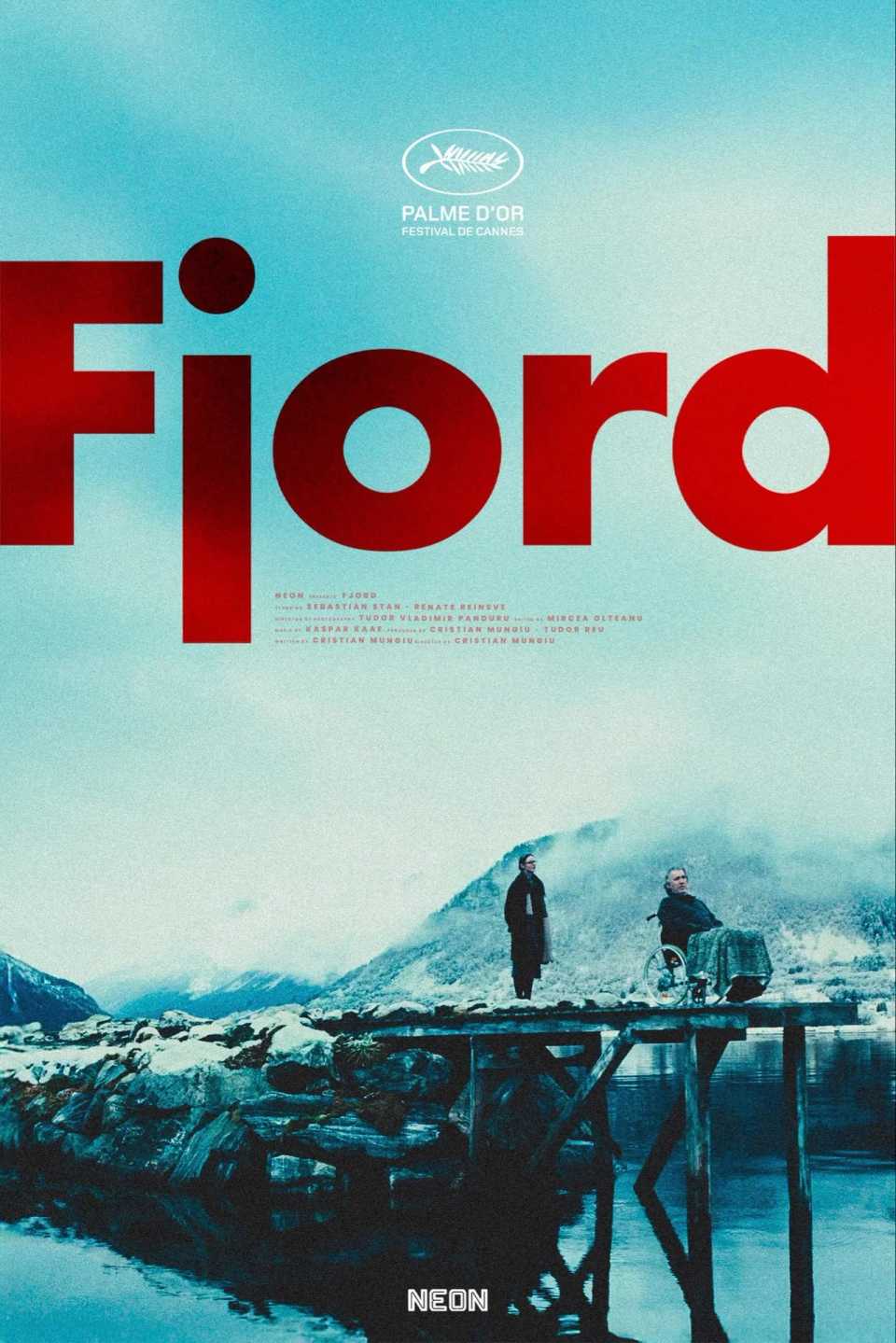
Fjord is in theaters now.
Release Date October 9, 2026
Runtime 146 minutes
Director Cristian Mungiu
Writers Cristian Mungiu
Producers Tudor Reu, Cristian Mungiu, Andrea Berentsen Ottmar, Pascal Caucheteux, Dyveke Bjørkly Graver, Marco Perego
Cast
-

-

Renate Reinsve
Lisbet Gheorghiu