Prime Video
Contains spoilers for "The Lord of the Rings: The Rings of Power" Season 3, Episode 7 – "Orodruin"
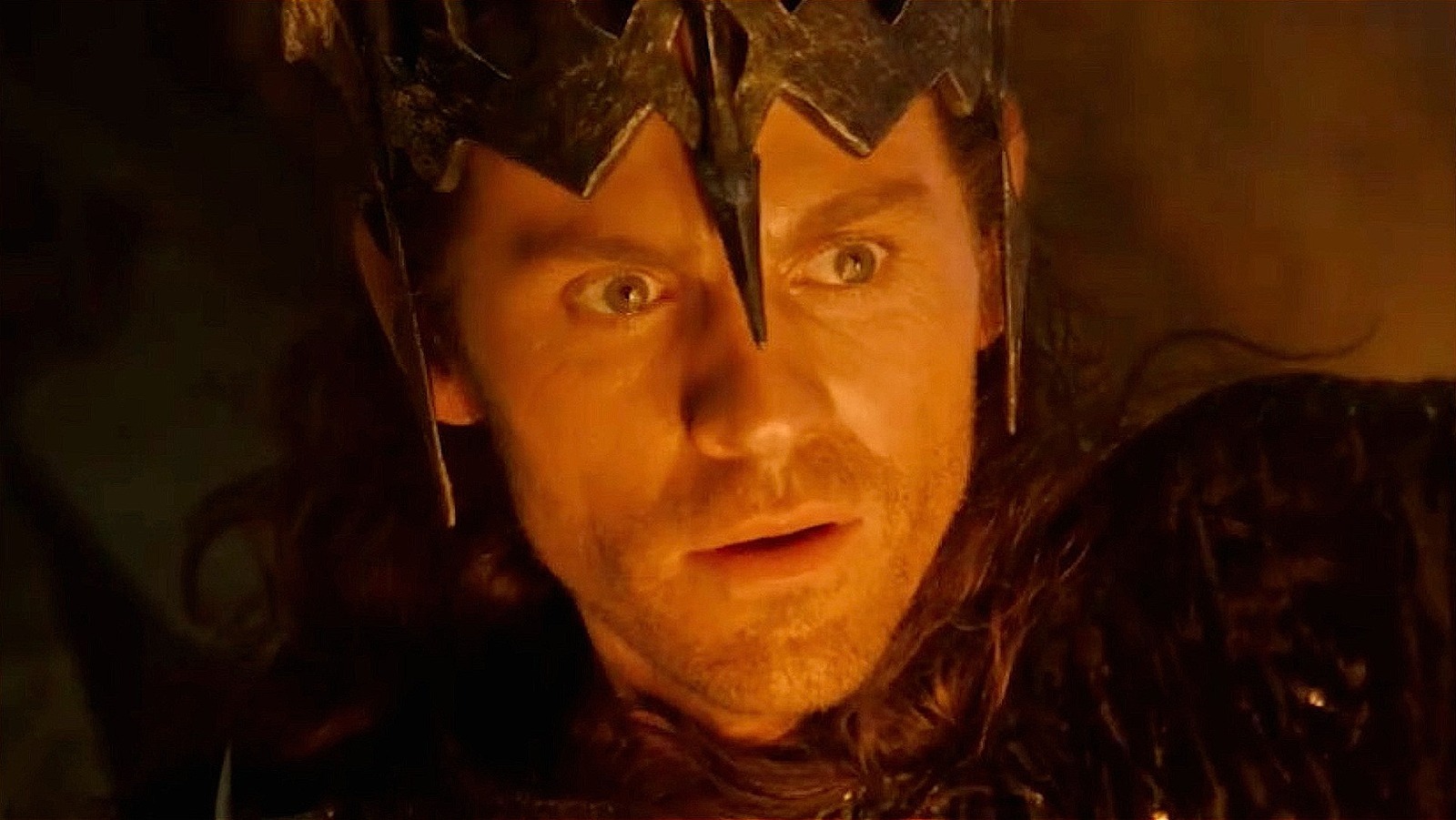
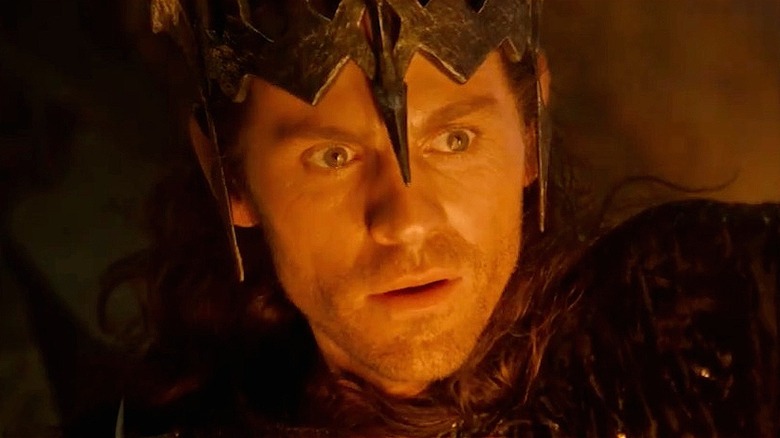
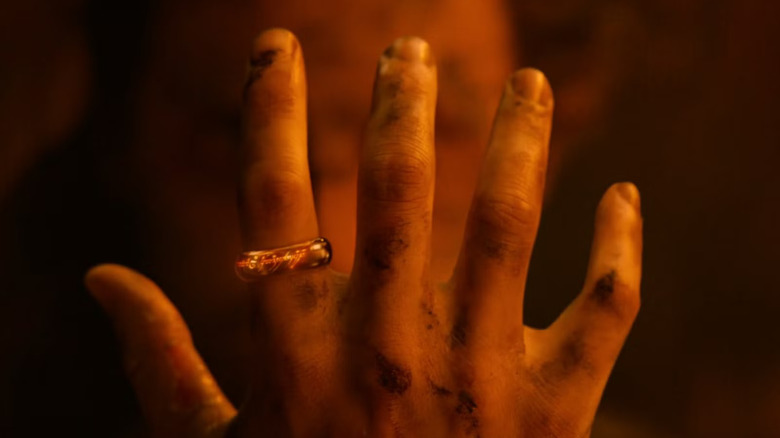
In "The Rings of Power" Season 3, Episode 7, Sauron forges the One Ring to rule them all. There are plenty of little ways the Rings of Power differ in the Prime Video series compared to Tolkien's books. One surprising thing that happens when Sauron first completes the One Ring in the show is it moves on its own, skipping and jerking its way over to its master's hand and hopping on a finger. We know Sauron's motivation in forging it is to control other Rings, but what the heck is happening there? The disturbing scene begs the question: is the One Ring alive?
The answer isn't quite yes or no. Tolkien does talk about the Ring as if it has a mind of its own and makes decisions, and this takes different forms. The Ring is said to hear its master's call, for example. It abandons ring-bearers and slips off fingers without warning. It can tempt people and even convinces Sméagol to kill his friend Déagol (or at least the desire to have it convinces him) within minutes of seeing it for the first time. But these things always seem to connect to the will and call of the Dark Lord.
The little hints at the sentience of the One Ring are most prevalent in the second chapter of "The Fellowship of the Ring," ominously titled "The Shadow of the Past." Here, Gandalf explains the history of the super-powered piece of jewelry to a wide-eyed Frodo for the first time, and the wise Wizard presents a strong argument for the One Ring being a living thing.
The One Ring can definitely act on its own
Prime Video
In "The Fellowship of the Ring," Gandalf warns Frodo that Bilbo was surprised by how much work it took to keep an eye on the Ring. He says that Bilbo "found out that the thing needed looking after; it did not seem always of the same size or weight; it shrank or expanded in an odd way, and might suddenly slip off a finger where it had been tight." That on its own isn't enough to say the One Ring is definitely alive, but the evidence keeps piling up. Later in the conversation, the Wizard adds, "A Ring of Power looks after itself, Frodo. It may slip off treacherously, but its keeper never abandons it." He also states, "It was not Gollum, Frodo, but the Ring itself that decided things. The Ring left him."
After that, Gandalf offers an interesting summary of the history of the Ring's actions. "The Ring was trying to get back to its master. It had slipped from Isildur's hand and betrayed him; then when a chance came it caught poor Déagol, and he was murdered; and after that Gollum, and it had devoured him." Gandalf then goes on to say that "when its master was awake once more and sending out his dark thought from Mirkwood, it abandoned Gollum." Shrink. Expand. Slip. Look. Devour. Abandon. These are all action verbs that consistently give the One Ring a personality and agency all its own.
The One Ring channels Sauron's power
Prime Video
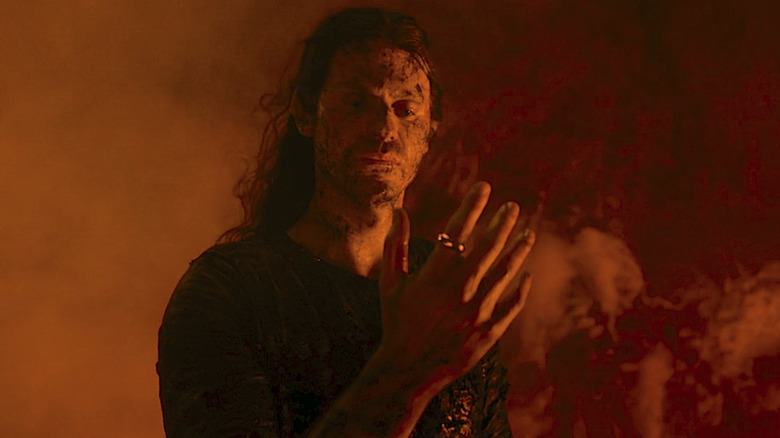
The only catch that makes it hard to argue that the One Ring is truly alive is the power at work behind it. While the Ring appears to have a mind of its own, Tolkien also gives us descriptions of the Ring as if it's channeling power, too. In the same passages from "The Fellowship of the Ring" where Gandalf talks about watching out for the Ring's erratic behavior, he also describes the effect that Rings of Power like this have on weak mortals who wear them. He says if someone uses the Ring often he "becomes in the end invisible permanently, and walks in the twilight under the eye of the Dark Power that rules the Rings," adding that "sooner or later the Dark Power will devour him."
It's undoubtedly chilling, and in this case, it seems to reference Sauron's own power, not the Ring as its own character with agency. So what's the verdict? Well, according to TVLine's research, Tolkien never really clarifies if the One Ring is truly alive or is simply an extension of Sauron's own vast powers. At the very least, the trinket acts with a degree of autonomy that appears to give it its own personality. The One Ring may be a MacGuffin in the books, the movies, and the Amazon series, but make no mistake: It has a lot more of a say in what happens than your average plot device.