
Published Nov 26, 2026, 5:19 PM EST
Audrey Connelly is a writer living and working in Boston, MA. Music is and has always been one of the most important parts of her life. While rock & roll is her true love, Audrey's taste runs the gamut. Deep cuts, overplayed Billboard Hot 100 hits, trip hop, reggae, musical theater. It's all fair game. However, if she's being totally honest, she is not a huge fan of (most) country music, but she is (mostly) willing to give anything a listen or two.
She has previously contributed to Atwood Magazine and has brought her passion for writing and music – specifically classic and alternative rock – to Collider.
Throughout the 1960s, there was a huge influx of British rock and pop music into American culture. English bands were dominating the charts and the music scene was becoming more globalized than ever before. The overseas relationship was reciprocal – these British bands were reworking American blues and R&B within a rock format, infusing psychedelic and progressive rock. Concurrently, American rock music began to emulate the British sound. This cultural phenomenon changed the face of music forever.
The British Invasion is an interesting and necessary study in the way music reinvents itself – how every musician is influenced by those who came before. This time period introduced this wonderful merging of sound to an international audience, causing a dizzyingly steep learning curve that produced some of the greatest music of all time. Here are the top five most important bands of the British Invasion.
5 The Animals
The Animals formed in 1962 in Newcastle upon Tyne. They drew inspiration from American rhythm and blues artists, getting their start with covers by iconic musicians such as Jimmy Reed and Nina Simone. They had a big hand in the genesis of folk rock with their signature song: a cover of the American folk classic “House of the Rising Sun.” Their version is raw and emotional, capturing the struggles of working-class Americans during this time. The band represented a darker and grittier side of the British Invasion canon, the opposite end of the spectrum from the British pop that was also making its way overseas.
In the latter half of the sixties, they changed their lineup and their name to Eric Burden and The Animals. During this time, they delved into the psychedelic rock space, departing from their earlier blues influences. They laid the groundwork for prog rock, influenced punk/ garage music, and inspired artists across many genres (including Bruce Springsteen, The Grateful Dead, and Rod Stewart, to name a few.)
4 The Kinks
The Kinks also formed in 1962, and their rise in popularity aligned with that of the British Invasion. They released their breakout hit “You Really Got Me” in 1964, quickly achieving international success. They were heavy hitters on the British Invasion circuit – that is, until 1966, when they were banned from touring in America. While the reason has never been explicitly made public, it is believed to be a combination of promoter disputes, chaotic behavior from the band, and visa and permit issues. Nevertheless, they continued to grow in popularity in the UK and America alike.
The Kinks’ satirical single “Sunday Afternoon” was inspired by British music hall – a form of working-class variety theater rooted in Victorian-era taverns and pubs. The track was the biggest hit in the UK during the summer of 1966. The Kinks are often regarded as the original punk band, with much of their music featuring fuzzy guitar distortion and a driving, bluesy energy. They influenced countless bands across rock subgenres, including psychedelic bands like The Doors and Jefferson Airplane, punk rock groups such as the Ramones, and Oasis and other Britpop bands.
3 The Who
The Who popularized many techniques and terms that would become touchstones in hard rock. Their incredible mastery of their instruments allowed them to get super creative with their recording and production. They experimented heavily with synthesizers and feedback, adding layers of texture that were unprecedented at the time. Guitarist and songwriter (and legend!) Pete Townshend had a massive impact on rock music unto himself. He popularized the use of power chords and also coined the term “power pop” in reference to the group’s sound. Townshend wrote the band’s most popular album, Tommy, which was the first time the term “rock opera” was used publicly.
Drummer Keith Moon also had a big hand in the band’s popularity and original sound. His playing was chaotic and unruly – he pushed the rhythm section out of the pocket and onto center stage. Moon was the backbone of The Who’s explosive, energetic live performances. They were the loudest band of the era, and maybe of all time – a quality that was understandably polarizing.
2 The Rolling Stones
And now we’ve reached the greatest rock band of all time. The Rolling Stones (who are remarkably still together and actively performing) are pioneers of hard rock music. They began their career with blues covers (a common theme on this list) and were greatly influenced by American R&B artists such as Chuck Berry, Muddy Waters, and Fats Domino. The band was drawn to the sheer power and emotional expression these musicians brought to their work.
Eventually, the Stones moved on to writing and recording their own original music – tracks that would, conversely, influence the next generation of American blues and rock artists, a prime example of the circuitous and reciprocal nature of music. These songs were primarily written by Mick Jagger and Keith Richards, a collaboration that sometimes led to tension in the group. Not that it affected them much – they have countless international hits. The Stones’ expansive discography bridged the gap between rhythm and blues and hard classic rock, and also between America and the UK. Their swagger and flamboyant rebellion made them popular in youth culture on both sides of the Atlantic.
1 The Beatles
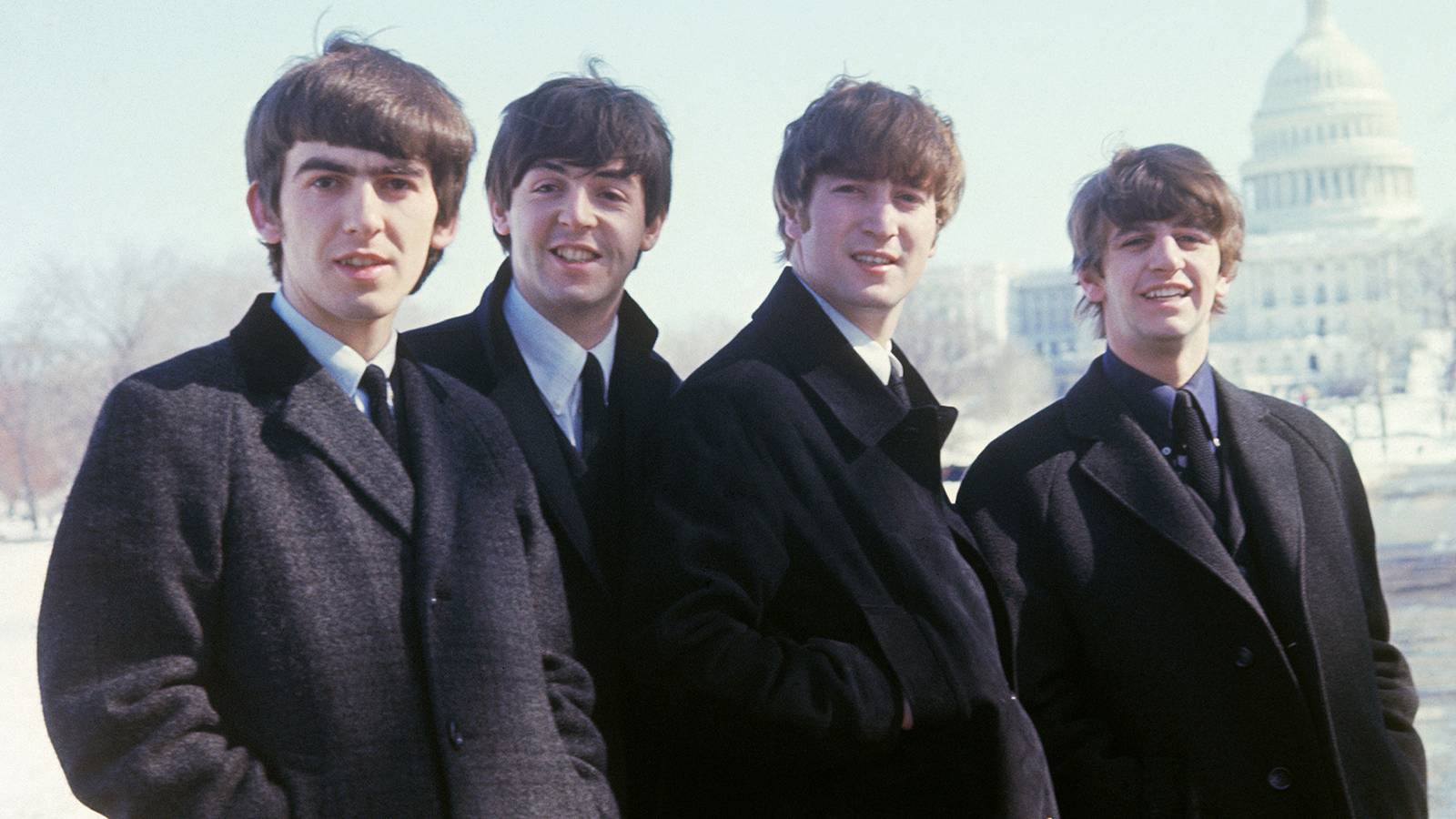
Bet you didn’t see this one coming – Beatlemania, baby! Formed in 1960, The Beatles are the most influential band in popular music. They started out with a clean-cut, boy-next-door look and sound – all pop, no grit. With time, they evolved into something much more. They began to travel and broaden their horizons, getting to know themselves and the world on a deeper level. Their lyrics grew deeper and more poetic, and their influences expanded vastly: Indian and Western classical music, pop, psychedelia, and folk were all incorporated. Their evolution as a band is something to be studied – and it has been, quite thoroughly and quite often.
The British Invasion would never have happened without The Beatles – they were the foot in the door to the American popular music market. They were the voice of youth culture and the counterculture, a living and breathing documentation of the Western world from 1960 to 1970. Their constant reinvention and unprecedented levels of success have never been matched or recreated, and likely never will.