
.jpg) 2 hours ago
4
2 hours ago
4
Cold spray whipped off the ropes as a diesel engine throbbed in the background. One by one, empty shellfish pots came over the side of the fishing boat, occasionally containing the remnants of crab and lobster claws and carapaces.
Something strange was going on.
Then the culprit revealed itself – a squirming orange body surrounded by a writhing tangle of tentacles.
Related: Billions of Sea Stars Are Wasting Away, And We Finally Know Why
A few minutes later, three more of these denizens of the deep came up in a single pot, and then, incredibly, a final pot rose from the water completely rammed full of them, more than a dozen together in a squirming mass.
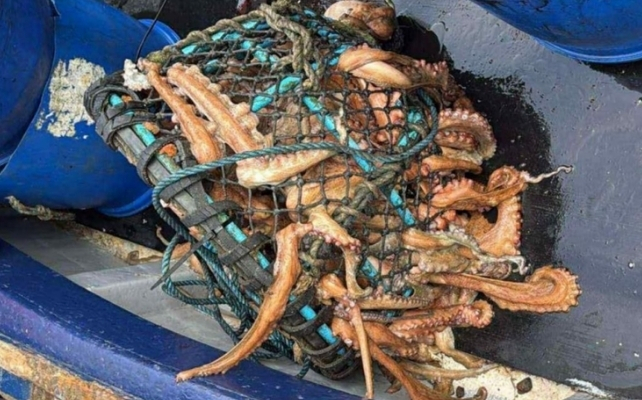 An inkwell pot retrieved off the southwest coast of the UK during 2025, rammed full of common octopus (Octopus vulgaris). (South Devon and Channel Shellfishermen)
This was a familiar scene off the south coasts of Devon and Cornwall early last year, as a bloom of the common octopus (Octopus vulgaris) emerged, the first time anything like this had been seen for 75 years.
In fact, commercial catches of common octopus in 2025 were almost 65 times higher than the recent annual average. A new report now sheds light on these blooms: their history, the causes, and the consequences.
The common octopus, despite the name, is not normally common in British waters. Instead, it favours the warmer climes of southern Europe, the Mediterranean, and north Africa. But, occasionally, such as in 1900, 1950, and now 2025, numbers explode off the south-west coast of England, changing marine food chains and disrupting the local fishing industry.
Common octopuses take the ultimate "live fast, die young" approach to life. Despite the large size they can attain, they generally only live for less than two years, with females dying after their eggs hatch. The males also die after breeding. This means octopus populations are highly affected by changes in environmental conditions.
Octopus blooms have previously been rare in the UK, but emerging evidence from long-term marine monitoring of the western Channel suggests that these episodes coincide with sustained periods of unusual warmth in both the ocean and atmosphere.
These "marine heatwaves" can stimulate rapid population growth, whether the octopus are locally established or newly arrived from the south. These warm conditions are often accompanied by unusually low salinity in coastal waters, a signal that points to fresher water entering the region. While salinity itself is unlikely to drive the outbreaks, it serves as a valuable tracer of the water's origin.
The fresher conditions may stem from high river flow from major French Atlantic rivers such as the Loire, or from prolonged easterly winds over the Channel during the cooler months (October to March). These processes could help transport octopus larvae across the Channel from northern France and the Channel Islands.

Taken together, the combination of warmth, altered circulation, and low-salinity signatures suggests that climate-driven shifts in ocean and atmospheric dynamics underpin these outbreaks.
From crisis to opportunity?
Those early scenes of octopus consuming catches in crab and lobster pots continued as 2025 rolled on. But they didn't just stop at crustaceans. Piles of empty scallop shells were found in many pots, sometimes with remnants of flesh still attached.
Scallops don't normally go into crab and lobster pots (unless they have lights in them, which these ones didn't), so the only explanation is that octopus were actively putting scallops in pots to stock up their larder, consuming them at leisure later.
However, fishers are nothing if not adaptable. They soon realised that there was a lucrative export market for octopus and began targeting them. One boat fishing out from Newlyn in Cornwall brought home over 20 tonnes of octopus, worth £142,000, from just three days fishing.
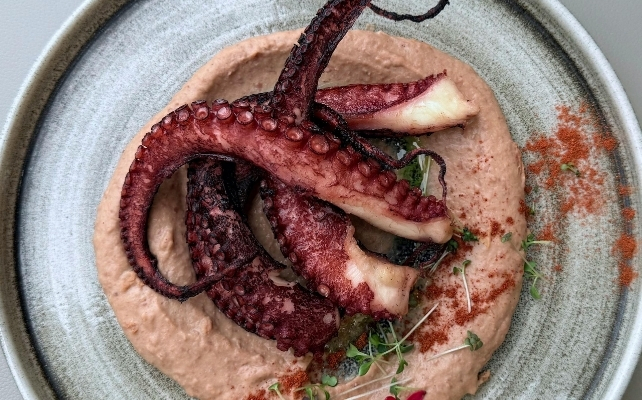 UK fishers realised there's a lucrative export market for octopus. (Arda Anil/Pexels/Canva)
Between £6.7 million and £9.4 million worth of common octopus was landed on the south coast of the UK from January to August 2025. However, not all fishers benefited, and for most boats, octopus catches suddenly dropped off in August.
With other shellfish fisheries also declining dramatically last year – lobsters by 30% and brown crabs and scallops by over 50% – many fishers worry about a future in which there is nothing left to catch.
So, what does the future hold? Given the link with climate change, the extensive reports of octopus breeding and a recent appearance of juvenile octopuses in UK waters, the continued presence of the common octopus seems likely.
If a bloom the size of last year's occurs again soon, future fisheries should be guided by sustainable and ethical principles that help diversify opportunities for fishing fleets, while leaving enough octopus in the sea to be enjoyed by the hundreds of divers and snorkellers who loved watching these amazing creatures last year.
Bryce Stewart, Associate Professor, Marine Ecology and Fisheries Biology, University of Plymouth; Marine Biological Association; Emma Sheehan, Associate Professor of Marine Ecology, University of Plymouth, and Tim Smyth, Head of Group: Marine Processes and Observations, Plymouth Marine Laboratory
This article is republished from The Conversation under a Creative Commons license. Read the original article.
 English (US)