
.jpg) 1 hour ago
3
1 hour ago
3
Article content
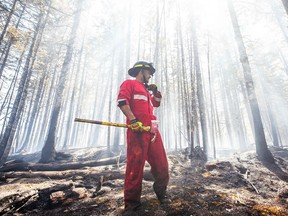
Another summer, another procession of devastated Canadian communities and millions of Canadians and Americans breathing hazardous smoke from fires burning far away. Our firefighters perform extraordinary work under dangerous conditions. But towns and homes still burn.

THIS CONTENT IS RESERVED FOR SUBSCRIBERS ONLY
Subscribe now to read the latest news in your city and across Canada.
- Exclusive articles from Barbara Shecter, Joe O'Connor, Gabriel Friedman, and others.
- Daily content from Financial Times, the world's leading global business publication.
- Unlimited online access to read articles from Financial Post, National Post and 15 news sites across Canada with one account.
- National Post ePaper, an electronic replica of the print edition to view on any device, share and comment on.
- Daily puzzles, including the New York Times Crossword.
SUBSCRIBE TO UNLOCK MORE ARTICLES
Subscribe now to read the latest news in your city and across Canada.
- Exclusive articles from Barbara Shecter, Joe O'Connor, Gabriel Friedman and others.
- Daily content from Financial Times, the world's leading global business publication.
- Unlimited online access to read articles from Financial Post, National Post and 15 news sites across Canada with one account.
- National Post ePaper, an electronic replica of the print edition to view on any device, share and comment on.
- Daily puzzles, including the New York Times Crossword.
REGISTER / SIGN IN TO UNLOCK MORE ARTICLES
Create an account or sign in to continue with your reading experience.
- Access articles from across Canada with one account.
- Share your thoughts and join the conversation in the comments.
- Enjoy additional articles per month.
- Get email updates from your favourite authors.
THIS ARTICLE IS FREE TO READ REGISTER TO UNLOCK.
Create an account or sign in to continue with your reading experience.
- Access articles from across Canada with one account
- Share your thoughts and join the conversation in the comments
- Enjoy additional articles per month
- Get email updates from your favourite authors
Sign In or Create an Account
or
Article content
For about a century, governments across North America have aggressively and successfully fought wildfires. The unintended consequence has been the accumulation of vast amounts of combustible vegetation in our forests and around our towns. Worse, communities have grown long fingers into forested areas as people have built homes in nature and resisted harvesting nearby.
Article content
Article content
Article content
This wildland urban interface (WUI) is where the biggest losses are occurring and where we should focus policy. Canada’s institutions evolved to sustain forests and fight fires. They now need to protect communities from wildfire.
Article content
By signing up you consent to receive the above newsletter from Postmedia Network Inc.
Article content
The provinces govern how foresters write sustainable forest management plans for harvesting and replanting to achieve a sustainable harvest level, make timber available for mills, protect sensitive habitat and biodiversity and address Indigenous and social concerns, such as cultural sites, noise, views, herbicides and recreation. Timber doesn’t get cut without an approved plan. There is room for improvement but, overall, it’s a good framework that satisfies broadly accepted ideas about sustainability.
Article content
But it wasn’t designed for the wildfire situation we currently face. Its goal is to sustain forests, not protect communities when the forests burn. In fact, in forest management planning, wildfire is generally treated as a forest disturbance rather than a public safety issue.
Article content
Provinces can take a decade to update forest management planning — with years consumed by consultations, reviews, objections, revisions and other process. Then it takes more years to change the plans themselves. It all happens at the speed trees grow, which is fine if that’s what matters, but not if the trees are igniting homes, which is what matters now. We need to get wildfire public safety objectives into this process.
Article content
Article content
But we can’t afford to wait for a new planning cycle or structure. To protect public safety, the provinces should urgently identify communities that are likely to burn and provide guidelines for foresters for reducing fuels. This could mean commercial harvesting, mechanical thinning, removal of understory (the stuff growing under the canopy), prescribed burns including Indigenous cultural burning, and conversion of highly combustible forest types such as pine and fir to slower-burning types like poplar and birch.
Article content
Article content
These changes cut across multiple ministries and levels of government. Provincial and federal governments need to co-ordinate their work and mobilize resources with the urgency of a wildfire command centre. The Canadian Council of Forest Ministers could do the co-ordinating. If it’s done right, we could start to see tangible benefits within a year.
Article content
Who will pay for cutting down trees that are not commercially valuable? Communities might be expected to but many are cash-strapped and can’t. Many of the financial benefits of fewer fires in the WUI would flow elsewhere: governments would spend less fighting wildfires, insurance companies would pay fewer claims, businesses would remain open and families would stay in their homes.
 English (US)