
.jpg) 2 hours ago
3
2 hours ago
3
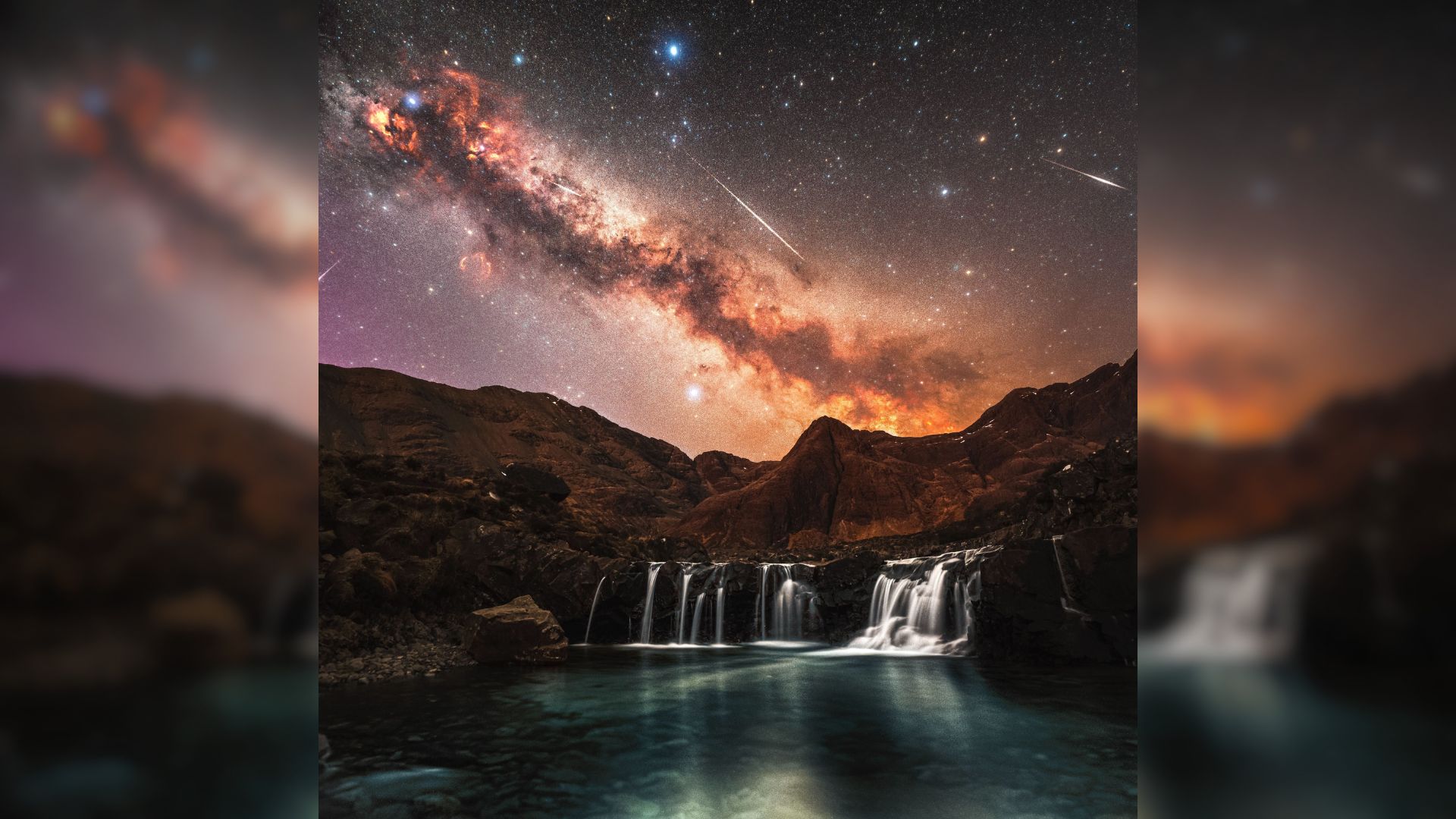
Astrophotographer Josh Dury captured a stunning view of the Milky Way arcing through the night sky above Scotland's Isle of Skye, as shooting stars carved fiery paths through Earth's atmosphere.
"With my star tracker engaged, I sat on a small boulder with river water running between my feet — thank god I brought wellies!", Dury recalled in an email to Space.com. "The most magical moment of all, as with any experience with the stars, is when you know all is safe; the camera is running and then - turn off the red torch."
Dury's composite image reveals several bright Lyrid meteors racing alongside the Milky Way, while colossal dust lanes darken the dense star fields along the galactic plane. A trio of waterfalls known as the "Three Brothers of Skye" glisten below, their waters taking on an ethereal, glassy appearance through long-exposure photography.
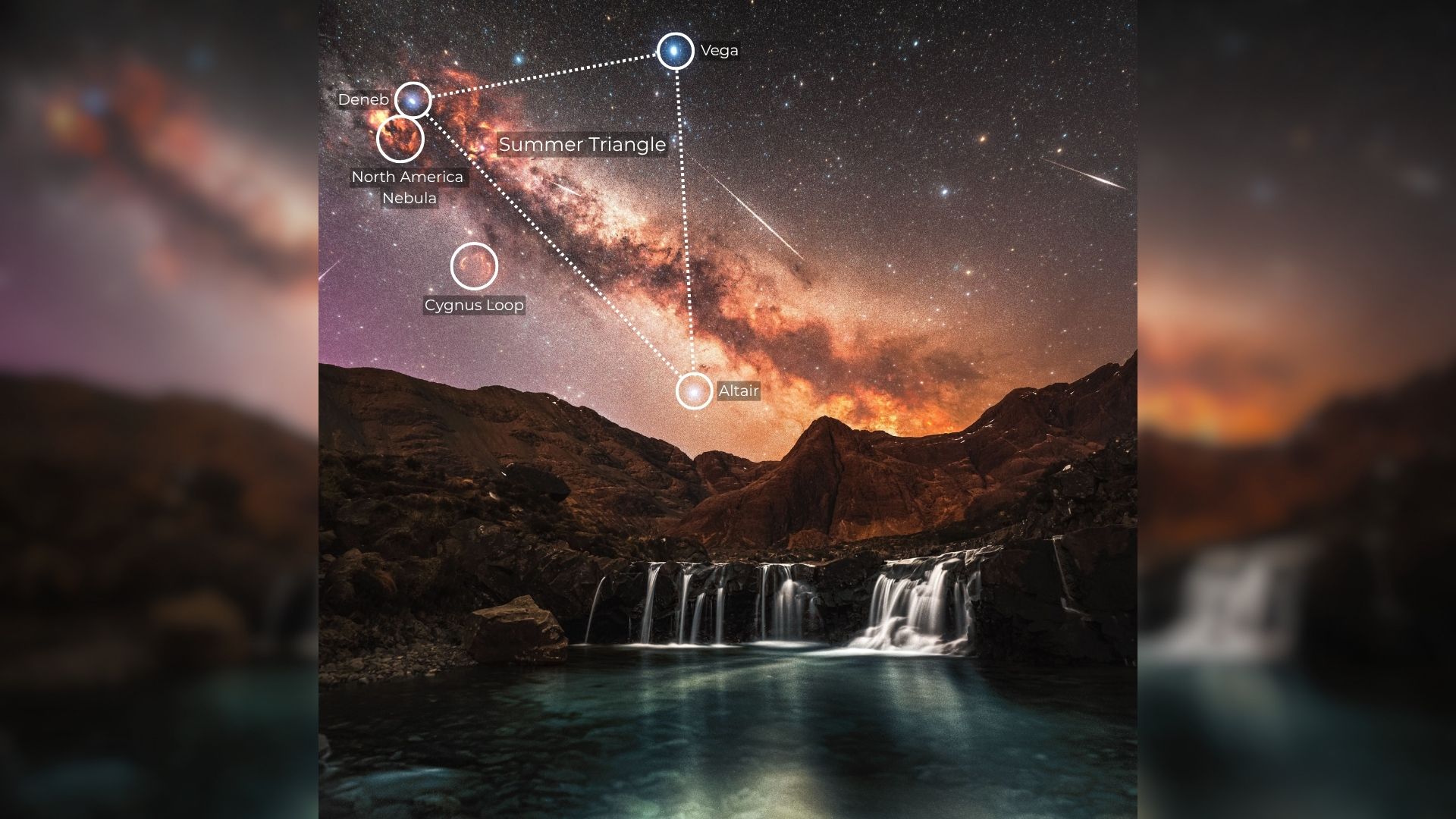
Vega, the fifth brightest star in the night sky, shines near the top of the image, with the stars of the constellation Lyra. Below, sits Altair, while Deneb glows to the left, representing the tail of the great swan in the constellation Cygnus. Together, these stars form a famous asterism known as the Summer Triangle.
"To see the reality was nothing short of magical - with the sound of gushing water, the ghostly appearance of the waterfall and the splendour of the milky way rising over The Three Brothers of Skye was just utterly romantic and purely magnificent," Dury continued.
The North American Nebula shines to the lower left of Deneb, named for its resemblance to the North American continent, while the 120-light-year-wide supernova remnant known as the Cygnus Loop glows closer to the horizon.
Dury captured the image using a series of 30-second exposures with a Sony A7S III camera and Sigma 14 mm DGDN lens stabilized on a Benro Tortoise 24CLV tripod fitted with a Move Shoot Move NOMAD star tracker. He then combined and edited the individual exposures into a single composite scene, revealing stunning detail in both the terrestrial and cosmic subjects alike.
Interested in capturing your own images of our galaxy? Then be sure to check out our guide to photographing the Milky Way, along with our picks of the best cameras and lenses for astrophotography.
Editor's Note: If you would like to share your galactic astrophotography with Space.com's readers, then please send your photo(s), comments, and your name and location to [email protected].
 English (US)