
.jpg) 2 hours ago
3
2 hours ago
3
Like much of human history, the last throes of the Stone Age featured crises, conflicts, and intimate death rituals, many of which we may never fully comprehend.
Yet a grisly discovery at an ancient settlement in Slovakia has astounded archaeologists, even in the cryptic, occasionally brutal context of the Neolithic times of its makers.
In 2022, archaeologists unearthed a horror-movie scene near the town of Vráble, in Slovakia. Excavating a 7,000-year-old settlement, they found at least 77 headless human skeletons haphazardly strewn through two ditches that encircled one of the site's neighborhoods.
The settlement belongs to the Linear Pottery Culture (LBK), representing Europe's earliest farming communities, which originated in the Carpathian basin and spread throughout Central Europe circa 7,500 years ago.
It features hundreds of dwellings, including post-built longhouses, grouped into three distinct neighborhoods, covering nearly 40 acres each.
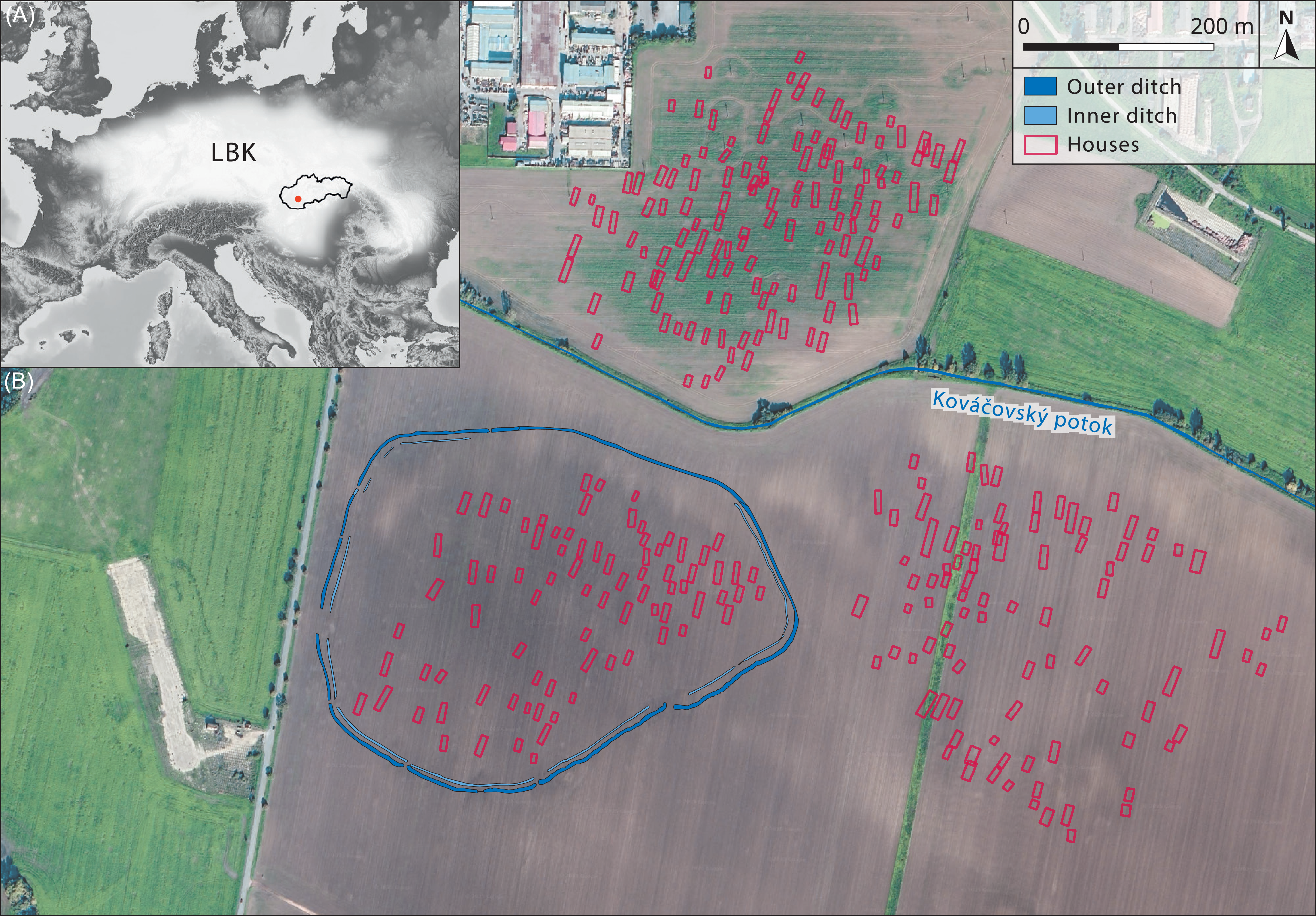 An overview of the Neolithic Vráble-Veľké Lehemby settlement site. The south-west 'neighborhood' (bottom left) is surrounded by two parallel ditches in which human remains were found. (Furholt et al., Proceedings of the Prehistoric Society, 2026)
Yet it turns out this settlement was also inhabited by the dead, harboring the remains of 112 individuals identified as of August 2025 – though the researchers expect this number will rise significantly with further study.
Some of these individuals are interred in traditional burial pits near houses, sent to their eternal rest with 'grave goods' such as ceramic vessels, blades, and offerings of young sheep.
The south-west neighborhood is the only one surrounded by a pair of ditches, in which its inhabitants deposited their dead. While the skeletons were found in varying states of preservation, the skulls are mysteriously missing – except for a single child placed among the adults, with his or her skull preserved.
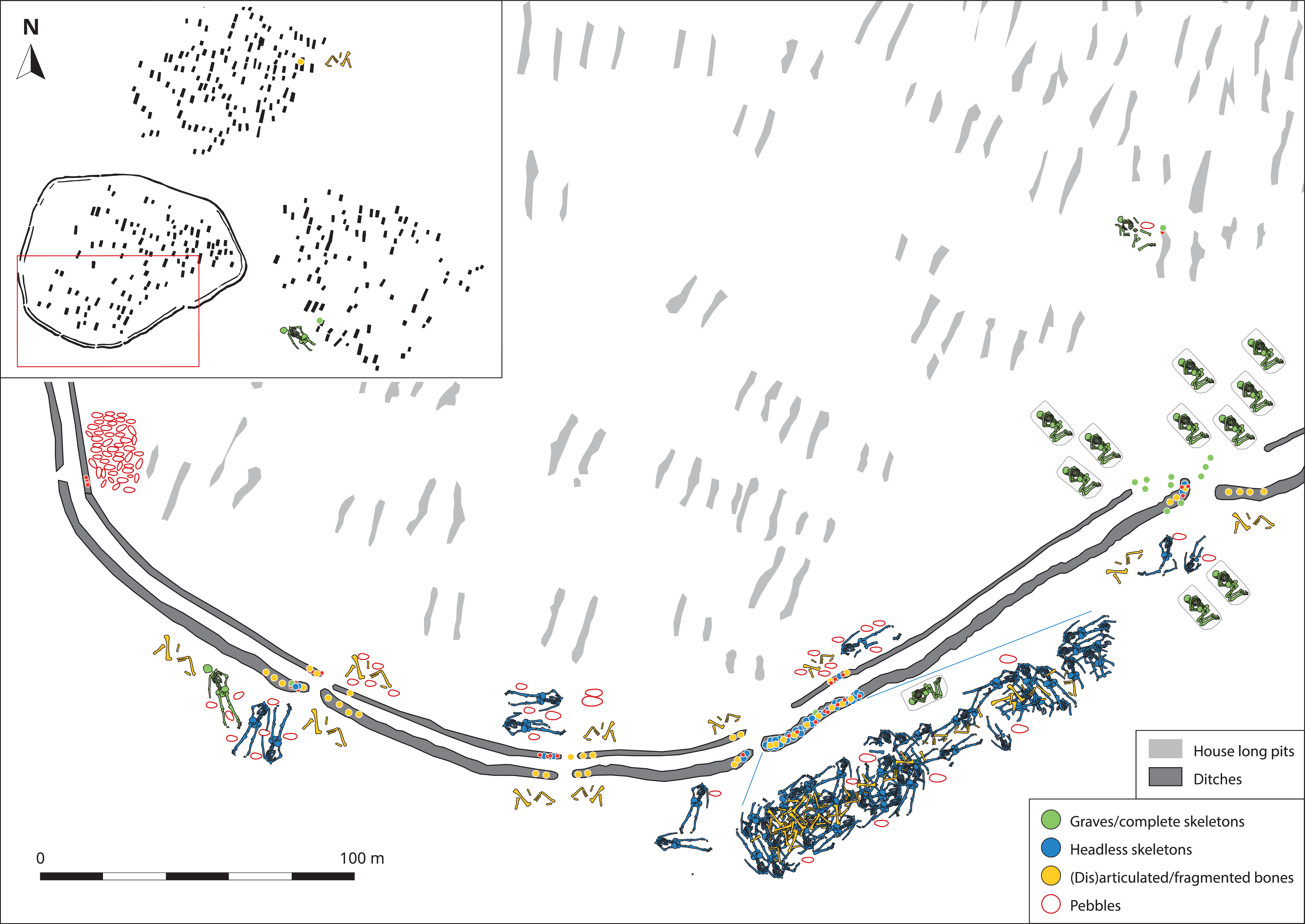 Many headless skeletons and fragmented bones were found near graves containing complete skeletons documented during previous excavations. (Furholt et al., Proceedings of the Prehistoric Society, 2026)
So, were these seemingly mutilated remains the result of violence, as our current sensitivities may suggest?
"In contrast, we have evidence that the interments – which appear unusual to us – were part of social practices, which structured local and supra-regional relationships and are only limited signs of conflict and crisis," says Martin Furholt, an archaeologist at Kiel University in Germany and the study's lead author.
Furthermore, based on skeletal markings, the heads appear to have been carefully cut away with sharp tools, rather than sloppily or forcefully chopped with blunt instruments.
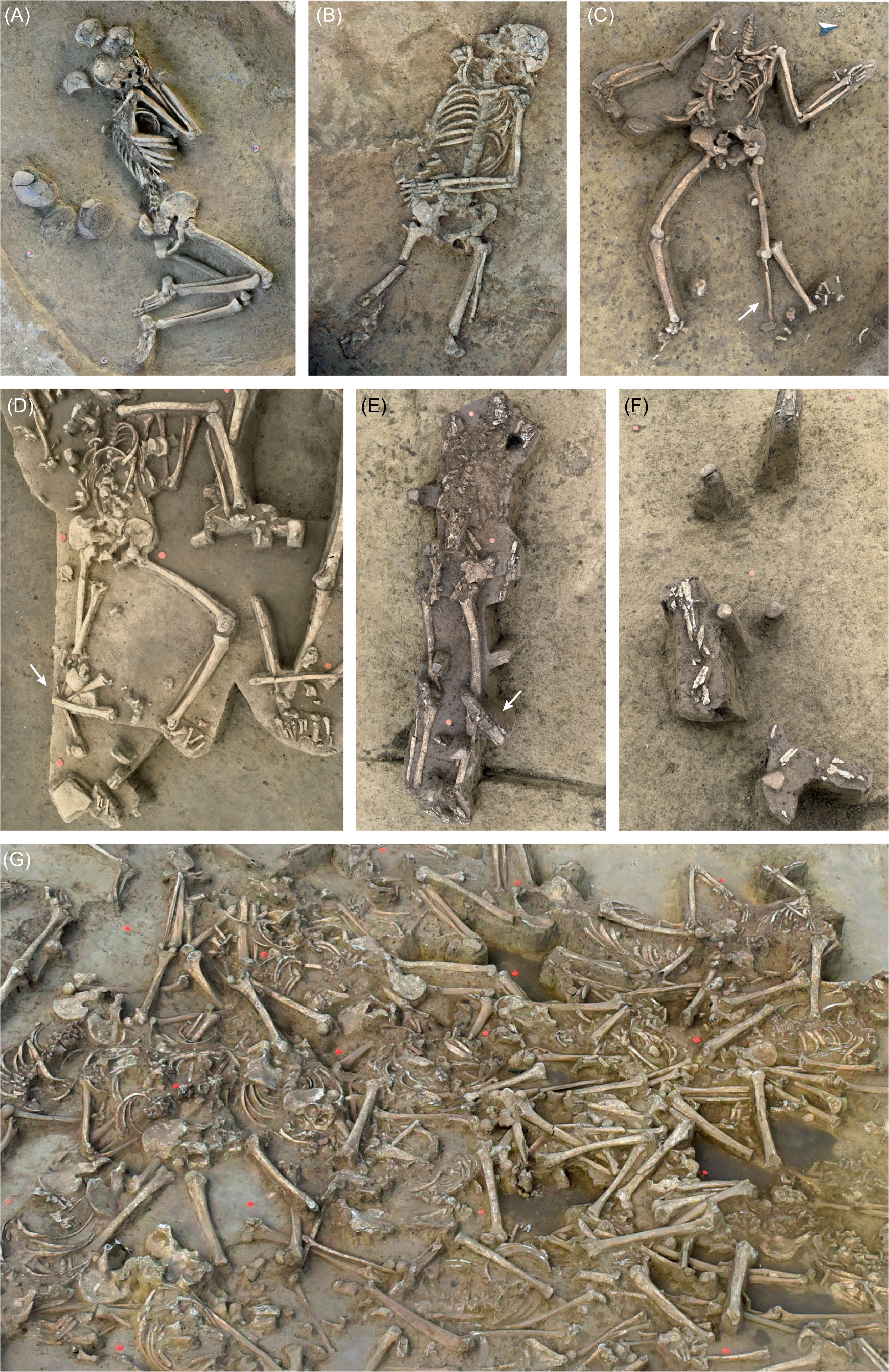 The different burial practices discovered at the site: Image A shows a traditional burial, while images C-G show the headless skeletons. (Furholt et al., Proceedings of the Prehistoric Society, 2026)
"First analyses suggest, above all, that violent 'decapitations' were not conducted here, but rather skillful removals of the skulls," explains Katharina Fuchs, a biological anthropologist at Kiel University.
Evidence from other European sites of the same era hints at many possibilities, including head-hunting practices.
Alternatively, these individuals may have been the victims of human sacrifices or had their heads captured in a symbolic theft of personhood.
There's evidence of violence at other LBK settlements in the region, including the slaughter of what could be entire families. Other groups appear to have tortured their enemies by breaking their legs before executing them.
Elsewhere, Neolithic grave diggers chopped bodies into small pieces, and others possibly collected skull caps.
Or, maybe these burials were magically or ceremonially inclined, and meant for ancestors or deities in a world believed by some to be presided over by gods and spirits.

What we do know is that headless burials were widespread throughout Neolithic Europe, suggesting that this was an established practice.
"We must assume that these practices were embedded in completely different contexts of meaning than those of modern societies," Furholt says.
"This is what makes an interpretation of them so challenging."
Future work includes analyses of bones and other artifacts to reveal relationships among individuals, their lifestyles, and other demographic clues.
Related: Archaeologists Discover Hundreds of Strange, Ancient Mass Graves in The Desert
Plus, additional headless skeletons may still be found in the nearly 160 meters (520 feet) of the ditch system that remains to be explored.
The skulls themselves may also turn up, perhaps in the settlement's houses or in the ditches.
Let's just hope Hollywood has it wrong and that unearthing these ancient, potentially consecrated remains won't unleash a global curse that only a whip-wielding archaeologist hero can resolve.
This research was published in the Proceedings of the Prehistoric Society.
 English (US)