
.jpg) 1 hour ago
3
1 hour ago
3
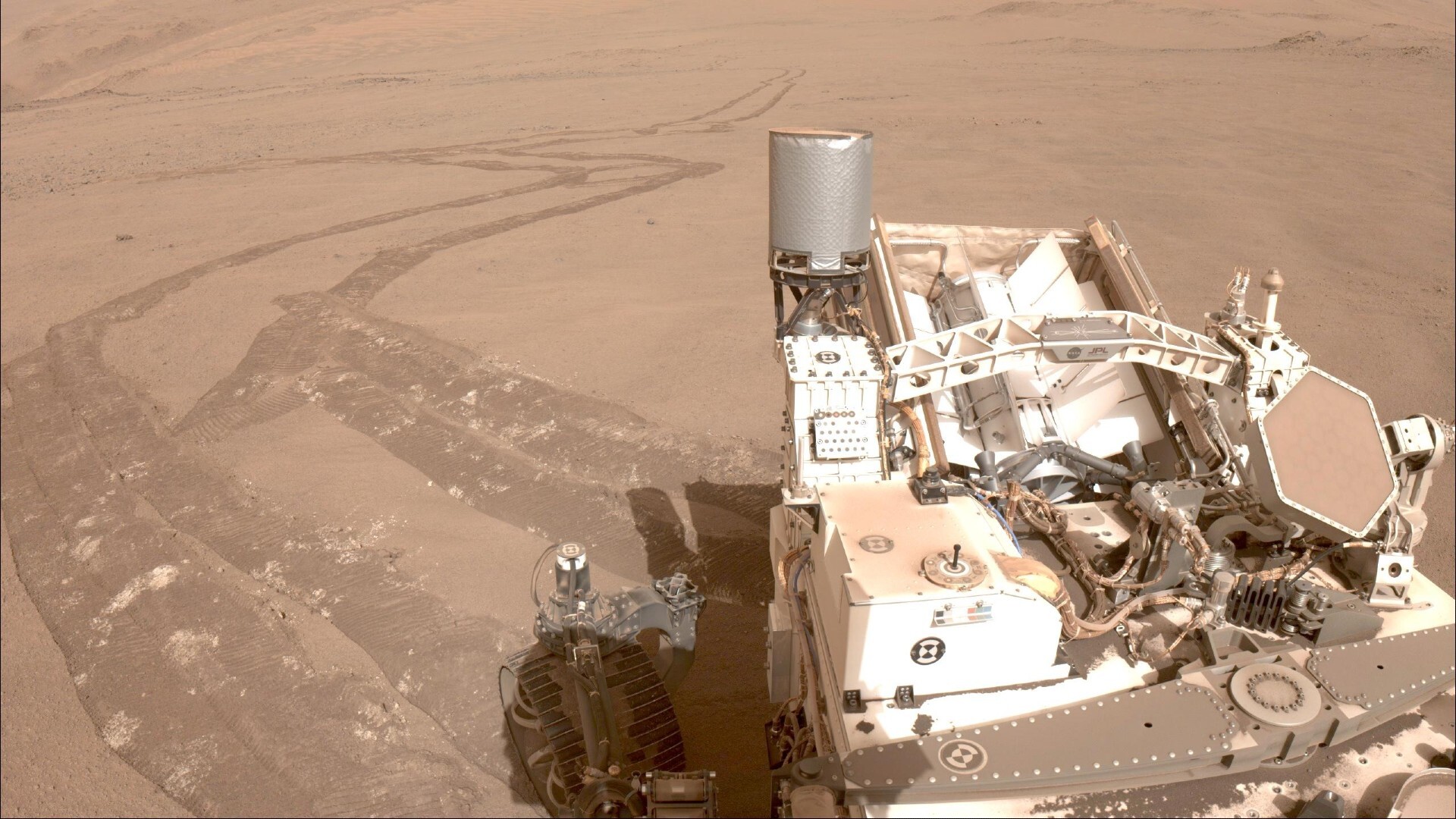
NASA's Perseverance Mars rover may soon set a record for the longest distance driven on another planet.
Nearly five years into its mission on the Red Planet, the car-sized rover still has enough remaining capability to drive more than twice the distance it has already logged, mission scientists said Wednesday (Dec. 17) at the American Geophysical Union meeting in Louisiana. If all goes according to plan and nothing breaks, Perseverance could drive as much as 62 miles (100 kilometers) by the time its mission is over.
Lee said engineering tests completed over the summer certified that the rotary actuators used to steer Perseverance's wheels can operate optimally for at least another 37 miles (60 kilometers). Since touching down inside Jezero Crater on Feb. 18, 2021, the rover has already traveled about 25 miles (40 kilometers), according to NASA. "It just turned out to add up to a nice even 100 kilometers," Lee said.
Perseverance was originally tested and certified to drive a total of just 12 miles (20 kilometers). Its extended durability reflects lessons learned from Curiosity, its predecessor, whose wheels accumulated an increasing number of dings and punctures after encountering terrain sharper and more rugged than anticipated. That led engineers to design Perseverance's wheels for even tougher conditions, making them larger in diameter and giving them twice as many treads as Curiosity's, Lee said.
"That is proving to play out very well," Lee added. The rover's wheels, he said, "are in fantastic shape" with no known punctures or tears.
Since its wheels-down landing in Jezero Crater — the remnant of a massive impact about 3.9 billion years ago that was later home to a large lake and river delta — Perseverance has drilled and cached rock samples in its search for signs of ancient microbial life. The rover has since climbed more than 1,300 feet (400 meters) up the crater's inner wall and onto the rim, exploring new terrain.
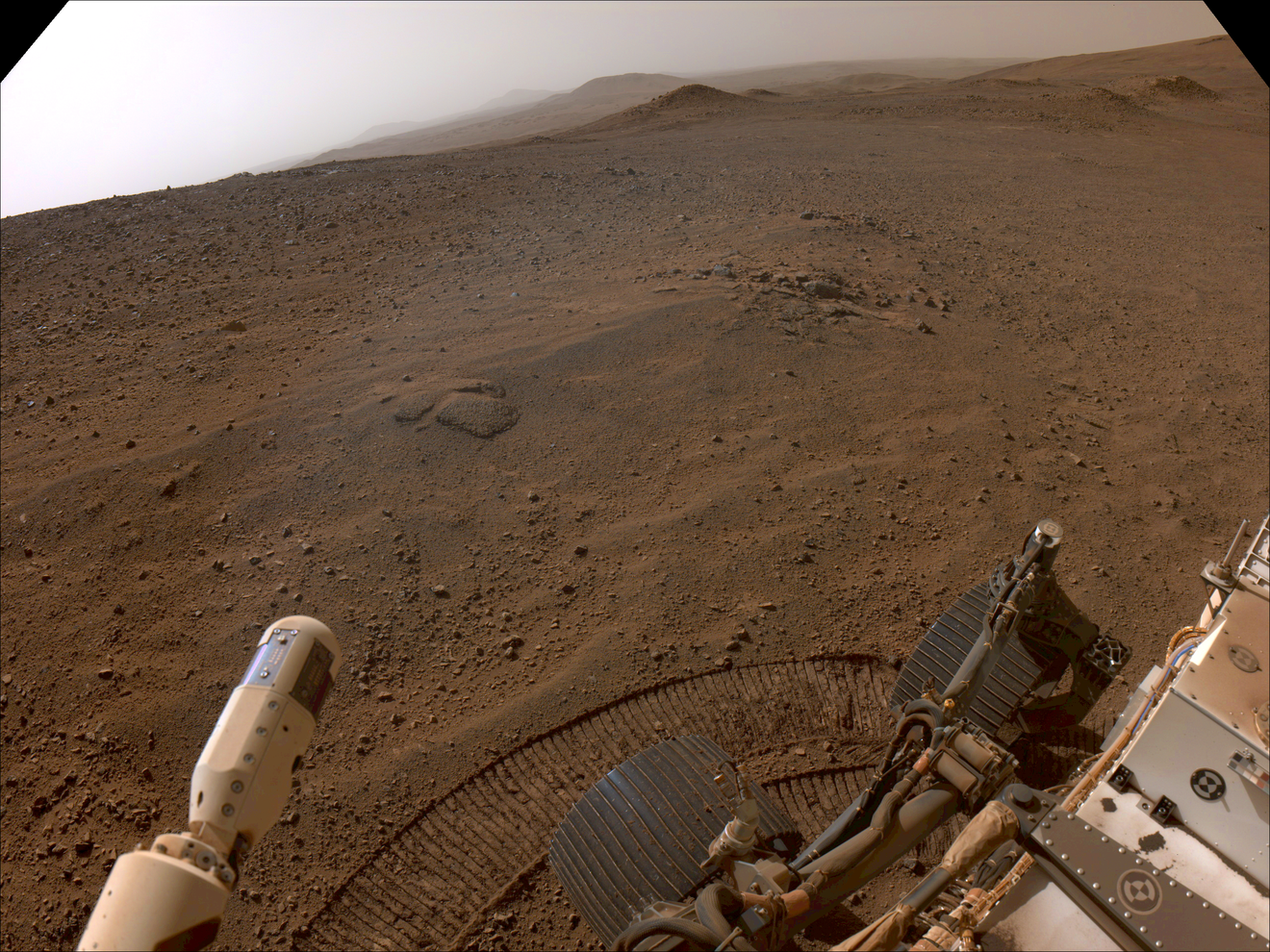
Along the way, Perseverance found one of its most intriguing targets yet — an arrowhead-shaped rock nicknamed Cheyava Falls that contains chemical signatures and structures scientists say could have formed through processes associated with microbial life billions of years ago, when Mars was much wetter than it is today.
In a paper published Dec. 17 in the journal Science, scientists report results from the crater's "Margin Unit," where Perseverance collected samples rich in the mineral olivine. This olivine likely formed at high temperatures deep within the Red Planet until being later exposed at the surface, where it interacted with water from Jezero's long-gone lake and with carbon dioxide in Mars' early atmosphere.
Those interactions produced carbonate minerals, which can preserve chemical signatures of past environments and potentially of biological activity, scientists say.
"This combination of olivine and carbonate was a major factor in the choice to land at Jezero Crater," study lead author Ken Williford of the Blue Marble Space Institute of Science in Washington said in NASA's statement. "These minerals are powerful recorders of planetary evolution and the potential for life."
As Perseverance moves beyond the crater's rim, scientists hope to collect additional olivine-rich samples and compare them with those gathered from the Margin Unit.
The rover currently carries six unused sample tubes, and at least two tubes contain samples that have been collected but not yet sealed, meaning they could be replaced if more compelling targets emerge, Lee said.
That flexibility may prove important as the rover pushes into new terrain. This week, the rover is expected to reach a site nicknamed Lac de Charmes, just beyond the rim of Jezero Crater, where ancient rocks appear to be more intact — and potentially more revealing of early Martian geological processes — than those closer to the crater, Briony Horgan of Purdue University in Indiana who co-authored the new Science paper, told reporters on Wednesday.
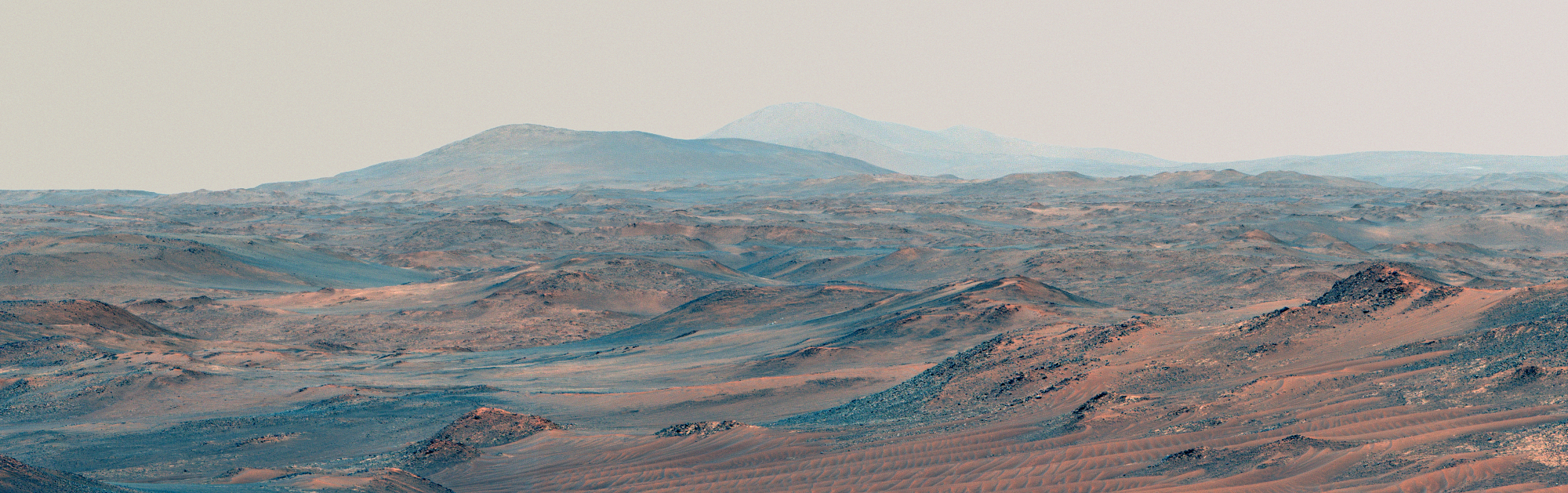
Perseverance captured this panoramic view that includes Lac de Charmes, where it will look to collect additional samples next year. (Image credit: NASA/JPL-Caltech/ASU/MSSS)
Scientists are eager to bring Perseverance's haul — the 10 sample tubes dropped onto the crater floor in 2023 — back to laboratories on Earth, but their return remains uncertain as NASA's troubled Mars Sample Return program languishes in limbo.
That uncertainty has not altered Perseverance's near-term science plans, Lee said. The mission team is working with NASA headquarters to finalize the rover's next 2.5 years of exploration, extending through most of 2028, he said, with no current plans to deposit additional sample tubes beyond those already awaiting potential pickup.
The team is also beginning to explore how artificial intelligence might assist mission operations and data analysis. Lee described AI as "an exciting emerging capability," particularly for identifying long-term trends in the rover's growing data archive, and potentially helping develop short-term activity plans.
"We still are at that stage where we want to make sure to do that very carefully," Lee said.
Any AI-assisted plans would still undergo the same rigorous simulations and human oversight as traditional command sequences, he said, "to make sure any plans that are developed are going to make sense and are safe."
When asked how long Perseverance may last on Mars, Lee said the rover carries no consumables, such as propellant, that would impose a hard end to the mission. A NASA assessment of the rover's subsystems predicts that Perseverance could continue operating through at least 2031.
The primary life-limiting factor for the rover is its radioisotope thermoelectric generator, which generates electricity from the heat released by the radioactive decay of plutonium-238 and gradually produces less power over time. That will require more conservative operations, Lee said, likening it to a phone charging more slowly on a weaker power source.
"We'll start seeing that and have to adjust our appetites in operations," Lee said. In the meantime, "there is a lot to keep us busy."
 English (US)