
.jpg) 3 hours ago
3
3 hours ago
3
Many of us owe our moms our very survival into adulthood. It's a harrowing job, making sure children don't find their way into sticky situations.
But the protective umbrella of a mother's love may extend far, far beyond just the individual. The exceptional longevity of the entire human race may be partly explained by the length of time children remain under their mothers' care.
A study of animals that live long, slow lives, including primates, whales, and hyenas, focuses on one thing these species have in common. The offspring of all these species remain dependent on maternal care for protracted timespans.
According to the team of researchers led by neurobiologist Matthew Zipple of Cornell University, their modeling, published in 2024, suggests that natural selection over time tends to favor mothers who live longer – helping drive the evolution of longer lifespans in the species.
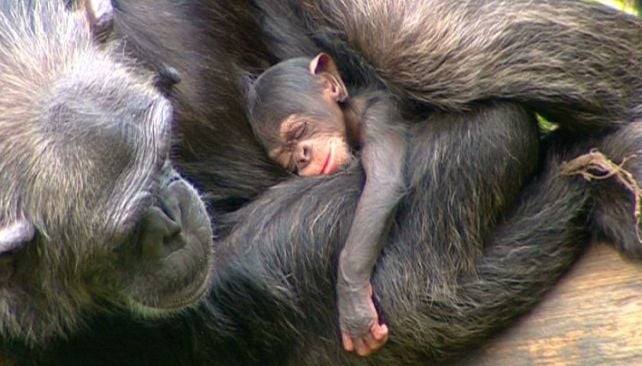 A chimpanzee mother and her baby. (Oxford Scientific Films/Photolibrary Video/Getty Images)
Of course, there is an evolutionary trade-off. These long-lived species produce fewer offspring than, say, a litter of kittens or a sac of spiderlings. But that benefits the offspring too, allowing more care per offspring.
"It's one of the really mysterious things about humans, the fact that we live these super long lives as compared to so many other mammals," Zipple said.
"What we're putting forward is that a part of the explanation for our long lifespan is this other foundational aspect of our lives, which is the relationship between the mother and her child."
The lifespans of mammals vary widely, from a brief 12 months for the Müller's giant Sunda rat to the double-century-long life of the bowhead whale. For most species, their lifespan has a loose but reliable relationship to body size.
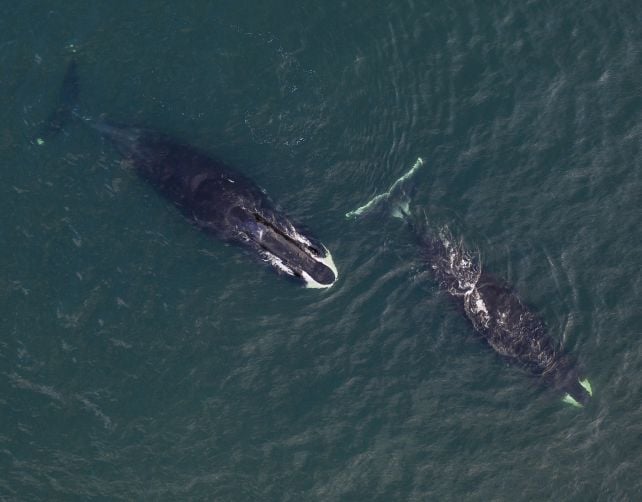 Bowhead whales can live for more than 200 years. (by wildestanimal/Moment/Getty Images)
Some species, however, defy this relationship, with lifespans much longer than those of other species with similar body mass. Humans number among these longer-lived species, as do some other primates, as well as hyenas, certain whale species, and elephants.
What these species also have in common with each other is that they are all very social animals, living in groups that help each other.
One proposed explanation for the longevity of at least some of these species is the grandmother hypothesis.
According to this theory, in species with a postmenopausal stage of life, grandmothers age out of reproduction, reducing reproductive competition and giving support to the mothers that are still bearing children.
However, this only applies to a few species – humans, orcas, beluga whales, narwhals, and possibly chimpanzees.
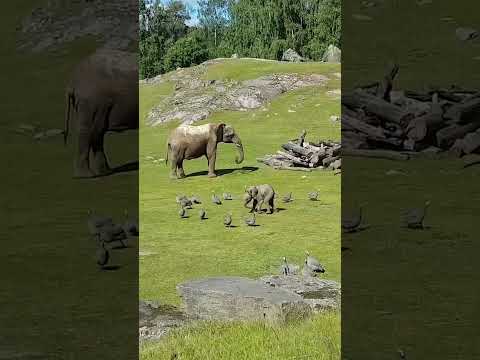
Zipple and his colleagues wanted to know why other species without postmenopausal grandmothers can live similarly long lives, so they turned their focus to mothers.
"We wanted to expand the Mother and Grandmother hypothesis to look at these specific ways that we know, in primates, that the mother's survival benefits her offspring," Zipple said.
"And ask what are the broader and perhaps more subtle ways in which the benefits of maternal presence in one's life can lead to the evolution of longevity. We're also trying to explain this phenomenon across a much wider range of animals."
The researchers built models using data collected by field ecologists to test how strongly a mother's survival affects her offspring's chances of survival – and even her grandchildren's.
The idea is straightforward. In many of these long-lived species, the death of a mother or grandmother decreases the survival odds of their offspring.
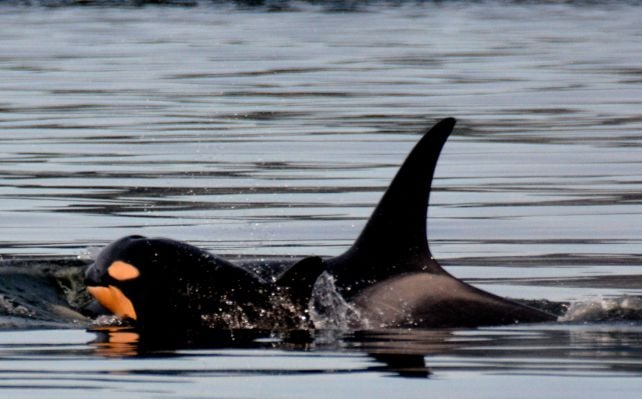 Orcas spend years under the care of their mothers, reaching maturity at 12 to 20 years of age. (Rachael Griffin/iStock/Getty Images)
This suggests that, in species where young rely heavily on their mothers, a mother staying alive longer can directly improve her offspring's chances of surviving and reproducing. That creates evolutionary pressure favoring individuals that live longer, even if they have fewer offspring overall.
Across multiple models, the team found the same pattern. When offspring depend more on their mothers, populations tend to evolve longer lifespans and slower reproduction.
Conversely, if a mother dies early, her offspring may be less healthy or less able to care for their own offspring, creating a cascading impact on survival across generations.
"As we see these links between maternal survival and offspring fitness grow stronger, we see the evolution of animals having longer lives and reproducing less often – the same pattern we see in humans," Zipple said.
"And what's nice about this model is that it's general to mammals overall, because we know these links exist in other species outside of primates, like hyenas, whales, and elephants."

The researchers did not investigate whether this effect extends to paternal care. In all of the species studied, mothers provide most of the care, and data on links between fathers and offspring survival are harder to obtain.
In species where links have been studied – humans, baboons, and other primates – the strength and the duration of the mother's influence are stronger than those of the father's.
Related: Orca Grandmothers Shed New Light on The Mysterious Benefits of Menopause
"When you watch mothers and infants in nonhuman primates interact, you can just see in the faces of the infants that there's nothing more important in the world than the presence of its mother," Zipple said.
"So for me, the behavioral work, in combination with the demographic studies, really reinforced this common evolutionary thread that we share with our closest primate relatives – which is that there's a period of time where the whole world is our mother, and while that gets weaker over time, it never goes away.
"Part of the long-term aspiration of this line of research is linking that to longevity, linking these two mysterious and central aspects of what it is to be human."
The findings were published in the Proceedings of the National Academy of Sciences.
 English (US)