
.jpg) 1 hour ago
4
1 hour ago
4

Lewis Hamilton has spent almost two decades at the top of an elite sport with a very high level of fitness. At 40, the seven-time F1 champion trains to stay sharp enough, strong enough, and recuperated to compete across a demanding racing calendar.
Hamilton remains one of the fittest athletes on the grid and has long been known for clean eating, relentless conditioning, and discipline away from the track. Early in his F1 career, the Briton leaned heavily into strength and cardio volume. Over time, his program has evolved, with less weight training and more awareness of what his body actually needs.
Speaking to Men’s Health, Hamilton explained how his daily routine has grown over the years:
“It’s shifted, progressed, evolved. I still love to run. I ran this morning. I did a run which varies between six and eight miles. Then ice bath. But before all that, stretching is the first thing I do as soon as I get out of bed. In the afternoon I might do a HIIT session, but I can’t really do too much weights because otherwise I get too heavy. So mostly it’s Pilates and yoga.”High-intensity interval training (HIIT) is a big part of that mix. It is designed to push the heart rate close to its upper limit, often around 85-90 percent, in short bursts with brief recoveries in between. The format can be applied to almost any exercise: sprints, rowing, cycling, or circuits using light weights.
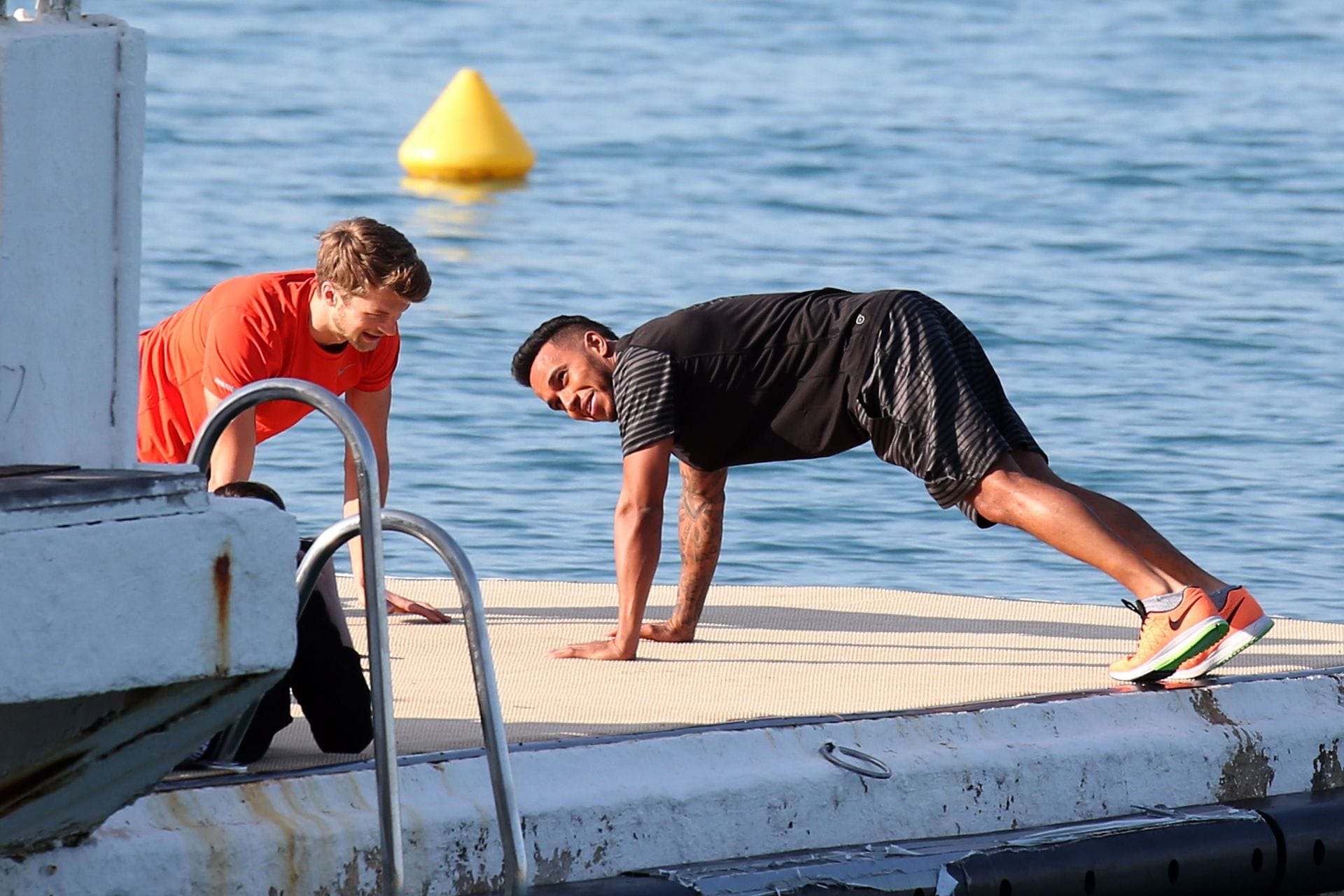 Lewis Hamilton in a photo shoot on the Hotel Martinez Beach, Cannes. Source: Getty
For Lewis Hamilton, it keeps conditioning sharp without adding unnecessary bulk, which is critical inside an F1 cockpit. Besides HIIT, flexibility and mobility have become central for him. Pilates and yoga keep him loose through the hips, neck, shoulders, and core, the areas most punished by G-forces over long races.
When asked about his non-negotiables, Hamilton added:
“Ice baths. Recovery is something that I never really focused on in the past. I would just do the workout and then go on with my day. So stretching and ice baths. Those are the two things that I force myself to do.”Years ago, Hamilton, like many athletes, saw recovery as optional. Today, he frames it as performance fuel. Better sleep, controlled breathing, nutrition, cold exposure, and structured rest all carry equal importance to the gym work itself, he added.
Hamilton also debunked a myth he hears often, that F1 training is entirely brutal power work. Instead, the approach of the Ferrari driver shows controlled weight training, focus on recovery and sleep, careful weight management, and consistency.
Lewis Hamilton's fitness mantra in F1 goes beyond muscles
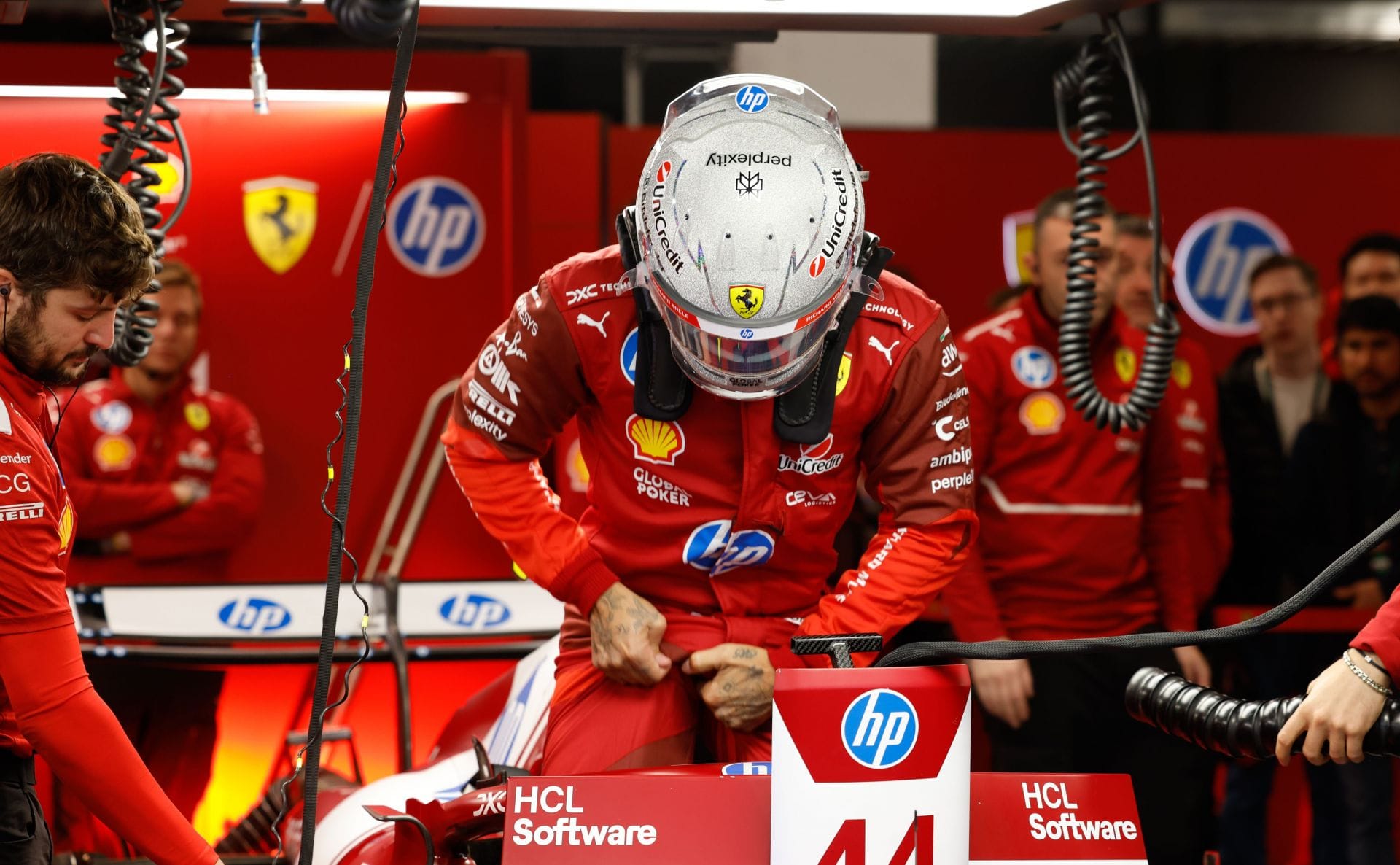 Lewis Hamilton ahead of the 2025 Las Vegas Grand Prix. Source: Getty
Fitness in F1 is fundamentally different from traditional gym training. Drivers need endurance, core stability, neck strength, and body weight control for sustained G-forces. That physical load sits alongside cognitive stress from split-second decisions, race management, and communication, all at 300 km/h.
In the same interview, Lewis Hamilton was asked how he protects his mind as carefully as his body. He explained:
“When I was younger, I think the training was really my therapy – and it still kind of is, particularly the runs. That’s where I get most of my thinking done. Adding things like yoga, adding things like breathwork... Then meditation. I think the ice bath helps with that too... Positive affirmations are probably the most important thing of all...When you speak positively about yourself, your body reacts to that.”That emphasis on mental strength arrives at a significant point in his career.
Lewis Hamilton’s first season in red was brutally difficult. The seven-time champion struggled to adapt, lacked rhythm over long stretches, and finished well adrift of teammate Charles Leclerc in races (19-4) as well as qualifying (19-5). It became the first year in which he failed to stand on the podium. However, he remains focused on 2026.
Why did you not like this content?
- Clickbait / Misleading
- Factually Incorrect
- Hateful or Abusive
- Baseless Opinion
- Too Many Ads
- Other
Was this article helpful?
Thank You for feedback
Edited by Hitesh Nigam
 English (US)