Part of my goal in putting together Guiding Key, Kotaku’s year-long Kingdom Hearts book club, is to interrogate how much the memes about Square Enix’s supposedly convoluted Disney and Final Fantasy crossover series have distorted what it actually is. That means seeing just where it is in this 25-year-long journey that Square Enix decided Kingdom Hearts was going to be more than just an anime-inspired jaunt through Disney worlds, and was instead going to become a decades-long epic. And now that I’ve started replaying the original Kingdom Hearts, I want to call out something that was disorienting and even perhaps frightening to me as a child: the tutorial.
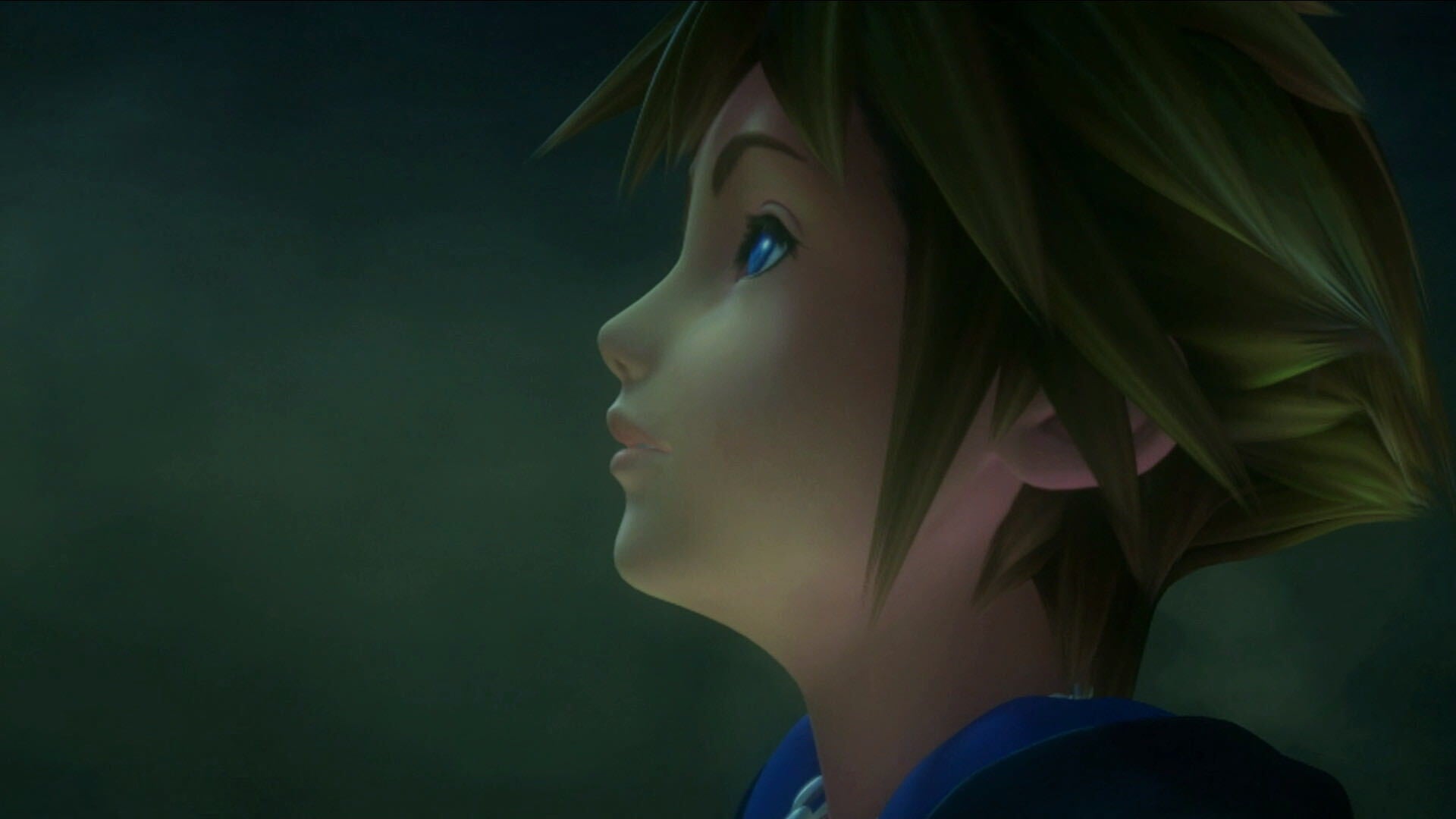
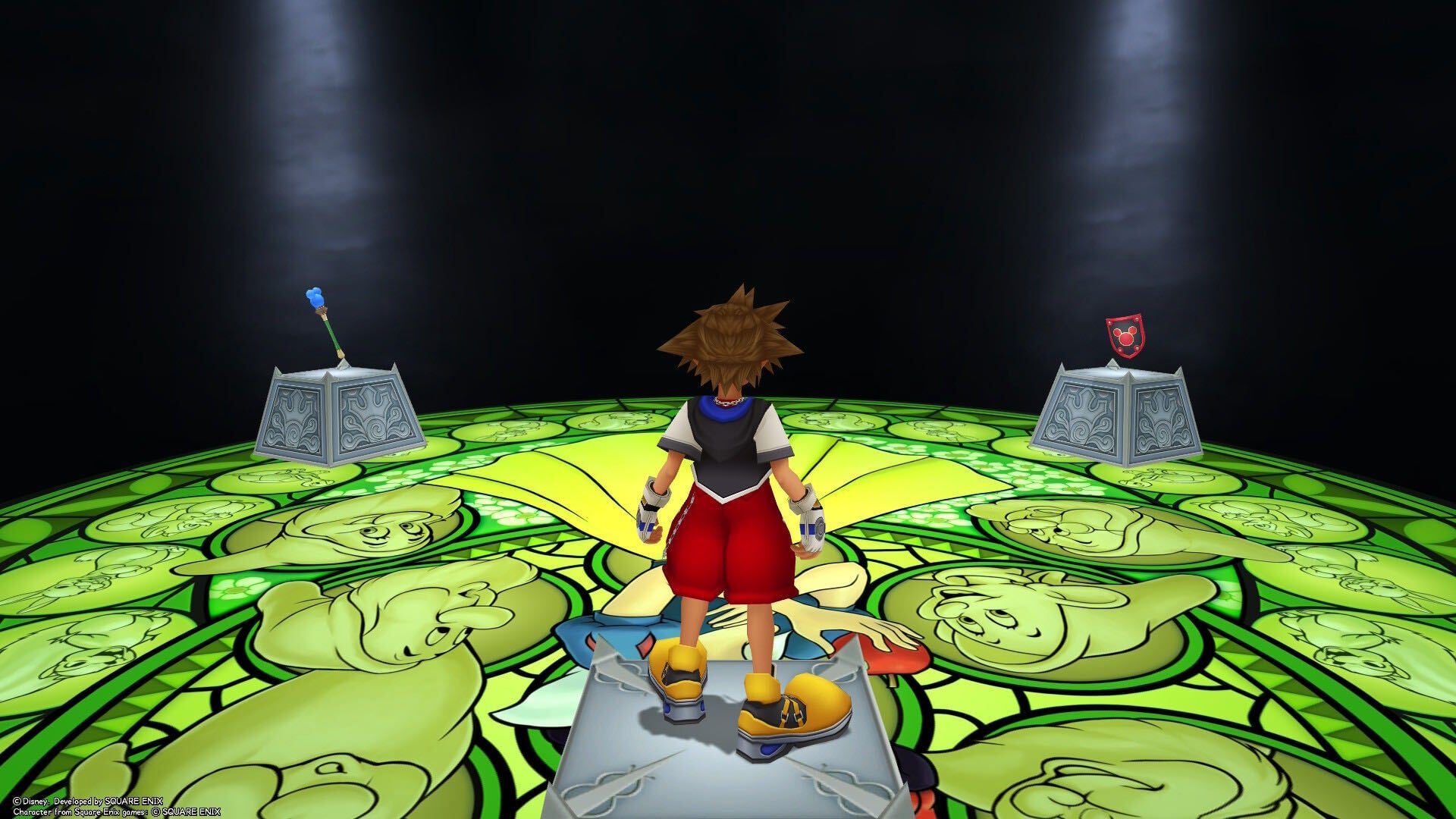
Immediately after the still-stunning opening cinematic set to Utada Hikaru’s “Simple and Clean,” Sora, our plucky protagonist, falls into an abyss, landing on a giant stained-glass platform adorned with Snow White’s likeness. At this point, Sora hasn’t met her, and won’t meet an actual Disney character for many hours, but he and his allies would return to places that looked like this many times throughout the series. This is the Dive to the Heart, which is essentially a physical space that symbolizes one’s heart. The princesses shown on these pillars span multiple Disney films, and even now, Kingdom Hearts is spinning its intricate web in the ones it chooses to show the player as they explore this area. Why does Sora see these specific princesses?
The times we enter a Dive to the Heart across the Kingdom Hearts series seem to confirm that these characters’ appearances aren’t picked at random, as it implies that their hearts are sealed in some way. But we’re just playing a kid having a terrifying dream. What are we supposed to do about that? Nothing right now, but if we can get stronger, maybe we can fix whatever’s happened here.
 © Square Enix / Kotaku
Sora’s dream in this space is ominous and otherworldly, and as a disembodied voice guides him through it, they speak to him as if he has a great journey ahead, and the stakes seem rather high. It’s here that Square Enix meticulously tutorializes everything from how to swing a weapon at the menacing but also kind of adorable blobs called Heartless to how to save your game, but the most interesting thing about Kingdom Hearts’ original tutorial is what it doesn’t tell you.
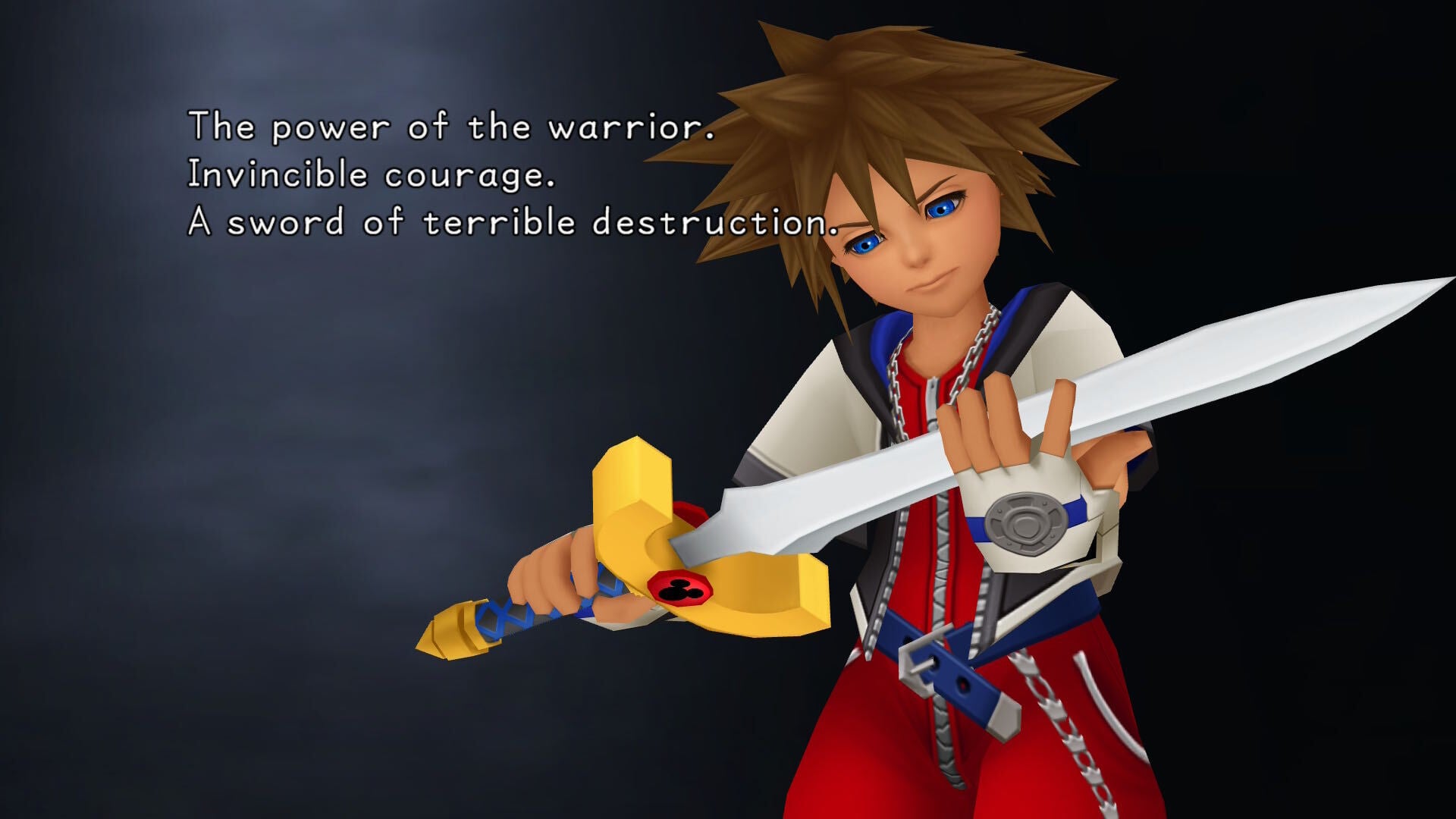
As a kid, I didn’t understand the choices it was asking me to make, and some of them I only actually learned the consequences of while doing research for this post. At the very beginning, the player is asked to choose between a sword, staff, and shield. After they’ve chosen, they’re forced to give up one of the two remaining tools. Kingdom Hearts doesn’t tell you what this means, but under the hood, this affects Sora’s baseline stats for the whole game, as well as the order in which he learns skills throughout. It is, essentially, determining a specialization without a name. Compared to the friends he fights alongside, Sora is a pretty well-rounded jack of all trades, and can still reasonably take on pretty much any challenge in Kingdom Hearts regardless of your choice here, but what I was most struck by was not just the abstract way the game presents this role-playing element to you, but the foreboding sense of dread and preemptive grief I felt playing through it now.
Throughout most of this section, an incredibly somber choir arrangement plays in the background. When I was a kid playing the game on my PS2, I thought I had rented a Disney game that was going to simply let me run around the movies my family had grown up watching. Right at the outset, I felt like the game was preparing me for something much, much darker.
Even in the brief section where you leave the Dive to the Heart and enter a facsimile of Destiny Islands, Sora’s childhood home, this terrifying score plays while three Final Fantasy characters ask you existential questions about what matters to you, what you fear, and what you hope for your life. My guys, Sora is 14 years old, do you think he’s ever thought about these things before? Well, even if he hasn’t, he has to now. Something is coming for him, and he has to grow up now.
 © Square Enix / Kotaku
Whatever truly lies beyond this nightmare, the fear of it manifests in a giant Heartless called Darkside, which is one of the most iconic bosses across the series. It’s not a challenging fight, but its giant form is certainly more frightening than anything we’ve seen in this nightmare before. Swinging our weapon of choice into its fists as it brings them down onto the platform is nothing compared to the absolute acrobatics Sora will do in the future, but even as we defeat it, nothing we’ve learned so far can stop it from swallowing us whole in a shroud of darkness.
Though what immediately follows is more in line with the childlike whimsy I was expecting, this tutorial sets the stage early on for what Sora’s journey will entail for the next 20+ years. The princesses he sees in this dream may mean nothing to him right now, but by the time his journey is over, he’ll find they’re much more than a passing invention of his subconscious.It’s his destiny to face this darkness, even as it swallows him whole time and time again. Whether Square Enix knew what form that darkness would take at the time or not, Kingdom Hearts always had more going on behind the scenes than anyone could have predicted.
”The closer you get to the light, the longer your shadow becomes.
— But don’t be afraid
You hold the mightiest weapon of all.
So don’t forget:
You are the one who will open the door.”
Follow along with Guiding Key, Kotaku’s year-long Kingdom Hearts replay:
- Kingdom Hearts: October-December 2026
- Kingdom Hearts: Chain of Memories: January 2027
- Kingdom Hearts II: February-April 2027
- Kingdom Hearts 358/2 Days and Re:Coded: May 2027
- Kingdom Hearts: Birth by Sleep: June 2027
- Kingdom Hearts Dream Drop Distance and A Fragmentary Passage: July 2027
- A watch through of the unplayable mobile games Kingdom Hearts Union χ Dark Road: August 2027
- Kingdom Hearts III and the Re:Mind DLC: August-October 2027
- Kingdom Hearts Melody of Memory: November 2027
- Kingdom Hearts IV: Late 2027