
.jpg) 1 hour ago
3
1 hour ago
3
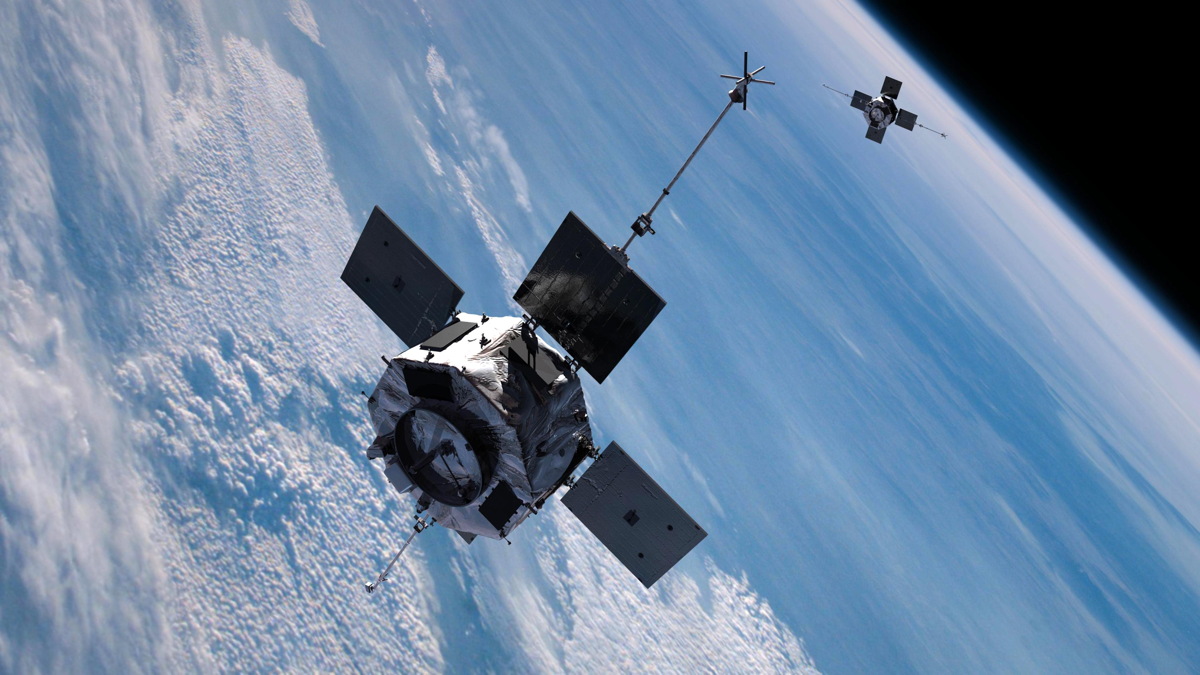
A big NASA satellite will crash back to Earth on Tuesday (March 10) after nearly 14 years in orbit, experts say.
The spacecraft in question is the 1,323-pound (600-kilogram) Van Allen Probe A, which launched in August 2012 along with its twin, Van Allen Probe B, to study the radiation belts around Earth for which they're named.
Article continues below
"NASA expects most of the spacecraft to burn up as it travels through the atmosphere, but some components are expected to survive reentry," NASA officials wrote in an update on Monday. "The risk of harm coming to anyone on Earth is low — approximately 1 in 4,200."
That low risk of injury — about 0.02% — takes into account the fact that water covers about 70% of Earth's surface. So, any parts that survive reentry will likely splash down in the open ocean, not land in or around a city.
The Space Force's estimated reentry time is just that — an estimate. It will be updated in the coming hours, as more and better data come in.
The Van Allen Probes — which were originally called the Radiation Belt Storm Probes — launched to a highly elliptical orbit, which took them as far away from Earth as 18,900 miles (30,415 kilometers) and brought them as close as 384 miles (618 km).
The mission was supposed to last just two years, but the spacecraft managed to continue operating until July 2019 (Probe B) and October 2019 (Probe A). They gathered data that scientists and mission planners analyze to this day.
"By reviewing archived data from the mission, scientists study the radiation belts surrounding Earth, which are key to predicting how solar activity impacts satellites, astronauts, and even systems on Earth such as communications, navigation and power grids," NASA officials said in the same statement. "By observing these dynamic regions, the Van Allen Probes contributed to improving forecasts of space weather events and their potential consequences."
Both probes were expected to stay up in Earth orbit until 2034. However, the sun has been unexpectedly active in recent years, causing our planet's atmosphere to expand and frictional drag on orbiting satellites to increase.
Such effects have likely shortened Van Allen Probe B's time in space as well, but less dramatically than its twin's. Probe B isn't expected to reenter before 2030, according to NASA.
 English (US)