
.jpg) 3 hours ago
2
3 hours ago
2
For thousands of years, humans living high in the Argentinian Andes have relied on drinking water that would make most people deathly ill.
There, naturally occurring arsenic in volcanic bedrock leaches into the groundwater, contaminating the local water supply with levels of the toxic metalloid that would pose serious health risks to most human populations.
But for one group in northern Argentina, natural selection may have provided an unusual genetic advantage.
According to a DNA analysis of people across western South America, a population in the Argentinian Andes carries a gene variant that likely helps them metabolize arsenic more safely.
"Adaptation drives genomic changes; however, evidence of specific adaptations in humans remains limited," wrote a team led by evolutionary biologists Carina Schlebusch and Lucie Gattepaille of Uppsala University in a 2015 paper.
"Our data show that adaptation to tolerate the environmental stressor arsenic has likely driven an increase in the frequencies of protective variants of AS3MT, providing the first evidence of human adaptation to a toxic chemical."
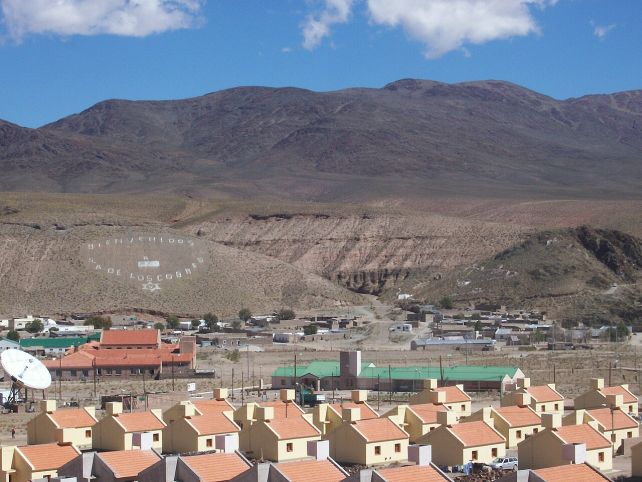 The Argentinian town of San Antonio de los Cobres sits at an altitude of about 3,775 meters (12,385 feet). (Roberto Ettore/Wikimedia Commons, CC BY 3.0)
Given enough time and gentle enough exposure to a hazard, life has shown a remarkable ability to adapt to all sorts of wild conditions – from extreme heat to complete lack of oxygen to dangerous radiation levels.
However, relatively little is known about how human populations adapt to toxic chemicals in their environment. Arsenic is highly toxic, associated with cancer, skin lesions, birth defects, and early death. It's also widespread, naturally present at high levels in the groundwater of many regions around the world.
The current recommended limit for arsenic in drinking water, set by the World Health Organization, is 10 micrograms per liter.
Until a filtration system was installed in 2012, the remote, high-altitude town of San Antonio de los Cobres, in Argentina's Puna de Atacama plateau, had drinking water that contained around 200 micrograms of arsenic per liter – about 20 times the recommended limit.
Yet the region has been inhabited for thousands of years – at least 7,000 years, and perhaps as long as 11,000.
This apparent ability to shrug off dangerously high arsenic levels puzzled scientists for decades. In 1995, scientists noted that women from the Argentinian Andes had a "unique" ability to metabolize arsenic, as evidenced by metabolites in their urine.
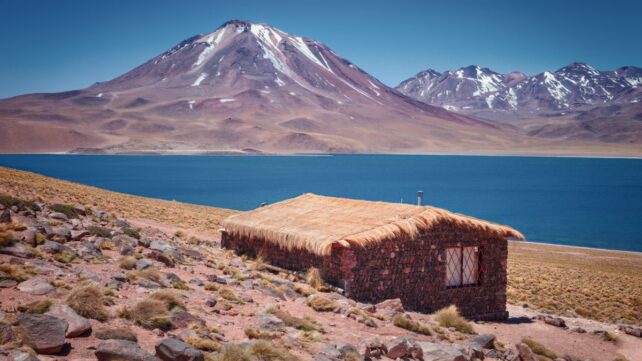 The Puna de Atacama plateau in northern Argentina, where groundwater naturally contains high levels of arsenic. (jarcosa/iStock/Getty Images Plus)
When arsenic enters the body, enzymes convert it through several chemical forms. One of these intermediate forms, called monomethylated arsenic (MMA), is particularly toxic. A later form, dimethylated arsenic (DMA), is easier for the body to excrete in urine.
People in San Antonio de los Cobres tended to produce less of the toxic intermediate and more of the easily excreted form, suggesting their bodies were unusually efficient at processing arsenic.
Intrigued, Schlebusch, Gattepaille, and their colleagues wanted to solve the puzzle at the genetic level.

The team collected DNA from 124 women in San Antonio de los Cobres using cheek swabs, whose urine samples showed the same arsenic metabolite profile as in the 1995 study. Then, they analyzed millions of genetic markers across the genome.
To determine whether the gene variant was unique to the Argentine population, the researchers compared their results with publicly available genome data from Peru and Colombia, drawn from the international 1000 Genomes Project.
Previous research showed that an enzyme called arsenic (+3 oxidation state) methyltransferase (AS3MT) could play a key role in arsenic metabolism, so that is where the researchers focused their efforts.
What they found was a cluster of genetic variants near the AS3MT gene that strongly influenced how the body processes arsenic. These variants were far more common in people from San Antonio de los Cobres than in genetically similar populations in Peru and Colombia.
The variants appear to make the body more efficient at converting arsenic into forms that can be safely excreted in urine, reducing the buildup of the most toxic intermediate compounds – a result that neatly aligns with earlier studies of arsenic metabolites in urine.
Related: Humans Are Still Evolving Before Our Eyes on The Tibetan Plateau
While arsenic contamination is common around the world, very few communities have lived with such high levels of exposure for long periods of time.
In San Antonio de los Cobres, people have lived with arsenic in their groundwater for thousands of years – long enough for natural selection to favor traits that reduce vulnerability to arsenic's toxic effects.
Later research suggests similar genetic signals may also appear in other Andean populations exposed to arsenic for generations, supporting the findings that long-term exposure can drive genetic tolerance, and hinting that the adaptation may be more widespread across the region.
"Given the severe deleterious health effects of arsenic in both children and adults," the researchers wrote, "individuals who carry the arsenic-tolerance haplotype… could have a very strong selective advantage in high-arsenic environments."
The research was published in Molecular Biology and Evolution.
 English (US)