
We may earn revenue from the products available on this page and participate in affiliate programs. Learn More ›
Doing home projects out in a garage or down in a basement workshop isn’t always possible. And even when it is possible, it’s not always the best option, especially if you need to carry heavy, oversized, or delicate materials throughout your home. Instead, it’s sometimes better to set up a temporary workshop where you need to work.
After years spent as a construction project manager moving my tools and materials between warehouses, work sites, and the homes/businesses of our customers, I developed an easy system for setting up a quick and effective temporary workshop with just a few key components. Keep reading to find out exactly what you need to create your own temporary workshop at your home.
1. Portable Workbench
Working on the floor strains your back, while working on dining tables risks costly dents and scratches. Instead, it’s always good to have a portable workbench that’s easy to set up and take down, like the Keter Folding Workbench. A stable and reliable surface makes projects more efficient, since you won’t need to be bending over to cut, glue, or drill.
Additionally, the workbench can act as a simple support when you need to measure materials, set up a miter saw, or clamp your materials so that they don’t shift while you work. If you don’t want to purchase or build a new workbench for this purpose, you can also set up a pair of heavy-duty collapsible sawhorses paired with a sacrificial plywood sheet to give you a waist-high surface that folds flat for storage.
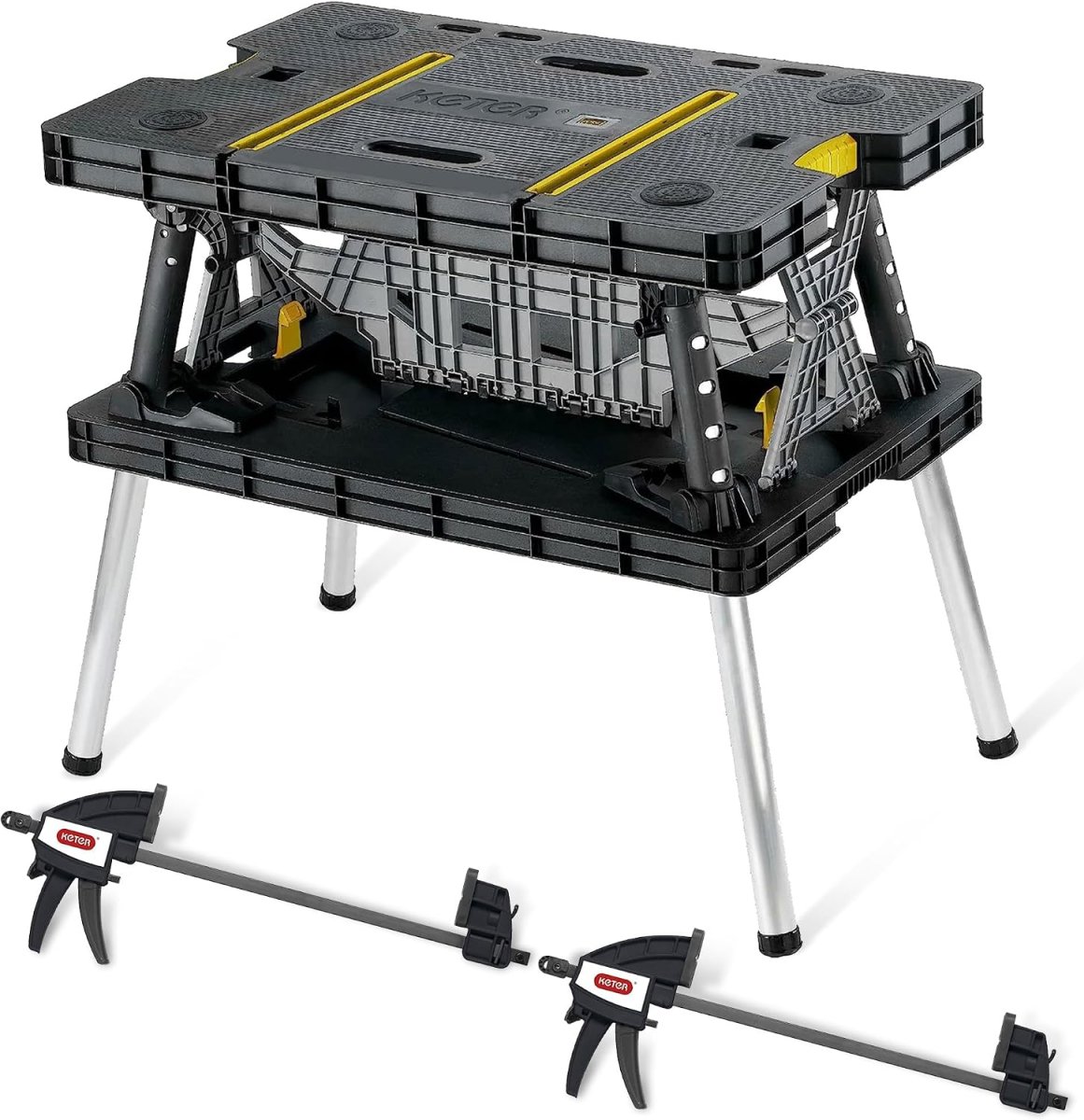 Photo: Amazon
2. Heavy-Duty Surface Protection
Floor and countertop protection prevents permanent damage and can reduce your cleanup time by half. For this reason, it’s essential to plan for surface protection and cleanup when you are setting up your temporary workshop.
Drape moving blankets or thick canvas drop cloths over tables, counters, or hardwood floors to absorb impacts and catch dropped tools. Unlike plastic tarps, heavy canvas stays put and prevents items from sliding around. To help keep your temporary workshop clean and organized, include a small wet/dry shop vac fitted with a disposable fleece filter bag to capture messes at the source so you can pack up in minutes.
Best Overall Tarp
White Duck Outdoors 18-Ounce 100% Cotton Canvas Tarp
Treated with a special coating, this heavy-duty tarp repels moisture in addition to offering protection to your work surface. Learn more.
3. Portable Workholding (Clamps, Mats, and Vises)
Without a heavy, bolted-down bench vise, clamps act as your third hand to hold materials steady while cutting, gluing, or drilling. Keep two or three medium-sized bar clamps handy to secure materials directly to a table edge or sawhorse. These clamps are often easy to store when not in use, so they won’t get in the way while you work.
Also, you can lay a rubberized mesh pad, like this POWERTEC Nonslip Mat, under smaller pieces when sanding or routing. It holds flat workpieces steady using friction alone, leaving the entire top surface unobstructed.
4. Clamping Task Light
Overhead room lighting casts shadows right over your hands when you lean over a project to see what you are doing, increasing mistakes and safety risks. But holding a flashlight while you work just ties up one of your hands, severely limiting your control and efficiency. Instead, it’s better to find task lights that are made for versatility so you can focus on the project, rather than fighting with dim lighting.
A directional light clipped to a shelf, chair, or table edge lets you aim bright light directly at your cut line or assembly area. Opt for a high-lumen LED clamp light or magnetic work light to illuminate your temporary workshop, like this ZONE LED Clamp Work Light.
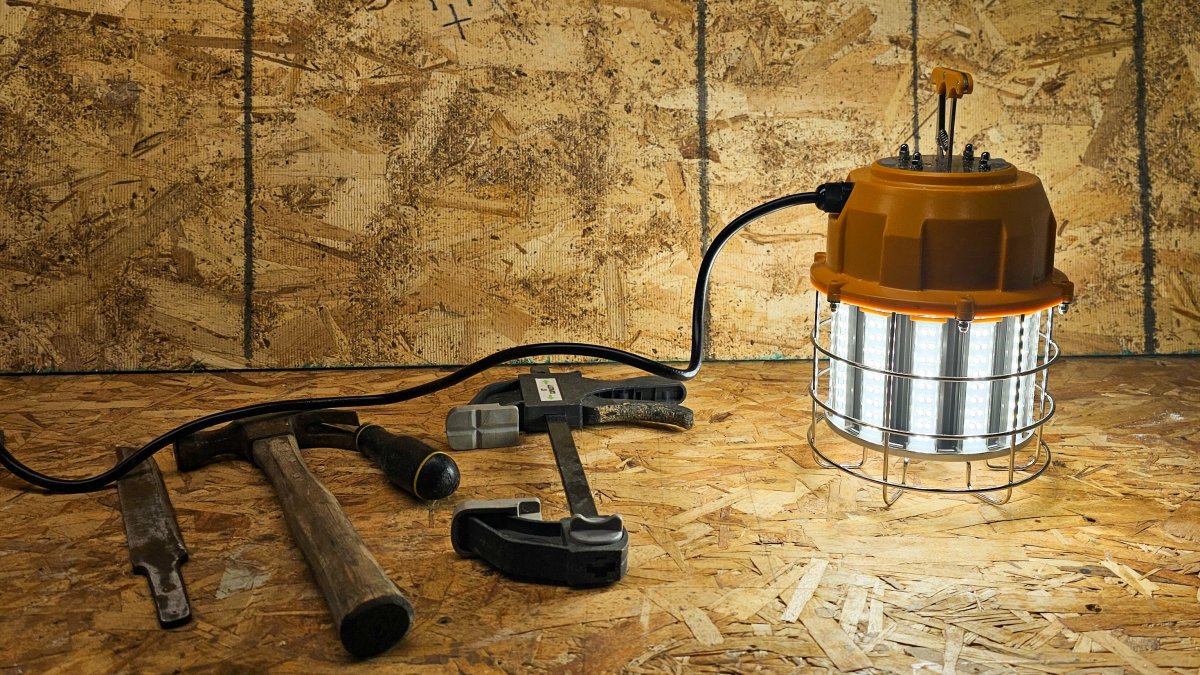 Photo: Glenda Taylor for BobVila.com
5. Heavy-Duty Extension Cord and Power Strip
Indoor outlets are often far from where you need to work and rarely have enough open receptacles. A 12-gauge, multi-outlet cord with built-in GFCI protection, such as this CCCEI Extension Cord, safely handles high-draw power tools while protecting you from electrical faults. It can also be used to power a space heater for a temporary cold weather workshop upgrade if you need to work outside or in an uninsulated space.
Use a thick-gauge cord to safely run high-draw power tools from a wall outlet to your temporary station without overheating or losing power. Additionally, use a surge-protected power strip with wide-spaced outlets for your battery chargers, task lights, and smaller tools. Wide spacing prevents bulky power bricks from blocking adjacent plugs.
Meet the 2026 Tools of the Year
After months of scouring the market and putting products through their paces, we’ve named the best of the best in new tools. There’s something for everyone, from veteran pros to average Joes.