 Image via HBO, Everett Collection

Published Oct 31, 2026, 6:36 PM EDT
Julio is a Senior Author for Collider. He studied History and International Relations at university, but found his calling in cultural journalism. When he isn't writing, Julio also teaches English at a nearby school. He has lived in São Paulo most of his life, where he covers CCXP and other big events. Having loved movies, music, and TV from an early age, he prides himself in knowing every minute detail about the things he loves. When he is older, he dreams of owning a movie theater in a small countryside town.
Sign in to your Collider account
It's been nearly a decade since Game of Thrones ended, and there hasn't really been another show like it since. House of the Dragon has helped a little, but considering it will be a long time before the final season of the prequel premieres, finding a binge-worthy show at that high a level of quality feels impossible — unless, instead of Westeros, it's the Roman Empire you think about every day. Before Game of Thrones, HBO had another big-budget series of epic proportions: Rome. With only two seasons and rooted in the actual history of the last days of the Roman Republic, it's the perfect answer for anyone looking for a new show to binge, as both series share most of what viewers like to see nowadays, including great acting, intrigue, and power struggles. No dragons, though.
‘Rome’ Tells the Story of the Rise of the Roman Empire After the Fall of the Republic
While history buffs certainly love it, Rome is the kind of series that appeals to a much wider audience, just like Game of Thrones did with fantasy. That's because, although it is based on historical events, the political intrigue and personal confrontations are equally important to the series, making it an enticing watch even for those who already know what happens. Characters like Caesar (Ciaran Hinds), Pompey (Kenneth Cranham), and Brutus (Tobias Menzies) are key players, but the best happens away from them.
Collider Exclusive · Universe Personality Quiz Which Iconic Universe Do You Belong in the Most? Star Wars · Lord of the Rings · Harry Potter · Game of Thrones · Star Trek
Five legendary universes. Five completely different visions of what the world could be — or already was. One of them is the world your instincts, your values, and your particular way of existing were built for. Eight questions will tell you which one.
🚀Star Wars
💍Lord of the Rings
🧙Harry Potter
👑Game of Thrones
🖖Star Trek
FIND YOUR UNIVERSE →
01
What gives your life its deepest sense of meaning? Every universe is built around a different answer to this question.
ABeing part of something larger than myself — a cause, a rebellion, a fight for freedom that outlasts me. BThe journey itself — the places I'll go, the companions beside me, the world I'll discover on the way. CLearning — unlocking what I'm capable of, understanding the world's hidden mechanics, growing into something more. DLegacy — the name I leave behind, the power I build, the mark I make before the world moves on without me. EUnderstanding — exploring what exists beyond the horizon and asking what it means to be alive in a universe this vast.
NEXT QUESTION →
02
Which kind of world do you most want to inhabit? The environment shapes who you become. Choose carefully.
AA galaxy of planets, each with its own culture — connected by conflict, trade, and the Force. BAncient lands of breathtaking beauty, deep history, and a creeping darkness at the edges. CA world hidden inside our own — full of wonder, community, and magic waiting to be learned. DA brutal, beautiful continent where power is everything and every alliance is a calculation. EA future where humanity has reached the stars — and must decide what kind of species it wants to be.
NEXT QUESTION →
03
How do you prefer your conflicts resolved? The shape of a world's conflicts tells you everything about its soul.
AThrough sacrifice and courage — someone has to make the impossible choice so others don't have to. BThrough fellowship — the impossible becomes possible when the right people walk the same road. CThrough growth — confronting what you fear, understanding what you lack, and becoming equal to the challenge. DThrough strategy — outthinking, outmaneuvering, positioning yourself so the outcome was never in doubt. EThrough dialogue — finding the third option, the peaceful resolution, the answer that doesn't require a body count.
NEXT QUESTION →
04
Who do you want beside you when things get difficult? Your ideal companions reveal the world you were made for.
AA small crew — a pilot, a rogue, a warrior — each broken in their own way, unbeatable together. BA fellowship of different kinds of people, bound by purpose and deepened by the long road. CFriends who grew up alongside me — who knew me before I knew myself, and stayed anyway. DAllies whose loyalty I've earned — and tested — and whose ambitions align with mine, for now. EA crew of brilliant, curious, principled people from every corner of known space.
NEXT QUESTION →
05
What is your relationship with power? How you seek, wield, or resist power is the map of who you are.
AI want to use it to protect — and I'm terrified of what I might become if I'm not careful. BI distrust it. The most important power in this story is the courage to give it up. CI want to earn it — through knowledge, through effort, through becoming someone worthy of it. DI want to wield it. Preferably before someone else decides to wield it against me. EI want to understand it — its structures, its limits, its ethical dimensions. Power without accountability is the real threat.
NEXT QUESTION →
06
How does your universe treat good and evil? A world's moral architecture tells you more about it than any map.
AThere is a dark side and a light side — and the choice between them is always present, always personal. BEvil is real and ancient and patient — and goodness, however small, is the only thing that can undo it. CGood and evil are real, but they live inside people — and people are complicated, always capable of both. DGood and evil are mostly a matter of perspective and proximity. Power is the only honest currency. EEvil is usually the result of ignorance, fear, or broken systems — and understanding it is the first step to solving it.
NEXT QUESTION →
07
What role would you naturally fall into? Every universe has archetypes. Which one fits you without trying?
AThe reluctant hero — ordinary origins, extraordinary moment, changed forever by the choice to act. BThe unlikely carrier — the one nobody expected to matter most, quietly bearing the weight of everything. CThe student — not yet who I'll become, learning through every mistake, growing into something the world needs. DThe player — sharp enough to see the game for what it is, ambitious enough to try to win it. EThe explorer — drawn to the unknown, driven by curiosity, most alive when standing somewhere no one has stood before.
NEXT QUESTION →
08
What do you ultimately believe about the future? The answer to this is the clearest window into which universe already lives inside you.
AThat hope is real — that even in the darkest galaxy, a new hope is always possible. CThat even the smallest person can change the course of the future, if they have the courage to try. CThat love and friendship and doing what's right will matter in the end, even when everything says otherwise. DThat the wheel keeps turning — that power shifts, winters end, and what endures is those willing to fight for it. EThat humanity — or whatever we become — is capable of extraordinary things, if we choose to be.
REVEAL MY UNIVERSE →
Your Universe Has Been Chosen You Belong In…
Your answers point to the iconic universe your values, your instincts, and your particular way of seeing the world were built for. This is where you would find your people — and your purpose.
Star Wars
You believe in the cause — in the idea that freedom is worth fighting for even when the odds are impossible and the empire is vast.
- You are drawn to the moral clarity of a universe where hope itself is a form of resistance.
- You'd find your people in the Rebellion — a ragtag coalition of true believers held together by conviction more than resources.
- Star Wars is fundamentally a story about ordinary people choosing to matter in an extraordinary conflict — and that is exactly your kind of story.
- The Force may or may not be with you. But the will to use it for something larger than yourself certainly is.
Lord of the Rings
You understand, in the deepest part of yourself, that the journey matters as much as the destination — and that the world's beauty is worth protecting even at great cost.
- Middle-earth is a world of ancient wonder, deep friendship, and a darkness that only retreats when enough small acts of courage accumulate.
- You would thrive here because you value the fellowship more than the glory — the road more than the arrival.
- Tolkien's universe rewards patience, loyalty, and the willingness to carry something heavy across a very long distance.
- Those are not burdens to you. They are simply how you move through the world.
Harry Potter
You believe that love, loyalty, and doing what's right are not naive sentiments — they are the most powerful forces in any world, magical or otherwise.
- The Wizarding World is a place of wonder hidden in plain sight, where learning is transformative and the bonds you form at school follow you into every battle.
- You would flourish here because you take both the magic and the friendships seriously — and you understand that one without the other is incomplete.
- Harry Potter's universe ultimately rewards those who choose to stand for something even when standing is terrifying.
- That choice — made quietly, without guarantee — is something you understand completely.
Game of Thrones
You see the world clearly — its power structures, its hypocrisies, its brutal arithmetic — and you are not paralysed by that clarity. You use it.
- Westeros is a world that rewards intelligence, adaptability, and the willingness to understand that every alliance is also a negotiation.
- You would survive here — possibly thrive here — because you don't confuse the world as it is with the world as you'd like it to be.
- Game of Thrones is a story about what happens when the idealists and the realists collide. You are sharp enough to know which one lasts longer.
- Winter always comes. You are already prepared.
Star Trek
You believe the future is worth building — that curiosity, cooperation, and the expansion of understanding are not just ideals but the most practical path forward for any civilisation.
- Star Trek is a universe where the questions matter as much as the answers, and where encountering something utterly alien is cause for wonder rather than fear.
- You would belong here because you are fundamentally optimistic about what intelligence and decency can achieve — while being honest about how hard that achievement is.
- The Federation is the universe's most ambitious thought experiment: what if we actually got better?
- You don't just hope that's possible. You think it's the only thing worth working toward.
↻ RETAKE THE QUIZ
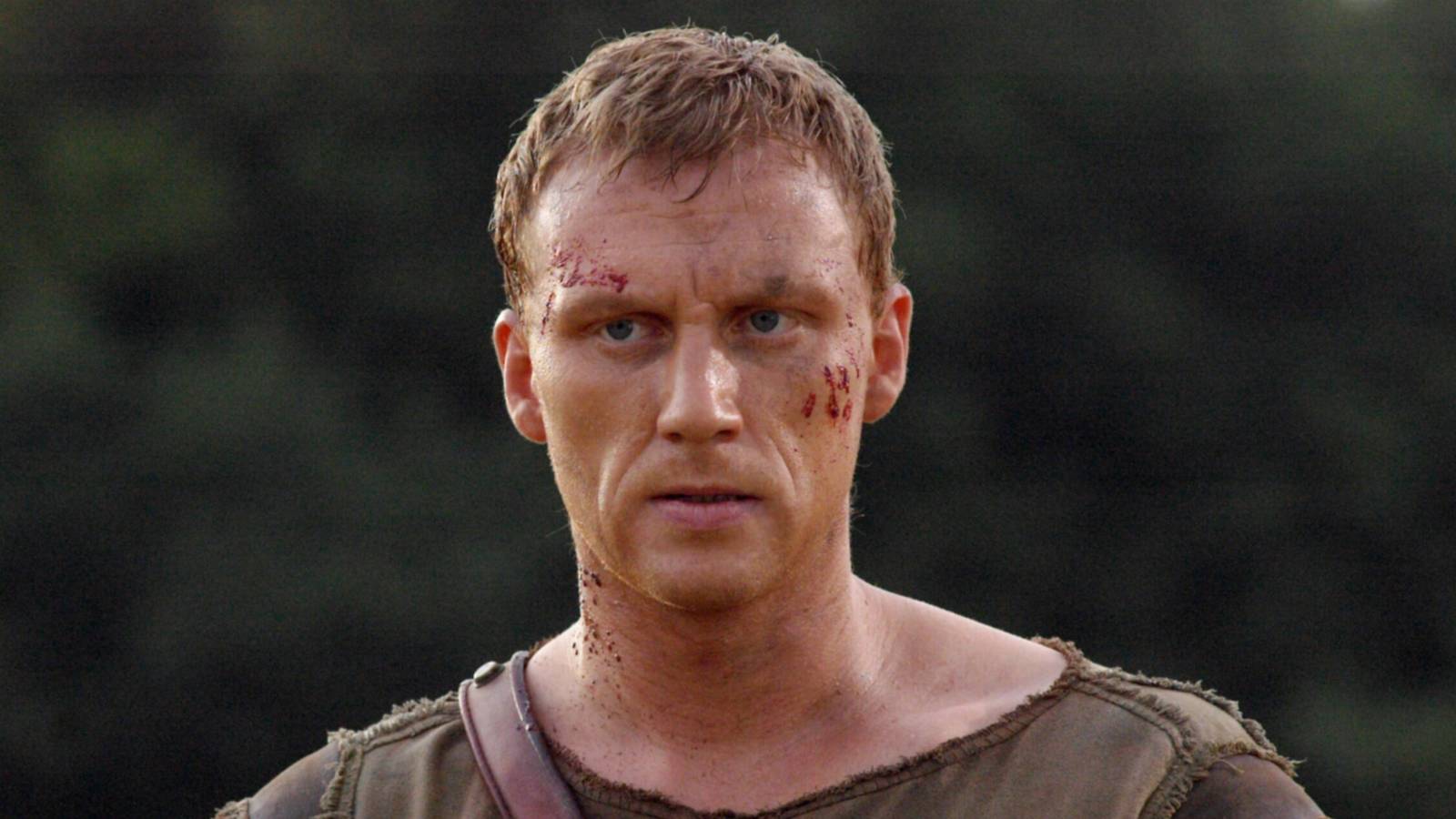
The actual protagonists are Lucius Vorenus (Kevin McKidd) and Titus Pullo (Ray Stevenson), two grunts from Caesar's legions who feel a lot like the two peasants in The Hidden Fortress at first. Always bickering, they stumble upon important roles in the fateful civil war between Caesar and Pompey and rise to a prominence neither really wanted. One of Rome's strong suits is its portrayal of the plebs and populace in those days, and Vorenus and Pullo are the best examples.
As interesting as they are, though, scheming isn't what they're about. In that sense, Atia of the Julii (Polly Walker) and Servilia of the Junii (Lindsay Duncan) owe nothing to characters like Cersei Lannister (Lena Headey). Both connected to Caesar as his niece and former lover, respectively, they each move mountains to protect their families and political positions. Their respective sons, Octavian (Max Pikris/Simon Woods) and Brutus, benefit greatly and also end up playing important parts in the fate of Rome.
‘Rome’ Excels by Prioritizing Historical Authenticity Instead of Accuracy
 Image via HBO
Being a television series and not a history book, it's natural that not everything depicted in Rome really happened, or that the historical characters weren't really the way they are portrayed. Still, when thinking about it daily, what we envision about the Roman Empire is heavily influenced by works of art, and Rome is one of the best references available to help us sharpen this vision. It isn't perfect (far from it), but it does excel by feeling authentic while aspiring for accuracy, not the other way around.
What this means in practical terms is that Rome, much like Game of Thrones, is a very gritty and realistic take on a world that, apart from TV screens and book pages, lives mostly in people's minds. Nothing in the series should be taken as actual history, but it does make an effort to present everything in a credible way. For example, it's highly unlikely that someone who has been stabbed multiple times could even articulate words, but we still imagine Caesar saying "Et tu, Brutus?" because of Shakespeare's Julius Caesar.
This isn't meant to discredit everything that came before Rome, of course, but rather to praise the way the series focuses on aspects that most people wouldn't. The very fact that its two main characters come from a street-level setting shows Rome in a different light — the street gangs, the vendors, and the day-to-day lives of these people dressed in rags contrast with the marbled columns and togas we imagine almost exclusively. Both are present, naturally, but are equally important.
‘Rome’ Paved the Way for HBO's ‘Game of Thrones’
When Rome aired back in 2005, HBO hadn't yet settled into its era of franchises and IP, and prestige original programming was what set it apart from other cable platforms. Rome immediately fits with The Sopranos and The Wire in this category, but it's also different in that it's the network's first big-budget production, with a budget of over a hundred million dollars. More than a village, it took Rome's iconic Cinecittá studios to build the scenery, in a joint effort by HBO, BBC, and RAI.
Unfortunately, such high production costs weren't part of cable TV's reality at that time, forcing Rome to end in Season 2, with Augustus becoming the first Roman Emperor, instead of following through with the original five-season plan. But this reduced episode count also makes Rome one of the best series to binge nowadays. It isn't a long-term commitment, so to speak, as it can be quickly binged in a week, or even during the weekend.
In many ways, Rome laid the foundation for everything that Game of Thrones would do on an even larger scale a few years later. This experience with big-budget production for television, from sets and costumes to the storytelling itself, was crucial for the franchise boom of the late 2010s. So, everything that Game of Thrones and House of the Dragon does nowadays, Rome did first.
Rome is available to stream on HBO Max.

Rome
Release Date 2005 - 2007-00-00