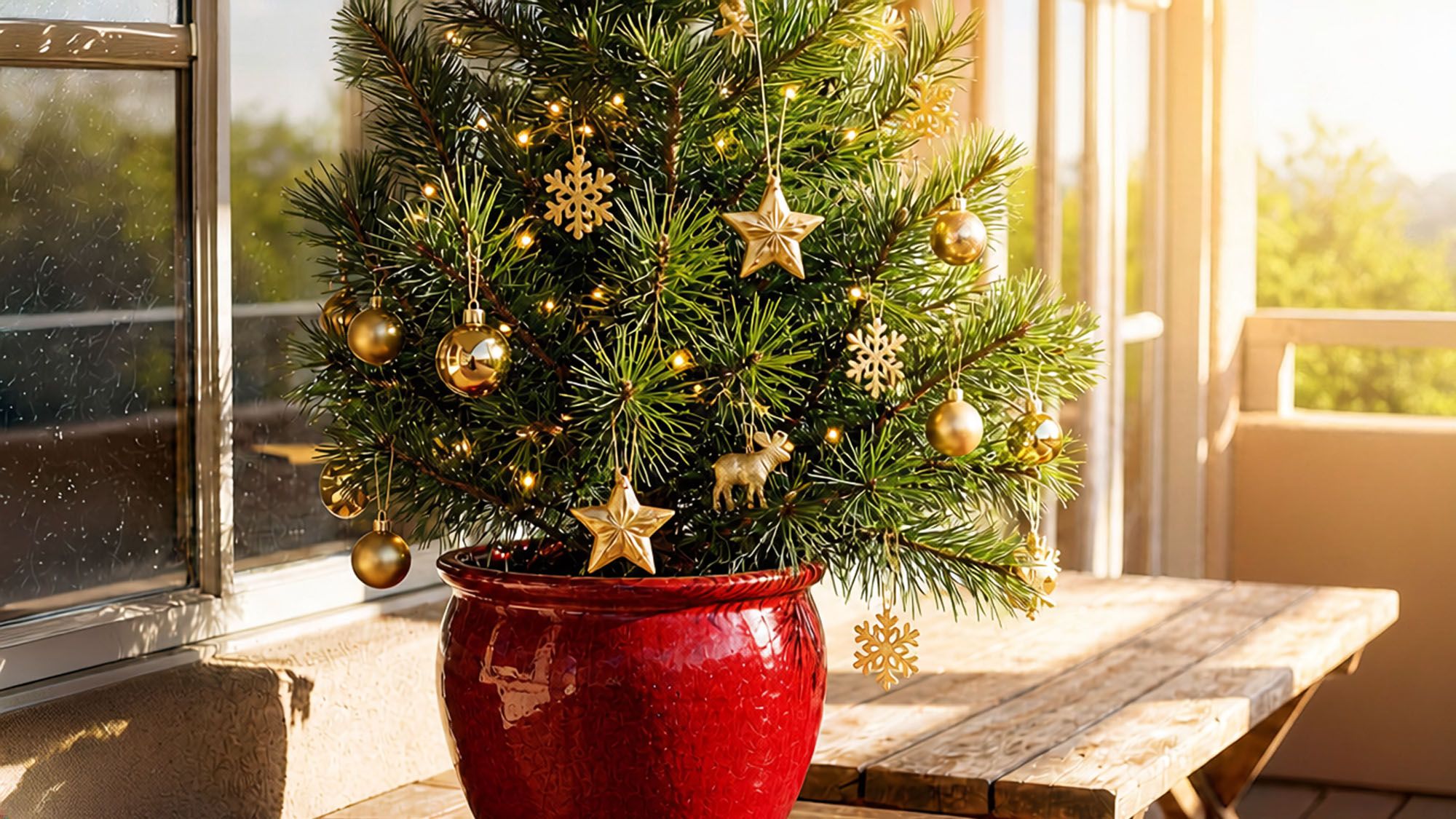
If there is one piece of decor that represents the holidays, it’s got to be a Christmas tree. Add an evergreen tree to your living room, toss on some tinsel, and, suddenly, it’s the holidays.
But Christmas trees seem more expensive every year, and it’s not fun to spend all that money on a one-use tree that you'll discard in January. This is the year to switch to a beautiful live Christmas tree that lasts for years. There are lots of miniature Christmas-type trees that can be grown in pots, spruced up for the holiday, then enjoyed in the garden for the rest of the year.
The key is to buy a living tree that is attractive and built for the long haul, not a single use. I’ve got you covered on that score with a short list of the best living Christmas tree options, from miniature traditional-looking spruces to unusual blue and golden conifers.
Best Living Christmas Tree Options
What’s the best small evergreen tree to grow in a pot for Christmas? Well, the answer will be different for each of us. There are plenty of attractive trees that make good live Christmas trees through December, then live happily in the garden the rest of the year. Pick your favorite, but make sure it’s suited to your USDA hardiness zone so it can thrive outdoors for years to come!
1. Dwarf Alberta Spruce

(Image credit: Getty Images)
Dwarf Alberta spruce (Picea glauca 'Conica') makes wonderful live, potted Christmas trees. These trees offer a classic pyramidal Christmas tree shape and incredible longevity – to 50 years or more in the right conditions. Their compact, densely packed growth habit makes these trees look cute, and they grow very slowly – between 2 and 4 inches (2.5–5 cm) per year – and top out at just over 10 feet (3 m) tall and wide. The needles are fine-textured and soft to the touch, a rich blue-green. They are also aromatic when rubbed.
You can order a classic dwarf Alberta spruce online at Nature Hills, or for something a little different, the Rainbow's End cultivar, which produces a second flush of lemon-yellow growth in summer.
These little spruces are easy to care for, drought-tolerant, and cold-tolerant. They grow best in well-drained acidic soil and prefer full sun. Only water when the top 3 inches of soil are dry. Their preferred climate (USDA zones 2–8) has cold winters and cool summers.
2. Dwarf Blue Spruce
(Image credit: Getty Images)
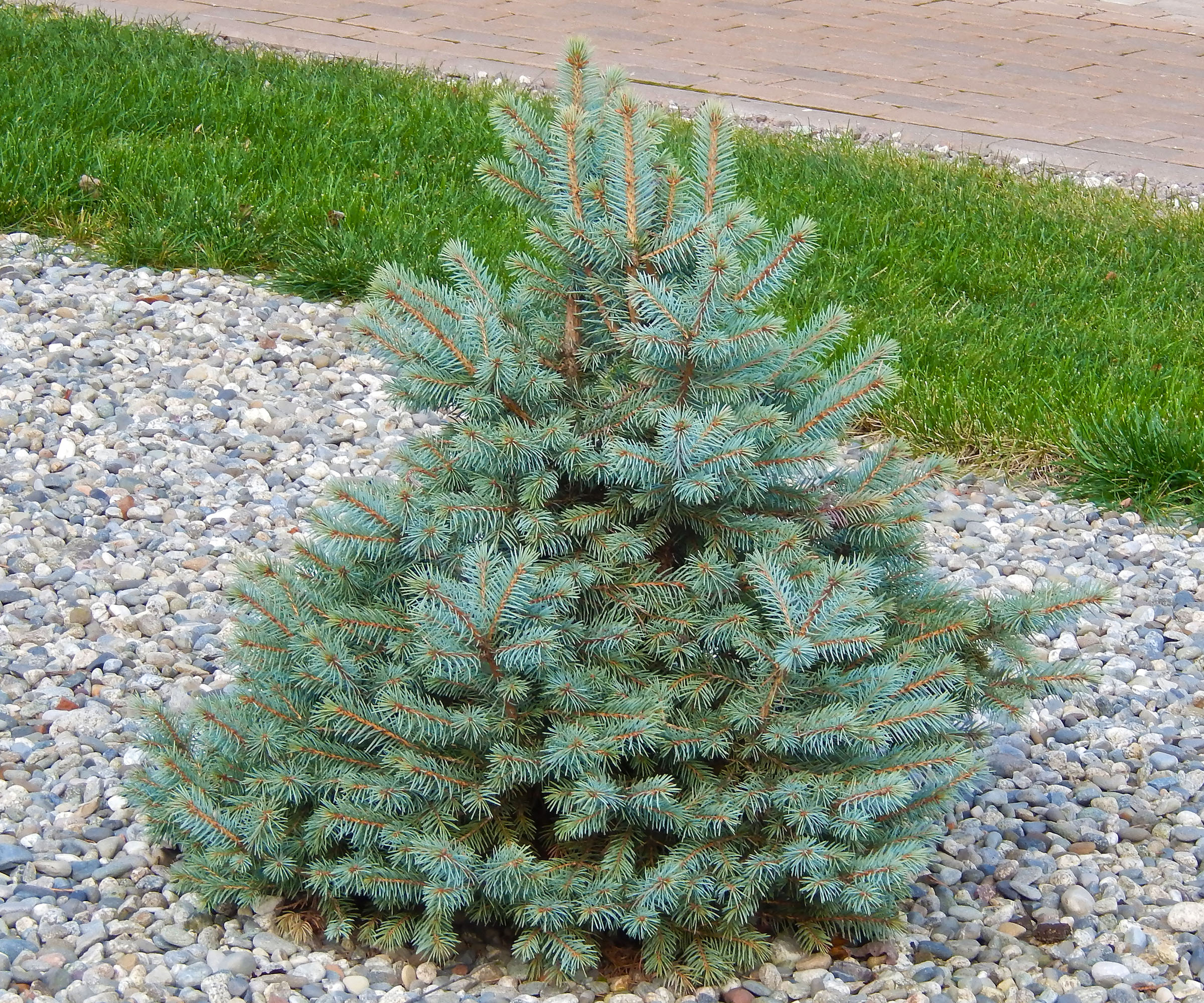
A dwarf blue spruce (Picea pungens 'Globosa') can make a great compact, living Christmas tree. You can doll it up for the holidays indoors, then move this slow-growing evergreen conifer outdoors for the winter in USDA zones 2–8. It needs little maintenance and offers a tidy, manageable size and striking silver-blue foliage.
The signature blue needles make the dwarf spruce a unique holiday tree, and its strong, stiff branches hold up heavy ornaments without issue. The natural pyramidal form requires little shaping, and its needles rarely fall out. On the other hand, the needles are prickly and can hurt you when you are decorating if you aren’t careful. Plus, this spruce doesn’t offer the beloved evergreen aroma, but a distinct odor that isn’t universally loved.
Dwarf blue spruce trees require very little attention once established. When you are moving the tree outside, put it in a site with lots of direct sun. Add several inches of organic mulch to the soil. The ‘Globosa’ cultivar, available from Woodies Garden Goods, reaches 3 to 5 feet (1–1.5 m) tall and wide.
3. Korean Fir
(Image credit: Getty Images)
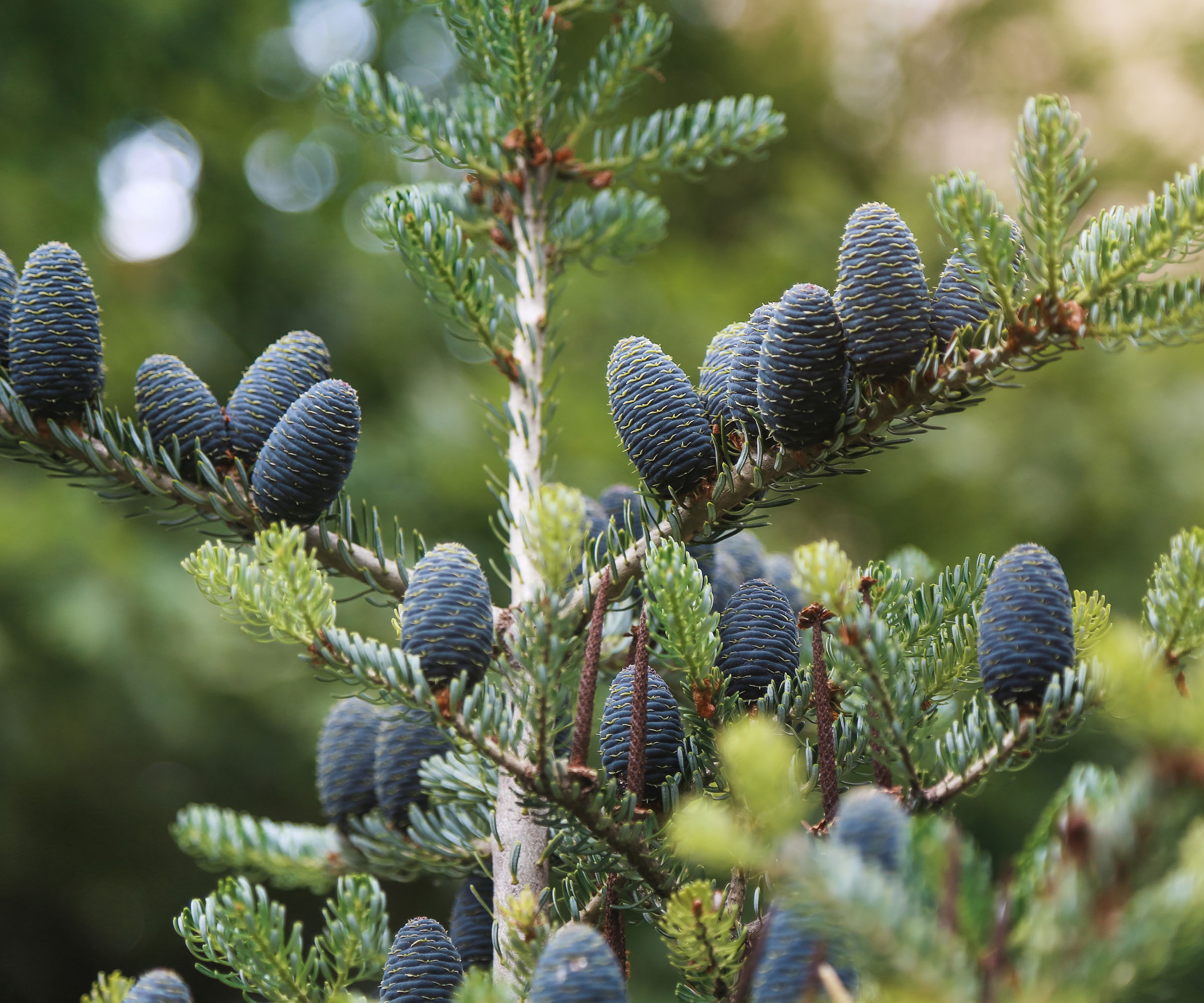
Korean fir (Abies koreana) is a compact, slow-growing, symmetrical evergreen tree. With its soft, rounded needles and dense growth habit, it is a popular choice for a live Christmas tree.
The needles are very ornamental, a dark green with a silvery underside, and offer a rich, fresh forest scent with notes of citrus. The cones are special too, a striking violet-purple and stand upright. This slow-growing fir creeps up a bit every year to finish at some 15-30 feet tall, with a conical form. A species tree will grow to 30 feet (10 m) tall, but a dwarf variety like Cis Dwarf Korean Fir, from Nature Hills, stops at 2 to 3 feet tall and wide. For something different, Ice Breaker Korean Fir is a dwarf variety that looks perpetually snow-covered.
Plant in full sun to partial shade in moist, well-drained, acidic soil. These trees thrive in USDA zones 5–7.
4. Dwarf Norway Spruce
(Image credit: Getty Images)
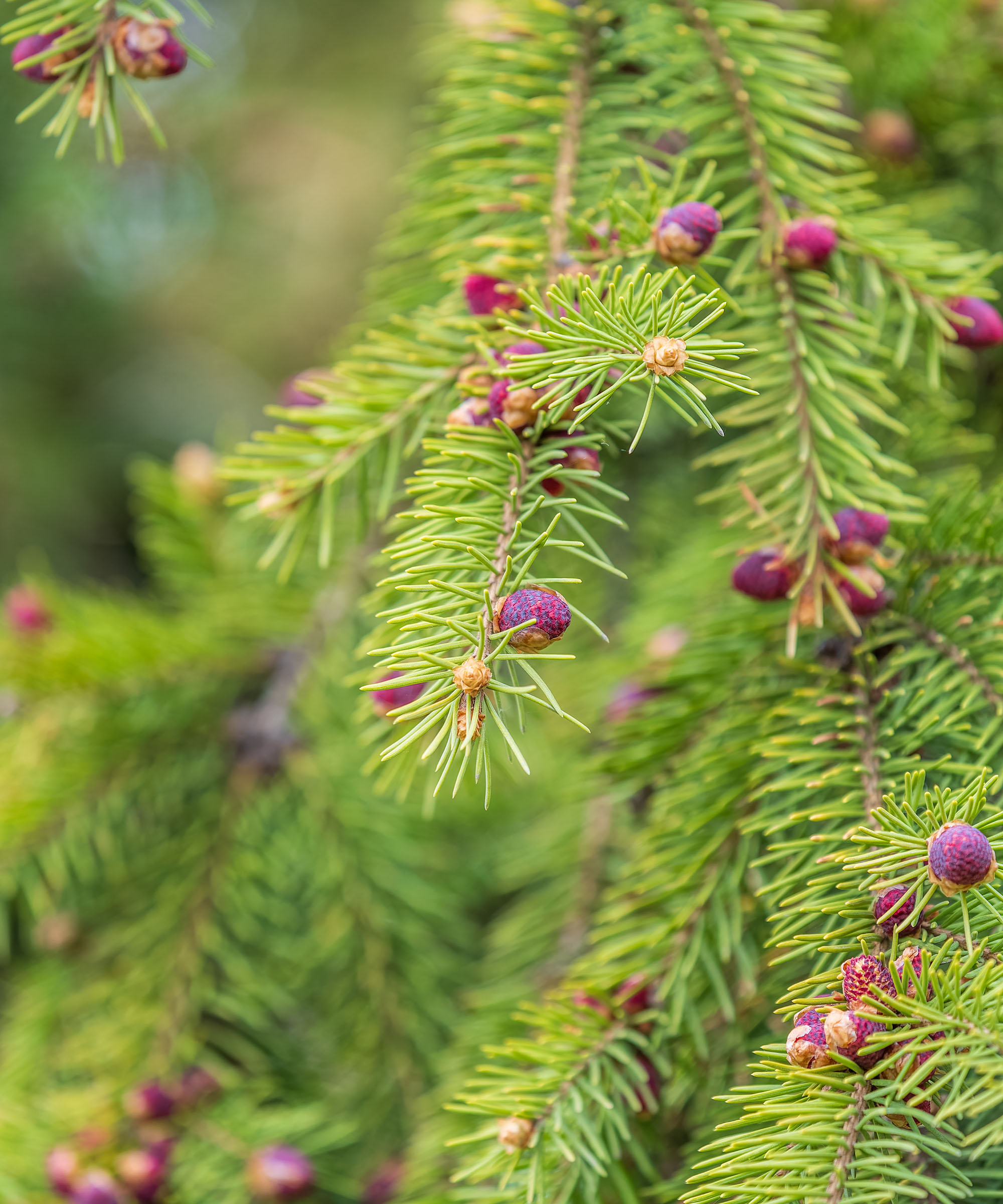
A dwarf Norway spruce (Picea abies) makes a charming, compact live Christmas tree that can be kept in a pot or, in zones 3–7, planted in the garden after the holidays. These small trees typically reach around 3 feet (1 m) tall and wide at maturity, depending on the cultivar. They make charming, sustainable live Christmas trees and can be moved outdoors after the festive season.
A dwarf Norway spruce tree offers a classic triangular shape, dark green needles, and graceful, drooping branchlets. This classic Christmas tree is popular for its dense, symmetrical shape and rich "Christmassy" scent that quickly fills up the room. Unfortunately, Norway spruce needles can dry out and drop fast in warm indoor temperatures, so keep it in as cool a spot as possible.
These trees are generally about 3 feet tall (90 cm) when sold as potted Christmas trees, and the ultimate height depends on the cultivar. They grow slowly, adding between 1 and 3 inches (5–10 cm) every year.
You can buy both ‘Pumila’ dwarf Norway spruce and ‘Pusch’ dwarf Norway spruce at Nature Hills. ‘Pumila’ has a dense, bushy shape that looks lovely decorated for Christmas, while ‘Pusch’ offers something a little different, producing tiny red cones in spring that add extra interest to the garden.
5. Japanese Cedar

(Image credit: Peter Turner Photography / Shutterstock)
Japanese cedars (Cryptomeria japonica) make unique live Christmas trees with soft, fine foliage that is pleasant to touch. The appearance depends on the cultivar, but many compact cultivars offer a naturally dense, rounded shape. The foliage can take on bronze, copper, or bluish-green tones during winter.
For a real statement tree, Black Dragon Japanese cedar, available from Plant Addicts, has a mature height of 8–10 feet (2.5–3 m), or for a smaller tree, the Tansu Dwarf Japanese cedar, from Nature Hills, reaches 3–4 feet (1–1.2 m).
Caring for your live Japanese cedar tree isn't difficult, but you’ll want to limit how much time it spends indoors. Too much time in a warm house can make the tree unhappy. Indoors, keep the tree away from direct heat sources. When it’s time to take the tree outside, start it out in a sheltered spot or an unheated garage for a few days.
Be sure to keep the soil moist. Check it every day. Japanese cedars thrive in full sun to partial shade in USDA zones 5–9 and require well-drained, fertile soil. Standard varieties can grow to 50 feet (15 m) tall if planted in the ground. Dwarf cultivars stay much smaller.
6. Lemon Cypress
(Image credit: Getty Images)
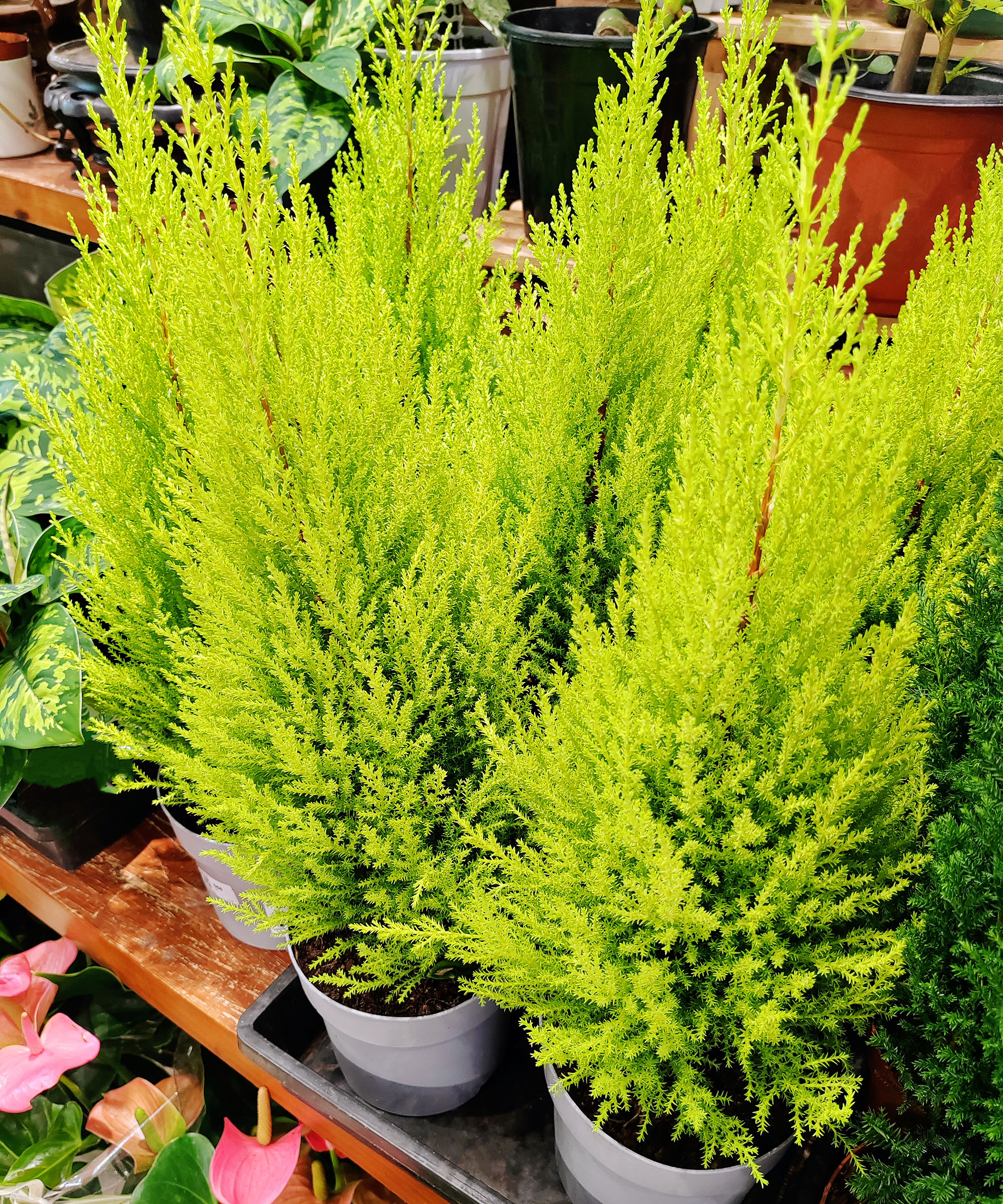
You will recognize the lemon cypress (Cupressus macrocarpa ‘Goldcrest’) – it’s the potted evergreen that you are likely to see in every store just before Christmas as a holiday plant. You can even get one from Walmart. It makes a charming, small Christmas tree with its natural pyramid shape, bright chartreuse foliage, and fresh citrus scent.
The lemon cypress is a versatile evergreen that, once the festive season is done, can be kept in a container on a patio in USDA zones 7–10. Be gentle with it indoors. Use lightweight ornaments since the soft branches can bend or break under heavier decorations. You’ll want to avoid hot lights, too. Use battery-operated micro fairy lights that don’t produce excess heat.
These trees grow slowly and can top out at 10 feet (3 m) tall and 3 feet (1 m) wide. Indoors, give them a sunny window with 6 hours of bright light a day. Keep the tree far from hot air vents and cool drafts, and provide a pebble tray for humidity. Transition the cypress to an outdoor location after the holidays.