
Published Oct 22, 2026, 5:14 PM EDT
Greer Riddell is a London-based culture journalist and critic writing on film, television, audience behaviour, and the wider media industry. She is a Writer and Social Media Coordinator at Collider and TV Editor at FILMHOUNDS.
Her recent collaborations include Netflix, Warner Bros., DC Studios, Hulu, and Disney+, producing features on titles including Saturday Night Live UK, Severance, Sitcoms, Buffy the Vampire Slayer, and Stranger Things. Her recent reviews include Peaky Blinders: The Immortal Man, Stranger Things: Tales From ‘85’, Scrubs Season 10, and The Boroughs. Her work has also included coverage of UK film festivals and features published in Film Stories Magazine.
What makes us human, and can it ever be replicated? It’s the question at the heart of Kazuo Ishiguro’s Klara and the Sun, the 2021 novel given the Taika Waititi treatment for the big screen. Set in a future where genetic enhancement divides society and artificial companions provide teenagers in their “hard, lonely, dorky years” with friendship, the story follows Klara (Jenna Ortega), a solar-powered Artificial Friend purchased for Josie (Mia Tharia), a “lifted” child reacting adversely to the procedure.
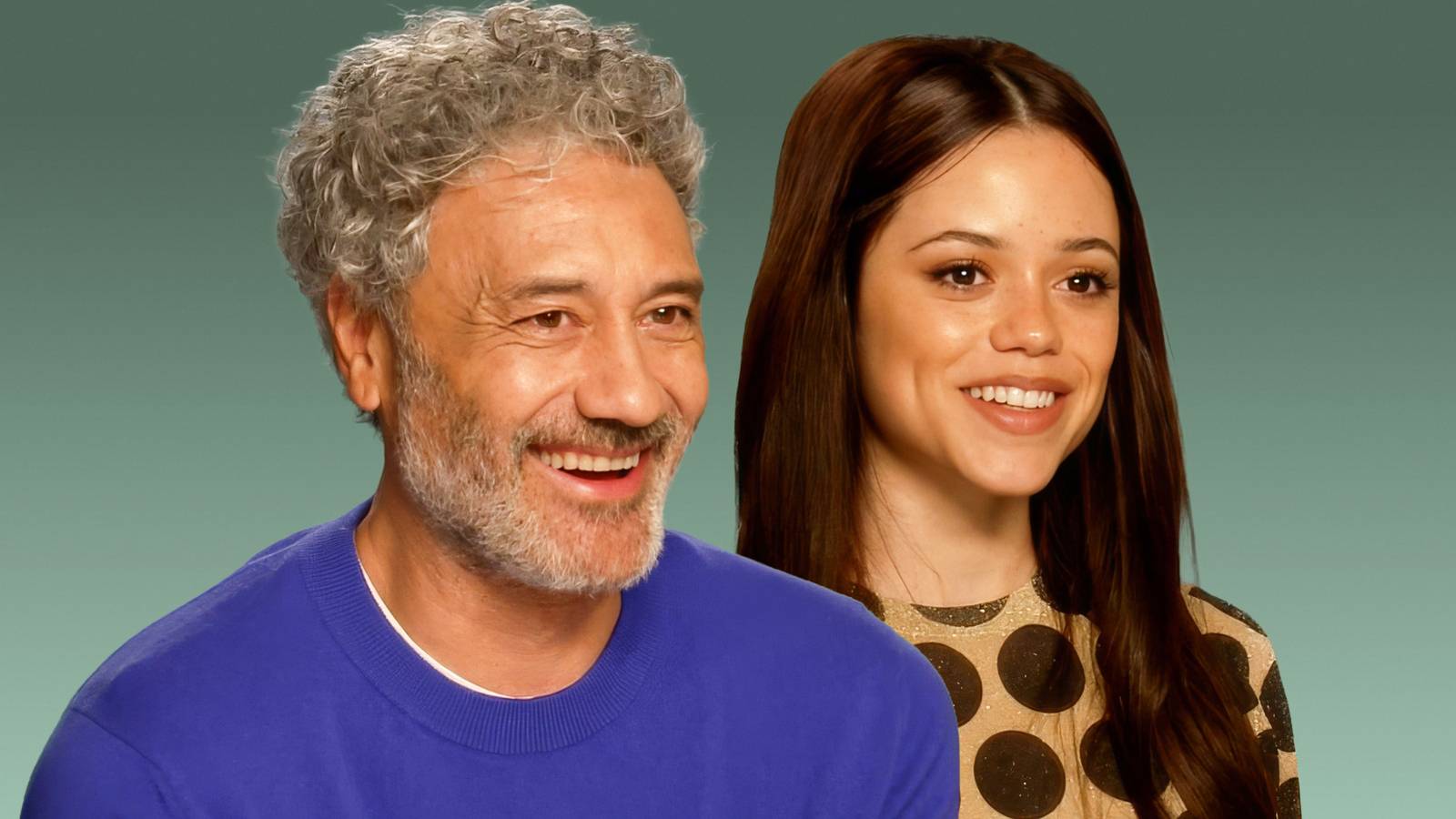
Fresh out the box, Klara must learn about humanity from Josie and her social climber mother, Chrissie (Amy Adams). She observes the people around her, imitates their behavior and attempts to understand their relationships, with plenty of physical comedy and laugh-out-loud dialogue along the way. Yet the story also explores grief, love and the unsettling possibility that technology might one day replicate the people we cannot bear to lose. Ahead of Klara and the Sun’s release, Ortega and Waititi joined Collider to discuss the balance between comedy and tragedy, the influences behind Klara’s playful physicality, and the lessons about artificial intelligence audiences might take away from the film.
Taika Waititi On Keeping ‘Klara and the Sun’ Funny Without Losing Its Heart
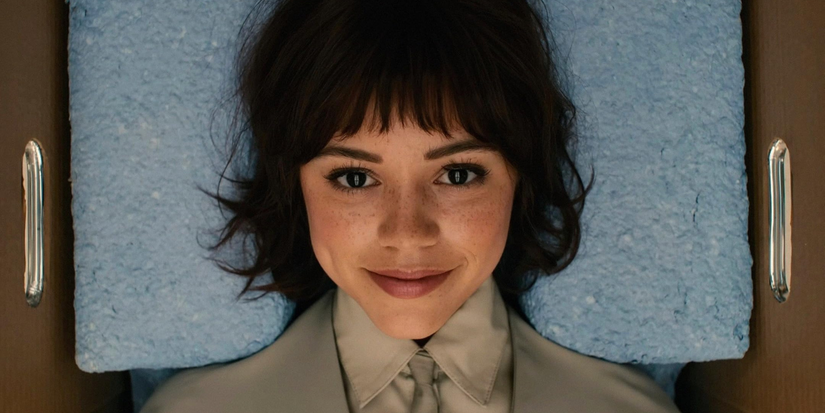 Image via. Sony Pictures Distributing
Despite its darker themes, Klara and the Sun finds plenty of comedy in Klara’s attempts to navigate human life. Her awkward movements and literal interpretations of those around her make for some of the film’s funniest moments, but her innocence also makes the story’s emotional beats more devastating.
For Waititi, striking the right balance is a challenge that continues throughout the film-making process, particularly in the edit. “Sometimes, you know, there'll be cuts of a film which are all jokes, but you can't connect with the characters and you don't feel anything,” he explains. “In other ones where it's like more just drama and you've kind of like lost the sort of spice that you wanted in the first place.”
The solution is to leave room for different interpretations of a scene, experimenting with the performances before deciding how far to push the humor. “You say, ‘Okay, let's do one. We can be a bit sillier. We can do try something really ridiculous,’” he says. “I never know when I'm on set exactly what it's going to be.” That willingness to experiment is particularly important for Klara, whose comedy and connection depends on the gap between her intentions and her understanding of the world.
Jenna Ortega Used Buster Keaton To Bring ‘Klara and the Sun’s Robot To Life
 Image via. Sony Pictures Distributing
Klara’s clowning and wide-eyed expressions are central to Ortega’s portrayal. Much of the character’s personality and anxiety is communicated physically, whether she’s standing on one leg when excited or struggling to master the stairs. At times, she wouldn’t look out of place in an early silent comedy.
“A big reference for us was Buster Keaton because there's so much in the script. It's Klara falls over, Klara trips, Klara runs into wall, Klara whatever,” Ortega says. There are clear parallels with Keaton’s physical stunts, particularly in The Electric House (1922), in which he struggles with a moving staircase. Klara’s own attempts include sliding down them on her stomach. Like the characters in silent comedies, Klara often seems at the mercy of events, carried along by a world she is still trying to understand.
Keaton was a useful reference not only for the comedy itself, but for Klara's emotion. “You think about someone like Buster who's doing so many stunts and still had this sort of detached expression in reality,” Ortega explains. “It just kind of felt like it naturally — Klara being artificial and not real, and yeah, her messiness.” Klara’s performance depends on her ability to communicate through gesture and expression, often without fully understanding the emotions she reflects but like the a silent greats, she can convey something powerful without having to articulate it.
Ortega also credits Waititi’s script and humor as important guides, alongside the behavior of the other characters. Klara learns by observing those around her, and Ortega’s performance reflects this process of absorbing and imitating the people she encounters. “So much of what Klara is doing is just kind of giving people back what she sees and is a reflection of who she's surrounded by,” she says. “So a lot of it too is down to Mia and Josie and kind of her dialogue and phrasing and way of, you know, so I just was kind of trying to be a sponge as much as possible.”
Waititi, meanwhile, sees another influence in Giulietta Masina, the Italian actor and wife of filmmaker Federico Fellini. Her performances in La Strada (1954) and Nights of Cabiria (1957) combine expressive physicality with vulnerability, qualities he sees in Ortega’s Klara. He admits he doesn’t know whether the resemblance was intentional, but says it made him happy.
Taika Waititi Didn’t Set Out To Make An AI Movie With ‘Klara and the Sun’
One of the film’s most unsettling sequences sees Klara examine a sequence of photographs and decide whether they depict something good or bad, including her human companion, Josie. The scene touches on how AI systems are trained through machine learning to recognize patterns in images, raising questions about how AI learns to make judgements and what happens when those judgements are flawed and have real-world consequences.
However, Waititi says contemporary questions about AI were not a major consideration when the film was made. “I'll be honest, when I wrote this, I had only heard a few conversations about AI,” he says. Now, Waititi observes, it seems to be “all anyone wants to talk about.” “We just made a film about a robot who happened to be, like, more human than the family that she got bought by,” he says. “And, you know, I wanted to just make something that was just a really human story about a sort of sweet robot.”
Ortega offers a slightly different perspective, focusing on the broader themes of technology in Ishiguro’s original novel. For her, the story is a reminder of the importance of human connection in a world increasingly shaped by technological change. “I thought [Ishiguro], in a very, like, nuanced and insightful format, found a way to direct the attention to the public about how important it is that we look after one another and connect to one another,” she says. “The world is a big, scary place, and we don't really know what's going on with these advancements and technology and what could happen.”
Rather than attempting to predict what the future holds, Ortega reiterates Ishiguro’s hopes for Klara and the Sun and encourages audiences to focus on what they can control. “Just focus on what's in front of you and look after the people that you love,” she says. While the novel invites readers to consider whether humans possess a replicable spark or soul that makes them unique, the film shifts the emphasis slightly. AI may be able to imitate human behavior, but that doesn't mean it can reproduce the connections that give our lives meaning.
Klara and the Sun releases in theaters on October 23, 2026.

Release Date October 23, 2026
Runtime 116 minutes